 Heather Cook🖖Autistic Coach
Many autism therapies have as their goal to make autistic children “normal,” or “indistinguishable from their peers.” 1/3
#Autism #autistic #ActuallyAutistic #AutismAcceptance #Acceptance #autismacceptancemonth
Many autism therapies have as their goal to make autistic children “normal,” or “indistinguishable from their peers.” 1/3
#Autism #autistic #ActuallyAutistic #AutismAcceptance #Acceptance #autismacceptancemonth
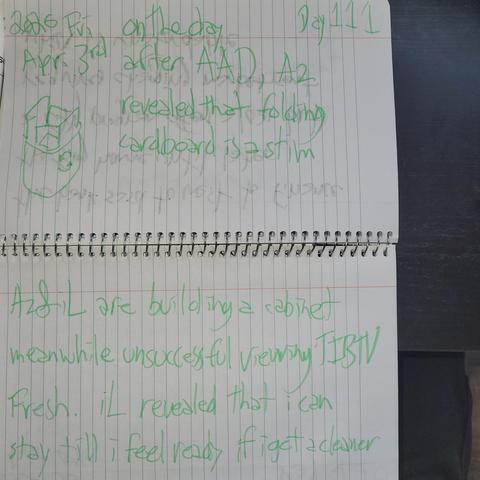
#jouRapNal #book18 day 111
20260403Fri
#3goodThings #stay #stim #AutismAcceptanceMonth #threeGoodThings
Autism Acceptance, Belonging, and Inclusion at Work Is Just Good Workplace Design
April is Autism Acceptance Month. Creating workspaces that are inclusive and welcoming for everyone, including neurodiverse staff, is an important part of workplace well-being.
We tend to treat autism acceptance, and neurodiversity more broadly, as something separate from the rest of our work. It becomes a program, a training, or a hiring initiative. Something we add on rather than something we build into how work functions. But when you look at what meaningful acceptance requires, it starts to look a lot like good communication practice in general. It looks like clear expectations, thoughtful communication, flexibility, and environments that make it easier for people to do their jobs. Clear is kind.
When we talk about autism acceptance, we often focus on awareness or understanding. Those things matter, but they are only a starting point. Creating spaces that are inclusive and welcoming is the goal. Acceptance shows up in how we design and work on a daily basis. It shows up in job descriptions that are clear about expectations, in structured interviews that reduce guesswork, and in communication practices that don’t rely entirely on verbal exchanges or implicit norms. It shows up in giving people advance notice of changes whenever possible, and in creating workspaces that reduce unnecessary sensory strain. And knowing what things are most likely to cause sensory strain – lighting, noise, air quality, etc. It also shows up in flexibility, both in how work gets done and in recognizing that people may approach tasks differently and still be highly effective. All of that matches the research around what makes healthy workplaces, including the physical space and policies.
None of these changes are particularly radical, and they benefit everyone at work. The same practices that support autistic employees also make work more accessible, consistent, and sustainable for everyone. This is something we see again and again when we talk about workplace design more broadly: when we remove unnecessary barriers, more people are able to do their best work. (Universal design, anyone?)
But just like other aspects of workplace wellbeing, we tend to shift responsibility to the individual. We tell people to be more resilient, to communicate more clearly, to manage their time better, or to engage in more self-care. At the same time, we don’t address or change the underlying issues in place – unclear expectations, constantly shifting priorities, environments that are noisy or distracting, and workflows that depend on interruption and urgency.
If the environment requires people to navigate ambiguity, sensory overload, and inconsistent communication just to function, then the issue is not that some employees need accommodations. The issue is that the workplace has been designed in a way that creates unnecessary barriers.
For autistic employees, that kind of environment can be especially challenging. More broadly, it undermines psychological safety for everyone. Teams function better when expectations are clear, communication is direct, and people feel comfortable expressing concerns or asking for clarification. That is about being more intentional in how we support one another’s work.
It is also important to be clear about what we mean when we talk about supporting autistic employees. The goal is not to help individuals adapt to a system that was not designed with them in mind. The goal is to design systems that allow more people to succeed. When expectations are clear, people make fewer mistakes. When communication improves, collaboration improves for everyone. When environments reduce unnecessary strain, everyone has more capacity to focus and engage in their work. When flexibility is built into the system, retention and job satisfaction improve for everyone.
These are organizational outcomes, not individual accommodations.
If we hire neurodiverse employees without addressing culture, policies, and practices, we are not creating inclusion. We are asking people to navigate the same barriers that existed before, often with the expectation that they will find ways to manage them on their own. Hiring is only one step, and it is not the most difficult one. The more challenging work is examining how decisions are made, how communication happens, how physical and virtual spaces are structured, and what people are expected to manage as part of their day-to-day work.
Where to Start
If this feels like a lot, start with one thing.
Creating a work environment that goes beyond autism acceptance to belonging and inclusion at work is not separate from workplace well-being. It is one way of understanding whether our workplaces are functioning in ways that support the people in them. When we design workplaces that support autistic employees, we are also creating environments that are clearer, more flexible, and more sustainable for everyone.
P.S. If you’re an autistic or neurodiverse librarian consider submitting a presentation about creating a welcoming workplace for autistic and/or neurodiverse staff to ThriveLib, a virtual conference created for librarians, library managers, and library workers who are ready to reimagine what well-being looks like in their professional lives.
References and Suggested Readings
Alissa. (2021, February 20). Libraries are for everyone! Except if you’re autistic. Cataloguing the Universe. https://lissertations.net/post/1626
Anderson, A. (2018). Employment and Neurodiverse Librarians. STEMPS Faculty Publications, 82. https://digitalcommons.odu.edu/stemps_fac_pubs/82
Anderson, A. (2021). Job Seeking and Daily Workforce Experiences of Autistic Librarians. The International Journal of Information, Diversity, & Inclusion, 5(3), 38–63.
Anderson, A. (2022, September 26). Researcher’s Corner: At the intersection of autism and libraries. Hiring Librarians. https://hiringlibrarians.com/2022/09/26/researchers-corner-at-the-intersection-of-autism-and-libraries/
Anderson, A. M. (2021a). Exploring the workforce experiences of autistic librarians through accessible and participatory approaches. Library & Information Science Research, 43(2), 101088. https://doi.org/10.1016/j.lisr.2021.101088
Autism Career Pathways 501c3 (Director). (2020, February 10). Lauren the Autistic Librarian [Video recording]. https://www.youtube.com/watch?v=1zglfZn5bak
Bastian, R. (2023, October 23). Tips For Supporting Neurodiversity In The Workplace. Forbes. https://www.forbes.com/sites/rebekahbastian/2019/10/23/tips-for-supporting-neurodiversity-in-the-workplace/
Camp, C., & Finlay, D. J. (2025). The experiences of neurodivergent Library and Information Science [LIS] professionals working in academic libraries – a case study. The Journal of Academic Librarianship, 51(5), 103115. https://doi.org/10.1016/j.acalib.2025.103115
Cohen, R. A., Cooke, P., Holt, M., Lounsberry, M., Roga, E., Farrell, K. S., & Squires, J. (2025). Autistic librarians in the academic library hiring process. College & Research Libraries, 86(5), 705.
Commissioner, O. of the. (2023). Be Aware of Potentially Dangerous Products and Therapies that Claim to Treat Autism. FDA. https://www.fda.gov/consumers/consumer-updates/be-aware-potentially-dangerous-products-and-therapies-claim-treat-autism
Contributor, G. (2017b, April 16). Perspectives of an Autistic Children’s Librarian. ALSC Blog. https://www.alsc.ala.org/blog/2017/04/perspective-autistic-childrens-librarian/
Doyle, N. (2019, November 24). Ableism In The Workplace: When Trying Harder Doesn’t Work. Forbes. https://www.forbes.com/sites/drnancydoyle/2019/11/24/ableism-in-the-workplace-when-trying-harder-doesnt-work/
Emily. (2012, June 29). Further Questions: Would You Hire a Person Who Has an Autistic Spectrum Disorder For a Reference Librarian Position? Hiring Librarians. https://hiringlibrarians.com/2012/06/29/further-questions-would-you-hire-a-person-who-has-an-autistic-spectrum-disorder-for-a-reference-librarian-position/
Eng, A. (2017). Neurodiversity in the Library: One Librarian’s Experience. In the Library with the Lead Pipe. https://www.inthelibrarywiththeleadpipe.org/2017/neurodiversity-in-the-library/
Finn, J. (2023, September 16). Two Librarians Fired Over Autism-Awareness Display, Because Rainbow. Prism & Pen. https://medium.com/prismnpen/two-librarians-fired-over-autism-awareness-display-because-rainbow-c8b3fbd2c916
Furr, P. (2023, March 7). Why It’s Important To Embrace Neurodiversity In The Workplace (And How To Do It Effectively). Forbes. Retrieved April 25, 2024, from https://www.forbes.com/sites/forbesbusinesscouncil/2023/03/07/why-its-important-to-embrace-neurodiversity-in-the-workplace-and-how-to-do-it-effectively/
Gainey, K. (2023, September 20). What Is Social Skills Training & How Is It Used? Choosing Therapy. https://www.choosingtherapy.com/social-skills-training/
Geraghty, T. (2024, July 26). Psychological safety and neurodiversity. Psych Safety. https://psychsafety.com/psychological-safety-and-neurodiversity/
Giles-Smith, L., & Popowich, E. (2023). Autistic employees in Canadian academic libraries: Barriers, opportunities, and ways forward. Canadian Journal of Academic Librarianship, 9, 1–22.
Haire, A. (2025). What Does It Mean to Be Information Literate for an Autistic Librarian in the Academic Library Workplace?. Journal of Information Literacy, 19(1), 27–47.
Howard, J. (2022, December 14). It’s Important to Create Psychological Safety for Autistic Professionals. https://www.inclusionhub.com/articles/create-psychological-safety-for-autistic-professionals
Inc, G. (2025, April 25). Neurodiverse Workers: Hidden Challenges, Untapped Potential. Gallup.Com. https://www.gallup.com/workplace/659618/neurodiverse-workers-hidden-challenges-untapped-potential.aspx
Is Your Workplace Neurodivergent Competent? (2022, September 20). Psych Central. https://psychcentral.com/health/neurodiversity-in-the-workplace
jrose. (2022, October 31). Neurodiversity and Libraries. Liblime. https://liblime.com/2022/10/31/neurodiversity-and-libraries/
Juarez, A. H. (Host). (2025, May 30). Cultivating an Inclusive Workplace for Neurodivergent Staff with Renee Grassi (No. 174) [Broadcast]. https://libraryleadershippodcast.com/174-cultivating-an-inclusive-workplace-for-neurodivergent-staff-with-renee-grassi/
Louise Taylor. (2022, January 11). Communication Styles, Counseling, and Neurodiversity. Psychology Today. https://www.psychologytoday.com/us/blog/the-neurodivergent-therapist/202201/communication-styles-counseling-and-neurodiversity
Ludmila Praslova. (2022, April 24). Workplace bullying of autistic people: A Vicious cycle. Specialisterne. https://us.specialisterne.com/workplace-bullying-of-autistic-people-a-vicious-cycle/
Ludmila Praslova. (2022, February 1). Moral Injury at Work and Neurodiversity: Are there Additional Risk Factors? Specialisterne. https://ca.specialisterne.com/moral-injury-at-work-and-neurodiversity-are-there-additional-risk-factors/
Maddock, K. (n.d.). To what extent are autistic library staff in the UK supported in their workplace?
Maxwell, L. (2022, July 25). Being an Autistic School Librarian. BOOK RIOT. https://bookriot.com/being-an-autistic-school-librarian/
Motti, S. W., Niloofar Kalantari, Vivian. (2024, April 24). Neurodiversity inclusion starts with the job interview. Fast Company. https://www.fastcompany.com/91111139/neurodiversity-inclusion-starts-with-the-job-interview
Nasland, R., Dudheker, S., & Dudheker, R. N. and S. (2023, July 20). Designing for Neurodiversity in the Workplace. Work Design Magazine. https://www.workdesign.com/2023/07/designing-for-neurodiversity-in-the-workplace/
Neurodiversity in the Library: One Librarian’s Experience – In the Library with the Lead Pipe. (n.d.). Retrieved May 24, 2022, from https://www.inthelibrarywiththeleadpipe.org/2017/neurodiversity-in-the-library/
Neurodiversity Resources For Students—Neurodiversity Hub<br/>. (n.d.). Neurodiversity Hub. Retrieved April 3, 2026, from https://www.neurodiversityhub.org/training1
Newman, B. L. (2024, April 26). Supporting Neurodiversity in the Library Workplace. Librarian by Day. https://librarianbyday.net/2024/04/26/supporting-neurodiversity-in-the-library-workplace/
Praslova, L. N. (2022, June 21). An Intersectional Approach to Inclusion at Work. Harvard Business Review. https://hbr.org/2022/06/an-intersectional-approach-to-inclusion-at-work
Rosa, S. D. R. (2018, September 14). What Is Light Sensitivity Like for One Autistic? Thinking Person’s Guide to Autism. http://www.thinkingautismguide.com/2018/09/what-is-light-sensitivity-like-for-one.html
Smith, S. (n.d.). Training & Resource Center. Autism Society. Retrieved April 3, 2026, from https://autismsociety.org/training-resource-center/
Southey, S., Morris, R., Nicholas, D., & Pilatzke, M. (2024). Autistic perspectives on employment: A scoping review. Journal of Occupational Rehabilitation, 34(4), 756–769.
Staff, L. (2026, April 2). Autism Librarian. Autism Librarian. https://autismlibrarian.wordpress.com/
Steinemann, A. (2019). Ten questions concerning fragrance-free policies and indoor environments. Building and Environment, 159, 106054. https://doi.org/10.1016/j.buildenv.2019.03.052
The Association of Southeastern Research Libraries (ASERL) (Director). (2024, February 29). Library Accessibility Alliance (LAA) Webinar: Transforming Librarianship to Model Neuroinclusion in Libraries [Video recording]. https://vimeo.com/918005788
Torres, A. (n.d.). Neurodiversity at Work Playbook: Employee Engagement & Growth Series. Disability:IN. Retrieved April 4, 2025, from https://disabilityin.org/resource/neurodiversity-at-work-playbook-employee-engagement-growth-series/
Training Autistic Employees—Hire Autism. (2022, January 5). https://www.hireautism.org/resource-center/training-autistic-employees/
Tumlin, Z. (2019). “This Is a Quiet Library, Except When It’s Not:” On the Lack of Neurodiversity Awareness in Librarianship. Music Reference Services Quarterly, 22(1–2), 3–17. https://doi.org/10.1080/10588167.2019.1575017
Be kind. Be patient. Be understanding. 🎗️❤️
Happy World Autism Day and Autism Acceptance Month! 🧩🌍
#AutismAcceptanceMonth #WorldAutismDay #BigHearts #Inclusion
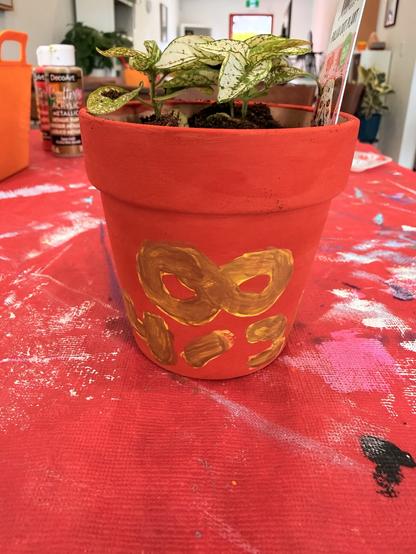
🌟 April is #AutismAcceptanceMonth — and acceptance means centering autistic voices.
Two essential orgs to follow and support:
🔹 Autism Self Advocacy Network — disability rights & policy, built on "Nothing About Us Without Us"
🔹 Autistic Women & Nonbinary Network — centering autistic women, girls, & gender-diverse folks often left out of the conversation
#ActuallyAutistic #NothingAboutUsWithoutUs #Neurodiversity #Inclusion #DisabilityRights
Today is officially #WorldAutismAwarenessDay, designated by the United Nations as day of recognition and appreciation. This kicks off #AutismAwarenessMonth, which many of us call #AutismBewarenessMonth because it's always much more about "here's how bad autism is" than "here's how to make autistic people's lives better". When we want to be more positive than snarky, we call it #AutismAcceptanceMonth, because it's better to be accepted than for people to be aware of us mainly as a set of problems.
The problem with the above is that all that awareness and acceptance is something that allistic people are supposed to do, so the occasion centers allistic people instead of autistic people. The whole month is about how allistic people think and feel about us – it's not actually about us at all!
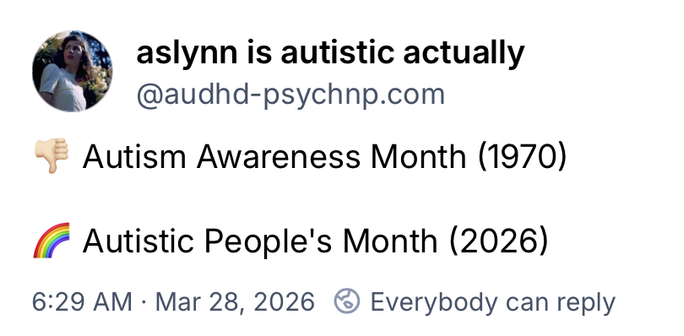
But over on Bluesky, Aslynn (`@audhd-psychnp.com`) hit on some better branding: Autistic People's Month! I really like this, as it centers us in our own celebration. #AutisticPeoplesMonth is not about how anyone else feels about us, but about our own existence, accomplishments, problems, and all the rest. I hope this catches on, so doing my part to make it happen. April is now ours!
Today is World Autism Awareness Day and April is World Autism Acceptance Month.
 phli
phli Bobbi L. Newman
 gabriella stephanie
 Neurodivergent BC

 Alliance Amateur Radio Network
 josh susser
 Charlotte
 Your Autistic Life FR/EN/ES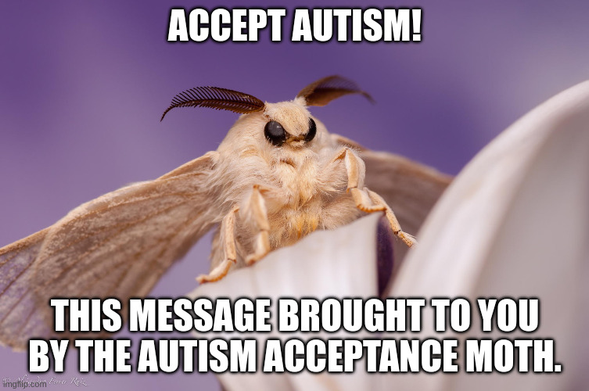
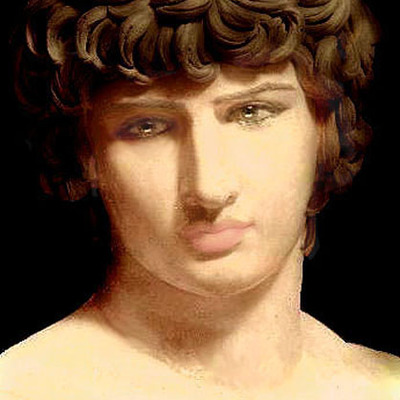 Antinous the Gay God