When I was out for a walk with the dogs this morning I saw a shadow in the distance through the trees & had a chuckle because it looked for all the world like the profile of a large kangaroo. I told myself it was too big to be that & was smiling to myself. Then the profile turned its head, stood upright & looked straight at me. It was one of the biggest kangaroos I have ever seen.
I have Pareidolia & often see faces in all sorts of things & just thought I’d done it again. Noooo - it was definitely a very big roo & I’m glad it was quite a distance away from myself & the dogs. 🦘 #AussieAnimals #Kangaroo #Pareidolia

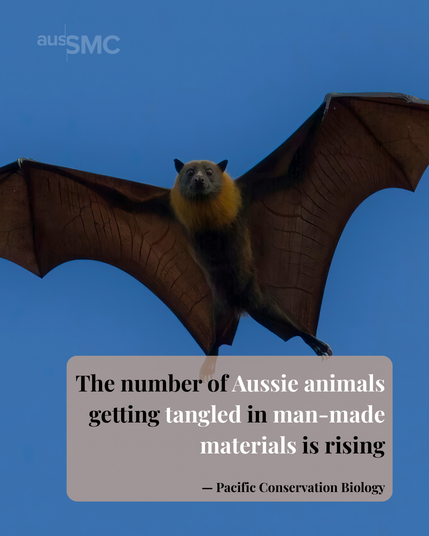
🦇 More Australian animals are getting tangled up in man-made materials such as netting or wire than in the 2010s

✨Follow the link for more information on this story✨
https://www.scimex.org/newsfeed/the-number-of-aussie-animals-getting-tangled-in-man-made-materials-is-rising

#science #sciencenews #research #stem #facts #knowledge #sciencefacts #flyingfox #aussieanimals

Sydney’s 10 Most Dangerous Animals to Watch Out For

Discover the most dangerous animals in Sydney with our guide, revealing hidden risks and safety tips for your adventures in the city and beyond.

Australia Travel Hub
Sydney’s 10 Most Dangerous Animals to Watch Out For

Discover the most dangerous animals in Sydney with our guide, revealing hidden risks and safety tips for your adventures in the city and beyond.

Australia Travel Hub

Saltwater crocodiles are often spotted lying in the sun, but Australian researchers have discovered it’s just as vital for these reptiles to remain cool.

So, why do crocodiles need to regulate their body temperature? And what does this teach us about these iconic Aussie predators?

We asked PhD candidate Kaitlin Barham of The University of Queensland for the facts; this is 60 Seconds of Science. https://youtu.be/J-1OmXGrq_g

#ausgeo #seeaustralia #crocs #crocodile #aussieanimals
#environment #globalwarming

Saltwater Crocodiles Need to WARM UP and COOL DOWN to Survive!

YouTube

This wombat is making the most of the long weekend in true blue Aussie fashion – with a day at the beach! ☀️

Did you know that wombats sometimes forage on the beach? They will wander the sands, snuffling about for salt marsh plants like samphire!

Watch our video interview with wombat expert Yolandi Vermaak to learn more about these awesome animals… https://ausgeo.co/wombats

🎥 IG @thereal.chickentender

#beach #wombat #wombats #aussieanimals #australiananimals #beachlife #cuteanimals #seeaustralia #australianbeaches #wombatwednesday
#environment #biodiversity #ecology #nature #wildlife #travel #adventure

Ready to dig into the wonderful world of wombats? 🍃

Yolandi Vermaak of Wombat Rescue will be in the studio, along with some wombat joeys, on Monday 27 May at 5pm AEST to answer all your questions.⁠

Comment your questions below 👇 for the chance to have them answered live in the next episode of Ask An Expert.

Get notified when the episode airs… https://youtube.com/live/nmDu9djn0rI

#ausgeo #australia #wombat #wombats #aussieanimals #seeaustralia #exploremore #animal #cuteanimals #nature #wildlife #animals #cute #babyanimals #joey
#environment #biodiversity #ecology #rewilding #biology #nature #wildlife

Bevor Sie zu YouTube weitergehen

It seems numbats (Myrmecobius fasciatus) can't handle the #heat!

New research shows numbats are reaching a body temperature greater than 40°C within only ten minutes of activity in the sun, despite using fur techniques to regulate body temperature.

So, what does this mean for the future conservation of this endangered native species? https://ausgeo.co/numbats

#ausgeo #conservation #numbat #aussieanimals #nature #wildlifephotography #naturelovers #naturephotography #seeaustralia
#environment #globalwarming #biodiversity #ecology #biology #climatechange #climatecrisis #nature #wildlife #science #scientist

#environment #globalwarming

Too hot to handle: rising temperatures proving too much for endangered numbats

Thermal imaging has found that numbats can't handle the heat with as little as ten minutes of activity in the sun causing them to overheat.

Australian Geographic