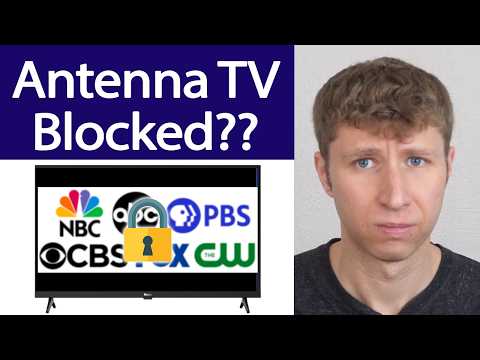
We have less than 2 years in the united states to fight against the transition of terrestrial television to a subscription service.

https://brokensignal.tv/pages/NAB_to_FCC_Shut_Down_ATSC_1_by_2028.html

#usa #fcc #atsc3 #atsc

NAB to FCC: Shut Down ATSC 1.0 by 2028 – What It Means for You - Broken Signal

The NAB wants ATSC 1.0 shut down by 2028 and a full nationwide switch to NextGen TV by 2030. Here’s what that could mean for free TV, encryption, and your equipment.

Broken Signal

you won a know what I really fuckin hate? #atsc-3.0 #atsc . I am an analog guy. for example, I will not trust #weather data from the internet. I am a guy who likes to flip on my frs walky to the NOAA weather channel, and get my weather from the good oll NOAA. or, I'll get it, if not available, from AM radio stations.

I also have a TV an tenna that gets me all my channels, from NBC, to the criminal justice channel, to court TV. and I will absolutely stand against atsc. first off, OTA is hard to encrypt on its own. the NSA proved that with a5/1 when they racked that OTA encryption several years ago. second, many consumers, including (but not limited to myself) do not have the hardware needed to support atsc3 channels. and third, you shouldn't have the right to fucking tell me when I can watch something. weather i'm connected to the fucking internet or not shouldn't matter. personally, I equate it to the online safety act but for TVs. also, I know people who live in the middle of nowhere. they can't get internet and don't have the ability to get starlink, whatever reason that may be. #fcc #atsc #atsc-3.0 #brodcasting #tv #television . cc: @ChrisDuffley @lonseidman

Is it possible to overboost #ATSC signal into the #PVR2250 card?

If anyone has a line on a free-or-near-free source of flatscreen LCD monitors with ATSC antenna connections, please do let me know. Would like to build a little ‘over-the-air’ TV monitoring studio.

These little LG 24LJ4540s are perfect.

Two dozen of them would be ideal but 12 would be a good start.

#build #ATSC #OTA #TV #Media #MediaMonitor #VIU
https://www.amazon.com/lg-electronics-24lj4540-24-inch-model/dp/b01n2z17ms

Amazon.com: LG Electronics 24LJ4540 24-Inch 720p LED TV (2017 Model) : Electronics

Buy LG Electronics 24LJ4540 24-Inch 720p LED TV (2017 Model): LED & LCD TVs - Amazon.com ✓ FREE DELIVERY possible on eligible purchases

✨ 💖💕🌹💐💖 💙💜💖🦋🌺💜🎼 🎶 🎸 Now playing Movie - Dil Se 🛍️ 🌑 🔔 48kHz ATSC version 🎹 📚 📖 🎻🎻 🎼 🎶 ✨ 💖💕🌹💐💖 💙💜💖🦋

#NowPlaying #movie 🎶 #Retro #drama 💫 #LegacyMovie #ATSC

Nothing like having to tell your tuner to rescan because #ATSC tuners are too smart to just lock onto anything and show whatever you got, but too stupid to figure out where the channels are on the fly...

And #ATSC3 aka #NextGenTV is 100% horseshit and I'm kinda glad to see the viewing public just straight up reject it and the DRM that comes with it.

#Television

#TV-signal based #BPS tested as fallback for #GPS — digital TV infrastructure could come to the rescue if #satellites are compromised
Broadcast Positioning System (BPS) works by adding an #ATSC frame to output, and this will usually provide timing accuracy to 100ns, which is good but not quite as good as GPS (~10ns). However, for BPS positioning, you will need to be in signal range of four transmitters, and even then, accuracy will be in the order of a 100-meter radius.
https://www.tomshardware.com/service-providers/tv-signal-based-bps-tested-as-fallback-for-gps-digital-tv-infrastructure-could-come-to-the-rescue-if-satellites-are-compromised
TV-signal based BPS tested as fallback for GPS — digital TV infrastructure could come to the rescue if satellites are compromised

Broadcast Positioning System (BPS) replaces satellites with ATSC 3.0 digital TV signal data.

Tom's Hardware

"The FCC is quietly contemplating a fundamental restructuring of all broadcasting in the United States, via a new DRM-based standard for digital television equipment, enforced by a private “security authority” with control over licensing, encryption, and compliance. This move is confusingly called the “ATSC Transition” (ATSC is the digital TV standard the US switched to in 2009 – the “transition” here is to ATSC 3.0, a new version with built-in DRM).

The “ATSC Transition” is championed by the National Association of Broadcasters, who want to effectively privatize the public airwaves, allowing broadcasters to encrypt over-the-air programming, meaning that you will only be able to receive those encrypted shows if you buy a new TV with built-in DRM keys. It’s a tax on American TV viewers, forcing you to buy a new TV so you can continue to access a public resource you already own.

This may not strike you as a big deal. Lots of us have given up on broadcast and get all our TV over the internet. But millions of American still rely heavily or exclusively on broadcast television for everything from news to education to simple entertainment."

https://www.eff.org/deeplinks/2025/05/fcc-must-reject-broadcast-drm

#USA #Trump #FCC #Broadcasting #DRM #TV #Encryption #ATSC

The FCC Must Reject Efforts to Lock Up Public Airwaves

President Trump’s attack on public broadcasting has attracted plenty of deserved attention, but there’s a far more technical, far more insidious policy change in the offing—one that will take away Americans’ right to unencumbered access to our publicly owned airwaves. The FCC is quietly...

Electronic Frontier Foundation

@lonseidman posted this :

Public Knowledge, Access Humboldt, Consumer Reports, Electronic Frontier Foundation, Media Council Hawaii, and the Open Technology Institute at New America file an extensive brief on the ATSC 3.0 transition docket with strong arguments against DRM encryption: https://www.fcc.gov/ecfs/document/105071750416733/1

That's a long document so I turned to NoteGPT for a summary. This is what it produced. It's still a bit long bit it hits the high points. The entire document is worth reading but I know most people won't read anything that long. Hopefully Lon will do a video about this (on his LonTV YouTube channel) but for now this may be helpful.

Summary

The comments submitted by a coalition of advocacy groups, including Public Knowledge, Consumer Reports, and the Electronic Frontier Foundation, to the Federal Communications Commission (FCC) outline significant concerns regarding the National Association of Broadcasters’ (NAB) petition to mandate a transition from the ATSC 1.0 to the ATSC 3.0 broadcasting standard. The coalition argues that the transition prioritizes broadcaster profits over public interest and threatens access to vital information, particularly for vulnerable and marginalized communities. They claim the proposal relies on Digital Rights Management (DRM), which could lead to privatization of public airwaves, increased consumer costs, and unnecessary electronic waste. The coalition emphasizes that any transition should ensure universal and equitable access, safeguard consumer rights, and incorporate strong public interest obligations, such as enhanced emergency alert systems and accessibility features. The comments call for the rejection of the NAB petition until clear safeguards addressing the concerns raised are implemented.
Highlights

🚫 Disenfranchisement Risks: The NAB’s ATSC 3.0 proposal may marginalize low-income and vulnerable communities by requiring expensive new equipment.
🔒 Privatization of Airwaves: The transition may privatize public airwaves, introducing barriers to access through DRM.
🌍 Environmental Concerns: A forced upgrade to ATSC 3.0 may lead to widespread electronic waste from discarded older devices.
💰 Consumer Burden: The cost implications of transitioning to ATSC 3.0 disproportionately affect consumers, particularly low-income households.
⚠️ Emergency Alerts: The proposal risks compromising emergency alert systems, especially in times of crisis.
📡 Public Interest Obligations: New broadcasting standards must include mandatory enhancements for emergency alerting and accessibility.
🏛️ First Amendment Violations: DRM restrictions threaten fair use rights and could ultimately infringe upon First Amendment protections.

Key Insights

📉 Consumer Costs: The NAB proposal raises concerns about increased consumer costs related to upgrading to ATSC 3.0, which may disadvantage those who cannot afford new devices. Studies indicate that ATSC 3.0-capable TVs are significantly more expensive than their predecessors, solidifying barriers to equitable access. This disparity could widen existing digital divides, particularly among rural, low-income, and elderly populations reliant on free over-the-air broadcasting.

🔄 Digital Rights Management (DRM): The incorporation of DRM into ATSC 3.0 could lead to a streamlined control mechanism that effectively privatizes the previously public domain of broadcasting. This shift may result in broader implications for the way content is accessed and shared, as users often face restrictions that hinder lawful sharing and consumer rights established by copyright law. By conditioning access to content on private approval, the value of public spectrum is fundamentally undermined.

♻️ Electronic Waste: The forced transition to ATSC 3.0 could lead to substantial environmental consequences, such as increased electronic waste from discarded older devices that would no longer be operable. The environmental impact disproportionately burdens low-income households, which may not have the means to invest in new hardware, leading to both financial and ecological concerns.

📡 Mandatory Public Interest Standards: The comments advocate for robust and mandatory public interest obligations tied to ATSC 3.0, including enhanced emergency alert systems and accessibility features for disabled populations. Such standards are essential to ensure that technological advancements genuinely serve the public and do not merely benefit private interests.

👥 Impact on Marginalized Communities: The transition poses significant risks for marginalized communities, many of whom rely on broadcast television for essential services. The petition could disenfranchise these groups, creating a tiered system of access based on the ability to pay for new technology.

⚖️ First Amendment Concerns: The introduction of DRM in ATSC 3.0 raises significant legal questions about free access to public airwaves, particularly concerning fair use rights guaranteed by the First Amendment. This dynamic challenges consumer rights and could foster an environment that stifles innovation and expression, undermining the very principles that underpin democratic discourse.

🔍 Oversight and Transparency: There is a pressing need for clear rules and safeguards regarding how data collected through the ATSC 3.0 return path can be used, outlining permission processes, the extent of data collection, and the types of disclosures required. The lack of current federal regulations can lead to consumer surveillance under the guise of service enhancement, highlighting the importance of consumer privacy regulations in the new broadcasting landscape.

In summary, the coalition’s comments critique the NAB’s transition proposal for ATSC 3.0 as fundamentally flawed without robust regulatory protections to ensure that public interests are prioritized. The transition’s potential negative implications—ranging from disenfranchisement of marginalized groups to environmental concerns and First Amendment rights—underscore the need for careful consideration and oversight by the FCC before making changes to the broadcasting standard. The ongoing battle for equitable access to communication services is crucial, especially as technology evolves and new infrastructures are introduced.

#ATSC #ATSC3 #FCC #NAB #DRM #Television #TV #USA #EFF #Technology

ECFS

Federal Communication Commission Electronic Comment Filing System

I've been interested in doing ATV for years. This article is interesting. https://www.nuand.com/forums/viewtopic.php?t=3503 I have met Clayton in person as he's a local ham. Neat.

#AmateurRadio #HamRadio #ATSC #ATV

ATSC Transmitter - Official bladeRF forum