Education & Knowledge
What would happen if you photographed someone 80 light-years away?

What would happen if you photographed someone 80 light-years away?
#JamesWebb #Space #Telescope (#JWST) Reveals That Most #Galaxies Rotate Clockwise This preferred direction of spin might be due to one of two reasons: either our entire universe exists in a #blackhole, or #astronomers have been measuring the universe’s expansion incorrectly https://www.smithsonianmag.com/smart-news/james-webb-space-telescope-reveals-that-most-galaxies-rotate-clockwise-180986224/
“Efficiency of turbulent reacceleration by solenoidal turbulence and its application to the origin of
radio mega halos in cluster outskirts” by K. Nishiwaki, Brunetti, Vazza & Gheller.
https://arxiv.org/abs/2312.01120
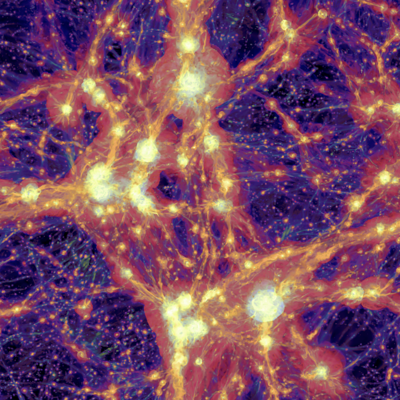
It is a new sophisticated exploration of the evolution of relativistic electrons in the vast volume of galaxy clusters, and it uses a cosmological MHD simulations to make a sense of recent fascinating radio observations.


Recent radio observations with Low-Frequency Array (LOFAR) discovered diffuse emission extending beyond the scale of classical radio halos. The presence of such mega halos indicates that the amplification of the magnetic field and acceleration of relativistic particles are working in the cluster outskirts, presumably due to the combination of shocks and turbulence that dissipate energy in these regions. Cosmological magnetohydrodynamical (MHD) simulations of galaxy clusters suggest that solenoidal turbulence has a significant energy budget in the outskirts of galaxy clusters. In this paper, we explore the possibility that this turbulence contributes to the emission observed in mega halos through second-order Fermi acceleration of relativistic particles and the magnetic field amplification by the dynamo. We focus on the case of Abell 2255 and find that this scenario can explain the basic properties of the diffuse emission component that is observed under assumptions that are used in previous literature. More specifically, we conduct a numerical follow-up, solving the Fokker--Planck equation using a snapshot of a MHD simulation and deducing the synchrotron brightness integrated along the lines of sight. We find that a volume-filling emission, ranging between 30 and almost 100% of the projected area depending on our assumptions on the particle diffusion and transport, can be detected at LOFAR sensitivities. Assuming a magnetic field $B\sim0.2μ$G, as derived from a dynamo model applied to the emitting region, we find that the observed brightness can be matched when $\sim$1% level of the solenoidal turbulent energy flux is channeled into particle acceleration.
If you want to browse a (growing) collection of media reports and reactions 📰🖥️🎙️in various languages about #ESAEuclid, we are curating a list on our website.
We have articles ranging from outlooks, to (pre)launch 🚀 reports to first light 💡. So far.
👉 https://www.euclid-ec.org/public/media-response
#ESA #DarkEnergy #DarkMatter #astrodon #astrononomy #space #cosmology
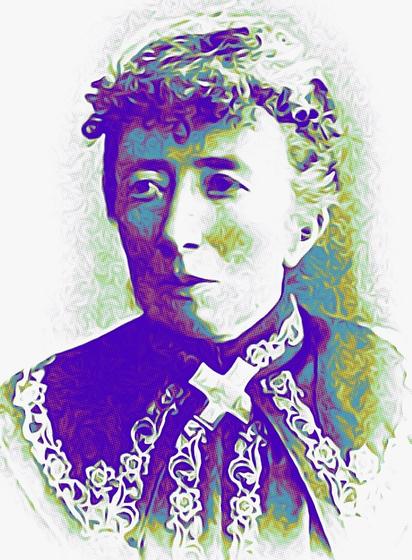
A pioneering Irish woman in the field of #Astrononomy was born #OnThisDay 180 years ago.
#WomenInScience #IrishHistory #OTD #HerStory #IrishWomen Mastodaoine
https://www.irishstewpodcast.com/blog/otd-birth-agnes-mary-clerke-1842
Grüner #Komet kommt der #Erde nahe
#astrononomy

Am Nachthimmel ist derzeit ein besonders spektakuläres Phänomen zu beobachten: ein grünlich schimmernder Komet, der an der Erde vorbeizieht. In der Nacht auf morgen ist er der Erde am nächsten. Weil er jetzt auch seine größte Helligkeit erreicht, kann man ihn derzeit besonders gut sehen – sofern das Wetter mitspielt.


This photo I took with my trusty Celestron C9.25" 2350mm SCT rather than my refractor. The darker areas of the Lunar surface are called "maria" or "seas" (e.g. "Sea of Tranquility") because long ago, people thought they were oceans. This particular one is "Mare Imbrium" or "Sea of Rains".

 HistoPol (#HP) 🏴 🇺🇸 🏴
 franco_vazza
 Euclid Consortium
 Irish Stew Podcast
 Fred_S_at (main)
 Sue Robinson
 Paige1🏳️⚧️ 🏳️🌈🔭📖🌹🌌
 Jake 🇺🇸 🇵🇱