Historical Armies – Army of King Tomislav

Baptized Croatia musters as many as 60 thousand horse and 100 thousand foot, and galleys up to 80 and cutters up to 100. The galleys carry 40 men each, the cutters 20 each and smaller cutters 10 each. This great power and multitude of men Croatia possessed until the time of Prince Krasimer. But when he was dead and his son Miroslav, after ruling for four years, was made away with by the ban Pribonias, and quarrels and numerous dissentions broke out in the country, the horse and foot and galleys and cutters of the Croat dominion were diminished. And now it has 30 galleys and *** cutters, large and small, and *** horse and *** foot.

Above is the passage from De Administrando Imperio, by Roman Emperor Constantine VII. It is probably the only direct source for military strength of Tomislav’s Croatia we have, and had been long a subject of debate. Generally speaking, the 19th century Romantic Croatian historians had uncritically accepted it, using it to prove the military strength of Tomislav’s Croatia – even though it really requires no proving, considering his achievments could only have been possible with a strong army. But massive military strength apparently shown by Constantine was used to prove that Croatia was a Balkan superpower, something that was followed by 1990s and some of the later Croatian historians. Authors such as Šanjek, Milošević and Ivan Vujčić presented the above numbers as factual.

First historian to comment Constantine’s numbers was Franjo Rački. He did not bring numbers into question, but at first commented that they likely correspond to time of Duke Trpimir before changing his opinion and concluding that they are more likely to time of King Tomislav. Ivan Kukuljević Sakcinski merely used the numbers as-is to estimate population of Tomislav’s Croatia as being anywhere from 1 600 000 and 2 000 000 people. Vjekoslav Klaić considered Constantine’s numbers realistic in the context of the territorial extent of Croatian kingdom of the time as well as Tomislav’s military successes. Bulgarian historian M.S.Dironov concluded that Porphyrogenetus’ data referred to period of Tomislav’s rule when he had integrated Bosnia, or at least its larger, western part, into Kingdom of Croatia. Slovene historian Lj. Hauptmann does not bring the numbers into question at all, but merely concludes that they refer to the time after year 925. G.Manojlović spent a lot of time and space trying to justify Porphyrogenetos’ unusually large numbers. He concluded that Porphyrogenetos’ data was based on an older document due to usage of the present time, and also that he never included data for numbers of Croatian army after the half of 10th century, despite intending to. He also concluded that the numbers related to king Tomislav. Large number of infantry and cavalry Manojlović attempted to explain by noting that this was not a professional army similar to that of the Byzantine Empire, but rather a gathering of all military-capable males under banners of their chiefs. He also believed that numbers Constantine had provided included not only troops of actual Kingdom of Croatia, but also those of the Duchy of Neretva, as well as the Serbs whom Tomislav had sheltered from extermination in Croatia following Serb defeat against Bulgaria. Thus he concluded that the numbers presented included all areas under Tomislav’s leadership and not just Croatia itself. F Šišić uncritically accepts Porphyrogenetos’ numbers, merely commenting that they had made Croatia a major military power of the time, as does G Novak.

Overall, numbers as presented in the opening paragraph tended to be uncritically accepted until the half of the 20th century.

Conversely, modern-day, predominantly Communist, historians however tended to equally uncritically reject it as worthless propaganda. Bogo Graffenauer first expressed doubt in validity of Constantine’s report in 1950s based on the demographic impossibility of such numbers, and this soon spread to school textbooks. Serbian historian B Ferjančić noted that “Constantine’s numbers are undoubtably exaggerated, as they would assume that Croatia had military force greater than the Byzantine Empire. Yugoslav textbooks such as those of Olga Salzer in 1960 as well as modern (post-2000) Croatian textbooks unequivocally reject Constantine’s data as exaggerations. Petrić-Ravančić textbook decisively refutes accuracy of Constantine’s numbers stating that “… these numbers can in no way be correct, as they would mean that Croatia of the time had military larger than that of the Byzantine Empire itself”. Bekac-Štambak textbook likewise states that numbers are clearly overstated. In modern Croatian historiography, Nada Klaić rejected these numbers as exaggerated as they would require population of over 2 million people, while she accepts Graffenaueur’s assumption that Croatia had had only just over half a million inhabitants. J Lučić and V Košćak however uncritically accept Constantine’s numbers, while Ivo Goldstein and A Nazor spend a lot of time refuting them. Goldstein stated that Constantine’s numbers may be ten times as large as actual numbers.

Goldstein’s argument rests on few main arguments:

  • European states in the 19th century could mobilize at most 7 – 8% of population, and thus medieval state could not support a large number of men under arms.
  • Croatian army of the time was organized akin to Russian druzhina (fellowship, retinue, band).
  • Cavalryman’s equipment was expensive.
  • Relative numbers of 3 cavalrymen for 5 infantrymen which Porphyrogenetos brings is impossible; instead, Goldstein proposes the 1:10 ratio implied by the notes on Ljudevit – Borna conflict in the Annales regni Francorum (ARF).
  • But the last note is actually misrepresentation of historical source by Goldstein. Goldstein presents ARF as stating that Ljudevit had lost 3 000 infantry and 300 cavalry in the fighting in Dalmatia. Even if that were the case, this would in fact imply greater than 1:10 ratio of cavalry to infantry as cavalry is generally better able to escape. But that is not what the source says at all: actual statement is that Ljudevit had lost 3 000 soldiers killed and 300 horses captured. Further, since Ljudevit was clearly still capable of resistance after losing 3 000 soldiers, this implies that both his field army he had led into Dalmatia and especially his overall military were significantly stronger than 3 000 men.

    At any rate, Goldstein’s remarks would produce a military of 16 000 men, of whom some 1 600 would be cavalry and 15 000 infantry.

    Ante Nazor notes that analysis of sources supports the view that early medieval armies in the area of Croatia could not have been very numerous. He bases this on data on demography of medieval Croatia, required expenses of equipping the army described and comparative analysis of multiple sources. He concludes that Tomislav’s army may have numbered some 2 500 “standing” soldiers and overall force of up to 10 000.

    In general, “romantics” uncritically accept various impossibilities while “deconstructivists” negate even the most solidly established truths (with few exceptions such as Ante Nazor). In both cases, historiography is led by politics and propaganda, with nationalist romantic historians seeking to maximize Tomislav’s achievments and the military power of the Croatian kingdom, while Yugoslav Communist historians tend to try and minimize them. Neither group has shown any capacity for actual critical thought and consideration of the historical data nor shown any inclination to try and fit information given by the Emperor into the historical, sociopolitical and geopolitical context which Tomislav’s Croatia existed in.

    So what was the real strength of Tomislav’s Croatia?

    Historical Context

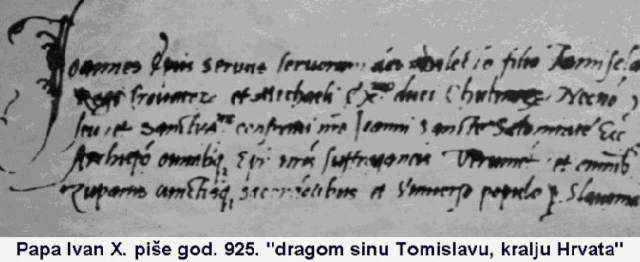
    While Tomislav’s kinghood is contested in some circles (e.g. so-called-historian Ivo Goldstein), letter of Pope John X from 925 clearly states “To dearest Tomislav, King of Croats…”. Thus Tomislav was clearly the first king of Croatia. His kinghood also makes sense in the light of his achievments, as Tomislav had united – for the first time ever – Pannonian and Maritime Croatia into one kingdom (for geographical reference, Pannonian Croatia will have included modern-day Zagreb area and Slavonia, while Maritime Croatia will have included modern-day Lika, Dalmatia, Bosnia and parts of Herzegovina), although Slavonia in reality may have remained a sort of buffer zone between Croatia and Magyaria / Hungary. Tomislav did so after defeating Magyar invasion, having earlier defeated Bulgarian army under Algobotur somewhere near river Vrbas. He was also the first Croatian ruler that was unquestionably independent of Frankish dominion, as until 888. Croatia was still under Frankish overlordship.

    So it is quite clear that a) Tomislav was in fact the king of Croats and b) Tomislav’s Croatia was a strong military power. Unfortunately, this does absolutely nothing to help us answer the question “How strong?”. Magyar invasion was likely just a plundering raid, while victory over Bulgarians was a consequence of an ambush in the mountains of Herzegovina. In neither case will Tomislav have required a massive military force, especially since he will have had advantage of terrain in both cases. Even if – which is doubtful – victory over Magyars was in Slavonia, swampy and forested terrain of the 10th century Slavonia will have given Croatian, predominantly infantry, army a major advantage over mounted Magyars. Fact that Croatian army was active deep in Slavonia can be seen from a warrior burial in Susedgrad near Zagreb. In this grave was found spata K which is typical for 10th century Croatia, while swords of these type were not found at all in the areas surrounding the kingdom. Late type of this sword means that it could only have come from the early 10th century, that is, time of expansion of Tomislav’s Croatia. So while we cannot be certain Tomislav had actually conquered Slavonia, at the very least it was heavily contested between Croatia and Hungary.

    There are multiple arguments for why Constantine’s data may be inaccurate. Two main arguments are as follows:

  • Constantine did not have accurate information due to temporal or physical distance
  • Tomislav was a Byzantine ally, and since Byzantine Empire had many enemies, Constantine had reasons to exaggerate Croatian military power.
  • Thing is, none of these “pass the smell test”.

    The opening paragraph was, as noted, written by the Roman Emperor Constantine VII. Constantine VII Porphyrogenetos was born in 905 AD, crowned in 913 AD and shared a throne with multiple co-emperors until 945 AD, most notably Romanos I Lakapenos (ruled 920 – 944 AD). In 945 AD he finally achieved practically sole rule. Legally, he never ruled alone – immediately upon becoming a sole emperor, he crowned his then-7-years-old son Romanos II as a co-emperor. This makes Constantine a very close contemporary of King Tomislav, as Tomislav was crowned a Duke of Maritime Croatia in 910 AD and was crowned a King of Croatia in 925 AD, reigning until 928 AD at least. Thus Constantine VII will have been 20 years old at the time of Tomislav’s coronation as a king, a situation very different from typical medieval chroniclers who are oftentimes decades or centuries removed from the events they are writing about. And while Constantine’s work was finalized and published in 945 AD, he began writing it in 926 AD, during Tomislav’s reign.

    Work De Administrando Imperio actually never had a title. Name itself was only made up in 1611 AD by the Dutch diplomat and scientist Meursius, but the work was in reality something of a letter and a guide written by Constantine VII for his son and heir Romanos (future Roman Emperor Romanos II). And since Constantine VII was as noted Tomislav’s contemporary, and an Emperor of the state that had at the time the most sophisticated diplomatic and espionage complex in Europe if not wider, he can be expected to have access to factually correct data. Purpose of the work as a guide for a future emperor also precludes the propagandist purpose historians had offered as a reason for the high numbers of Croatian troops described: a work written as an internal guide for one’s own son is not going to have propagandized numbers, unless they are considered factually accurate by the writer.

    Yet number of 160 000 soldiers for Croatia of the time is basically impossible, for several reasons.

    Numbers in Medieval Sources

    When looking at numbers in medieval sources, one has to be careful of several things:

  • innacurate information
  • poetic licence or symbolic meaning
  • context
  • When it comes to context, most important factor is that numbers tend to be one of several types:

  • observational guess achieved by observing an army in the field and assigning it a number
  • census of troops in service
  • prescribed size of the military establishment
  • Of the three, last number is of least use here, simply because medieval Croatia – as typical of the medieval states with the exception of the Byzantine Empire – did not have a an official establishment with prescribed number of troops. In fact, the ninth and tenth century Byzantine Empire was the only European state that did. Treadgold places Byzantine army in 899 AD at 124 000 soldiers and marines and 34 200 oarsmen. All of these were professional soldiers, a situation unlikely in Croatia.

    Census of troops is also useless, as it is not known that medieval Croatia ever carried out such a census before its union with Hungary. In fact, carrying out a census will have been impossible because as stated above, most medieval states did not have a prescribed number of troops and thus military would be in a constant if low-level flux. And even if census had existed, it will have been necessary to first establish whether it lists the entire military or only a portion of it.

    Observational guesses are typically of limited use. These are arrived at by observing an army in the field and assigning a round number – say, 100 000 men. But for large armies, such numbers are usually greatly exaggerated due to normal human tendencies (just as police and the press often exaggerate size of large crowds). Moreover, even if number of any given field army is correct, it still gives absolutely no indication of actual number of troops available to the state. A country with underdeveloped logistics may be able to field only a small field army despite having technically more troops available than a country with better developed logistics.

    In case of Constantine’s text, what he is doing is discussing total size of Tomislav’s army based on his own estimate. So this is not a field army, and it is not a reliable number.

    Demography and Logistics

    Early medieval demographic estimates provide the clearest refutation of the idea that Croatia could have raised so many men. Tomislav’s Croatia was certainly a very powerful state, and after his victories over Magyars / Hungarians and Bulgars almost certainly extended to natural river borders of Drava – Danube – Sava – Drina – Neretva. This means that it had included modern-day Croatia (without Istra), Syrmia and Bosnia, but likely excluded Herzegovina as Duchy of Neretva was likely not under Tomislav’s direct authority.

    • Croatia: 56 594 km2
      • remove Istria County: – 2 813 km2
      • add Serbian Syrmia: + 3 942 km2 (?)
    • BiH: 51 209 km2
      • remove Herzegovina: – 12 188 km2 (?)
    • TOTAL: 96 744 km2

    All and all, a total area of 95 000 – 105 000 km2 is likely. Whether Tomislav however had practical control over Slavonia is uncertain, but in any case majority of population of Croatia of the time was likely in the maritime Croatia (a.k.a. Dalmatia).

    But what about population density?

    We know that medieval Croatia was not a densely populated country. While exact estimates are difficult due to lack of data (especially hard data such as censi and tax records), it is possible to arrive at approximate estimates by using contextual clues. Climate, vegetation and soil conditions are also not well known. Yet through study of sources and comparisons with other areas of Europe it is nevertheless possible to arrive at some estimates.

    Notable here are descriptions of Crusaders who had passed through Croatia in the 11th century. Crusades had passed through Maritime Croatia – today’s Dalmatia and western Bosnia. Specifically, they passed from Senj eastwards (Lika, western Bosnia, Dalmatian highlands). Chronicler describes these lands as being full of hills, forests, large rivers, streams and pastures, and also as being “wet and foggy and almost entirely swampy”. 10th century sources mention swamps in Istra as well, and much if not most of Pannonia was also swampy.

    One also needs to consider that amount of land necessary to support a peasant family was much greater than today. Today, one needs 200 square feet of garden, 200 square feet of fruit trees, 1/4 acre or 10 890 square feet of pasture for a cow and chickens, 500 square feet for pigs (they and chickens can use the same pasture as the cow), 1/2 acre or 21 780 square feet for lamb and goats, 2 acres or 87 120 square feet for meat cows, for a total of 120 690 square feet (2,77 acres / 11 212 m2) of land to feed a family. During medieval times, a peasant household required at least 90 000 m2 to live (Byzantine modios), but by 15th century in Western Europe it could be up to 120 000 m2 (German hufe – 121 406 m2; Hungary – 30 acres = 121 406 m2). Thus, amount of land necessary was some ten times greater. But Croatian population of the time – as with much of early medieval Europe – had only small amounts of actually cultivated land. Most of the food was provided by animal husbandry, that is, livestock farming.

    Going from this, estimates posit that average population density must have been low. How low can be seen from estimates for population density of similarly pastoral areas. V Rogić estimated average density of former Yugoslavia in early Middle Ages as being around 5 people per km2. B Grafenauer estimated population density of early medieval Slovenia at 6 to 8 people per km2. Ancient Germania had density of some 4 to 7 people per km2, which is relevant as we know it had similar living conditions to early medieval Croatia: primarily animal husbandry with very few farms and large areas of land covered by forests and swamps. Density may however have been increased by refugees from Moravia (conquered by Magyars in the early 10th century), but not significantly so.

    So what about numbers?

    During the Carolingian age, eastern Francia (roughly today’s Germany) had some 2 500 000 people at cca 400 000 km2, for density of cca 6,25 people per km2. V Rogić estimated that total early medieval population of the area of former SFRY (255 804 km2) was around 1 000 000 people, for density of cca 3,9 people per km2.

    According to this, in 1 000 AD, Kingdom of France had 7 200 000 people, Hungary and England 1 250 000 people each, Ireland 630 000 and Croatia with Bosnia may have had a total of 698 000 people at a slightly larger surface area of 107 000 – 114 000 km2. This will have given Croatia a population density of cca 6,32 people per km2, compared to 9,59 per km2 for England and some 14 per km2 for France.

    In 900 AD, population will have been some 70% – 90% of population in 1000 AD. This means that Tomislav’s Croatia will have had population density of 4,42 – 5,67 people per km2 at area of 95 000 – 105 000 km2, for total population of anywhere between 420 000 and 600 000 inhabitants.

    To stay as favorable as possible I will herefore use the 90% estimate as well as the maximum (105 000 km2) surface area, leading to a total population of 600 000 people.

    But how does this translate into military?

    Quite logically, in fact. Soldiers need to be trained, equipped and fed – even the local militia. And this requires smiths, cooks, tailors and other specialists. Further, neither women nor children will be used as soldiers by any sane society, nor will be the people too old to fight. What this means is that even for the absolute balls-to-the-wall general mobilization, typically done only by barbarian nomadic societies, maximum proportion of fighting men is somewhere in the 25% range, as in, all of their military-aged males. Extreme military mobilization by settled societies with part-time militia armies (e.g. Roman Republic) could mobilize some 6 – 8% of population, and less militarized states could count on being able to mobilize some 4 – 5% of the population. But these armies were cca 90% infantry. Roman manipular legion had 4 200 infantry and 300 cavalry (93% infantry), and in barbarian armies, proportion of infantry was even greater. Mobilization was typically “take a guy, give him a spear and a shield, and send him to fight”. And in the early middle ages, even the “basic” equipment – shield and spear – was already expensive.

    Cavalry requires much more support than infantry. Horse is expensive, horseman training is also expensive. In order to ensure survival of this already massive investment, ruler will also want to make sure that the cavalryman has adequate protection – metal helmet, hopefully metal armor – which drives up the cost even further. During Charlemagne’s time, equipment of a cavalryman cost some 44 solidi – or some 15 cows, with horse alone costing 3 to 6 cows. Other sources give breakdowns which are even higher, up to 45 cows:

    • metal helmet = 6 cows
    • scale armor = 12 cows
    • horse = 12 cows
    • sword = 7 cows
    • spear and shield = 2 cows

    Thus a minimum was some 40 cows, and even more if one wanted additional equipment such as dagger or greaves. It is consequently obvious that a cavalryman had to be a rich person indeed. Frankish cavalryman had to own at least 12 mansi (plots) of land to be capable of service. As will be seen below, this ratio of 12 plots per cavalryman was nearly identical in the Byzantine Empire, and thus can be assumed to hold true for Croatia as well.

    And when on campaign, horse’s massive food requirements mean that the cavalryman has to have several pack animals as well, as well as the servant or servants. And to provide for all of this, cavalryman will have far larger holdings than a simple infantryman – which is the entire reason why knightly class appeared. Luckily, it is possible to see roughly how much land will soldiers require.

    The closest approximation here is the Byzantine Empire. It was geographically proximate to Croatia, and while its military was professional, basic support requirements for troops do not change that much. And for Byzantine soldier to be supported, one required a lot of land. In the Byzantine Empire of the time, one small farmer owned typically 30 modioi of land (some 90 000 – 100 000 m2). As price was typically 3/4 of nomisma for one modius of first-class arable land, 30 modioi meant 22,5 nomismata.

    Soldiers’ land holdings as prescribed by Constantine VII were as follows:

    • cavalryman = 4 lbs of gold / 288 nomismata (=12,8 farmer plots)
    • infantryman = 50 modii = 1,7 farmer plots

    Nikeforos II prescribed holdings of 12 pounds of gold for a heavy cavalryman (cataphract), though that is less relevant as there are no suggestions Tomislav ever had this type of soldiers in his army.

    I will assume that marines of ships had same holdings as infantry, despite the fact that in the Byzantine Empire marines held four pounds of gold worth of land, same as the cavalry. Since purpose here is to arrive at the maximum number of soldiers Croatia could have possibly raised, and Croatian warships were basically coastal fishing ships, this is not too much of an issue.

    Further, since Croatia of the time was under both the Frankish and Byzantine influence, and equipment will have been similar, this means that values seen above for Byzantine cavalry (which are not cataphracts) and infantry will have been roughly similar for Croatia. It should be noted that in both Francia and Byzantium of the time, armor was worn only by cavalry – infantry had either no armor or else textile armor only. Heavy cavalry, equipped with metal helmet, metal armor for the rider and textile for the horse, lance, sword, dagger and bow, will have been exceptionally rare. Even in the Byzantine Empire, cataphracts numbered some 5% of the army – remainder were 25% light cavalry and 70% infantry.

    So if we take the numbers provided by the translation, the results are as follows:

    • 60 000 cavalry = 240 000 lbs of gold = 768 000 plots
    • 100 000 infantry = 170 000 plots
    • 80 galleys with 40 men each = 3 200 men = 5 440 plots
    • 100 boats with 20 men each = 2 000 men = 3 400 plots

    In total, absolute minimum for the above force would be the equivalent of 946 840 plots of land. Even assuming that the infantry and the marines are peasant militia with only one plot of land each, it is impossible to go below 873 200 plots of land.

    This means that minimum population Croatia will have required to field such numbers is anywhere between 4 366 000 and 4 734 200 people, requiring very nearly modern-day population densities (41,6 to 49,8 people per km2). And the real dealbreaker here is cavalry: anywhere between 81% and 88% of land goes to supporting the cavalry. In fact, while not directly comparable, 15th century Hungary could field some 80 000 mostly light cavalry from population of cca 4 million people – but no infantry. Of these, 16 000 came from the Kingdom of Croatia. And Tomislav’s Croatia was heavily forrested, which means that raising cavalry and especially feeding it on campaign a very difficult if not impossible task. Further, while general military obligation providing infantry was definitely not impossible for Tomislav’s Croatia, fact that it was a monarchy and with strong cavalry indicates that the process of class stratification was already underway, which may well have limited the number of available infantry as well.

    It is undeniable that Tomislav’s Croatia did have strong cavalry. This is proven by textual records as well as the spurs found in burial sites and pictorial evidence. But “strong” is a relative word, and as can be seen from the discussion of environmental factors, conditions in Croatia of the time were hardly favorable for large-scale horse breeding. This is especially true for the mountainous littoral Croatia – the most densely settled area of early medieval Croatia. For comparison,Croatia in 1890 had 2 186 410 people and 248 053 horses (1 horse on 9 inhabitants) while in Bosnia in 1879 ratio was approximately one horse for every 7 inhabitants and in Dalmatia in 1869 only one horse for every 27. Average for all three areas was one horse for 9 inhabitants, but Bosnian average may well be assumed for Bosnia and Dalmatia. Thus cavalrymen will have been relatively rare, and likely limited to vassals and escorts of ruler and more notable individuals. In Anglo-Saxon terminology, cavalrymen would be equivalent to huscarls while infantry will have been equivalent to fyrd. Because Tomislav’s cavalry was very well equipped however – stirrups had been found in Croatia as early as 7th century, compared to 8th century in France and 10th century in England. Most likely cause of this was Avar influence.

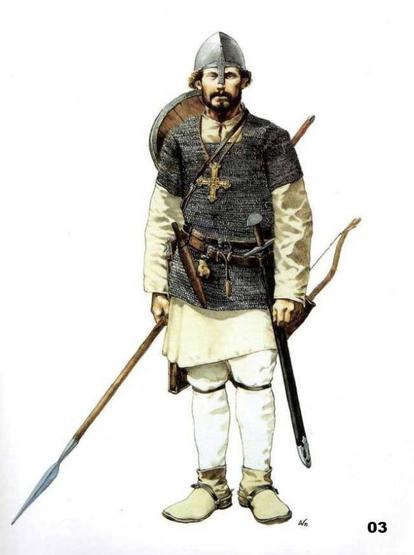
    10th century Croatian cavalryman

    Military organization of Tomislav’s Croatia also makes a cavalry-heavy army unlikely. Specifically, Croatia of the time was organized into županije (counties) ruled by župan (count), who was a royal appointee. There were six counties during time of Trpimir, and 11 at least during Tomislav’s time – Constantine Porphyrogenetus actually lists the counties which he considers part of Croatia: Hlijevana, Cetina, Imotski, Plivanj, Pesent, Primorje / Coastal, Bribir, Non, Knin, Sidraš, Nin, Krbava, Lika, Gacka (note tha Krbava, Lika and Gacka were technically not counties but were ruled by ban of Croatia). He also specifies that Croatia begins at Cetina and stretches until Labin in Istra.

    Counties were centered on strong fortifications such as Klis, built on raised land which dominated their surrounding, controlling roads and mountain passes. Each county was ruled by a count who also led county’s armed forces, and there was a separate area ruled by ban (viceroy) who had his own army. This setup, while based around militia as opposed to professional troops, is curiously similar to Byzantine army of the time, which was organized into provincial territorial armies (themata) and the professional standing army commanded by the Emperor (tagmata). Pop Dukljanin (Presbyter Diocleas) states that each county had a count and a captain, with captain leading 100 men, while viceroy’s area had 7 captains. With 11 counties and viceroy’s area this makes for 18 captaincies and thus a maximum of around 1 800 somewhat professional soldiers (likely cavalry). Even if we assume the king had a separate royal army equal in size to viceroy’s army, number of professional / career soldiers / cavalry still only reaches 2 500 men.

    There are issues with these numbers. Captains (satnici, stotnici) only first appear in Croatian sources in the 11th century. While they may have existed earlier, that is necessarily only speculation. Nor is it clear that the Emperor had listed all of Croatian counties. Porphyrogenetos does not mention the organization of area between Velebit and Raša, which can be assumed to have some military force at least.

    Yet cavalry numbers are definitely not small for the 10th century “standing” army, as later documents show that cavalry was only very few in number. Pacta Conventa, a likely 13th century document that may or may not reflect the actual state in 11th century, states that each Croatian tribe was to equip at least 10 armored cavalry at its own expense. Duke of Krk, Bartul, received Modruša county with the obligation of raising 10 men-at-arms (armored cavalrymen) for campaigns within the borders of the Kingdom of Croatia, and 4 cavalrymen outside it. In 1224, Klokok tribe in Gorska county received royal freedoms alongside the obligation of equipping 15 armored cavalry and 100 infantry. Golden Bule to Gradec in 1242 obliged the city to provide 10 fully armed soldiers (meaning heavy cavalry). In 1293, viceroy Pavle Šubić was, due to his honor of viceroy, obliged to provide 500 soldiers. This was the primary expeditionary army, as infantry only really served in the local defense.

    Thus, traditionally accepted number of troops for Tomislav’s Croatia is impossible. At the very least, infantry ought to outnumber cavalry far more than it does in the sources. Further, while reliance on the peasant militia for infantry may have given Croatia relatively large numbers of recruitable army, only a small portion of it would be actually useful for deployment on campaign as peasant infantry could not be marched for significant distances. Essentially, any “field” army would consist of a cavalry core plus however many infantry could be collected from the immediate area.

    What this means is that numbers of Tomislav’s army, and especially those of its cavalry component, have to be significantly reduced.

    Since population of Tomislav’s Croatia cannot plausibly go above 600 000 people and 120 000 plots at most, simple arithmetic reduction while keeping proportion will lead to a military of at most 8 000 cavalry, 16 000 infantry and 1 600 sailors. Taking the above data for number of horses in 1890 however, conclusion could be drawn that there may have been some 70 000 – 85 000 horses in total in Tomislav’s Croatia. Since cavalryman required more than one horse, and war horses were in any case a minority of all horses, this again confirms that number of cavalrymen in Tomislav’s army must have been in single-digit thousands.

    Thankfully, reduction does not need to be, and cannot be, proportional. Few if any tenth century European armies had anywhere near close to a third of cavalry as proportion of the army (sole exception being the Byzantine Empire, at 20 – 25%).

    Cutting cavalry to 1 800 – 2 500 will allow the number of infantry to be raised to some 90 000 men, which is a far more plausible relation. Basic overview would be thus:

    • 120 000 total plots
    • 21 600 – 32 000 plots cavalry
    • 95 680 – 85 280 plots infantry
    • 2 720 plots sailors

    From the above, Tomislav’s Croatia may have had:

    • 1 800 – 2 500 cavalry
    • 95 680 – 85 280 infantry
    • 1 600 sailors
      • 20 galleys with 40 men each
      • 40 boats with 20 men each

    or a total of 90 000 – 100 000 troops at its maximum population. At minimum population of 420 000 men, total number of soldiers may have been as low as 60 000. Compared to the numbers usually cited for Constantine’s work (162 500 total), these values are between 37% and 62% of the total.

    Situation is even worse since Constantine does not include Slavonia as part of Tomislav’s Croatia. This makes sense since while Tomislav had definitely beaten the Magyar / Hungarian invasion, it is not clear whether he could have expanded his authority until Drava. Considering the likely very lightly populated nature and difficult swampy terrain of the area between Sava and Drava, it is likely that neither Magyars nor Tomislav actually fully incorporated Slavonia into their states, but instead left it as a sort of “no mans land” or a buffer zone between the two.

    Field army, of course, will have been smaller. Considering the factors seen above we can assume that the maximum deployable army will have been entire cavalry + infantry of one to two counties. This makes the field army total as some 1 800 – 2 500 cavalry and maybe 7 000 – 6 000 infantry. Cavalry could be brought down further, making maximum field army some 900 – 1 200 cavalry and 7 000 – 6 000 infantry, far closer to actual early medieval field armies. For comparison, Frankish army that had defeated the Magyars at Lechfeld in 955 AD likely numbered only 7 000 – 8 000 men.

    But above are just principles. While I am confident that the framework established above is accurate, it can only ever set principles to how many soldiers Croatia could have had and thus produce a context and framework for discussing the actual sources. Closer look at actual source is required to see what more likely the matter.

    Constantine Porphyrogenetos – De Administrandi Imperio

    As noted earlier, Constantine Porphyrogenetos’ De Administrondo Imperio (DAI) is the sole real source for numbers of military of Tomislav’s Croatia, but contextual clues show that the reading shown in the first paragraph cannot be considered reliable. But where other historians had predominantly ended up rejecting the numbers outright, Živković believes that Constantine’s numbers are completely reliable and precise… when read properly. Specifically, he believes that numbers had been fundamentally misread.

    While contextual clues are a key tool for historians, one should not rely on them too much. As Warren Treadgold noted in his discussion with John Haldon, “faith in superiority of assumptions over evidence could be used to reject any source or sources”. Živković’s reinterpretation solves this problem by offering interpretation which brings DAI text to a point where it actually agrees with the various contextual considerations discussed previously.

    Problem with De Administrando Imperio is that it is preserved in only one medieval manuscript, and that one is not the original either. Copyist errors are common in the hand-written manuscripts, and especially so in manuscripts which a) utilized Byzantine relatively clumsy numerical system and b) had been copied by people outside the culture they had been originally written in. In fact, Živković notes that not one author had actually bothered to take a look at the original document before making his argumentation.

    The passage in question is as follows:

    Ὅτι ἡ βαπτισμένη Χρωβατία ἐκβάλλει καβαλλαρικὸν ἕως τῶν ξ’ χιλιάδων, πεζικὸν δὲ ἕως χιλιάδων ρ’ καὶ σαγήνας μέχρι τῶν π’ καὶ κονδούρας μέχρι τῶν ρ’ καὶ αἱ μὲν σαγῆναι ἔχουσιν ἀνὰ ἀνδρῶν μ’, αἱ δὲ κονδοῦραι ἀνὰ ἀνδρῶν κ`, αἱ δὲ μικρότεραι κονδοῦραι ἀνὰ ἀνδρῶν ι’

    Typical Croatian translation reads thus:

    Krštena Hrvatska postavlja konjaništva do 60 tisuća a pješadije do 100 000 i sagena do 80 i kondura do 100. Na sagenama imaju po 40, na kondurama po 20 a na manjim kondurama po 10 ljudi.

    Christian Croatia sets cavalry up to 60 thousand and infantry up to 100 000 and sagenas up to 80 and conduras up to 100. On sagenas they have 40 men each, on conduras 20 men each and on smaller conduras 10 men each.

    According to Živković, however, transcription and its translation are an issue. First and greatest problem is the word χιλιάδων after the letter ksi (ξ’), that is the number 60. He believes that the word does not denote thousands at all. And he is correct because the Paris manuscript actually has two alphas (ξ’ ᾷᾳ) in the place of thousands. Moravcsik transcribed the shorthand as χιλιάδων, but older editions of DAI show that editors had transcribed it in many various ways. Dubrovnik researcher A Banduri, who did have access to the original, simply left the shorthand out. Bekker and Rački did not leave it out, but translated it as “thousands”.

    Yet if ᾷᾳ really does stand for “thousands”, that would be the unique case in this manuscript. At no other place is the number “thousand” shortened as “ᾷᾳ”. In fact, when writing “thousand” the writer is using exclusively χιλιάς , and thus ᾷᾳ is never and cannot be used for the word thousand. Several notes at the margins also imply that the transcriber had issues understanding the original he was transcribing. Živković thus interprets the ᾷᾳ as meaning “ἀλλάγια” (allagia, allagion). This is a Byzantine military term which in general can mean a shift or rotation, but by the 10th century was being increasingly used as an alternate name for cavalry bandon. But what size is the bandon?

    As with any military unit, size of bandon had changed over time. Yet the sources temporally closest to Tomislav’s time are remarkably consistent in the size of the allagion. The Praecepta Militaria of Emperor Nikephoros II Phokas (963 – 969) has the basic cavalry unit being bandon of 50 men, and same size of the bandon is repeated in the Taktika of Nikephoros Ouranos (980 – 1010). Campaign Organization and Tactics states that cavalry units should number up to 300 men, however, and Taktika of Leo VI (895 – 908) states the size of 250 to 350 men for bandon. The “imperial” allagion could have been far larger, even up to the stated 300 man size.

    From the above, it can be concluded that 60 allagia numbered most likely a total of 3 000 cavalry – but they could have also numbered 9 000, 15 000, 18 000 or even 21 000 men.

    So what about the infantry?

    Expression “πεζικὸν δὲ ἕως χιλιάδας ρ`” can only be read as “infantrymen up to / around 100 000”. Yet as shown in the previous demographic discussions, such number of infantry is possible only as an extreme upper end, and only if cavalry numbers significantly less than 3 000. Using a maximum of 120 000 plots of land with 3 000 cavalry (36 000 – 38 400 plots) and 1 600 sailors (1 600 plots?) would leave infantry with a maximum of 82 400 plots of land, and this is ignoring the possibility that some soldiers may have had more land than strictly necessary. Having 100 000 infantry would leave only 18 600 plots for cavalry, which would limit their numbers to no more than 1 500 or so. And if infantry had truly numbered around 80 000, would not Constantine had written so (“infantrymen up to / around 80 000”).

    Živković concluded that the problem was again in the transcription. Transcriber already mixed up ρ and κ in the transcript, which means that the most likely solution is that instead of ρ᾿ (100) the text had originally read κ᾿ (20). F Rački made nearly the exact same mistake some eight centuries later, mixing up the number of sagenas (80) with the number of sailors (40):

    “takova (Hrvatska) mogaše diognuti na noge 100.000 pješakov, 60.000 konjanikov, a na moru 5.200 brodarov, koji oboružahu 40 velikih a sto manjih brodov.”9

    such (Croatia) could raise 100 000 infantrymen, 60 000 cavalrymen, and at sea 5 200 sailors who armed 40 large and 100 small ships.

    Živković also believes that the “reading” of Croatian naval capacity is accurate. And it really has no reason not to be. Eighty galleys at 40 men each and 100 cutters at 20 men each represents a total of 5 200 men. For comparison, Byzantine dromond carried either 108, 120 – 160 or 300 men depending on the size. At this size, Croatian galleys would be closest to smaller of the Viking longships (karvi – 6 to 16 benches = 12 to 32 rowers; snekkja – 20 benches = 40 rowers) and much smaller than the larger longships (skeid or dreki, at 30 benches / 60 rowers and above). By comparison, 959 Byzantine navy had 34 200 oarsmen and 8 000 marines, or 42 200 men in total. This incidentally made it have 0,35% of Empire’s population, where 1 600 men of Croatian navy would be either 0,38% of 420 000 population or 0,27% of the 600 000 men figure. Even 5 200 men of the navy would not be impossible however, remembering that these were mostly not professional soldiers.

    Conclusions

    Number of 165 000 soldiers for Tomislav’s Croatia is plainly impossible. Kingdom did not have either the population density nor organization capability required to raise such an army, even if we assume that the entire army consisted of lightly equipped peasant levies – which in itself is very different from what Constantine states. How large exactly the number of soldiers available was is far more difficult to estimate, but a combination of multiple sources (De Administrando Imperio and various other sources and contextual clues) can lead to a reasonably accurate conclusion.

    Overall, most likely strength of Tomislav’s Croatia is:

    • 3 000 cavalry (60 allagia)
    • 20 000 infantry
    • 5 200 sailors (80 galleys and 100 cutters)

    Sources

    Proba_93-146str_2crop.pdf (srce.hr)

    458218 (srce.hr) or link

    #armies #army #Croatia #croatianArmy #croatianKingdom #europe #kingTomislav #kingdomOfCroatia #militaryHistory

    Sizes of Armies in the Hungarian-Ottoman Wars

    This is list of sizes of field armies and military establishments alike during the Hungarian-Ottoman wars, from their beginning in the 14th century until early 17th century.

    Hopefully it will provide a good overview of how large armies advanced medieval states could field. Still, two factors should be noted. Firstly, records will naturally be incomplete or uncertain. Nevertheless, while exact numbers cannot be established with certainty for most cases (with few exceptions), they should provide a general ballpark. Secondly, Hungary and Ottoman Empire were two fundamentally different states. Not only was the Ottoman Empire much larger, but it was also much more centralized and “modern” than the feudal Hungary. As a results, Ottomans found it easier to field large, organized armies, even during the early period when “raw” resources of two states were comparable. Of course, as the time progressed and the Ottoman Empire expanded in all directions, Hungary found itself increasingly outmatched. This was only gradually reversed during the Habsburg era, but that period goes way beyond the Middle Ages or even early modernity.

    Sources:

    Vjekoslav Klaić, Povijest Hrvata

    Tamas Pasafalvi – From Nicopolis To Mohacs

    • 1397: all landowners appear in person as well as equipping one mounted archer per 20 peasant plots
    • 1396, Battle of Nicopolis
      • Crusader army
        • Burgundian contignent: 1 000 men-at-arms, ~60 archers, ~100 crossbowmen (est.)
    • 1410s, Sigismund’s army:
      • border troops: 2 200 lances (cca 2 200 men at arms, 4 400 – 6 600 light cavalry)
      • second line: 450 lances (cca 450 men-at-arms, 900 – 1 350 light cavalry)
    • 1411, November 11, Sigismund’s army against Venice: 10 000 – 12 000 cavalry
    • 1412, December 12, Sigismund’s army in Weiden: 3 000 cavalry
    • 1414, Ottoman assistance to Hrvoje Vukčić in Bosnia: 30 000
    • Ottoman raids on Croatia in 1414, 1415
      • Venetian assistance to Ottomans 1415: 600 archers
    • 1419, July, Venetian siege of Trogir: 500 infantry
    • 1423 Ottoman raid: 15 000 men
    • 1425. October, Ottoman raiding party: 15 000
      • note: destroyed by Sigismund in Bulgaria
    • 1426, May, Ottoman raid on Bosnia: 4 000
    • 1432/1433, Sigismund’s organization of Hungarian military
      • 80 000 cavalry in total
        • 60 000 towards the Turks
        • 20 000 towards the Hussites
      • banderium size: 500 men
    • 1433, March, decree on defense
      • general mobilization – tempore universalis exercitus generaliter proclamati
      • prelates, barons and rich nobles provide their banderia
      • on top of noble banderiums, all nobility is to provide one well-armed and armored cavalryman for each 33 serfs
    • 1434, Talloci’s campaign in Bosnia: 1 117 lances / 4 500 men
    • 1435, August, Ottoman raid in Bosnia: 1 500 men
      • arrived at request of Hrvoje Vukčić
    • Ottoman army destroyed in 1437: 40 000 men
    • 1439, June, Ottoman invasion of Serbia: 130 000 men
    • 1439, August, Hungarian army: 25 000 men
    • 1442, March, Ottoman raid into Transylvania (Mezid Bey)
      • Ottoman army: 16 000 cavalry
    • 1442, Vasaq (raid)
      • Ottoman Army: 80 000 men
      • Hungarian Army: 15 000 men
    • 1443, May, reported Ottoman garrisons
      • 2 000 Ottoman cavalry near Sofia
      • 4 000 Ottoman and Serbian cavalry around Smederevo
    • 1443, August, start of John Hunyadi’s Long Campaign
      • Hungarian Army
        • 15 000 men
          • 10 000 Hungarian
          • 5 000 Serbian by Despot Branković
        • 600 battle wagons
    • 1443, November, Ottoman garrison in Balkans: 20 000
    • 1444, Varna (campaign)
      • Hungarian Army: 20 000 total
        • ~15 000 Hungarian cavalry
          • 8 500 heavy cavalry
        • 4 000 Wallachian cavalry under Dracula
        • few hundred Hungarian infantry
        • 100 war wagons
      • Ottoman Army
        • 30 000 – 35 000 Sipahis
        • 10 000 Janissary infantry
        • ~10 000 Akinci light cavalry and Azab light infantry
    • 1448, Kosovo (campaign)
      • Hungarian Army: 32 000 total; 24 000 Hungarian, 8 000 Wallachian
        • 15 000 cavalry
        • 4 000 puskars (handgunners)
      • Ottoman Army: 50 000 total
        • 10 000 light infantry (Azabs)
    • 1453, Ottoman capture of Constantinople:
      • 80 000 Ottoman regular, 85 000 Ottoman irregular
      • 9 000 Constantinople defenders (3 000 Latins), 26 ships (10 Roman)
    • 1454, January, Hunyadi’s defensive mobilization: 4 mounted archers and 2 footmen from every 100 tennant plots
    • 1454, October, Hunyadi’s raid into Serbia: 8 000 cavalry
    • 1454, Ottoman army destroyed on October 2: 32 000 troops
    • 1456, July, Belgrade (siege)
      • Hungarian:
        • 7 000 (city garrison)
        • 12 000 (reinforcements)
        • 30 000 – 60 000 crusaders (most likely ~27 000)
        • 240 boats
      • Ottoman:
        • 120 000 men (contemporary, modern estimate 40 000 – 50 000)
        • 300 cannons
        • 70 large ships
        • 200 small ships
    • 1457, Ottoman army in Bosnia: 8 000 men
    • 1458, April, Hungarian expedition into Serbia (Szilagyi): 8 000 men
    • 1458, June, Ottoman army in Serbia: 40 000 men
    • 1458, June, Ottoman raid into Srijem: 7 000 men
    • 1458, November, Szilagy’s defeat:
      • Ottoman raid into southern Hungary: 8 000 cavalry
      • Szilagy’s response force: 2 000 cavalry and 1 000 infantry
    • 1459, Hungarian army under Simon Nagy: 3 000 men (royal troops)
    • 1461, Hungarian army sent to help archduke Albrecht: 5 200 men
      • 4 000 cavalry, 1 200 infantry
    • 1463, Ottoman army moving towards Bosnia: 150 000 men
    • 1463, Ottoman advance guard: 20 000 light cavalry
    • Standing Army of Matthias Corvinus, 1463: 7 000 men
      • 5 000 infantry, 2 000 cavalry
    • 1463, April: 1 light cavalryman for every 10 peasant homes
    • 1463, May, Army raised by Matthias Corvinus in Srijem: 19 000
      • standing army:
        • 2 000 court cavalry
        • 5 000 infantry
      • prelate and baronial banderia: 12 000 cavalry
    • 1463, estimated Ottoman garrison of Bosnia: 20 000 men
    • 1463, December, Ottoman garrison of Jajce: 700
    • 1464, May, field army raised by Matthias to invade Ottoman Empire: 22 000
      • 14 000 cavalry
      • 8 000 infantry
    • 1464, June, raiding army led by Muhammad-pasha: 40 000
    • 1464, September 11, army led by king Matthias into Bosnia
      • 17 000 cavalry
      • 6 000 infantry
      • 7 000 Crusaders
    • 1465, May: 1 soldier for every 20 peasant homes
    • 1465, November, army sent by king Matthias towards Herzegovina: 5 000
    • 1468, army sent by king Matthias into Austria (against Moravians there): 5 000
    • 1468, army taken by king Matthias into Moravia: 16 000 men, 50 cannons, 2 000 wagons
    • 1469, army taken by king Matthias into Czechia: 10 000
    • 1469, May, Ottoman raid into Croatia (Slavonia?): 20 000
    • 1469, 27 July, army sent by king Matthias into Croatia: 9 000 cavalry
    • Ottoman raids of unknown size into Croatia (Slavonia) in 1470 and 1471
    • 1471, May, Ottoman army in Bosnia preparing to raid Istria and Carniola: 40 000
    • 1471, August, Ottoman garrison of newly-constructed Šabac: 2 000
    • 1472, September, army with king Matthias: 10 000 men, 900 war wagons
    • 1472, September, Ottoman raid into Croatia and Slovenia: 12 000 cavalry
    • note: Ottoman raid of unknown size into Croatian Slavonia in 1473
    • 1474, Ottoman raid into Croatia: 8 000
    • 1474, Matthias’ army in Bohemia: 10 000 men, 900 war wagons
    • 1475, army raised by Matthias:
      • 60 000 – 70 000 troops (of which 4 000 Bosnian)
      • 100 ships on Danube and Sava
      • 1 000 wagons
    • 1470s, army raised by Matthias (possibly more accurate report on the 1475 above):
      • 6 000 mercenary heavy cavalry
      • 10 000 infantry
      • 10 000 Hungarian heavy cavalry
      • 4 000 footmen (crossbowmen)
      • artillery:
        • 12 mortars
        • 40 quartanes
        • 107 haufnicas
        • 200 tarasnicas
        • 3 000 carts for wagenburg
        • 30 bombards on wheeled carriages
      • 330 river vessels
        • 10 000 soldiers
          • 1 700 men-at-arms with lances
          • 1 200 infantry with great shields (pavise)
          • remainder (7 000) crossbowmen and archers
    • 1475, Ottoman garrison of Šabac: 13 000
    • 1476, Ottoman garrison of Šabac: 700 (remnant)
    • Ottoman raid of unknown size into Slavonia in 1475
    • 1476, Ottoman raid into Erdely (Transylvania): 5 000
    • 1476, July, Ottoman’s invasion of Moldavia under Muhammad:
      • 90 000 (9 000 Wallachian) main army
      • 10 000 eastern army
    • 1476, Ottoman army left in Moldavia after Sultan’s retreat: 18 000
    • 1476, October, Matthias’ armies:
      • 26 000 men in a fortified camp facing Ottomans
      • ~54 000 men assisting Stephen the Great in Moldavia
    • 1476, Ottoman raid into Croatia burns Križevci
    • 1477, October, Ottoman raid into Croatia and Venice: 10 000
    • 1478, June, Ottoman raid into Croatia and Carniola: 20 000 cavalry
    • 1479, October, Ottoman raid into Erdely: 43 000 (alternatively: 21 000))
    • 1480, February, Hungarian expedition to Krk: 6 000
    • 1480, June, Hungarian raid into Wallachia: 60 000
    • 1480, June, Ottoman-Wallachian army (destroyed): 20 000
    • 1480, August, Ottoman raid on Hungary: 7 000
    • 1480, November, Ottoman raid into Holy Roman Empire: 3 000
    • 1480, December, Ottoman raid into Hungary (destroyed): >10 000
    • 1480, December, Ottoman defensive army (destroyed): >8 000
    • 1481, March, Ottoman invasion of Otranto: 20 000
    • 1481, Hungarian army sent by king Matthias to help retake Otranto: 700
      • 100 men-at-arms
      • 200 light cavalry
      • 400 infantry
    • 1481, August, Hungarian raid into Serbia and Bulgaria: 28 000
    • 1482, September, Ottoman raid into Hungary: 10 000
    • 1483, autumn, Ottoman raid into Croatia: >7 000 cavalry
    • 1484, April 10, orders for Saxon mobilization: 200 cavalry (heavy?)
    • 1486, Matthias’ army sent to assist Ferdinant of Neapoli: 1 000 cavalry, 700 infantry
    • 1487, January, Matthias’ invasion of Austria: 20 000 cavalry, 8 000 infantry
    • Total military strength of Matthias Corvinus: 148 000 – 163 000
      • 364 galleys with 2 600 sailors and 10 000 soldiers
    • 1491, June, Hungarian army at Stolni Biograd: 40 000
    • 1491, September, Ottoman raiding party: 10 000 – 11 000
    • 1491, September, Ottoman raid on Croatia: 12 000
      • note: possibly same as the above
    • 1491, Winter, Pal Kiniszi’s army: 6 000 cavalry, 6 000 infantry
    • 1492, January, Black Army at Košice: 7 000
    • early 1493, Wladislas II army against the Frankapans: 4 000 cavalry, 2 000 infantry
      • led by ban Derencsiny (Derenčin)
    • 1493, Ottoman raid on Croatia: 8 000 light cavalry
      • note: defeated the above Croatian army
    • 1493, winter, Pal Kiniszi’s raid on Ottoman Serbia: 10 000 cavalry
      • only 3 000 cavalry participated in actual raid, remainder stayed in a fortified camp
    • Ottoman raid of unknown size in July 1494
    • Hungarian raid in 1494
      • note: heavy cavalry acted as a “moving castle” – tactical reserve, while light cavalry raided
    • 1494, September, Ottoman raid: 20 000
    • note: Hungary and Ottoman Empire agreed on three years truce in April 1495
    • 1495, February, Hungarian army at Gussing: 6 000 cavalry, some infantry
    • 1496, John Corvinus’ raid on Zadar: 200 cavalry, 600 infantry
    • 1497, summer, Ottoman raid on Carinthia and Carniola: 12 000
    • note: Hungarian-Ottoman truce renewed in 1498 for another three years; Ottomans captured Bosnian castle of Komotin (under Hungarian crown) shortly after renewal of the truce; truce was revoked by Hungary in April 1500
    • 1500, autumn, Hungarian army at Bacs: 4 000 men-at-arms, 6 000 light cavalry
    • 1501, early summer, Ottoman army through Modruš: 6 000
    • 1501, September, Josza Som’s raid on Serbia: 14 000 cavalry
      • v2: 10 000 cavalry, 6 000 infantry, 1 200 wagons, 32 cannons
    • 1501, September, Hungarian (John Corvinus) raid on Bosnia: 8 000
    • 1501, October, Ottoman raid on Croatia: 15 000
    • 1501, November, Hungarian raid (Peter Szentgyorgyi) on Ottoman Bulgaria: 5 000
    • 1501, November, Ottoman army destroyed in Croatia: 12 000
    • note: complete forces commanded by Corvinus, Somi, Szentgyorgy: 20 000 cavalry, 7 000 infantry
    • 1502, January, Ottoman destruction of Levać:
      • Ottoman army: 4 000 cavalry, 3 000 infantry
      • garrison of Levać: 700
    • 1502, January, army of Viceroy of Jajce: 200 cavalry
    • 1502, May, Ottoman siege of Jajce: 6 000 cavalry, 4 000 infantry
    • 1502, June, Janos Tarcai’s army for provision of Jajce: 2 000 light cavalry, 2 000 infantry, 50 men-at-arms; 1 000 wagons of wine and 1 000 wagons of other necessities
    • 1502, July, Ottoman raid: 1 000 cavalry
    • 1502, July, Ottoman attack on Tarcai’s wagenburg:
      • Ottoman army: 10 000 men
      • Hungarian army: 2 000 infantry (cavalry had previously departed)
      • attack successfully repulsed
    • 1502, October, Jozsa Somi’s raid on Bosnia: 7 000 cavalry
      • note: Somi’s overall force 16 000, but remainder left behind to protect the border
      • destroyed Vidin
    • 1502, October, John Corvinus’ raid on Bosnia: 4 000 (contemporary with above)
    • 1502, Croatian raid on Rog: 400 cavalry
    • 1502, December, raid on Bosnia (Somi and Corvinus)
      • Hungarian army (Somi and Corvinus): 20 000
      • Ottoman army of Bosnia (Iskander Pasha): 5 000 – 10 000
        • note: no engagement – Iskander Pasha ordered not to attack Hungarians unless attacked; Somi’s army caused no damage to Ottomans
    • 1503, Skender-pasha’s raid on Dalmatia: 2 000 cavalry
    • 1503, basic unit of Hungarian army: 6 light cavalry, 1 man-at-arms, 1 wagon with infantry (6 infantrymen per wagon?)
    • treaty of 1503 was first one that forbade significant raiding by either side, and thus no Ottoman raids were recorded on Hungary or Croatia from 1503 until 1509 when Ottoman raid had been initiated by Venetian diplomacy; from 1511 Ottoman raids begin again in earnest
    • early 1510s, Hungarian standing / permanent forces on the Ottoman border:
      • Hungarian marches:
        • 3 590 cavalry
        • 400 infantry
        • 1 100 boatmen
      • Croatian-Slavonian border:
        • 1 657 cavalry
        • 770 infantry
    • 1511, July, Ottoman raid on Croatia: 300
      • scouting party for a larger raid that devastated Dubica county few days later
    • 1512, August, army of Emerik Perenyi: 3 500 cavalry, 600 infantry; increased to 8 000 by Frankapan reinforcements once in Croatia
      • scouting detachment sent to Bosnia: 500 cavalry
    • 1512, Ottoman raid of unknown size crushed by Batori’s army in mid-October
    • 1513, June, Ottoman raids began in earnest
    • 1513, August, Petar Berislavić’s destruction of Ottoman raiding army in Bosnia
      • Ottoman army: 12 000
      • Croatian army: 3 000
    • 1514, Ottoman raid on Croatia (Modruša): 2 000
    • 1514, Ottoman raid on Đakovo: 1 500
    • 1514, Ottoman raid on Požega: 2 000 cavalry, 3 000 infantry
    • 1514, Ottoman raid on Knin: 10 000
    • 1514, autumn, Beriszlo’s raid on Ottoman Bosnia: 1 000 cavalry, 1 000 infantry
    • 1514, September, Ottoman raid on Croatia: 4 000
    • 1515, multiple Ottoman raids of unknown size
    • 1515, February, Ban Beriszlo’s army: 2 000 cavalry, 2 000 infantry
    • 1515, March, Croatian army of Petar Berislavić: 500 cavalry, 2 000 infantry
    • 1515, May, Berislavić’s army destroyed near Novigrad: 10 000
    • 1515, August, Ottoman army in Bosnia: 40 000
    • 1515, John Zapolya’s attack on Žrnov: 10 000
    • 1518, January-February, Petar Berislavić’s expedition to supply Jajce: 4 000 cavalry, 6 000 infantry
    • 1518, proposed mobilization: 1 heavily armed horseman (man-at-arms) per every 36 hearths, 1 lightly armed horseman per every 24 hearths
    • early 1519 (January or February), Petar Berislavić’s supply run to Jajce: 3 000 cavalry
    • peace agreement in summer 1519 postulated that any raids with less than 500 cavalrymen will not be considered a breach of peace
    • 1520, Ottoman raid: 3 000 (one of multiple)
    • 1520, Ottoman army in Bosnia: 12 000
    • 1520., Ottoman raid in Croatia: 800 infantry
    • 1520., Petar Berislavić’s force: 300 cavalry
      • note: with this force, Petar Berislavić broke the aforementioned 800 infantry
    • 1520, Ottoman raid in late spring: 800 cavalry (killed Petar Berislavić)
    • 1521, Ottoman siege of Belgrade
      • garrison of Belgrade: 700 – 900
      • Hungarian army ready to assist Belgrade: 140 000 (?)
      • Ottoman army:
        • 300 cannons
        • 24 large galleys, 200 small vessels
    • 1521, troops promised by Archduke Ferdinand of Habsburg: 3 000 infantry and some artillery
    • 1521, November, standing army required to be held by Viceroy of Croatia (Ivan Karlović): 1 000 cavalry
    • 1522, May, Ottoman army besieging Knin: 25 000
    • 1522, June, Croatian garrison of Klis: 300
    • 1522, October, Szapolyai’s attack on Turnu Magurele: 5 000 cavalry, 2 000 infantry
    • 1523, summer, Ottoman raiding army in Srijem: 15 000
    • 1523, August, Ottoman raid on Ostrovica: 60 cavalry, 400 infantry
    • 1523, August, Ottoman attack on Hungary (Ferhat-pasha)
      • Ottoman army: 15 000
      • Hungarian army: 4 000
      • note: Ottoman army destroyed piecemeal by Hungarians after having split into three raiding columns, each 5 000 strong; Hungarians suffered some 700 losses – experienced border troops difficult to replace
    • eight raids of unknown size in November 1523 – thus it is likely that number of small raids was far greater than what is listed here
    • 1524, Archduke Ferdinand’s loan to Croatia: 200 light cavalry, 600 infantry
    • 1524, Petar Kružić’s relief army at Klis: 60 cavalry, 1 500 infantry
    • 1524, June, Ottoman raid of Croatia: 3 000
    • 1524, August, Hungarian southern army: 1 000 light cavalry, 600 men-at-arms
    • 1525, June, Hungarian Expedition to Jajce under Krsto Frankapan
      • Hungarian army: 2 000 cavalry, 4 000 infantry
      • Ottoman army of Bosnia: 15 000 – 16 000
    • 1526, March: infantry to be furnished at ratio of one for every ten tennants
    • 1526, Mohacs:
      • Hungarian army: 20 000 (possibly 24 000 – 25 000)
        • 3 000 heavy cavalry
        • 4 300 light cavalry
        • 12 000 infantry (10 000 infantry, 2 000 artillery?)
        • 80 cannons
      • Ottoman army: 100 000 total, including non-combat personnel
        • 50 000 cavalry
        • 12 000 Janissaries
        • 300 cannons (2 000 cannoneers)
    • 1527, Ferdinand’s promised standing army in Croatia: 1 000 cavalry, 200 infantry
    • 1527, three Ottoman raiding armies just in February
    • 1527, February, Ottoman raiding party: 500 cavalry
    • 1527, March, Ottoman raiding party: 2 000 cavalry
    • 1527, July, Ferdinand’s army against Zapolya: 3 000 cavalry, 8 000 infantry
    • 1527, September, army of Krsto Frankapan: 3 000 cavalry, 10 000 peasants
    • 1528, October, Habsburg army near Metlika: 5 000
    • 1529, March, Ferdinand’s army in Slavonia: 700 cavalry (Slovenian), 1 500 Spanish infantry
    • 1529, May, garrison of Gradec: 700 Spanish infantry
    • 1529, July, Ferdinand’s siege of Capitol: 10 000
    • 1529, September, Suleiman’s siege of Vienna:
      • Ottoman army:
        • 100 000 soldiers
        • 170 000 non-combatants
        • 300 cannons
      • Vienna garrison:
        • 16 000 – 18 000
    • 1530, May, Zapolya-Ottoman raid on Croatia (under Simon): 600 cavalry
    • 1532, May, Suleiman’s invasion of Hungary
      • 140 000 men
      • 120 cannons
    • 1532, May, Ferdinand’s planned army in Austria: 98 000
      • 40 000 German infantry
      • 8 000 German cavalry
      • 40 000 Spanish infantry
      • 10 000 Hungarian mercenaries
      • NOTE: Never faced Suleiman, as latter was stopped at Koszeg by Nikola Jurišić with 700 soldiers
    • 1532, June, Kružić’s army at Klis: 2 000
    • 1536, July, Ottoman raid into Slavonia
      • Ottoman army: 18 000
      • Croatian army: 25 000
    • 1537, March, assistance to Klis:
      • 3 000 German soldiers sent by Ferdinand
      • 700 Papal soldiers sent by Paul III
    • 1537, March, Ottoman army at Klis under Murat-beg:
      • 1 000 cavalry
      • 1 000 infantry
    • 1537, April, proposed standing army
      • 800 cavalry
      • 200 infantry
    • 1537, July, assembly of banderial forces near Koprivnica: 1 690 men, 260 wagons
    • 1537, August, army in Slavonia: 24 000
      • 8 000 cavalry
      • 16 000 infantry
      • 8 large cannons, 40 small / field cannons
    • 1537, September, Ottoman defensive army at Osijek: 5 000
      • note: opposes the above army
    • 1538, Jurišić’s army led to reinforce Croatia
      • 500 – 600 heavy cavalry
      • few hundred infantry
      • 2 000 light cavalry
    • 1537, forces requested by Croatian nobility for defense of Croatia
      • 1 000 light cavalry in Croatia
      • Slavonia:
        • 2 000 light cavalry
        • 500 heavy cavalry
        • 1 000 infantry
        • 1 000 engineers
    • 1537, forces promised by Ferdinand for defense of Slavonia
      • 2 000 cavalry
      • 1 000 infantry
      • note: request for one heavy cavalryman for every 25 serfs
    • 1537, August, garrison of Novigrad on Una: 200 cavalry
    • 1538, January, legal request to equip one cavalryman for every 36 serfs; 40 horses for drawing cannons; 1 food wagon from every 20 serfs to transport food to stores – 1/20 of food to be given to the viceroy for the army
    • 1540, July, Habsburg emergency army: 12 000
    • 1541, May, Habsburg siege of Buda:
      • Habsburg army: 20 000
      • Ottoman relief army, 21 July:
        • 30 000 cavalry
        • 2 000 infantry (Janissaries)
    • 1542: one light cavalryman from every 20 serf homes for King’s army; three light cavalrymen for every 100 serf homes for permanent defense of the kingdom
    • 1542, July, Habsburg army marching at Ostrogon: 55 000
      • German State Army
        • 25 000 – 26 000 infantry
        • 5 000 – 6 000 cavalry
      • 3 600 Italians
      • 10 000 Hussars
      • 10 000 other Hungarian troops
      • ~400 Croatian troops
    • 1543, Suleiman’s invasion of Croatia and Hungary: 200 000
    • 1543, Ottoman garrison left in Hungary under Rustem: 50 000
    • 1543, Ferdinand’s army at the border: 40 000
    • 1545, 1 May, Ottoman raid towards Varaždin: 7 000 – 10 000
    • 1545, May, Wildenstein’s force: 600 cavalry initially, increased to 1 500 before being destroyed – 300 survivors
      • note: followed the above Ottoman army to try and limit destruction
    • 1545, Wildenstein’s remaining border force: 800 cavalry
    • 1545, June, numerous Ottoman raids of indeterminate size
    • 1545 – 1547, constant raids of indeterminate size until the five-year peace agreement (1547, to last until 1552)
    • 1547 – February 1548, minor Uskok raids on Ottoman lands continue but ceased completely in February 1548
    • 1549, (peacetime) standing army of Viceroy of Croatia – 250 cavalry
    • 1550, December, Ottoman raid on Vinodol: 500 cavalry
      • note: peacetime Croatian army noted as being incapable of stopping Ottoman raids
    • 1551, June, Ferdinand’s army in Erdely: 6 000 – 8 000
    • 1551, September, Ottoman invasion of Erdely under Mehmed Sokolović: 40 000
    • 1551, Ottoman garrison of Lipa: 5 000
    • 1551, personal banderium of commander of Erdely Utišenić: 1 500
    • 1552, February, requests by council: one cavalryman for every 10 peasants and 1 infantryman for every 20 peasants
    • 1552, May, Ottoman army at Levak field: 5 000
    • 1552, July, Ottoman army besieging Temisvar: 50 000
    • 1552, July, Hungarian garrison of Temisvar: 1 300 soldiers, 250 armed citizens
    • 1552, July, Habsburg army: 9 000 – 10 000 (defeated on 9 August)
      • 3 500 Italian infantry
      • 3 000 German mercenaries
      • 800 Moravians
      • some Haiduks
    • 1552, August, Styrian and Carniolian troops gathered to assist Croatia: 4 000
      • note: soon disbanded without even moving or achieving anything
    • 1552, August, Ottoman army of Sanjak of Čazma: 1400 infantry and cavalry
    • 1552, September, Ottoman siege of Eger
      • Ottoman army: 100 000
      • Hungarian garrison: 2 000
    • 1552, October, German (Saxon) army in Hungary: 11 000
    • 1552, October, Ottoman raid on Croatia: 6 000
    • 1552, October, field army led by Croatian viceroy: 700 cavalry
    • 1553, promised standing army to defend borders of Croatia:4 200
      • 200 heavy cavalry
      • 2 000 light cavalry
      • 1 000 German infantry
      • 1 000 Croatian infantry (Haramis)
    • 1553, standing army, Slavonian border: 4 841 (2 725 cavalry, 700 regular infantry, 1 416 haramis)
      • Supreme Captain’s Company: 1050 (750 cavalry, 300 regular infantry)
        • Captain’s own:
          • 300 cavalry
          • 200 infantry (Landsknechte)
        • Lenković
          • 200 cavalry
          • 50 cavalrymen for post duties
        • Gradac near Križevci
          • 100 cavalry
          • 100 infantry
        • Kanisza: 100 cavalry
      • Slavonian Border
        • 1 375 cavalry
        • 1 416 haramis
      • Company of Nikola Zrinski: 600 cavalry, 400 infantry
    • 1553, standing army, Croatian border: 1 209
      • Senj captaincy: 383
      • Bihać captaincy: 190
      • mobile army: 200 cavalry, 400 infantry
      • 36 mountain guards / scouts
    • 1553, overall standing army in Croatia: 6 050
    • 1554, November, Croatian mobile army: 300 cavalry (remainder in garrisons)
    • 1555, October, viceroy Zrinski’s army: 300 cavalry (note: mobile army)
    • 1555, Erdedy’s standing army at Kostajnica and Novigrad: 155 cavalry
    • 1556, April, viceroy Zrinski’s standing army: 600 cavalry, 400 infantry
      • 200 cavalry in mobile army
      • 200 cavalry and 200 infantry around Hrastovica and Gradac
      • 200 cavalry and 100 infantry around Vrbovac and Rakovac
      • 100 infantry around Ivanić
    • 1556, June, Siege of Szigetvar:
      • Ottoman army (Ali-Pasha):
        • 10 000 initially
        • gradually reinforced to 25 000
      • Defense army (Marko Stančić Horvat):
        • 600 – 800 mercenaries
        • 200 armed civilians
      • Relief army near Kaniža: 10 000; attacked Bobovac on 19 July, forcing siege to lift
    • 1556, August: 1 armed infantryman per 5 serfs
    • 1556, late August, army of Archduke Ferdinand in southwestern Hungary: 6 000
    • 1556, December, standing army promised to viceroy Peter Erdedy: 600 cavalry, 400 infantry
    • 1557, April, Ottoman raiding party: >130 (50 captured, 80 killed)
    • 1557, early August, Ottoman raiding party in Slavonia: 4 000 cavalry
    • 1557, 19 August, Lenković’s party: 300 heavy cavalry, 100 light cavalry
      • note: destroyed the above Ottoman raiding party
    • 1557, 19 August, Ottoman raiding party destroyed near Koprivnica: 150 cavalry
    • 1558, 28 August, Ottoman raid over Una: 800 men (captured 80 Croatian civilians)
    • 1558, 30 August, Ottoman raid: 500 men (captured 100 Croatian civilians)
    • 1558, 29 September, Ottoman raid by Malkoč-beg: 11 000
    • 1558, 29 November, Ottoman raid on Koprivnica: 1 000
      • 150 killed and 120 captured by Croatian forces in ambush near Đurđevac
    • 1559, February, Ottoman raid on Croatia and Carinthia: 6 000 cavalry
    • 1560, March 16, Ottoman raid on Vranograč
      • Ottoman army: 420
      • Response:
        • Habsburg troops: 300
        • Croatian troops: 60 – 80
    • 1560, March 16, Ottoman raid on Slunj: unknown
    • 1560, May, four Ottoman raids in eight days – typical raid size 3 000 cavalry and infantry
    • 1560, June 6, Ottoman raid on Novigrod – 6 000 cavaly and infantry
    • 1560, June, Lenković’s request to Styria: 2 000 riflemen
    • 1560, September, Ottoman raid on Ivanić: 2 000 cavalry
    • 1560, September, Croatian Harami force: 68 infantry
      • note: ambushed and turned away the above Ottoman cavalry force
    • 1560, October, Ottoman raid on Donja Kladuša: 2 000 cavalry
    • pause in Ottoman raids through autumn-winter 1560 and spring 1561; new raids only in June 1561
    • 1561, June, Ottoman raid on Sračica: 50 – 60 cavalry
    • 1562, March, Croatian raid on Ottoman Podravina: 5 000 men (soldiers and peasants)
      • note: conquered fortified city of Slatina that had Ottoman garrison of 370
    • 1562, April, Ottoman army on Levak field: 7 000
    • 1562, June, Ottoman army near Moslavina on Drava: 20 000 cavalry, 2 000 infantry, 3 000 workers (building a fort)
    • 1562, early June, Ottoman raid from Kostajnica: 1 000 cavalry
    • 1562, early June, Ottoman raid from Novigrad: 1 000 cavalry
    • 1562, June, eight year peace signed between Ferdinant and Suleiman
    • 1563 commission conclusions:
      • 1 902 soldiers for 12 fortified places in Slavonia (Ivanić, Sveti Križ, Gumnik, Cirkvena, Križevci, Gradec, Topolovac, Đurđevac, Koprivnica, Vizvar, Varaždin, Toplice)
        • 807 haramis
        • 670 katanas
        • 20 Slavonian sharpshooters
        • 150 German riders
        • 175 German riflemen
        • 80 German sharpshooters
      • Bihać, current garrison 300 cavalry and infantry, to be reinforced with additional 300 cavalry and 100 infantry
      • Ripač, current garrison 60 troops, to be reinforced with additional 100
      • Croatian border to have 3 600 infantry in garrisons in total and adequate cavalry
    • 1564, John Sigismund Zapolya’s campaign against Austrian Hungary: 18 000
      • 12 000 Erdely troops
      • 6 000 Ottoman troops
    • 1565, June, Pasha Mustafa Sokolović’s raid on Croatia and conquest of Krupa
      • Ottoman army:
        • initial force 4 000
        • after receiving reinforcements: 20 000
      • garrison of Krupa: 28 soldiers
      • Auersperg’s relief army: 7 000
        • 4 000 Croatian
        • 3 000 Carniolian
    • 1565., June, Ottoman raid to Gradec (destroyed on 30 June)
      • 1 500 cavalry and infantry
    • 1565, July, approved Styrian help to Croatia: 600 riflemen
    • 1565, September 10, Battle of Obreška
      • Croatian army (Petar Erdedy): 3 000 cavalry and infantry (of which cavalry 1 000?)
        • note: initially assembled with the intent of raiding Ottoman territory
      • Ottoman army (Mustafa Sokolović): 12 000 cavalry
    • 1566, Austrian field armies
      • Maximillian’s hired troops for 2 million gold florints: 21 500 cavalry, 17 800 – 19 800 infantry – to defend Hungary
        • Germany
          • 12 000 – 14 000 infantry
          • 10 000 cavalry
        • 7 000 Bohemian cavalry
        • 1 900 Austrian cavalry
        • 1 500 – 1 700 personal cavalry of Maximillian and Ferdinand
        • 3 500 Hungarian troops
        • 100 men from France
        • 800 cavalry from Italy
        • 3 000 infantry from Firenze
        • 200 cavalry and 200 infantry from Savoy
        • 2 000 infantry hired by Papal money
      • army of Archduke Charles in Međimurje: 10 000
      • Erdedi and Auersperg’s army at Topusko (September)
        • 3 000 cavalry
        • four infantry banderiums (1 600 infantry?)
    • 1566, major garrisons
      • 6 000 Hungarian troops at Nyitra
      • 5 000 troops at Košice
      • 2 600 men at Gyula
      • 2 500 – 3 000 troops at Szigetvar (mostly Croatian)
    • 1566, Ottoman armies
      • Pertav-pasha’s army against Gyula (captured Gyula on 3 September)
        • 25 000 cavalry and infantry
        • 2 000 Janissaries
      • Suleiman’s army against Sziget
        • 100 000 men
        • 200 cannons
      • Ottoman relief army at Topusko
        • Usraim-beg: 5 000 cavalry
        • Holi-beg
          • 800 cavalry
          • 800 Janissaries
    • 1568, November, Drašković’s army: 8 000 cavalry and infantry
    • 1571, April, Ottoman raid: 330 cavalry
      • multiple raids of undetermined size in April
    • late 1571 / early 1572, raid by Juraj Zriny: 3 000 cavalry
    • 1573, February, Ottoman raid on Cetin: 3 000 men
    • 1574, March, Ottoman raid on Slavonia: 3 000 men
    • 1574, May, Parliament conclusion: a standing army of 240 Haramis
      • 200 Haramis under deputy viceroy
      • 40 Haramis in the garrisons
    • 1575, September, Ferhat-pasha’s raid
      • Ottoman army of Ferhat-pasha
        • 3 000 men led against Bihać
        • increased to 10 000 – 12 000 men before going to raid northern Croatia
      • Croatian army (Herbart Auersperg)
        • 2 000 cavalry and infantry
        • note: destroyed by the Ottomans
    • 1576, January, standing army of viceroy of Croatia: 300 cavalry, 200 infantry
    • 1576, entire year – a total of 50 – 60 major and minor Ottoman raids in this year alone
    • 1576, April, raiding army of Ferhat-beg: 7 000
    • 1576, April, garrison of Hrastovica: 25 infantry (captured by Ferhat-beg by trick)
    • 1576, April, garrison of Gvozdansko: 130
      • 80 Croatian infantry
      • 20 Carniolian riflemen
      • 30 miners
    • 1577, assessment of Croatian border forces
      • 1 972 professional soldiers on the Slavonian border – to be increased to 3 058
      • 2 757 professional soldiers on the Croatian border – to be increased to 3 800
      • personal force of Croatian viceroy to be set to 300 cavalry and 200 infantry
    • 1577, October, Ferhat-beg’s raid on Croatia
      • Ottoman army: 5 000
      • John Auersperg’s army: 600 cavalry
      • garrison of Gvozdansko: 300 men
    • 1577, December – 1578, January, Siege of Gvozdansko
      • Croatian garrison: 300
        • 50 soldiers
        • 250 peasants
      • Ottoman army: 10 000
    • 1578, March, proposed standing forces on Croatian border
      • Croatian border: 2 435 soldiers (annual pay 160 848 forints)
        • 1 315 Haramis
        • 500 Hussars
        • 300 horse shooters
        • 320 German soldiers
      • Slavonian border: 2 700 soldiers (annual pay 152 496 forints)
        • 200 arquebusiers
        • 400 Hussars
        • 350 German soliders
        • 1 750 Haramis
      • other recurring expenses:
        • 135 400 for buildings
        • 50 000 for artillery
        • 25 000 for provisions
        • 25 451 for war council
      • single expenses:
        • new fort on Croatian border and repairs of already existing forts: 420 000 forints
        • new sentry post between Sisak and Hrastovica: 8 000 for
        • cities near Glina: 20 000 for
        • Bihać: 20 000 for
        • cities between Bihać and Senj: 5 000 for
        • Slunj: 5 000 for
    • 1578, April, Ottoman raid near Koprivnica: 2 000
    • 1578, May, Ottoman raid through Croatia to Carniola: 5 000
    • 1578, August, Habsburg army under Khevenhiller to invade Bosnia
      • 7 000 men and 18 cannons from Carniola, Carinthia, Goritza and Istria
      • 4 000 – 5 000 infantry and cavalry under viceroy Ungnad
    • 1578, September, Fehrat-beg’s army: 24 000
    • 1578, October, remains of Khevenhiller’s army: 4 000
      • note: no major engagements with the Ottomans
    • 1580, July, Ottoman raid towards Lipa: 500
    • multiple Ottoman raids of undeterminate size during July
    • 1580, September, encounter battle near ruins of Grabrovnik (Croatian victory)
      • Croatian army: 2 400
      • Ottoman army: 4 000
    • 1581, January, Ottoman raid: 3 000
    • 1581, September, Ottoman raid under Ahmet-beg and Ali-beg: 5 000
    • 1581, April, decision to increase number of Haramis on Kupa from 100 to 200
    • 1584, October, Ottoman raid into Carniola:
      • Ottoman army: 8 000 – 10 000
        • Valvassor’s note: 8 400 cavalry, 600 infantry
      • Croatian response army: 2 000
        • note: Croatian victory
        • Valvassor’s note: 1 330 cavalry, 700 infantry
    • 1586, December, Ottoman raid and battle at Ivanić
      • Ottoman army: 3 500
        • 3 000 cavalry
        • 500 infantry
      • Croatian army: 500 cavalry and infantry
    • 1587, August, Ottoman raid towards Donja Lendava: 5 500
      • note: ambushed and destroyed at Kaczorlak swamps, leading to pause in raids
    • 1591, May, reinforcements for defense of Bihać: 200
    • 1591, August 6 – 11, Ottoman siege of Sisak by Hasan-pasha
      • Ottoman army: 16 000 – 18 000
      • note: Ottomans broke the peace agreement by this
    • 1591, October, Ottoman raid into Slavonia: 4 000
    • 1592, April, Ottoman preparations for siege of Sisak
      • Ottoman army under Hasan-pasha near Sisak: 40 000, including civilian workers (likely ~20 000 soldiers)
        • Fort of Petrinja:
          • construction began on 12 April
          • construction finished on 2 May
          • garrison: 1 000 men (received on 2 May)
        • Fort of Hrastovica: 400 men (received on 2 May)
        • Fort of Gore: 200 men (received on 3 May)
    • 1592, June, Siege of Bihać
      • Ottoman army: ~20 000
      • Garrison of Bihać: 400 – 530, of which 150 German mercenaries
    • 1592, July, Styrian reinforcements to Zagreb: 2 000 (400 cavalry, 1 600 infantry)
    • 1592, July, Ottoman attack on Croatian viceroy’s camp:
      • Habsburg / Croatian army: 3 000 (2 000 Styrian, 500 Croatian, 500 armed peasants)
      • Ottoman army: 7 000 – 8 000
    • 1592, September and November, Ottoman raids of undeterminate size
    • 1593, January, standing army of Viceroy of Croatia (incl. Slavonia): 250 cavalry, 250 infantry
    • 1593, January and February, Ottoman raids:
      • first raid, 400
      • second raid, 12 February, 1 300
    • 1593, Ottoman raid on areas between Kupa and Sava: 3 000 cavalry, 300 infantry
    • 1593, June, Siege and Battle of Sisak
      • Garrison of Sisak: 300
      • Ottoman Army: 18 000
        • 2 000 – 3 000 heavy cavalry (Sipahis)
        • 2 000 regular infantry (Janissaries)
        • 8 000 – 10 000 light cavalry
        • remainder (6 000 – 3 000) irregular light infantry (Azabs)
      • Relief Habsburg Army: 3 790
        • 1 200 harquebusier cavalry
        • 730 irregular light cavalry
          • 200 + 80 Hussars
          • 200(?) Hussars
          • 250(?) Hussars
        • 150 heavy infantry (pikemen)
          • 150(?) pikemen
        • 260 regular ranged infantry
          • 160 musketeers
          • 100(?) musketeers
        • 1 450 light infantry
          • 1 000 border light infantry
          • 200(?) light infanty
          • 250(?) Uskoks
    • 1593, August, Ottoman conquest of Sisak
      • Sisak garrison: 100
      • Ottoman army (Hasan Sokolović): 60 000
    • 1593, September, Ottoman raid on Božjakovina, Kraljevac and Zagreb: 10 000
    • 1593, September, Ottoman army (Sinan-pasha) in Hungary: 100 000
    • 1593, October 28, Habsburg (count Hardegg)’s siege of Stolni Biograd:
      • Habsburg army: 40 000
      • Ottoman relief army under Hasan Sokolović: unknown (completely destroyed by Hardegg)
    • 1594, May, Habsburg army under Archduke Matthias: 35 000 (later increased to 50 000)
    • 1594, June, Habsburg (Herberstain’s) raid on Ottoman Slavonia: 1 500
    • 1594, July, Sinan-pasha’s Ottoman army from Biograd: 200 000
      • captured Gyor
    • 1594, July 15, Habsburg army between Sava and Kupa: 16 000
      • besieged Petrinja on 1 August
    • 1594, November, Croatian (Lenković) raid on Bihać: 10 000 cavalry and infantry
    • 1595, August 23, Battle of Calugarani
      • Wallachian forces: 16 000
      • Ottoman: 35 000
    • 1595, August, campaign for liberation of Erdely
      • allied forces: 40 000
        • Erdely: 25 000 – 30 000
        • Wallachian: 15 000 – 10 000
    • 1595, Habsburg army: 60 000
      • >4 000 cavalry
        • 2 000 Dutch cavalry
        • 2 000 Papal cavalry
      • >17 000 infantry
        • 6 000 Valon infantry
        • 8 000 Papal infantry
        • 3 000 Tuscan infantry
      • unknown numbers of German troops (~40 000)
      • conquered Ostrogon in July to September
    • 1595, garrisons raised by cities
      • citizen garrisons (all infantry)
        • Zagreb: 50
        • Varaždin: 200
        • Križevci: 25
        • Koprivnica: 25
      • mercenary infantry garrisoned in cities
        • Sisak: 50
        • Želin: 50
        • Podotočje: 12
        • Lomnica: 15
        • Sveti Juraj: 10
        • Brezovica: 25
        • Božjakovina: 15
        • Pokupsko: 50
        • Kupčina: 20
        • Rečica: 10
        • Jastrebarsko: 25
        • Samobor: 15
    • 1595, August, Ottoman response to Herberstein’s raid: 20 000
    • 1595, April, attempted liberation of Klis (failed due to Venetian betrayal)
      • initial Croatian Uskok force: 120 men
      • Uskok force that captured Klis: 420
      • end garrison of Klis: 400
        • 70 Uskoks
        • 200 men from Poljica
      • Ottoman response force:
        • April 12: 600
        • April 18: 2 000
        • April 24: 8 000
        • final: 10 000 – 15 000
      • Habsburg relief army under Juraj Lenković: 1 000
        • 300 left to guard the ships
        • 700 went to Klis
        • 300 Croatian volunteers joined along the way – final force 1 000
        • 300 left in Klis, 700 went to get help – destroyed on the way
    • 1596, May – June, escort of archduke Ferdinand during inspection of Croatian Military Border
      • 300 cavalry
      • some infantry
    • 1596, July, Habsburg army at Petrinja: 6 000
      • forced to retreat by superior Ottoman army
    • 1596, September 10, Ottoman siege of Petrinja:
      • Ottoman army: 20 000 – 30 000
      • garrison of Petrinja:
        • 250 – 300 troops of the garrison
        • 100 Harami reinforcements
      • relief army (mid-September): 5 000 – 6 000
      • 6 000 strong Ottoman detachment defeated (3 000 killed), rest of the army abandons siege
    • 1596, August 15, Archduke Maximillian’s army at Hatvan: 36 000
    • 1596, September, siege of Eger
      • Eger garrison: 4 000
      • Ottoman army: 130 000
      • note: Eger fell when Valon and German troops rebelled
      • Habsburg attempted relief: 50 000 men, 36 cannons
    • 1597, March, Uskok raid on Venetian territory: 500
    • 1597, September 9, Habsburg raid on Slatina: 1 000
    • 1597, September, Habsburg siege of Gjur: 8 000 (?)
    • 1598, February, Uskok raid on Venetian territory: 700 Uskoks, 70 German riflemen
    • 1598, September 17, raid on Ottoman Slavonia: 4 500
      • Battle of Cernik:
        • Habsburg army: 4 500
        • Ottoman army: 2 000 (destroyed)
    • 1598, September 22, Venetian raid on Ledenice: 300
    • 1600, September 8, Ottoman siege of Kanisza
      • Garrison: 2 000
      • Relief army: 25 000
      • Ottoman army: unknown, but significantly more numerous
        • Ottoman garrison in Kanisza following capture: 3 000
    • 1601, January, defense agreements
      • Archduke Ferdinand’s proposal for defense against Kanisza:
        • 5 171 men
          • 500 German cavalry
          • 1 080 German infantry
          • 1 301 Hussar
          • 2 290 Haiduks
      • Parliament’s decision: 1 cavalryman from every 20 homes
    • 1601, January, Uskoks in Sinj: 300
    • 1601, January, Rabatta’s garrison in Sinj: 1 500 riflemen
    • mid 1601, siege of Kanisza
      • army collected to retake Kanisza: 24 000
        • Papal troops: 10 000
        • Toscana: 2 000
        • Mantova: 100 heavy cavalry
        • Spain: 4 000 German mercenaries
        • Archduke Ferdinand: 5 000
          • 3 000 infantry
          • 2 000 cavalry
      • Ottoman garrison: 3 000 (1 500 Janissaries)
    • 1601, September, siege of Stolni Biograd:
      • Habsburg army: 20 000
      • Ottoman relief army: 50 000
    • 1602, September, Sefer-beg’s raid on Rečica: 3 000
    • 1602, October, Rusworm’s attack on Budim:
      • Habsburg army: 20 000
    • 1605, May, Nemeth’s (Hungarian Haiduks) attack on Styria: 4 000
    • 1605, July, Viceroy Ivan Drašković’s invasion of Nemeth’s Hungary: 10 000
    #15thCentury #15thCenturyArmies #15thCenturyArmy #armies #armySizes #medieval #medievalArmies #medievalArmy #OttomanWars #OttomanHungarianWars

    🤗☁️🌈☁️🗣️💒🪽😇🪽👼🏿👼👼🏾👼🏻👼🏽👼🏼🫂🛐🌐🕊️💦❤️‍🔥💭🍥🌀🐫🐪💗🩵🩷💜💛✝️👑🌏🏩☁️🛡️🗡️🐎🐎🐎👼🤗(THE LORD of Armies!)*& one called to another!*& said!*“Holy!*holy!*holy is the LORD of hosts!*the whole earth is full of his glory!”*“Holy!*holy!*holy is the Lord of Armies!*The whole earth is full of his glory!”🤗👼🏻👼🏽👼🏼🫂🛐🌐☁️🌈☁️🐫🐪💗🩵🩷💜💛✝️👑🕊️💦❤️‍🔥🌏🏩🍥🗣️💭👼🏿🛡️🗡️🐎👼💒🪽😇🪽☁️👼🏿🛡️🗡️🐎🤗

    Isaiah 6:3
    #Isaiahs #Vision #of #Lord #of #Armies #Angels #GOD #Jesus #Christ #Holy #Spirit #Light #World #Pray #Believe #Heaven #Hope #Peace #Faith #Truth #Goodness #Love

    🤗☁️🌈☁️🗣️💒🪽😇🪽👼🏿👼👼🏾👼🏻👼🏽👼🏼🫂🛐🌐🕊️💦❤️‍🔥💭🍥🌀🐫🐪💗🩵🩷💜💛✝️👑🌏🏩☁️🛡️🗡️🐎🐎🐎👼🤗(THE LORD of Armies!)*& one called to another!*& said!*“Holy!*holy!*holy is the LORD of hosts!*the whole earth is full of his glory!”*“Holy!*holy!*holy is the Lord of Armies!*The whole earth is full of his glory!”🤗👼🏻👼🏽👼🏼🫂🛐🌐☁️🌈☁️🐫🐪💗🩵🩷💜💛✝️👑🕊️💦❤️‍🔥🌏🏩🍥🗣️💭👼🏿🛡️🗡️🐎👼💒🪽😇🪽☁️👼🏿🛡️🗡️🐎🤗

    Isaiah 6:3
    #Isaiahs #Vision #of #Lord #of #Armies #Angels #GOD #Jesus #Christ #Holy #Spirit #Light #World #Pray #Believe #Heaven #Hope #Peace #Faith #Truth #Goodness #Love

    🤗☁️🌈☁️🗣️💒🪽😇🪽👼🏿👼👼🏾👼🏻👼🏽👼🏼🫂🛐🌐🕊️💦❤️‍🔥💭🍥🌀🐫🐪💗🩵🩷💜💛✝️👑🌏🏩☁️🛡️🗡️🐎🐎🐎👼🤗(THE LORD of Armies!)*& one called to another!*& said!*“Holy!*holy!*holy is the LORD of hosts!*the whole earth is full of his glory!”*“Holy!*holy!*holy is the Lord of Armies!*The whole earth is full of his glory!”🤗👼🏻👼🏽👼🏼🫂🛐🌐☁️🌈☁️🐫🐪💗🩵🩷💜💛✝️👑🕊️💦❤️‍🔥🌏🏩🍥🗣️💭👼🏿🛡️🗡️🐎👼💒🪽😇🪽☁️👼🏿🛡️🗡️🐎🤗

    Isaiah 6:3
    #Isaiahs #Vision #of #Lord #of #Armies #Angels #GOD #Jesus #Christ #Holy #Spirit #Light #World #Pray #Believe #Heaven #Hope #Peace #Faith #Truth #Goodness #Love

    🤗☁️🌈☁️🗣️💒🪽😇🪽👼🏿👼👼🏾👼🏻👼🏽👼🏼🫂🛐🌐🕊️💦❤️‍🔥💭🍥🌀🐫🐪💗🩵🩷💜💛✝️👑🌏🏩☁️🛡️🗡️🐎🐎🐎👼🤗(THE LORD of Armies!)*& one called to another!*& said!*“Holy!*holy!*holy is the LORD of hosts!*the whole earth is full of his glory!”*“Holy!*holy!*holy is the Lord of Armies!*The whole earth is full of his glory!”🤗👼🏻👼🏽👼🏼🫂🛐🌐☁️🌈☁️🐫🐪💗🩵🩷💜💛✝️👑🕊️💦❤️‍🔥🌏🏩🍥🗣️💭👼🏿🛡️🗡️🐎👼💒🪽😇🪽☁️👼🏿🛡️🗡️🐎🤗

    Isaiah 6:3
    #Isaiahs #Vision #of #Lord #of #Armies #Angels #GOD #Jesus #Christ #Holy #Spirit #Light #World #Pray #Believe #Heaven #Hope #Peace #Faith #Truth #Goodness #Love

    🤗☁️🌈☁️🗣️💒🪽😇🪽👼🏿👼👼🏾👼🏻👼🏽👼🏼🫂🛐🌐🕊️💦❤️‍🔥💭🍥🌀🐫🐪💗🩵🩷💜💛✝️👑🌏🏩☁️🛡️🗡️🐎🐎🐎👼🤗(THE LORD of Armies!)*& one called to another!*& said!*“Holy!*holy!*holy is the LORD of hosts!*the whole earth is full of his glory!”*“Holy!*holy!*holy is the Lord of Armies!*The whole earth is full of his glory!”🤗👼🏻👼🏽👼🏼🫂🛐🌐☁️🌈☁️🐫🐪💗🩵🩷💜💛✝️👑🕊️💦❤️‍🔥🌏🏩🍥🗣️💭👼🏿🛡️🗡️🐎👼💒🪽😇🪽☁️👼🏿🛡️🗡️🐎🤗

    Isaiah 6:3
    #Isaiahs #Vision #of #Lord #of #Armies #Angels #GOD #Jesus #Christ #Holy #Spirit #Light #World #Pray #Believe #Heaven #Hope #Peace #Faith #Truth #Goodness #Love

    🤗☁️🌈☁️🗣️💒🪽😇🪽👼🏿👼👼🏾👼🏻👼🏽👼🏼🫂🛐🌐🕊️💦❤️‍🔥💭🍥🌀🐫🐪💗🩵🩷💜💛✝️👑🌏🏩☁️🛡️🗡️🐎🐎🐎👼🤗(THE LORD of Armies!)*& one called to another!*& said!*“Holy!*holy!*holy is the LORD of hosts!*the whole earth is full of his glory!”*“Holy!*holy!*holy is the Lord of Armies!*The whole earth is full of his glory!”🤗👼🏻👼🏽👼🏼🫂🛐🌐☁️🌈☁️🐫🐪💗🩵🩷💜💛✝️👑🕊️💦❤️‍🔥🌏🏩🍥🗣️💭👼🏿🛡️🗡️🐎👼💒🪽😇🪽☁️👼🏿🛡️🗡️🐎🤗

    Isaiah 6:3
    #Isaiahs #Vision #of #Lord #of #Armies #Angels #GOD #Jesus #Christ #Holy #Spirit #Light #World #Pray #Believe #Heaven #Hope #Peace #Faith #Truth #Goodness #Love

    🤗☁️🌈☁️🗣️💒🪽😇🪽👼🏿👼👼🏾👼🏻👼🏽👼🏼🫂🛐🌐🕊️💦❤️‍🔥💭🍥🌀🐫🐪💗🩵🩷💜💛✝️👑🌏🏩☁️🛡️🗡️🐎🐎🐎👼🤗(THE LORD of Armies!)*& one called to another!*& said!*“Holy!*holy!*holy is the LORD of hosts!*the whole earth is full of his glory!”*“Holy!*holy!*holy is the Lord of Armies!*The whole earth is full of his glory!”🤗👼🏻👼🏽👼🏼🫂🛐🌐☁️🌈☁️🐫🐪💗🩵🩷💜💛✝️👑🕊️💦❤️‍🔥🌏🏩🍥🗣️💭👼🏿🛡️🗡️🐎👼💒🪽😇🪽☁️👼🏿🛡️🗡️🐎🤗

    Isaiah 6:3
    #Isaiahs #Vision #of #Lord #of #Armies #Angels #GOD #Jesus #Christ #Holy #Spirit #Light #World #Pray #Believe #Heaven #Hope #Peace #Faith #Truth #Goodness #Love

    🤗☁️🌈☁️🗣️💒🪽😇🪽👼🏿👼👼🏾👼🏻👼🏽👼🏼🫂🛐🌐🕊️💦❤️‍🔥💭🍥🌀🐫🐪💗🩵🩷💜💛✝️👑🌏🏩☁️🛡️🗡️🐎🐎🐎👼🤗(THE LORD of Armies!)*& one called to another!*& said!*“Holy!*holy!*holy is the LORD of hosts!*the whole earth is full of his glory!”*“Holy!*holy!*holy is the Lord of Armies!*The whole earth is full of his glory!”🤗👼🏻👼🏽👼🏼🫂🛐🌐☁️🌈☁️🐫🐪💗🩵🩷💜💛✝️👑🕊️💦❤️‍🔥🌏🏩🍥🗣️💭👼🏿🛡️🗡️🐎👼💒🪽😇🪽☁️👼🏿🛡️🗡️🐎🤗

    Isaiah 6:3
    #Isaiahs #Vision #of #Lord #of #Armies #Angels #GOD #Jesus #Christ #Holy #Spirit #Light #World #Pray #Believe #Heaven #Hope #Peace #Faith #Truth #Goodness #Love