Sonnenfleck AR 4366 sorgt für extreme Aktivität auf der Sonne

Sonnenfleck AR 4366 zählt derzeit zu den aktivsten Regionen auf der Sonne und zeichnet sich durch einen außergewöhnlich hohen Flare-Output sowie ein großes Potenzial für weitere Eruptionen aus. Mit seiner enormen Energiedichte übertrifft er sogar AR 3664, die am 10. und 11. Mai 2024 für beeindruckende Polarlichter sorgte. Die komplexe magnetische Struktur von AR 4366 und die anhaltenden Ausbrüche erhöhen die Wahrscheinlichkeit von koronalen Massenauswürfen (CMEs). Bisher wurde […]
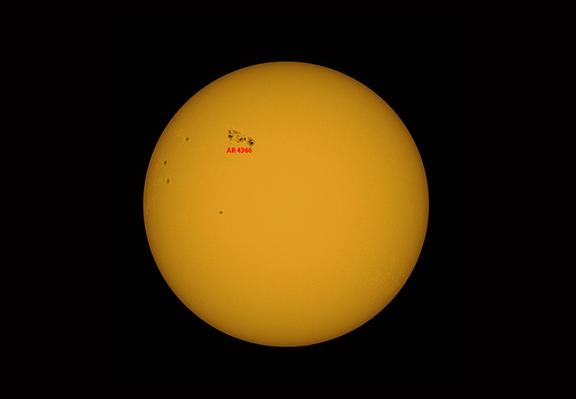

https://nordhessen-rundschau.de/wissenschaft-natur/sonnenfleck-ar-4366-sorgt-fuer-extreme-aktivitaet-auf-der-sonne/

take a look at the impressive sunspot AR3664! I took this photo last year :) These fascinating structures on the solar surface demonstrate the dynamic nature of our sun. Sunspots are not only beautiful to look at, but also important indicators of solar activity.☀️🔭

#Sunspot #AR3664 #Astronomy #Sun #Space #SolarActivity #Astrophotography #SpaceLovers #Nature #Science #AstronomyLovers

#SpaceWeather news via #SolarHam

Near X-Flare

June 23, 2024 @ 14:50 UTC
"Is our old pal #AR3664 (3697 and now 3723) still active?

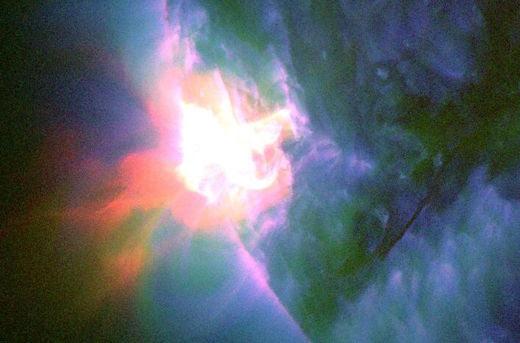
"Of course it is. A near #XFlare (M9.3) was detected at 13:01 UTC (Jun 23). The flare itself was fairly rapid, so a coronal mass ejection (CME) is likely not associated. We will get a better at the returning flare champion over the next few days.

"Now back for the third time, AR 3664 (3697) is returning into view from off the farside of the Sun. This region was first assigned 3664 on May 1st and would go on to produce non stop X-Flares and the resulting eruptions were responsible for the extreme #geomagnetic storm on May 10-11. It would reappear again on May 28th and was reassigned AR 3697 and would produce additional major solar flares. What will it have in store for us this time around? Stay tuned to find out."

https://solarham.com/pictures/2024/jun23_2024_m9.3.jpg

https://solarham.com/

#SolarCycle25 #SolarFlares

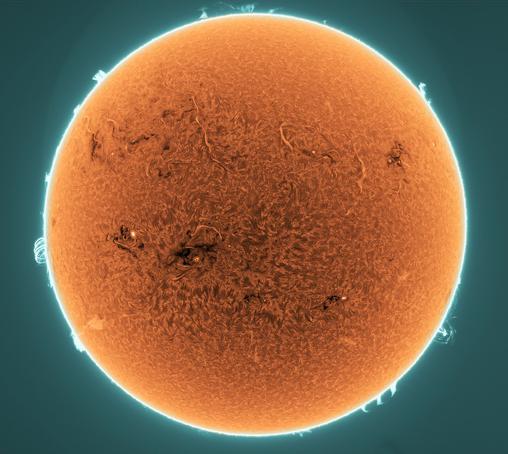
Protubérances et filaments sur un soleil actif - L'image d'astronomie du jour - 15/06/2024

Cette image du Soleil, colorisée et aux détails accentués, est constituée de différentes poses enregistrant l'émission d'atomes d'hydrogène dans la chromosphère solaire le 15 mai 2024...

Image Crédit & Copyright : Steen Sondergaard

https://apod.nasa.gov/apod/ap240615.html
https://www.cidehom.com/apod.php?_date=240615

#APOD #Astronomie #Soleil #AR3664

APOD: 2024 June 15 - Prominences and Filaments on the Active Sun

A different astronomy and space science related image is featured each day, along with a brief explanation.

HARD RADIATION STORM: Sunspot AR3664 (now known as AR3697) just did it again. A powerful explosion on the sun today peppered Earth and nearby spacecraft with "hard" protons. The radiation storm fogged satellite cameras for hours. Following close behind, a CME is heading for Earth, and its arrival on June 10th could spark G2-class geomagnetic storms. https://spaceweather.com has updates.

#spaceweather #ar3664 #ar3697 #CME #sunspot #radiationstorm

SpaceWeather.com -- News and information about meteor showers, solar flares, auroras, and near-Earth asteroids

No #GeomagneticStorm predicted yet. But with former #AR3664 (now #AR3697) belching out big flares, we might be in for another #Aurora treat soon...

#SpaceWeaherUpdate via #SolarHam

#XFlares Are Piling Up

June 1, 2024 @ 10:20 UTC

"Good morning. How about another X-Flare!

"The latest event measuring X1.4 was just detected around AR 3697 (3664) at 08:48 UTC (Jun 1). Much like the X-Flare yesterday evening, a CME does not appear to be associated with this event. Some dimming was observed to the north of 3697 before this event, but coronagraph imagery does not seem to reveal any plasma leaving the Sun. The flare producing machine is now in a good location for potential Earth directed eruptions.

"And with this now being the 49th X-Flare of the current solar cycle, we have tied the X-Flare total from the previous solar cycle 24. When will #50 take place? Stay tuned to find out."

https://solarham.com/

#SolarCycle25 #SolarFlares

Space Weather by SolarHam

EARTH IS BACK IN THE STRIKE ZONE: Returning sunspot AR3664 (now known as AR3697) is picking up where it left off two weeks ago. Today, it unleashed a long-duration X1.4-class solar flare, which caused a deep shortwave radio blackout over the Americas. From now on, every explosion will be geoeffective as the sunspot turns to squarely face our planet in the days ahead. Go to the smack zone on https://spaceweather.com

#Spaceweather #AR3664 #AR3697 #Sunspot #flare #solar #smack

SpaceWeather.com -- News and information about meteor showers, solar flares, auroras, and near-Earth asteroids

#SpaceWeather update via #SolarHam

"So is old region #AR3664 still active? Of course it is!

"An X2.9 solar flare was observed around the returning region at 07:08 UTC (May 27, 2024). The event is also responsible for an energetic coronal mass ejection (#CME) now emerging in updated coronagraph imagery. Because the sunspot region is still located behind the east limb, the flare itself was likely stronger than the X2.9 measurement. The CME itself should be directed away from our planet. We may see some busy days ahead of us. Stay tuned!"

https://solarham.com/

#SolarCycle25 #CMEs #SolarFlares #XClassFlare

Space Weather by SolarHam

Estimated X12 #SolarFlare from [presumed] #AR3664, which is on the far side of the Sun right now.

#CarringtonEvent was believed to be X45.

#AR3664 will be Earth-facing again soon.

#SpaceWeather via #SolarHam

"A fast moving, full halo coronal mass ejection (CME) is seen leaving the Sun this morning beginning around 05:30 UTC (May 20). Based on updated imagery, this event occurred on the farside of the Sun and is not Earth directed. Perhaps our old friend AR 3664 is up to its old tricks again. We should begin to see the big sunspot region turn back into view early next week."

https://solarham.com/

#SolarCycle25 #SolarFlares #SolarFlare #CMEs #XClassFlares

Space Weather by SolarHam

Tiens, la dernière grosse tempête solaire a un article Wikipédia en 21 langues, mais pas en français https://en.wikipedia.org/wiki/May_2024_solar_storms

#AR3664

May 2024 solar storms - Wikipedia