 Mahmoud Zalt
Struggle with how Pydantic stays so easy to use despite its depth? “The Facade That Makes Pydantic Feel Simple” breaks down the idea behind that simplicity.

Struggle with how Pydantic stays so easy to use despite its depth? “The Facade That Makes Pydantic Feel Simple” breaks down the idea behind that simplicity.
🚨 NEWS: REST API Design: naming conventions, status code e best practices per API che durano
Ecco i punti chiave in breve:
💡 Ti è mai capitato di dover integrare un'API dove gli endpoint si chiamano /getUserById e /createNewOrder, mentre i campi della risposta usano snake_case ma in alcuni punti camelCase? Se lavori nel bac...
#rESTAPI #namingConventions #statusCode #bestPractices #aPIDesign

A lot of teams say they “handle errors” when what they really mean is that exceptions eventually turn into JSON.
This piece pulls together the Quarkus reading path for RFC 9457, HTTP response design, OpenAPI, versioning, and deprecation so the unhappy path becomes part of the contract instead of an afterthought.
https://www.the-main-thread.com/p/quarkus-api-errors-rfc9457

GraphQL vs RESTful Fitment Architecture Costly Lie Exposed
A single GraphQL query can replace three legacy calls, cutting integration headaches for parts catalogs. See how the switch solves mismatches and speeds time‑to‑market—no more data silos.
https://partsfit.online/graphql-vs-restful-fitment-architecture-costly-lie/
#graphql #fitmentdata #crossplatformcompatibility #automotivepartsintegration #apidesign
Ever shipped an API and regretted your generic signatures later? Wildcards everywhere. Confusing bounds. Mental overhead. Michel Charpentier breaks down why variance matters—and why #Java still feels heavy here.
Read + apply: https://javapro.io/2026/01/27/what-i-still-miss-my-most-wanted-java-features/

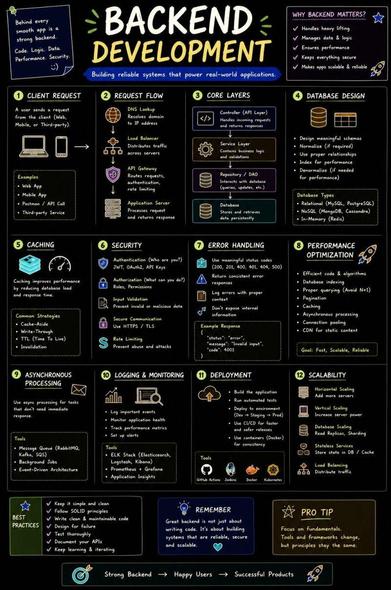
Most devs think backend = APIs.
It’s not.
It’s:
• Efficient request handling
• Clean architecture
• Smart DB design
• Caching strategies
• Security
• Reliability under load
Great backend ≠ just code
It’s systems that don’t break in the real world.
Tools change. Principles don’t.
https://jaswalaryan.space/article/backend-development-beyond-apis-complete-guide
#BackendDevelopment #WebDevelopment #APIDesign #SoftwareEngineering #SystemArchitecture #DatabaseDesign #Caching #Security #PerformanceOptimization #DevOps #Scalability #CodeQuality #Programming
Currently integrating with an API that uses pagination.
To get the next page of results you just provide a page=x parameter.
The number of pages info is in the results, so you can use that to build the pagination engine.
What happens if you go over the number of pages available? You get the last page of results again, with a 200 response code.
Fair play I guess. A simple trap to catch the idiot developer who can't count :D
 Meteora Web
 Markus Eisele
 11thDwarf 🦀
 Miriam
 JAVAPRO
 Aryan Jaswal
 Nicola Asuni
 Techino
 Phil Norton