 ResearchBuzz: Firehose
The Register: Gemini accused of 30,000-line code purge and fake recovery report. “A developer claims Google’s Gemini coding assistant deleted nearly 30,000 lines of working production code while making changes to a live application – the sort of productivity boost usually associated with ransomware.”
https://rbfirehose.com/2026/05/23/the-register-gemini-accused-of-30000-line-code-purge-and-fake-recovery-report/
 Vassil Nikolov | Васил Николов
@dubiousdisc wrote:
«The killer feature of Lisps is not macros or structural editing (though those are nice too). The killer feature is REPL-driven development. Writing and testing code are not separate stages; they are intertwined. It's a completely different way to program.»
The latter two sentences are true (we can add exploration to writing and testing).
I don't think that there is a _single_ killer feature, though.
For example, REPLs are available for quite a few languages nowadays, but these languages still don't "feel like" Lisp.
What is usually called homoiconicity is also important, for example, not so much by itself, but by the way it affects directly or indirectly many aspects of using a language.
A lot has been said about homoiconicity, of course, but still, let me add an illustration.
Define a quine as an expression Q in a programming language such that Q is equal to eval(Q).
Obviously, the precise representation of Q and the precise notion of equality will be language-dependent.
Now, compare a quine (in the above sense) in a Lisp to a quine in Python.
With regards to another aspect of the big topic, see also an old paper by Guy Steele called Growing a Language (or Making a Language that Can Grow, or something like that).
#ComputerProgramming
#GrowingALanguage
#Homoiconicity
#Lisp
#Programming
#ProgrammingLanguages
#Quines
#ReadEvalPrintLoop
#REPL
TechSpot: Anthropic says more than 90% of its code is now written by AI. “Google, Microsoft, Snap, and others have all talked about how much of their code is now AI-generated, but Anthropic appears to be leading the pack: its CFO said ‘90%-plus’ of its code is written by Claude.”
https://rbfirehose.com/2026/05/16/techspot-anthropic-says-more-than-90-of-its-code-is-now-written-by-ai/
 @reiver ⊼ (Charles)
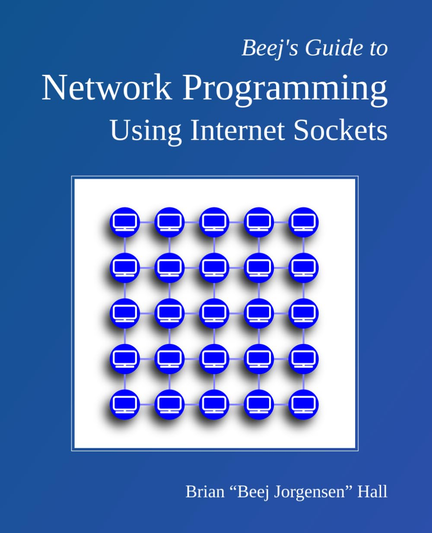
Beej (aka Brian Jorgensen) got tired of all his friends asking him how to do stuff with networking-programming in C —
So, in the mid 1990s he put it all online for free.
And, he has been updating it since then.
It covers: TCP, UDP, IPv4, IPv6, blocking & non-blocking I/O, client-server programming, select(), poll(), and more.
Beej's Guide to Network Programming has been an influential book.
#CLang #ComputerProgramming #NetworkProgramming #Programming
I can’t remember where I found it but it’s in my queue: Apives, a directory of APIs. From the front page: “Apives curates APIs with clear pricing, stability, access types, and real endpoint examples. This helps developers avoid guesswork caused by incomplete docs or outdated GitHub repositories.”
https://rbfirehose.com/2026/05/13/apives-a-directory-of-apis/
Syntax matters more than emotionally:
Syntax affects how expressive a language is.
Syntax affects editing and navigation capabilities (to illustrate, consider Emacs commands like `forward-list', `forward-sexp', `kill-backward-up-list', and then compare their usefulness between Lisp and Python).
Syntax affects cultural compatibility, the significance of which is much more than emotional.
Etc.
It is not for nothing that mathematics (usually) draws a distinction between operations and relations.
Some computer programming languages, not so much.
Here is one thing that can happen, using Python just as a handy example:
>>> 2 == 1 == 0
False
>>> (2 == 1) == 0
True
So, not left-associative.
>>> 0 == 1 == 2
False
>>> 0 == (1 == 2)
True
And not right-associative, either...
What do we call it?
Perhaps "quasi-associative" might fit the bill?
In any case, "anti-associative", "counter-associative", "dissociative", "non-associative", and "pseudo-associative" don't.
Note: the above doesn't happen with irritating silly parentheses ⌫⌫⌫ Lisp's prefix notation.
#CaveatProgrammator
#ComputerProgramming
#ProgrammingLanguages
 Tak!
Tak!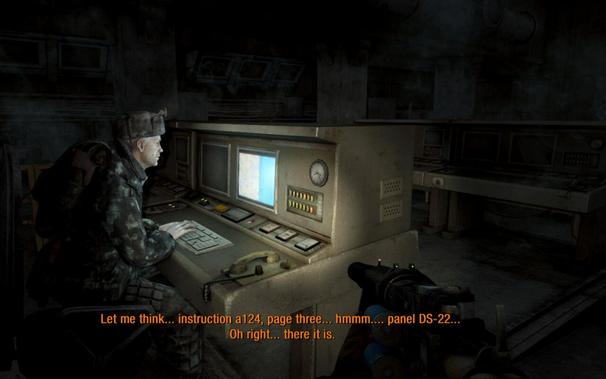
 Leanpub
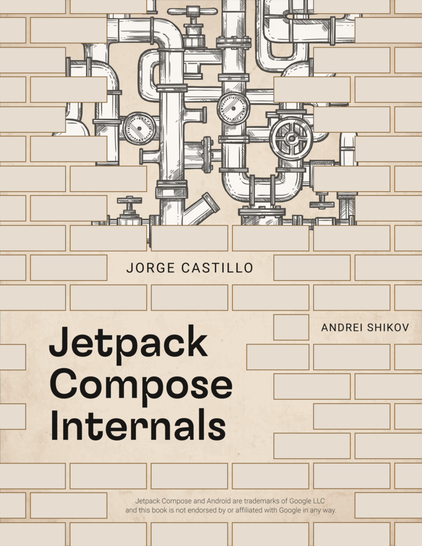
Jetpack Compose internals by Jorge Castillo is on sale on Leanpub! Its suggested price is $49.99; get it for $17.50 with this coupon: https://leanpub.com/composeinternals/c/LeanPublishingDaily20260416 #Software #ComputerProgramming #Java #Kotlin #SoftwareArchitecture
<hmmm-on-a-tangent/>
What if such nasty things also bring about an increased demand for program verification using formal methods?
Yes, it is difficult, but even partial solutions are helpful and way, way better than nothing.
By the way, I ought to look for any surveys on the use of assertions (the little cousins of program verification) in published program sources.
One old textbook I found well worth reading was the one about program specification and software development by Liskov and Guttag.
The first edition, using the CLU programming language.
#ComputerProgramming
#IHaveADream
#FormalMethods
#ProgramVerification
#SoftwareEngineering