Suben el riesgo país y caen los ADRs tras conocerse la inflación de abril

📰 Título original: El riesgo país sube con fuerza y supera los 530 puntos, mientras los ADRs caen hasta 5,6%

🤖 IA: No es clickbait ✅
👥 Usuarios: No es clickbait ✅

Ver resumen IA completo: https://es.killbait.com/suben-el-riesgo-pais-y-caen-los-adrs-tras-conocerse-la-inflacion-de-abril.html?utm_source=mastodon_social&utm_medium=social&utm_campaign=killbait_argentina.mastodon_social

#economía #riesgopaís #adrs #mer...

Suben el riesgo país y caen los ADRs tras conocerse la inflación de abril

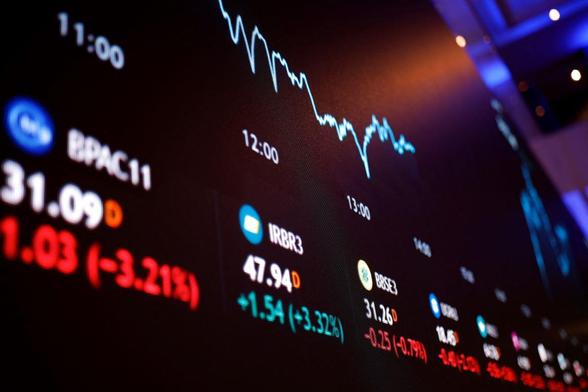
El riesgo país de Argentina registró un fuerte aumento, superando los 530 puntos, mientras que los ADRs (American Depositary Receipts) de empresas locales experimentaron caídas de hasta 5,6%. Los bonos soberanos en dólares descendieron hasta un 1,7%, liderados por el Global 2046, seguido del Bonar 2029, Global 2035 y Global 2038, todos con retrocesos menores a 1%. Este comportamiento se dio en el contexto del dato de inflación de abril, que fue de 2,6%, marcando su primera desaceleración en diez meses, aunque en línea con lo esperado por el mercado. El presidente Javier Milei celebró en redes que el IPC estaría “retornando a la normalidad”, a pesar de lo que describió como “intentos golpistas” y shocks externos. En el plano internacional, Irán permitió un mayor tránsito de barcos por el estrecho de Ormuz, que había sido casi bloqueado desde el inicio del conflicto, beneficiando el paso de varias naves chinas. En la bolsa local, el S&P Merval cayó 1,5%, con descensos destacados en Banco BBVA, Grupo Supervielle, Grupo Financiero Galicia y Metrogas. En Nueva York, los ADRs de compañías argentinas recortaron hasta un 5,6%, arrastrados por Supervielle, Edenor, BBVA y Telecom, mientras los principales índices de Wall Street retrocedieron entre 1,1% y 1,4%, presionados por el alza en los rendimientos de los bonos soberanos estadounidenses y el descenso en el sector tecnológico. El panorama refleja una combinación de factores domésticos e internacionales que generan volatilidad en los mercados financieros argentinos.

KillBait

Stop à la dette documentaire : Industrialisez vos ADRs et READMEs avec Spec-kit

https://video.ut0pia.org/w/iDoMy5ibJTVFSJpAcQwGJn

Stop à la dette documentaire : Industrialisez vos ADRs et READMEs avec Spec-kit

PeerTube
Your #architecture decision records capture what was decided and why. They don't capture what you believed was true at the time. When an assumption breaks — "users will do this" — how do you find every decision built on that belief? Re-read all 300 #ADRs & pray? https://www.attilagyorffy.com/blog/the-assumption-nobody-wrote-down/
Como foram os ADRs no feriado e o que isso indica para a abertura da Bolsa hoje: Índice de ADRs brasileiros caiu na contramão de índices de Nova York https://www.infomoney.com.br/mercados/como-foram-adrs-feriado-o-que-indica-para-abertura-bolsa-quarta-cinzas/ #ADRs #Bolsa
Índice de ADRs brasileiros cai seguindo EUA por preocupações com IA; Vale tem baixa: Preocupações sobre inteligência artificial seguem afetando o sentimento do mercado https://www.infomoney.com.br/mercados/indice-de-adrs-brasileiros-feriado-carnaval-17022026/ #ADRs #mercadofinanceiro
How to Make Architecture Decisions: RFCs, ADRs, and Getting Everyone Aligned

Making architecture decisions is one of those things that can go really well or really badly. I’ve been in both situations. I’ve seen…

Medium

Excited for #JCON EUROPE 2026? See Piet van Dongen at #JCON2026 in Cologne talking about 'Creating Effective and Objective Architectural Decision Records #ADRs'

#Documenting decisions is like eating your veggies as a kid: they …

🎟️ 2026.europe.jcon.one/tickets
Free for #JUG members

New article is live on my WriteFreely:
“Technical debt isn’t just code, it’s lost context.”

Most teams can point at code debt: missing tests, messy modules, shortcuts taken under pressure. The harder (and often more expensive) debt is the part you cannot point to: the *why* that evaporated. The moment a reasonable decision becomes an undocumented assumption, then a “hard requirement,” and finally a constraint that nobody dares to touch.

The article is built around a pattern I keep seeing in real systems: **Decision → Assumption → Constraint → Incident (or slow bleed)**, plus the symptoms that show up in delivery, operations, and team dynamics when context turns into folklore.

I also propose a few lightweight countermeasures that do not require a documentation bureaucracy: mini-ADRs that take ten minutes, PR prompts that force future-facing context into the open, a simple “folklore detection” checklist, and a realistic 30-day adoption plan for normal teams.

If you’ve ever inherited a system where “don’t touch that, it caused an incident last time” was considered documentation, this one is for you.

👉 https://authorial.org/byern/technical-debt-isnt-just-code-its-lost-context

#SoftwareEngineering #TechnicalDebt #Maintainability #EngineeringCulture #SoftwareArchitecture #Documentation #ADRs #KnowledgeManagement #ByernNotes

Technical debt isn't just code, it's lost context

Or: Why the most expensive debt your team carries might not show up in your linter. The conversation that keeps going nowhere I've sat ...

Thomas Byern

The real consequential decisions in engineering aren't made in sprint planning. They're hidden in the 'invisible choices': metrics, defaults & everyday behaviors.

The industry is focused on the wrong things. The choices that truly shape systems & culture are the ones that go unnoticed and unexamined.

Read the full insights: https://bit.ly/43Ajl1y

#InfoQ #QConSF #ADRs #TechLeadership #Culture

Understanding a software system by reading ADRs is a bit like event-sourcing its architecture in your head. You get the whole history (enabling deeper understanding), but if you just want to get information about the present state, it's not very efficient. Hence, keeping a snapshot of the current state (a read model if you will) in some form is still worthwhile.

#softwarearchitecture #documentation #ADRs