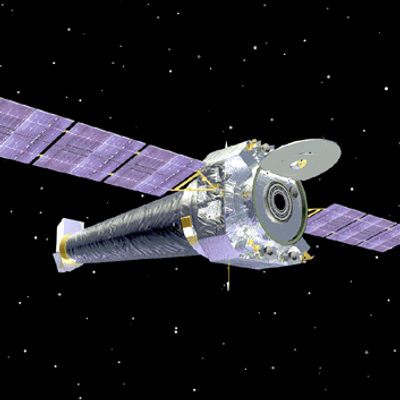
 Chandra Science
Our #AAS242 booth is now packed up and ready for the trip home, but we wanted to thank everyone who stopped by; whether you were learning about us for the first time or are a long-time user, it was lovely to meet with and chat with you all. We will see everyone again in New Orleans for #AAS243!
 Kelly Lepo
 Dr Robert Minchin
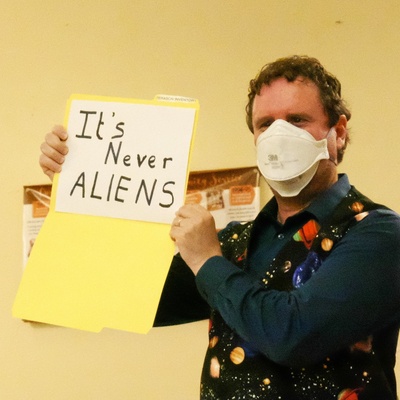
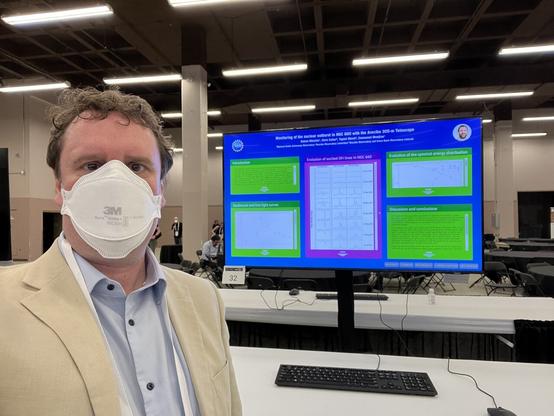
I’m standing by my iPoster at #AAS242 – station 32, if you want to come past, say hi, and find out about #Arecibo monitoring of the outburst in #NGC660
 Steve Crawford
The Optical Constants database (OCdb) is a new data repository developed to provide published, peer-reviewed, optical constants of organic refractory materials and ices relevant to planetary and astrophysical environments to the scientific community for the analysis and interpretation of observational data.
In Tony Beasley’s talk, he tracks the history of Open Skies back to 1959 and the start of the National Radio Astronomy Observatory.
The best ideas, regardless of where they come from, produces the best science.
Tracy Chen shares the Best Practices for Data Publication in the Astronomical Literature. A great resource for how to share your scientific information including sharing the name, source code and citation practices, open methodology, accessibility, data availability statement, DOIs, and peer review.
#OpenScience #AAS242 #astrodon
https://ui.adsabs.harvard.edu/abs/2022ApJS..260....5C/abstract
Best Practices for Data Publication in the Astronomical Literature
We present an overview of best practices for publishing data in astronomy and astrophysics journals. These recommendations are intended as a reference for authors to help prepare and publish data in a way that will better represent and support science results, enable better data sharing, improve reproducibility, and enhance the reusability of data. Observance of these guidelines will also help to streamline the extraction, preservation, integration and cross-linking of valuable data from astrophysics literature into major astronomical databases, and consequently facilitate new modes of science discovery that will better exploit the vast quantities of panchromatic and multidimensional data associated with the literature. We encourage authors, journal editors, referees, and publishers to implement the best practices reviewed here, as well as related recommendations from international astronomical organizations such as the International Astronomical Union for publication of nomenclature, data, and metadata. A convenient Checklist of Recommendations for Publishing Data in the Literature (Appendix A) is included for authors to consult before the submission of the final version of their journal articles and associated data files. We recommend that publishers of journals in astronomy and astrophysics incorporate a link to this document in their Instructions to Authors.
Hello #AAS242 -- join us at 9:30 in the Exhibitor Theater (the left side of the exhibit hall when you walk in from the lobby) for a presentation by Ian Evans on the #Chandra Source Catalog. The CSC and its upcoming 2.1 release unlock the 24-year legacy of our mission to enable everyone -- even people who have never looked at an X-ray photon before -- to be an X-ray expert. #Astrodon #Astronomy
 Space Telescope Science Inst.
We're at the 242nd meeting of the American Astronomical Society in Albuquerque, New Mexico, this week!
If you're attending, be sure to stop by our booth and learn about our organization's mission to expand the frontiers of space astronomy. #AAS242
Call for Community Input into the Definition of the Roman Space Telescope’s Core Community Surveys
Due: June 16
https://roman.gsfc.nasa.gov/science/ccs_community_input.html
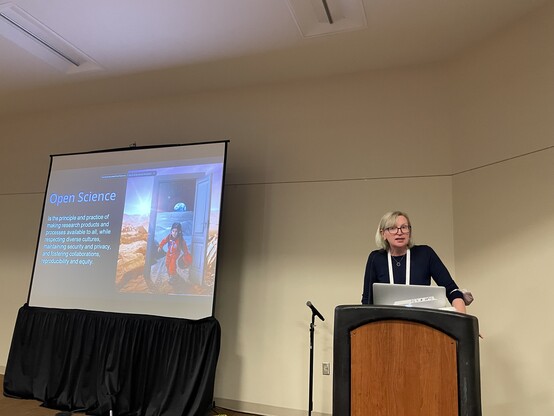
Talking about the Year of Open Science, @ChelleGentemann shares the federal definition of Open Science:
Open Science is the principle and practice of making research products and processes available to all, while respecting diverse cultures, maintaining security and privacy, and fostering collaborations, reproducibility, and equity.