How does the Wnt pathway promote resistance to
#DNAdamage induced by
#IonizingRadiation? @BenForWard3 &co show that
#WntSignaling modulates DNA damage response via EGFR in
#Drosophila, protecting cells from
#apoptosis induced by DNA ds breaks
#PLOSBiology https://plos.io/4dduEiq
Wnt signaling modulates the response to DNA damage in the Drosophila wing imaginal disc by regulating the EGFR pathway
The Wnt pathway promotes resistance to DNA damage induced by ionizing radiation in several human cancers, but the mechanisms are not fully understood. This study shows that Wnt signaling in the Drosophila wing imaginal disc modulates the DNA damage response through EGFR, protecting cells from apoptosis induced by DNA double-strand breaks.
Wnt signaling uses 10 receptors (FZD1-10) in humans, complicating therapeutic targeting. Study shows that a
#BacterialToxin fragment can specifically inhibit
#WntSignaling mediated by a subset (FZD1, 2, 7), with potential for
#cancer treatment
#PLOSBiology https://plos.io/3u1KVFO
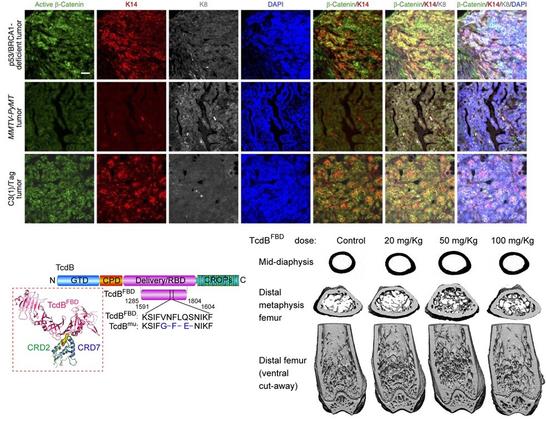
Targeted inhibition of Wnt signaling with a Clostridioides difficile toxin B fragment suppresses breast cancer tumor growth
Wnt signaling is transmitted via ten homologous Frizzled receptors (FZD1-10) in humans, complicating the therapeutic use of inhibitors due to side-effects. This study shows that a bacterial toxin fragment can be used as a tool to specifically inhibit Wnt signaling mediated by a subset of Frizzed receptors (FZD1, 2, 7), with potential for cancer treatment.

Restoring the blood-brain barrier using a novel WNT signaling pathway
There's a bouncer in everyone: The blood-brain barrier, a layer of cells between blood vessels and the rest of the brain, kicks out toxins, pathogens and other undesirables that can sabotage the brain's precious gray matter.
 PLOS Biology
 Phys.org