 Ms. Que Banh
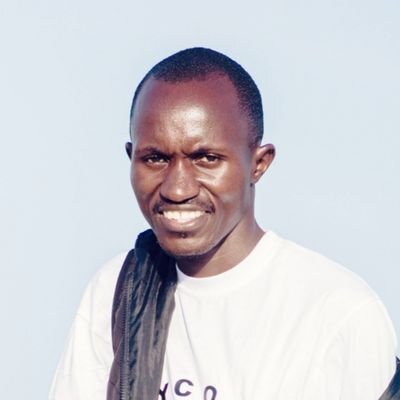 Ngazetungue Muheue
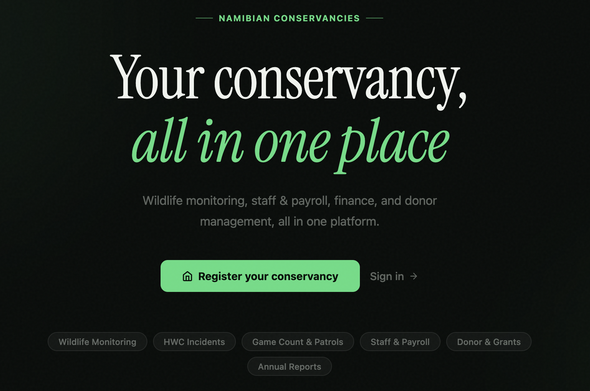
Today I am proud to announce that Phase One of my wildlife conservation project is complete.
This project is personal. I come from a family of farmers and wildlife rangers. Conservation is not just a cause for me, it is my heritage. After losing my job, I spent months in the fields, mountains, and valleys of our beautiful land, Namibia, talking to my community, listening, and building.
The road has not been easy. The project faces a serious challenge: funding. I have exhausted my budget. On top of that, my ideas are being taken by those in power, people who know that without their approval, the project cannot move forward. That is the biggest obstacle I face.
And yet, at the end of it all, if this project never sees the light of day, I will still be proud that I tried. Proud that Django and Python were the tools I chose. Proud that the open-source community walked this road with me.
I am also still open to job opportunities though.
Thank you, Django community. Thank you, Python community, Thank you, Ubuntu community.. You gave me the tools and the encouragement. This is as much yours as it is mine.
 Buddhistdoor Global (BDG)
 Joe Wynne 🌻🚗⛰️
 Headlines Africa
 Hacker News
 avikantz
 India Safaris