CSS is hard because it solves hard problems

Julie Evans recently re-wrote her website's Cascading Style Sheets (CSS), and took the fight to the stylesheet language as it were: So I decided years ago that I wanted to react to "CSS is hard" by getting better at CSS and taking it seriously as a technology, instead of devaluing it. Doing that changed everything for me: I learned that so many of my frustrations ("centering is impossible") had been addressed in CSS a long time ago, and that also what "centering" means is not always […]

https://disassociated.com/css-hard-because-solves-hard-problems/

🔖 Bookmarked: How to Surf the Web in 2025, and Why You Should https://www.raptitude.com/2025/06/how-to-surf-the-web-in-2025-and-why-you-should/

Algorithmic scrolling killed surfing, but David Cain reckons the old web is still there if you go looking.

🔥 Read more: https://flamedfury.com/bookmarks/how-to-surf-the-web-in-2025-and-why-you-should/

#Inbdieweb #Personalweb #Web #Webhistory

How to Surf the Web in 2025, and Why You Should

Just as it’s still possible (though seldom necessary) to ride a horse, it is still possible to surf the internet. It’s a thrill not yet lost to time.

Raptitude.com

Ego vs. Strategie: Wie ich 1996 durch einen Zufall das Megga Zuppa Duppa Network gründete.

Es begab sich im Jahr 1996...

In meiner damaligen „Netz-Bubble“ trat jemand sehr arrogant und aufschneiderisch auf. Er posaunte überall herum, dass er als Firma das „Medien Zentrum Dortmund“ (oder so ähnlich) gründen würde. Stolz verkündete er auch direkt die passende Domain: mzd.net.

Wieder zu Hause am Rechner siegte die Neugier. Ich wollte sehen, was er da schon aufgebaut hatte. Die Überraschung: Unter www.mzd.net war absolut nichts erreichbar. Ein kurzer Check der Whois-Daten bestätigte: Die Domain war noch gar nicht registriert!

In einer Mischung aus Spaß und um ihm einen kleinen Denkzettel zu verpassen, gründete ich kurzerhand das „Megga Zuppa Duppa Network“ und registrierte mzd.net. Damals durften .net-Domains ja offiziell nur von Firmen und Organisationen aus dem Netzwerkbereich registriert werden.

Ich wollte ihm zeigen, dass man sich Namen sichert, bevor man groß damit prahlt. Gegen ein oder zwei Bier als „Lehrgeld“ hätte ich ihm die Domain sofort übertragen. Ich wollte ihm ja nicht schaden, nur sein Ego ein wenig erden.

Doch es kam anders. Statt Einsicht gab es Ego-Explosionen und absurde Hacker-Vorwürfe. Tja, Kommunikation ist eben alles.

Und wie ich jetzt beim „digitalen Aufräumen“ festgestellt habe: Ich besitze die mzd.net inzwischen seit fast 30 Jahren.

Jetzt stehe ich vor der Wahl und brauche den Rat der Fediverse-Schwarmintelligenz:

1. Soll ich das legendäre Megga Zuppa Duppa Network endlich mit Leben füllen und auferstehen lassen?
2. Oder gibt es seriöse Domainbroker, die ihr empfehlen könnt, um dieses Stück Internetgeschichte in gute Hände zu verkaufen?

Ich bin gespannt auf eure Gedanken und Tipps!

#InternetHistory #WebHistory #VintageWeb #DomainNames #Storytelling #Nostalgie #1990s #Netzgeschichte #MZD #DomainHandel #Fediverse #TechStories #AskFedi

Rotten Dot Com by Dena Yago

May 6, 2026 – “Rotten.com was a haunted arcade, dispensing trauma in gumball-machine doses straight to kids with dial-up, who chewed on images never meant for their half-formed stomachs.”

The Paris Review

RIP Ask Jeeves. The natural-language search engine founded in 1996 was rebranded as Ask in 2006, and officially shut down on May 1.

Here are the Wayback Machine’s first and last captures of the site.

When websites disappear, the historical record can disappear with them. The #WaybackMachine preserves that history – capturing the web so its past remains accessible.

Explore 30 years of web history: https://web.archive.org

#90s #90sNostalgia #WebHistory #WebDesign

How many friends, family, co-workers, know about your blog/website?

Half the web might know about your blog, but how many of your in-person acquaintances, people in your household, community, or workplace, know you blog? Do you even tell them? Do you want to? The question came up at Forking Mad this week, and started me thinking. When I uploaded the first version of disassociated in 1997, I told just about everyone I knew. At that point I aspired to be a web designer, so telling the whole world of my online presence made perfect sense. I ended up working […]

https://disassociated.com/how-many-friends-family-co-workers-know-about-your-blog-website/

Using the internet like its 1999 - The Universe of Joshua Blais

A blog, notes, gallery, lifestyle and fully conglomerated posts from Joshua.

joshblais.com

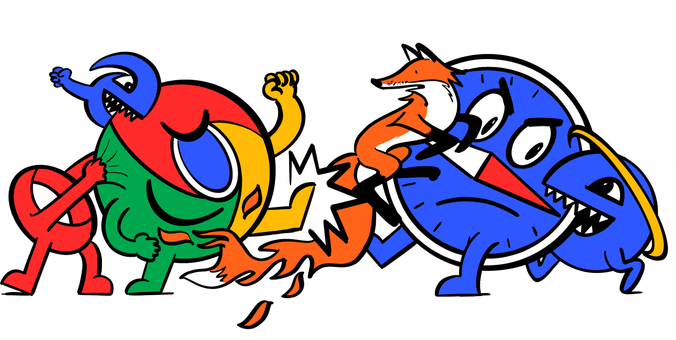
I was just reading a great piece on how the browser wars shaped the internet (https://hackernoon.com/how-the-browser-wars-changed-the-landscape-of-the-internet), and it hit me with a massive wave of nostalgia.

I had been using Opera since my school days. The classic Presto-engine Opera was truly ahead of its time. Does anyone else remember Opera Turbo, Opera Unite, Opera Link, and the original Speed Dial? The competitors had nothing even close to that back then. Yes, websites occasionally broke because of the different engine, but I absolutely loved that browser, even if I couldn't always explain why.

When the original Opera essentially ended with version 12.18, it was a sad moment. But the second I heard about @Vivaldi launching, I immediately jumped on their first Technical Previews. I was so relieved that the spirit of the old Opera didn't actually die - it just reformatted and got a new name.

I have followed them ever since, and lately, I've been using Vivaldi a lot more actively. I cannot recommend it enough.
It is incredibly convenient and customizable, exactly like the good old Opera. I am even planning to buy some of their merch to support the team and spread the word.

If you are looking for an alternative, just give it a try. Even though it uses the same Chromium engine under the hood, the experience is infinitely better than Google Chrome or Microsoft Edge.

#VivaldiBrowser #Opera #BrowserWars #WebHistory #TechNostalgia #Fediverse #Blog #Thougts #History

How the 'Browser Wars' Changed the Landscape of the Internet | HackerNoon

Browsers have been fighting for users since their emergence. Browser wars are going on constantly, and don't stop. I detailed discuss browser wars history.

Sometimes it is fun to do a manual audit of internet history. I just visited http://info.cern.ch/hypertext/WWW/TheProject.html and paused for a minute. It is literally the first website in the world.

The technical legacy of CERN is mind-blowing. They did not just smash particles! They gave us HTML, the WWW, and a strong culture of digital privacy. @protonprivacy for example, was founded by scientists who worked at CERN (it originally ran on protonmail.ch), and today it is one of the best tools we have to push back against Big Tech.

But then I got curious and went down a WHOIS rabbit hole. The registry shows cern.ch was registered "before 1 January 1996". However, the historically recognized first domain ever, symbolics.com, was registered on March 15, 1985.

I had a brief moment of cognitive dissonance: how could the first domain be six years older than the first website? Then it clicked. DNS and WWW are fundamentally different protocols. The DNS was already routing emails and networks long before Tim Berners-Lee invented hyperlinks.

To take it a step further, the same Tim Berners-Lee did not just invent the Web - he went on to found the W3C to keep it open and standardized, a mission that still continues today.

First domain != first website. It is basic technical logic, but connecting the dots manually gives that satisfying feeling of closing a mental background process.

#WebHistory #CERN #DNS #W3C #TechPhilosophy #InternetHistory #Proton #InfoSec #TechAudit #Blog #Privacy #History #Fediverse

The World Wide Web project

Pluralistic: Don’t Be Evil (11 Apr 2026) – Pluralistic: Daily links from Cory Doctorow