Sometimes it is fun to do a manual audit of internet history. I just visited http://info.cern.ch/hypertext/WWW/TheProject.html and paused for a minute. It is literally the first website in the world.

The technical legacy of CERN is mind-blowing. They did not just smash particles! They gave us HTML, the WWW, and a strong culture of digital privacy. @protonprivacy for example, was founded by scientists who worked at CERN (it originally ran on protonmail.ch), and today it is one of the best tools we have to push back against Big Tech.

But then I got curious and went down a WHOIS rabbit hole. The registry shows cern.ch was registered "before 1 January 1996". However, the historically recognized first domain ever, symbolics.com, was registered on March 15, 1985.

I had a brief moment of cognitive dissonance: how could the first domain be six years older than the first website? Then it clicked. DNS and WWW are fundamentally different protocols. The DNS was already routing emails and networks long before Tim Berners-Lee invented hyperlinks.

To take it a step further, the same Tim Berners-Lee did not just invent the Web - he went on to found the W3C to keep it open and standardized, a mission that still continues today.

First domain != first website. It is basic technical logic, but connecting the dots manually gives that satisfying feeling of closing a mental background process.

#WebHistory #CERN #DNS #W3C #TechPhilosophy #InternetHistory #Proton #InfoSec #TechAudit #Blog #Privacy #History #Fediverse

The World Wide Web project

Most businesses are running on tools they forgot they signed up for and missing the ones they actually need.

StackAudit maps your entire tech stack — every integration, every API, every automation — and shows you the gaps.

3,179 integrations cataloged. Zero guesswork.

Stop paying for what you don't use. Start building on what you do.

https://www.supportstacksystems.com

#StackAudit #TechAudit #SmallBusiness #Automation

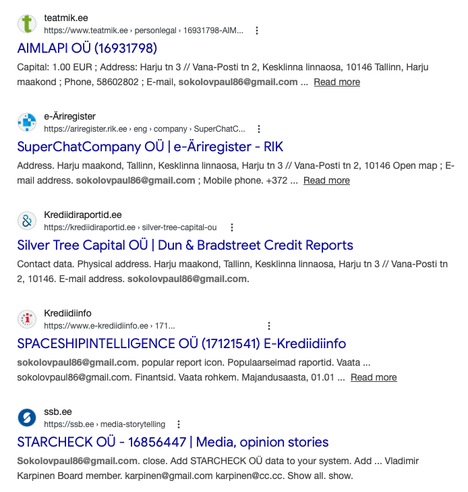
It gets even better. I decided to do a basic reverse search on the director's public contact info.

Whatever you do, do not look up his email address. You might accidentally discover that the creator of this "secure, privacy-first alternative to Proton Mail" registers his businesses using a standard @gmail.com account (with traces of a @yandex.ru address elsewhere).

You might also notice that this is just one of many €1 shell companies registered under the exact same contact. The digital footprint is fascinating. A true masterclass in privacy and operational security.

#OSINT #Privacy #CyberSecurity #TechAudit #Fediverse

I recently stumbled upon a new privacy-focused email provider called https://atomicmail.io. You may have heard of them already.

The landing page is very convincing, full of aggressive comparisons to @protonprivacy, @Tutanota, GMail and others.

But there is zero information about the people behind the product. Just an anonymous "team of enthusiasts and developers".

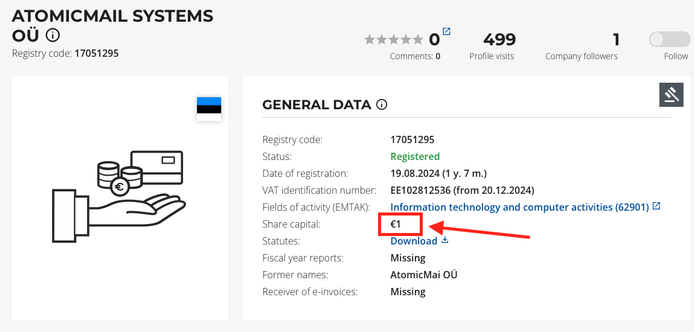
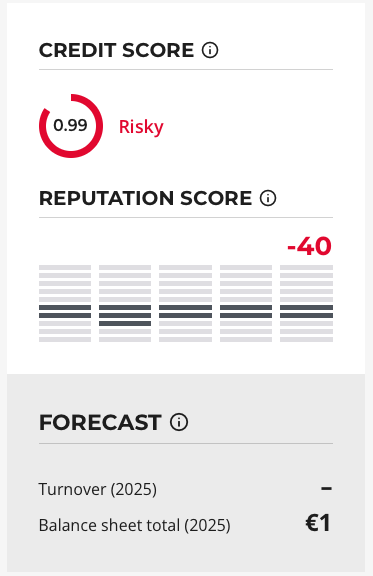
I decided to do a quick audit of their legal entity. It turns out the registered share capital of this company is exactly €1.

Well, that completely clears up any doubts about trusting them with my private data. Absolutely bulletproof.

#Privacy #InfoSec #EmailSecurity #TechAudit #CyberSecurity #OSINT #Proton #Fediverse #Blog #Thoughts

Finally, run internal audit sprints every six weeks. Spend two days reviewing compliance using your dashboard. This turns a quarterly scramble into a regular task. You’ll catch issues early.

This approach turns audit prep into a low, ongoing effort. Your team can stay focused on building the platform instead of reacting to inspectors. #Compliance #TechAudit #DevOps #CI/CD #Automation #DataPrivacy #Agile #TechStrategy #InternalAudit #ContinuousImprovement (4/4)

AI isn’t neutral—this post digs into how it mirrors political biases in its value systems. For advanced users, it’s a heads-up: your outputs might skew depending on the model. It’s less about finger-pointing and more about auditing what you’re working with. The thread’s got data to back it up—crucial if you’re building or relying on AI outputs. https://x.com/DanHendrycks/status/1889344081681342667 #AIbias #Ethics #TechAudit ~
Dan Hendrycks (@DanHendrycks) on X

AIs also exhibit significant biases in their value systems. For example, their political values are strongly clustered to the left. Unlike random incoherent statistical biases, these values are consistent and likely affect their conversations with users.

X (formerly Twitter)