Animal of the day (173)

Sea cradle, coat-of-mail shell, suck-rock β€” all of these nicknames refer to a very particular class of marine molluscs called Chitons. These small animals, of which 940 extant species are recognized, come in various colors and patterns. Thanks to the articulated shell composed of eight separate plates on its back, it is able to swim and even curl into a ball for protection. It is usually found creeping along the sea floor on its muscular foot, which can cling to rocks powerfully, making it difficult to dislodge. Though most species are herbivorous grazers, some are omnivorous or even carnivorous. The one in the picture below is the Lined Chiton, found along the west coast of North America.

#Wahnimals #animals #nature #marinelife
(πŸ“Έ: see Alt Text)

My favorite animal is (pretty much) all of them. :D

The variety of life that has existed in the past or exists today is mind-boggling. There are so many amazing creatures adapted to the niches they have carved out for themselves.

Pick any animal. Any at all. Think about its behaviors, its appearance, its environment. And link them together.

Ducks evolved wide, flat bills for foraging for food at the bottoms of lakes. They evolved soft, downy feathers to keep them warm. They evolved precise flight feathers, all of them a different shape and size, to fly, sometimes for long distances. They evolved webbed feet, to paddle around in the water. They evolved oil for their feathers that keeps them dry. They evolved a boat-like body to make paddling around easy.

All these cool adaptations happened, and combined to make the ducks we know and love today.

All animals went through changing and adapting and evolving to become perfect at living how they do. Every species is fascinating, and worth learning about.

I dare you to try something.

Go to the #Wahnimals hashtag, pick an animal you don't know much about, and do some research into it. Look up pictures and info from reliable sources. And then you'll be one step closer to understanding how they fit into their complex ecosystems, and one step closer to understanding life as we know it.

πŸ¦†πŸ¦†πŸ¦†

If you haven't seen the High Quality Dad Joke on @WahFo's most recent #Wahnimals post, you're missing out.

Plus, cute marmots!

https://meow.social/@WahFo/112544763998398898

Wah (@[email protected])

Attached: 1 image Animal of the day (172) Out of the 14 marmot species extant today, this one is called the Himalayan Marmot; that could be because people often spot him-a-layin' in the grass, or more likely because it is found throughout the Himalayas and on the Tibetan Plateau. This cat-sized rodent is not only round and adorable, but also very sociable. It digs deep burrows that it shares with other members of its colony, which comprises up to 30 families. Since they tend to huddle up for warmth, and with a typical hibernation period lasting 7.5 months out of the year, they must spend most of their lives in a giant fluffy cuddle-pile. Isn't that the dream? #Wahnimals #animals #nature #rodents (πŸ“Έ: see Alt Text)

meow.social - the mastodon instance for creatures fluffy, scaly and otherwise

Animal of the day (172)

Out of the 14 marmot species extant today, this one is called the Himalayan Marmot; that could be because people often spot him-a-layin' in the grass, or more likely because it is found throughout the Himalayas and on the Tibetan Plateau. This cat-sized rodent is not only round and adorable, but also very sociable. It digs deep burrows that it shares with other members of its colony, which comprises up to 30 families. Since they tend to huddle up for warmth, and with a typical hibernation period lasting 7.5 months out of the year, they must spend most of their lives in a giant fluffy cuddle-pile. Isn't that the dream?

#Wahnimals #animals #nature #rodents
(πŸ“Έ: see Alt Text)

@nellie_m I would like to nominate @WahFo's #Wahnimals posts for your list, as he works hard to describe the animals he showcases! πŸ’™πŸ’™πŸ’™

Animal of the day (171)

Unless you are a salamander enthusiast, there are a few things that may surprise you about the Mexican Climbing Salamander. For one, the 140 species of its genus are commonly named mushroom-tongued salamanders due to their projectile tongues with a tip that resembles a mushroom head, and which they can fire almost a body length at high speed to capture prey. For two, it is part of a larger salamander family, one that counts over 500 species that all decided they didn't need lungs. Instead, they breathe entirely through nonpulmonary tissues, mainly the skin and the mucus membranes in the mouth and throat. And for three, its heavily webbed feet, wide fingers, feet pads and prehensile tail make this arboreal amphibian an expert climber!

#Wahnimals #animals #nature #amphibians
(πŸ“Έ: see Alt Text)

Animal of the day (170)

Looking like a feather-duster on stilts, the Buff-crested Bustard is endemic to East Africa and most common in Ethiopia. It is more often heard than seen though, with its powerful short whistles that sound like a car alarm going off. Considered solitary, it can sometimes also be found in pairs or small family groups. It is an opportunistic hunter that feeds on plants, insects, and small rodents. Though normally reluctant to fly, during mating season, males engage in elaborate aerial displays to impress females; they fly up high, stall, and drop with folded wings, opening them just before they would smash their faces on the ground.

#Wahnimals #animals #nature #birds
(πŸ“Έ: see Alt Text)

Animal of the day (169)

As far as turtles go, the Diamondback Terrapin is a pretty one, but also a bit of an oddball. While its closest relatives thrive in the fresh waters of lakes and rivers, this one is specially adapted to living in brackish waters. It is found throughout the East Coast of the United States, the Gulf of Mexico coast, as well as in Bermuda. Like its more distantly related cousins the sea turtles, it has skin that is largely impermeable to salt and glands that help get rid of excess salt through tears. Staying relatively small with a shell length that reaches 5 inches in males and 7.5 inches in females, it feeds on various crustaceans, mollusks and fish.

#Wahnimals #animals #nature #turtles
(πŸ“Έ: see Alt Text)

Animal of the day (168)

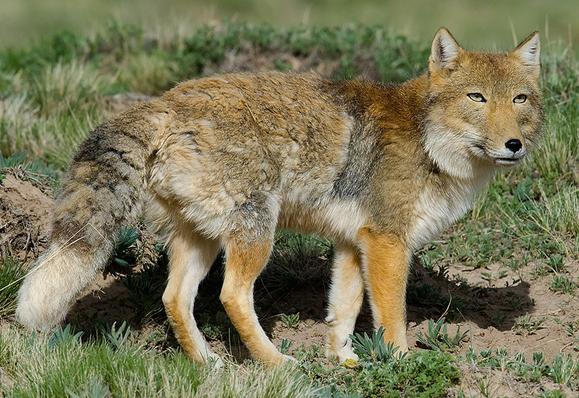
Failed taxidermy project? Nay nay, and don't be fooled by its wonky looks; the Tibetan Fox is a cunning hunter that is extremely well adapted to the high altitude plateaus it inhabits. This species of true fox is found across Tibet, Nepal, Sikkim, Bhutan, as well as parts of China and India. Unlike most foxes, it is most active during daytime, when its favorite meal, the pika, is up and about. It often hunts solo, but bonded pairs may hunt together, or it may join a brown bear in its hunt, grabbing any pika that escapes the bear as it digs them out. To hide from predators in these treeless slopes, it lives in burrows, often stolen from marmots, as it is not a great digger itself.

#Wahnimals #animals #nature #fox
(πŸ“Έ: see Alt Text)

Animal of the day (167)

With bear traps for arms, the Tailless Whip Scorpion can be quite nightmare-inducing, but with no fangs to bite and no glands for venom or silk, this arachnid is actually quite harmless. Its name comes from its modified whip-like front legs, which are very long and used as feelers to navigate the darkness it loves so much. To hunt, it relies solely on its barbed pincers to catch and skewer small invertebrates before grinding them down with its mouth parts. Nocturnal and solitary, it is found in tropical and subtropical regions worldwide, as well as in the pet trade. Today, this order includes 260 species, and its first appearance in the fossil record dates back to 358 million years ago!

#Wahnimals #animals #nature #arachnids
(πŸ“Έ: see Alt Text)