Hell no!

“A new tool helps artists stop bots from buying up concert tickets. Instead, it reserves spots for fans who are ‘human-verified’ by iris-scanning orbs.”

Resist #WorldID & #ConcertID

‘Sam Altman’s startup is hoping Jared Leto’s band will make you scan your eyeball’

https://sfstandard.com/2026/05/21/jared-leto-sam-altman-eye-scanner-concert-tour/

Sam Altman’s startup is hoping Jared Leto’s band will get you to scan your eyeball

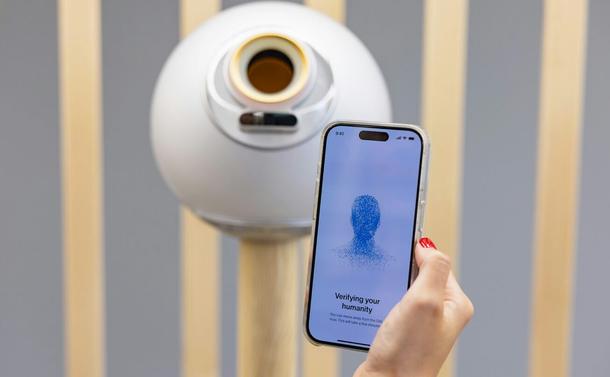
A new tool helps artists stop bots from buying up tickets by reserving spots for fans who are human verified with World IDs.

The San Francisco Standard

Pook-Emu Bee: Links For 04-28-26

I failed to post daily Pook-Emu Bee links on Sunday (out) and yesterday (work). But I return to you on this fair morning of April 28, 2026, with nine links from around the world wide web. 1. Hipster NYC straphangers fear third straight summer of hell on G train: ‘Here we are again’ (Nicole Rosenthal, Sofia Pozansky, and Haley Brown for the New York Post). I remembered having published a short post about G train upgrades and assumed that I had published it here on ECS. It turns out I […]

https://social.emucafe.org/naferrell/pook-emu-bee-links-for-04-28-26/

[Article] Pook-Emu Bee: Links For 04-28-26

Nine links from around the web for April 28, 2026, covering topics including NYC’s G train, nuclear negotations, Call of Duty movies, AI corporate speak, and Ralph Sampson.

The Emu Café Social

The Atlantic | Sam Altman Wants to Know Whether You’re Human by Will Gottsegen

AI generated summary, Read the full article for complete information.

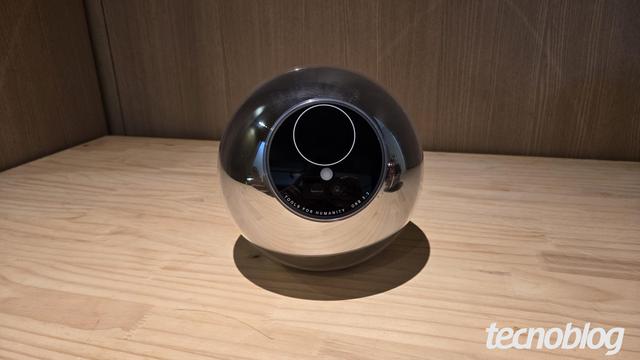
Sam Altman’s company Tools for Humanity is rolling out “World ID,” a biometric verification system that uses large, camera‑like devices called Orbs to scan a person’s face and irises, encrypt the data and create a digital passport proving “human‑ness.” Presented as an evolution of CAPTCHA, the service aims to combat the flood of AI‑generated bots, deepfakes, scams and impersonation that threaten online trust, especially as generative models become increasingly realistic. While the Orbs have been installed in public venues and are being integrated with services like Zoom, DocuSign and Tinder, the rollout has sparked privacy and reliability concerns—particularly after a mis‑communication about a partnership with Bruno Mars—and raises questions about how much users can trust a system that itself must prove its credibility. The article frames Altman’s push as both a response to the dangers of AI‑driven deception and a reflection of his broader role in shaping the technology that created those threats.

Read more: https://www.theatlantic.com/newsletters/2026/04/sam-altman-bots-world-id/686950/?utm_source=feed

#SamAltman #WorldID #OpenAI #Orb #CAPTCHA #BrunoMars

AI generated summary, Read the full article for complete information.

Sam Altman Wants to Know Whether You’re Human

And he has a way to prove it.

The Atlantic

qwant news | Sam Altman’s World Is Trying to Turn Human Identity Into Internet Infrastructure - Gadget Review

AI generated summary, Read the full article for complete information.

Sam Altman’s World unveiled World ID 3.0, a biometric “proof‑of‑human” network that expands its existing verification system to roughly 18 million users in 160 countries, enabling “verified‑human” badges on Tinder, bot‑limiting for Razer games, human authentication for Zoom meetings, and workplace verification through DocuSign and Okta. The upgrade introduces Deep Face technology, which uses Orb devices to capture iris and facial data, creating cryptographic signatures that can flag deepfakes in video calls and uploads while purportedly deleting raw images after processing. It also rolls out AgentKit, allowing a verified human to grant AI agents limited, revocable credentials for actions such as purchases or contract signing, all managed through a public‑beta World ID app that stores credentials alongside traditional ID data. While the company claims decentralized, anonymized storage and strong encryption, privacy advocates remain skeptical about the trade‑off between enhanced security and the collection of sensitive biometric information.

Read more: https://www.gadgetreview.com/sam-altmans-world-is-trying-to-turn-human-identity-into-internet-infrastructure

#SamAltman #DeepFace #AgentKit #WorldID

AI generated summary, Read the full article for complete information.

Sam Altman’s World Is Trying to Turn Human Identity Into Internet Infrastructure

World ID 3.0 adds human verification to Tinder, Zoom, and other apps while introducing deepfake detection and AI agent oversight features.

Gadget Review

Skanowanie oczu na Tinderze i Zoomie. Tak wygląda nowy certyfikat człowieczeństwa

Wyobraź sobie, że przed wejściem na wideorozmowę ze współpracownikami albo przed przesunięciem profilu w prawo w aplikacji randkowej, musisz bezspornie udowodnić, że jesteś żywym człowiekiem.

I to nie klikając w obrazki z sygnalizacją świetlną, ale skanując własną tęczówkę. To nie kadr z „Łowcy Androidów”, to nasza nowa rzeczywistość. Tinder i Zoom wdrażają technologię biometryczną, by walczyć z plagą botów i deepfake’ów. Za wszystkim stoi twórca ChatGPT, co nadaje tej historii wyjątkowo ironiczny wymiar.

Plaga idealnych oszustów

Zarówno platformy randkowe, jak i narzędzia korporacyjne mają dziś ten sam, gigantyczny problem: sztuczna inteligencja stała się zbyt doskonała w udawaniu nas samych. Na Tinderze plaga botów to już nie tylko irytujące, fałszywe profile, ale potężny przemysł oszustw matrymonialnych. Jak wyliczają amerykańscy śledczy, tylko w zeszłym roku ofiary zmanipulowane przez algorytmicznie zoptymalizowanych naciągaczy straciły ponad miliard dolarów (sic!). Boty potrafią dziś prowadzić rozmowy tak przekonujące, że użytkownicy nie zauważają momentu, w którym zaczyna się manipulacja.

Zupełnie inna, ale równie kosztowna skala problemu dotyka Zooma. Przypadek z Hongkongu, gdzie pracownik przelał 25 milionów dolarów, będąc w pełni przekonanym, że rozmawia na wideo ze swoim dyrektorem finansowym (który w rzeczywistości był perfekcyjnym deepfakiem), obudził korporacje z letargu. Wideokonferencja przestała być gwarantem autentyczności.

Zeskanuj oko, odbierz odznakę

Odpowiedzią na ten kryzys zaufania ma być World ID – cyfrowy paszport stworzony przez firmę World (dawniej Worldcoin). Użytkownicy Tindera i Zooma będą mogli dobrowolnie zeskanować swoją tęczówkę oka za pomocą specjalnego urządzenia w kształcie kuli (tzw. Orb) lub dedykowanej aplikacji. Tęczówka jest bowiem unikalna w stopniu znacznie wyższym niż odcisk palca.

Po udanej weryfikacji użytkownik otrzyma na swoim profilu specjalną odznakę „dowodu człowieczeństwa” (proof of humanity). Oznacza to, że zyskamy narzędzie pozwalające na pierwszy rzut oka odróżnić żywego rozmówcę od nawet najbardziej zaawansowanego, algorytmicznego oszusta. Firma chwali się, że do tej pory z jej weryfikacji skorzystało już 18 milionów osób.

Strażak, który sam podłożył ogień

W całej tej innowacji kryje się jednak fascynujący paradoks. Jednym z założycieli i szefem firmy World jest Sam Altman – ten sam człowiek, który stoi na czele OpenAI. To właśnie potężne modele językowe i generatory wideo tworzone przez jego firmę dały oszustom narzędzia do masowego tworzenia botów i deepfake’ów, z którymi teraz walczą Tinder i Zoom.

Podczas piątkowej prezentacji w San Francisco Altman stwierdził, że wkrótce w internecie będzie więcej treści stworzonych przez AI niż przez ludzi, ale „nie boi się przyszłości, dopóki potrafimy je od siebie odróżnić”. Trudno jednak nie zauważyć rynkowego sprytu tej strategii: gigant technologiczny najpierw dostarcza narzędzia, które niszczą zaufanie w cyfrowym świecie, a następnie oferuje nam biometryczne rozwiązanie tego problemu. Pytanie tylko, czy jesteśmy gotowi oddawać najbardziej wrażliwe dane biometryczne w zamian za cyfrową wiarygodność. W przeciwieństwie do skradzionego hasła, zrabowanego skanu tęczówki nie da się już nigdy zresetować.

Sam Altman ma potężny problem. ChatGPT to nie jest nowy Windows

#cyberbezpieczeństwo #deepfake #OpenAI #oszustwaWSieci #SamAltman #skanowanieTęczówki #sztucznaInteligencja #Tinder #tożsamośćCyfrowa #WorldID #Zoom
Ars Technica (@arstechnica)

World ID가 AI 에이전트 뒤에 암호학적으로 고유한 인간 신원을 연동하길 권장한다고 소개했습니다. 이 접근은 에이전트 인증·책임성·거버넌스 개선 가능성을 제시하며, 프라이버시·검증 방식 및 정책적 논의 촉발 가능성이 큽니다.

https://x.com/arstechnica/status/2034020062747918344

#worldid #identity #aiagents #cryptography #governance

Ars Technica (@arstechnica) on X

World ID wants you to put a cryptographically unique human identity behind your AI agents https://t.co/XX8Oz47Co6

X (formerly Twitter)
World ID wants you to put a cryptographically unique human identity behind your AI agents https://arstechni.ca/Smhv #worldcoin #Security #AIagents #identity #OpenClaw #security #WorldID #agents #AI
World ID wants you to put a cryptographically unique human identity behind your AI agents

Iris scan-backed tokens could help stop agent swarms from overwhelming online systems.

Ars Technica