Breaking Walls unveiled the physics‑based sci‑fi survival Venus: The Last Ascent, the demo is already on Steam, no early access date yet, release slated for 2027. 🪐

Build a massive wheeled fortress packed with guns, farms, drills, reactors and shields, grind resources, avoid getting stuck on ridges or flipping in storms, and push toward the last city above the clouds, it plays like a mobile tower‑defense, and at night the old machines wak...

#SteamAndEpic #Last #Breaking #Ascent #Walls #Venus

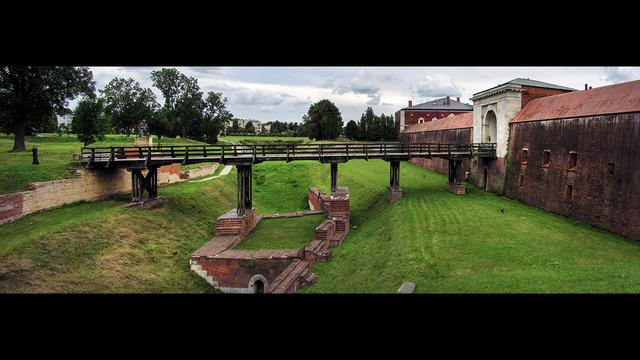
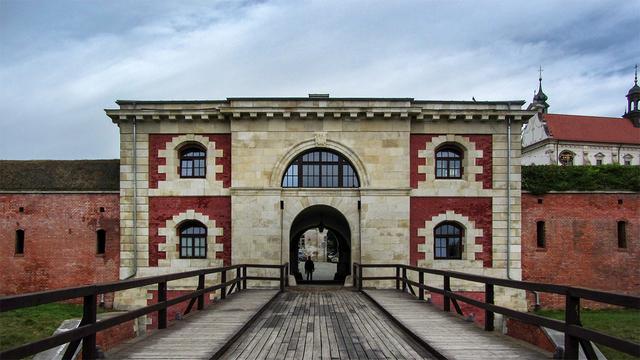
New Lublin Gate, Zamość, Poland

The New Lublin Gate was constructed between 1821 and 1822 during a general modernization of the city’s fortifications in the period of the Congress Kingdom of Poland. It was one of two new gates built on the sites of former fortifications, aiming to improve communication and access to the city, especially from the directions of Lublin and Krasnystaw. The gate was located in the curtain wall between bastions number V and VI on the northern defensive line. The design is attributed to military engineer Jan Mallet-Malletski, responsible for the modernization of the Zamość fortress.

The New Lublin Gate is distinguished by its classical monumental façade made of brick and stone. Its characteristic features include the Doric entablature crowning the façade and massive stone-and-brick frames around the arched passage with a powerful keystone. The façade also shows bas-reliefs of oak branches symbolizing courage and bravery, along with traces of the initials of Tsar Alexander I, who was also King of Poland. A wooden bridge, resting on the remains of a ravelin and earthwork, leads to the gate; this section of the curtain wall connecting the gate and the ravelin was reconstructed between 2007 and 2009.

Following the fortress’s decommissioning in 1866, the gate was bricked up and adapted for various purposes, including warehouses and guardhouses; in the postwar years, some of the rooms served as a restaurant and gallery. The New Lublin Gate remains an important historical and architectural landmark in Zamość, testifying to the city’s military and urban transformations in the 19th century.

#Zamosc #brama #gate #citygate #mury #walls #defensivewalls #architektura #architecture #Poland #Polska #photography #fotografia #bastion #fortifications

The window filters the gold of the setting afternoon sun, the light set in motion by the leaves of the trees. I cannot see the leaves, I can only see the movement of shadows made by them, the shadows they cast on the wall. The window is too high. Crisscrossing the dappled light are the shadows of filigreed iron bars as if the windows held the light prisoner.

---working opening sentences for "House of Old Selves"
#mastoprompt #walls

The Szczebrzeska Gate, Zamość, Poland

Also known as the Florian Gate, it was built in the early 17th century, probably between 1603 and 1605. The design is attributed to architect Bernardo Morando, who was the author of the entire Renaissance concept of the city of Zamość, and the construction was completed by the master mason Błażej Gocman.

The gate was one of the three main city gates and was located on the southern line of the city’s defensive walls, leading along the old road towards Szczebrzeszyn and Lublin. The structure was built on a rectangular plan, made of brick and sandstone, forming a two-story body covered with a hipped roof. Characteristic for the gate are Mannerist and Rococo decorative elements, including the attics and stone sculptures of St. Florian and St. Michael the Archangel, added in the 18th century during a renovation carried out by Jan and Jakub Maucher.

The Szczebrzeska Gate served as a strategic entrance to the city and an important element of the fortifications, connecting the outer suburbs with the center of Zamość. During the partitions, it was transformed in the Classical style, yet it retained its charm and functionality.

#Zamosc #brama #gate #citygate #mury #walls #defensivewalls #archotektura #architecture #Poland #Polska #photography #fotografia #fortifications