SAE 20, 30, 40… think you know these numbers? Think again. Behind the labels lies steam-era labs, stopwatches, and a viscosity index myth. Time to see how engine physics crushes marketing tales. #MotorOil #Tribology #SAE #Viscosity #Engine #OilMyths

https://www.youtube.com/watch?v=LhpcI0xHrug

SAE 30 - это что? А индекс? Странные числа, странные температуры - 40°C, 100°C.. Но почему? Зачем?

YouTube

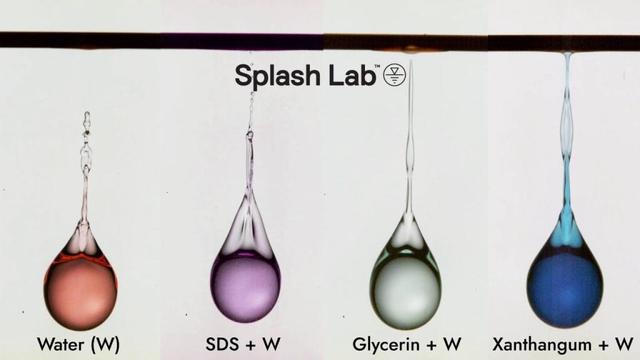
- Capillarity and viscosity: how liquids move -

Understand the relationship between capillarity and viscosity and their role in droplet dynamics with this video from the "Dynamics of fluid interfaces" MOOC by ESPCI Paris - PSL.

🎥 https://www.youtube.com/watch?v=Mq1EUe3cOCY&list=PLcbz7zf4dTyk9BqlBPLpgI48i9TiorpEi&index=13

#Capillarity #Viscosity #FluidPhysics #FluidDynamics

4.2 Capillarity and viscosity - Capillarity and viscosity

YouTube

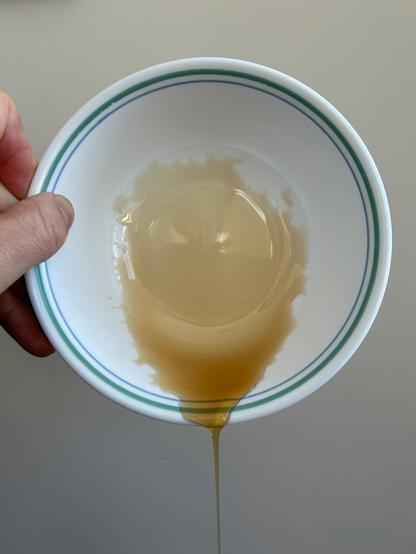
The world is a viscous place.

#viscous #viscosity

- Capillary number: balancing viscosity and surface tension -

The capillary number quantifies how viscosity and surface tension interact in droplets. Explore this key concept in the ESPCI Paris - PSL MOOC video.

🎥 https://www.youtube.com/watch?v=bbEOcd977ec&list=PLcbz7zf4dTyk9BqlBPLpgI48i9TiorpEi&index=12

#CapillaryNumber #Viscosity #SurfaceTension #FluidPhysics #LeidenfrostEffect

4.1 Capillarity and viscosity - Capillary number

YouTube

Competing Time Scales

Fluid dynamics often comes down to a competition between the different forces acting in a flow. Inertia, surface tension, viscosity, gravity, rotation — flows can be affected by all of these and more. In this video, researchers describe the three dominant forces in a rotating fluid like a planet’s atmosphere: viscosity, the fluid’s resistance to flowing; inertia, the fluid’s resistance to accelerating; and rotation, the overall spin of a fluid.

As shown in the video, which of these three forces dominates will change depending on the speed at which the force acts. We quantify this concept using time scales; the force with the smallest time scale can act fastest and will, therefore, win the tug-of-war. (Video and image credit: UCLA SpinLab)

#DIYFluids #flowVisualization #fluidDynamics #inertia #mathematics #physics #rotatingFlow #science #viscosity
Classical Fluid Analogies for Schrödinger-Newton Systems

Stock viscosity image: Photo by Fernando Serrano on Pexels.com

I thought I’d mention here a paper now on arXiv that I co-wrote with my PhD student Aoibhinn Gallagher. Here is the abstract:

The Schrödinger-Poisson formalism has found a number of applications in cosmology, particularly in describing the growth by gravitational instability of large-scale structure in a universe dominated by ultra-light scalar particles. Here we investigate the extent to which the behaviour of this and the more general case of a Schrödinger-Newton system, can be described in terms of classical fluid concepts such as viscosity and pressure. We also explore whether such systems can be described by a pseudo-Reynolds number as for classical viscous fluids. The conclusion we reach is that this is indeed possible, but with important restrictions to ensure physical consistency.

arXiv:2507.08583

It is based on work that his in her now-completed PhD thesis, along with another paper mentioned here. I have been interested for many years in the Schrödinger-Newton system (or, more specifically, the Schrödinger-Poisson system in the case where self-gravitational forces are involved). In its simplest form this involves a wave-mechanical representation, in the form of an effective Schrödinger equation, of potential flow described classically by an Euler equation. More recently we got interested in the extent to which such an approach could be used to model viscous fluids represented by a Navier-Stokes equation rather than an Euler equation. That was largely because the effective Planck constant that arises in this representation has the same dimensions as kinematic viscosity (but there’s more to it than that).

In the paper we explored a limited aspect of this, by looking at situations where there is no vorticity (so still a potential flow) but there is viscosity. There aren’t many examples of fluid flow in which there is viscosity but no vorticity, and most of those that do exist are about one-dimensional flow along channels or pipes with boundary conditions that don’t really apply to astrophysics, but one example we did look at in detail was the dissipiation of longitudinal waves in such a fluid.

One upshot of this work is that one can indeed describe some aspects of quantum-mechnical fluids such as ultra-light scalar matter in terms of classical fluid properties, such as viscosity, but you have to be careful. For more information, read the paper!

#AoibhinnGallagher #NavierStokesEquations #SchrödingerEquation #SchrödingerPoissonSystem #viscosity

Venusian Gravity Currents

Radar measurements of Venus‘s surface reveal the remains of many volcanic eruptions. One type of feature, known as a pancake dome, has a very flat top and steep sides; one dome, Narina Tholus, is over 140 kilometers wide. Since their discovery, scientists have been puzzling out how such domes could form. A recent study suggests that the Venusian surface’s elasticity plays a role.

According to current models, the pancake domes are gravity currents (like a cold draft under your door, an avalanche, or the Boston Molasses Flood), albeit ones so viscous that they may require hundreds of thousands of Earth-years to settle. Researchers found that their simulated pancake domes best matched measurements from Venus when the lava was about 2.5 times denser than water and flowed over a flexible crust.

We might have more data to support (or refute) the study’s conclusions soon, but only if NASA’s VERITAS mission to Venus is not cancelled. (Image credit: NASA; research credit: M. Borelli et al.; via Gizmodo)

#fluidDynamics #gravityCurrents #physics #planetaryScience #science #venus #viscosity #viscousFlow #volcano

Most fluid pharmaceutical products are not simple liquids and do not follow Newton's law of flow.
For more visit: https://pharmatech-rx.com/non-newtonian-fluids/

#nonnewtonianfluid #fluids #physics #Viscosity #flow #pharmatech #chem #manufacturing #pharmacy #newtonian_fluids

Newtonian fluids are simple liquids that follow Newton's law of direct proportionality between shear stress and shear rate.
The article: https://pharmatech-rx.com/newtonian-fluids/

#fluids #flow #viscosity #Pharmacy #Physics #newtonian_fluids

Room-Temperature Zwitterionic Liquids You Can Actually Stir:
Incorporation of a flexible oligoether chain into the spacer between cationic and anionic units reduces viscosity effectively
https://www.chemistryviews.org/room-temperature-zwitterionic-liquids-you-can-actually-stir/

#zwitterionicliquids #viscosity #chemistry #chemistryviews #chemviews

Room-Temperature Zwitterionic Liquids You Can Actually Stir - ChemistryViews

Incorporation of a flexible oligoether chain into the spacer between cationic and anionic units reduces viscosity effectively

ChemistryViews