 Alexander Winkler
Eine Frage an die #gamer:innen / #videospiel -Expert:innen hier: Gibt es Videospiele, die notorisch auf Historizität/Authentizität achten und vielleicht sogar Kulturerbe(daten) nachnutzen? Wenn ja, kennt da jemand entweder Dokumentation oder Literatur dazu? Ich recherchiere ein wenig zum Thema Nachnutzung von Kulturerbe(daten) im Gamingbereich und wäre für Hinweise dankbar!
 Miguel Espigado
GTA San Andreas. Los límites en la simulación de lo real
Mientras el espectador pasivo recibe un espectáculo, el jugador de video juegos genera el espectáculo. En el GTA San Andreas ocurre exactamente igual que en el cine. El jugador, como agente creador de la representación, conoce todos los artificios que mantienen el espectáculo de lo real, porque ha de conocerlos para representar, igual que el actor o el director de una película. La experiencia de juego denuncia constantemente los límites de lo real. El juego consiste precisamente en explorarlos. Trataremos de corroborarlo con ejemplos concretos.
GTA San Andreas. Los límites en la simulación de lo real, puede descargarse libremente en PDF aquí, en la sección «teoría».
#ammuNation #antiHéroe #armas #ética #ganster #GrandTheftAuto #GTASanAndreas #Norteamérica #sandbox #simulación #simulacro #videoGameStudies #videoJuegos #violencia
 Adrian
I’m at the same time excited and insecure to share the publication of my first article. This is a new experience for me and I want to thank @thist and @Eugen_pfister for their guidance along the way.
“Observing the Coming of Age of Video Game Graphics” is an attempt to dig the complex history of video games through their visuality.
https://openhumanitiesdata.metajnl.com/articles/10.5334/johd.251
Observing the Coming of Age of Video Game Graphics: Exploring the historical development of video game graphics through distant viewing, hermeneutics and image clustering | Journal of Open Humanities Data
The Journal of Open Humanities Data (JOHD) aims to be a key part of a thriving community of scholars sharing humanities data. The journal features peer reviewed publications describing humanities research objects or techniques with high potential for reuse. Humanities subjects of interest to JOHD include, but are not limited to Art History, Classics, History, Library Science, Linguistics, Literature, Media Studies, Modern Languages, Music and musicology, Philosophy, Religious Studies, etc. Submissions that cross one or more of these traditional disciplines are particularly encouraged.
Je suis très heureux de la publication de ce texte en particulier. Je l'ai écrit lors d'un séminaire à l'Université de Lausanne, sur l'histoire du jeu vidéo. @yrochat et @pyhurel m'ont énormément aidé dans la traduction française, ce dont je leur suis très reconnaissant.
Minarett Attack – Les jeux vidéo et la rhétorique de l’extrême droite
https://jeulausanne.hypotheses.org/1018
⚠️ Contient des images racistes et islamophobes.
--
It fills me with great pleasure that this text in particular is published now. I wrote it during a seminar at the University of Lausanne, on the history of video games. Yannick and Pierre-Yves helped me tremendously with the French translation, for which I am genuinely thankful.
I wrote the text originally in English and would have an unedited manuscript lying around.

Minarett Attack – Les jeux vidéo et la rhétorique de l’extrême droite
Ce texte examine l'utilisation d'un jeu vidéo dans une campagne politique de 2009 par un parti d'extrême droite. Je considère le jeu en question comme un outil rhétorique, l'utilisation consciente pour communiquer son propre agenda et influencer le processus de vote. Puisque le jeu n'est plus jouable, j'analyse ce qu'Internet a pu préserver, soit principalement la couverture de presse, ainsi que divers artefacts médiatiques. Cela me permet d’analyser la façon dont la rhétorique a été intégrée dans les graphiques du jeu, ainsi que la réception du jeu dans la presse. L’intention et l’effet sont deux aspects importants pour une analyse rhétorique (Fernández-Vara 2019 ; Scheuermann 2017).
I had the absolute pleasure of talking about parts of my ongoing research at Digital History Switzerland. I presented my approach on how to analyze video game images, in which FAVR plays a crucial role. Nervous as always, but the hosts and present community did a wonderful job of being warm and welcoming. Although my topic was a bit besides what many others presented, I got some valuable feedback and discussions out of the event. 10/10 would do again.
- https://digihistch24.github.io/book-of-abstracts/submissions/438/
- https://www.ludov.ca/en/observation/graphical-technologies/game-favr
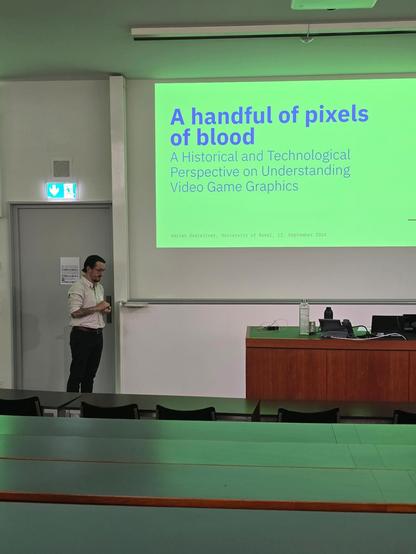
A handful of pixels of blood – DigiHistCH24 Book of Abstracts
What is the purpose of blood splattering onto the screen in a video game? Does it serve functional value, or is it mere intended to shock the user? Up to this day, little advance has been made in studying video game graphics’ material and structural conditions. They are not only narrative and aesthetic devices comparable to films but also hold functional information for players and are of an interactive nature (Fizek 2022; Gerling, Möring, and Mutiis 2023). Classical visual analysis struggles to encompass video game images because they focus on analogue or time-based visual media (Arsenault, Côté, and Larochelle 2015). How can blood spurting from a virtual body be analyzed? This research applies and extends the Framework for the Analysis of Visual Representation in Video Games (FAVR) to conduct and further adequate research on video game images.
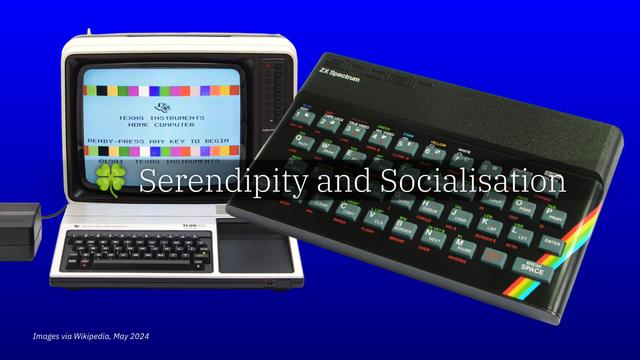
I'm quite excited to present some of my current research this Thursday at the Leisure Electronics conference. I'll be talking about the question "Why does somebody program a video game in the 1980ies?", and I have some dirty slides coming up. Tune in if your are in that kind of niche content.
My chances of landing a stable job in #Academia are practically zero. But even now, in my underpaid PhD-position, I feel more secure and positive in present and outlook regarding income and personal fulfilment. Which tells me a thing or two about how I felt before, and I guess I need to reflect on that.
One thing for sure: I’ve been incredibly lucky with the community I’ve become part of. #VideoGameStudies people are just awesome ✨
Some things never die.
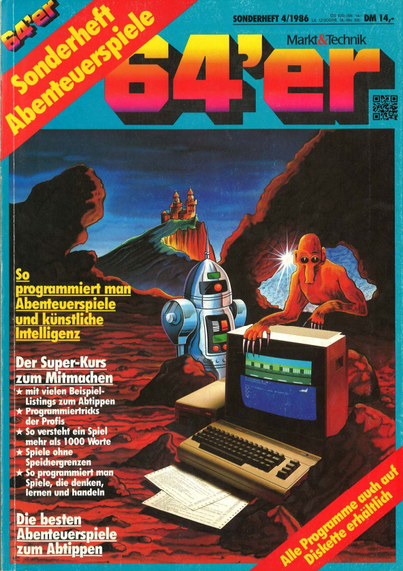
Reading through a source for early video game dev knowledge and skills, the C64'er 1986 fourth special issue, on adventure games.
A chapter on ✨ artificial intelligence ✨ starts with a Basic listing for a digital version of NIM and proceeds to state how important the book "Gödel, Escher, Bach" was for the preparation of the issue's content. Later, there is a listing and an analysis of Eliza as well as how to write an advanced text-parser.
Already present in this special issue is the discourse on formulating the machine as a quasi-human counterpart.
- https://en.wikipedia.org/wiki/Nim
- https://en.wikipedia.org/wiki/ELIZA
- http://www.homecomputerworld.at/magazine/64er/64er_sonderheft_1986_04.pdf
#VideoGameHistory #Technicity #C64 #VideoGameStudies #CHLudens

 Confoederatio Ludens
We were prominently featured in this comprehensive recap of @JeanFred of the Wikidata’s WikiProject Video games for 2023 💖 Thank you!
https://commonists.wordpress.com/2024/03/05/wikidata-and-the-sum-of-all-video-games-2023-edition/
https://www.wikidata.org/wiki/Wikidata:WikiProject_Video_games
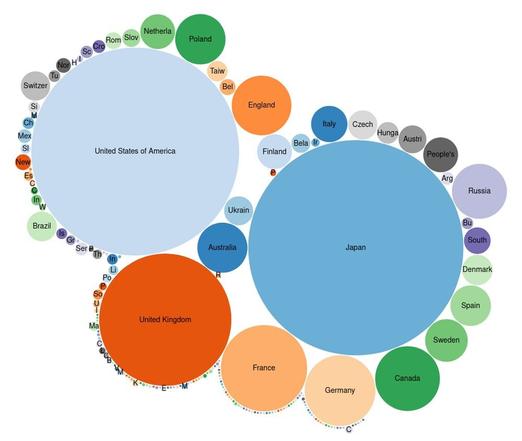

Our "Friendly Reading Salon" was today in session. Together, we read and now discussed Laine Nooney's "A Pedestal, A Table, A Love Letter: Archaeologies of Gender in Videogame History" hosted by @hekabeohnename this time ✨