Art encompasses a multitude of facets that intertwine to create profound expressions of creativity. From the intricate strokes of a painting to the graceful movements in a dance performance, art represents a beautiful fusion of diverse forms. This fusion serves as a testament to the boundless creativity and innovation that enlivens the world of art.
Ballets Russes: A Fusion of Art, Dance, and Fashion
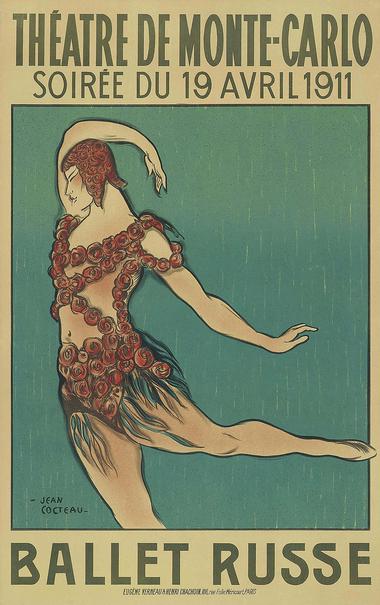
The Ballets Russes stands as a testament to the vibrant interchange of creative endeavors, seamlessly blending art, dance, and fashion into a mesmerizing spectacle. Founded by Sergei Diaghilev in 1909, this itinerant ballet company based in Paris engaged audiences worldwide with its innovative choreography, music, and stage design.
Collaborating with prominent artists of the time, including composer Igor Stravinsky, choreographer Michel Fokine, and designer Léon Bakst, the Ballets Russes redefined the art of ballet. From the stunning allure of vibrant costumes to the exploration of exotic themes, the company’s performances heralded a new era in dance.
Notable productions such as “The Firebird,” “Petrushka,” and “The Rite of Spring” ignited sensations with their avant-garde concepts, unconventional choreography, and groundbreaking musical scores.
The involvement of Matisse and Picasso in the Ballets Russes was significant, as both artists collaborated with the company, contributing to its innovative and influential productions.
Henri Matisse designed the costumes and sets for several of their performances. His distinctive artistic style and use of vibrant colours brought a unique visual dimension to the ballets, enhancing the overall aesthetic experience for the audience.
Similarly, Pablo Picasso collaborated with the company on the creation of striking set designs and costumes, infusing the productions with his avant-garde artistic vision and further pushing the boundaries of traditional ballet aesthetics.
Despite its relatively brief existence from 1909 to 1929, the Ballets Russes continues to inspire contemporary artists and captivate audiences with its enduring legacy of creativity and innovation.
La Tragédie de Salomé
Tamara Karsavina was a highly acclaimed Russian ballerina, renowned for her exceptional artistry and technical prowess. Born in 1885, she was a principal dancer of the Imperial Russian Ballet and later became a leading dancer with the Ballets Russes. Karsavina’s extraordinary talent and expressive performances contributed significantly to the Ballets Russes’ innovative and influential productions, leaving a lasting impact on the world of dance.
The ballet “La Tragédie de Salomé,” staged in 1913, is a mesmerizing example of the Ballets Russes’ commitment to pushing artistic boundaries. The production featured a brilliant costume designed by Serge Sudeikin for the prima ballerina Tamara Karsavina, which captured the essence of the narrative and thematic richness of the performance.
Sudeikin’s extraordinary design seamlessly blended opulence, drama, and exoticism, reflecting the depth of the production. The costume’s intricate details and striking visual impact enhanced Karsavina’s portrayal of the iconic character.
This collaboration between Sudeikin and Karsavina added to the company’s legacy as a pioneer in the world of performing arts.
Find out more about the Ballets Russes.
Explore more costumes from the V&A’s collections
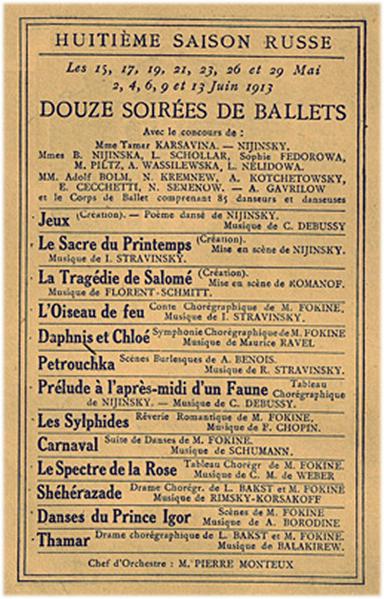
Copy of original Ballets Russes programme, staged by Sergei Diaghilev in Paris, 1913 (Public Domain via Wikimedia Commons)
https://chasingart.com/2024/05/24/ballets-russes-a-fusion-of-art-dance-and-fashion/
#BalletsRusses #LaTragédieDeSalomé #PerformingArts #SergeSudeikin #SergeiDiaghilev #TamaraKarsavina #VictoriaAlbertMuseum
 rogue_corq
 Karsten Schmidt

 Cal Howdy
 Mathew Thomas

 taz (inoffiziell)
 ChasingART