“The bigger, the better”*…
Thea Applebaum Licht with a reminder that, when it comes to size, Texas has got nothing on California…
Between about 1905 and 1915, the United States entered a golden age of postcards. Cheaper and faster mail service, the advent of “divided back” cards (freeing the entire front for images), and improved commercial printing all drove a new mass market for collectible communication. It was at this same moment that a craze for “tall-tale” or “exaggeration” postcards reached its peak. By cutting, collaging, and re-photographing images, artists created out-of-proportion illusions. One of the most popular genres was agricultural goods of fantastic dimensions.
Nowhere were such postcards more popular than in the western states. There, in the heart of the tough business of agriculture, illustrations of folkloric American abundance were understandable favorites. Pride and place were tied up with the prodigious crops. Supersized fruits and vegetables were often accompanied by brief captions: “How We Do Things at Attica, Wis.”, “The Kind We Raise in Our State”, or “The Kind We Grow in Texas”. Photographers like William “Dad” H. Martin and Alfred Stanley Johnson Jr. captured farmers harvesting furniture-sized onions and stacking corn cobs like timber, fisherman reeling in leviathans, and children sharing canoe-like slices of watermelon.
In the series of exaggeration postcards [produced in the run-up to the postcard boom, then published during it] collected [here], it is California that takes center stage. Produced by the prolific San Francisco–based publisher Edward H. Mitchell, each card features a single rail car rolling through lush farmland. Aboard are gargantuan, luminous fruits and vegetables: dimpled navel oranges, a dusky bunch of grapes, and mottled walnuts. Placed end-to-end, the cards would make a colorful train crossing California’s fertile valleys. Unlike other, more action-packed “tall-tale” cards — filled with farmers, fisherman, and children for scale — Mitchell’s series is restrained. Sharply illuminated, the colossal cargo lean toward artwork rather than gag. “A Carload of Mammoth Apples”[here], green-yellow and gleaming, could have been plucked from Rene Magritte’s The Son of Man [here].
Fabulous fruit and vegetables: “Calicornication: Postcards of Giant Produce (1909),” from @publicdomainrev.bsky.social.
In other art-related news: (very) long-term readers might recall that, back in 2008, (R)D reported that London’s Daily Mail believed that it had tracked him down, and that he is Robin Gunningham. Now as Boing Boing reports:
Anyone reading Banksy’s Wikipedia article at any point since a famous Mail on Sunday exposé in 2008 would likely get the impression the secretive stenciler is probably Robin Gunningham or Robert Del Naja, artists who came from the Bristol Underground. Reuters, having conducted extensive research into their movements, finds both men present at critical moments, but only one at all of them: an arrest report from New York City puts Gunningham firmly in the frame, and recent public records from Ukraine put it beyond doubt.
We later unearthed previously undisclosed U.S. court records and police reports. These included a hand-written confession by the artist to a long-ago misdemeanor charge of disorderly conduct – a document that revealed, beyond dispute, Banksy’s true identity. … Reuters presented that man with its findings about his identity and detailed questions about his work and career. He didn’t reply. Banksy’s company, Pest Control, said the artist “has decided to say nothing.”
His long-time lawyer, Mark Stephens, wrote to Reuters that Banksy “does not accept that many of the details contained within your enquiry are correct.” He didn’t elaborate. Without confirming or denying Banksy’s identity, Stephens urged us not to publish this report, saying doing so would violate the artist’s privacy, interfere with his art and put him in danger.
Del Naja (better known for other work) evidently participates in painting the murals and is perhaps the stencil draftsman (Banksy: “he can actually draw”). Banksy’s former manager, Steve Lazarides, organized a legal name change for Gunningham after the Mail on Sunday item, which successfully ended records for Banksy’s movements under his birth name and stymied researchers—until Reuters figured out the new one by poring through Ukrainian public records on days Del Naja was there. Gunningham used the name David Jones, among the most common in the U.K. If it rings a bell, you might be thinking of another famous British artist was who obliged by his record company to find something more unique.
* common idiom
###
As we live large, we might spare a thought for Isaac Newton; he died on this date (O.S.) in 1727. A polymath who was a key figure in the Scientific Revolution and the Enlightenment that followed, Newton was a mathematician, physicist, astronomer, alchemist, theologian, author, and inventor. He contributed to and refined the scientific method, and his work is considered the most influential in bringing forth modern science. His book Philosophiæ Naturalis Principia Mathematica (Mathematical Principles of Natural Philosophy), first published in 1687, achieved the first great unification in physics and established classical mechanics. He also made seminal contributions to optics, and shares credit with the German mathematician Gottfried Wilhelm Leibniz for formulating infinitesimal calculus. (Newton developed calculus a couple of years before Leibniz, but published a couple of years after.) Newton spent the last three decades of his life in London, serving as Warden (1696–1699) and Master (1699–1727) of the Royal Mint, a role in which he increased the trustworthiness/accuracy and security of British coinage in a way crucial to the rise of Great Britain as a commercial and colonial power.
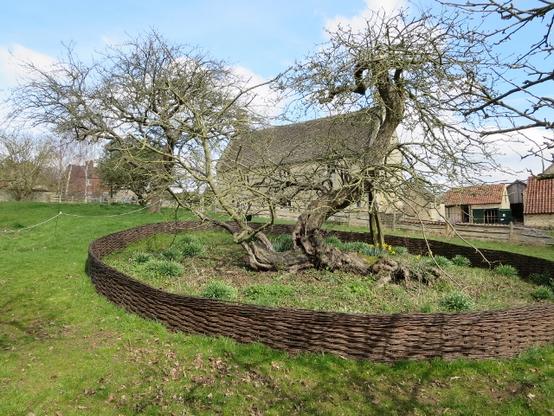
Newton, of course, had a famous relationship with fruit:
Newton often told the story that he was inspired to formulate his theory of gravitation by watching the fall of an apple from a tree. The story is believed to have passed into popular knowledge after being related by Catherine Barton, Newton’s niece, to Voltaire. Voltaire then wrote in his Essay on Epic Poetry (1727), “Sir Isaac Newton walking in his gardens, had the first thought of his system of gravitation, upon seeing an apple falling from a tree.” – source
Newton’s apple is thought to have been the green skinned ‘Flower of Kent’ variety.
Newton’s Tree with Woolsthorpe Manor (where, during the Plague, Newton was staying when he had his insight) behind (
source)
#apple #art #calculus #culture #currency #EdwardHMitchell #Enlightenment #fruit #gravity #history #humor #IsaacNewton #photography #postcard #Postcards #RoyalMint #Science #scientificRevolution #vegetables Editor
 The Mirror: News, Sport, Celebrity & Entertainment [Unofficial]
 Jayne
Jayne  🇪🇺🏳️🌈
🇪🇺🏳️🌈 (Roughly) Daily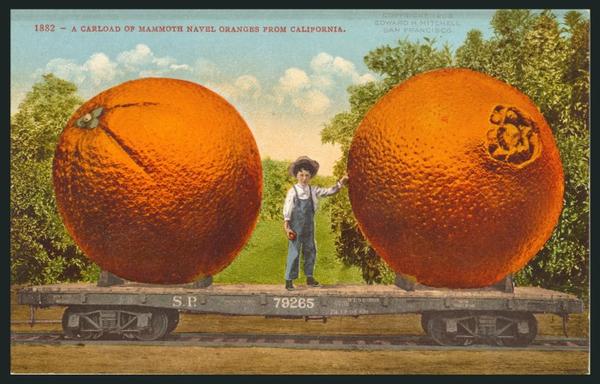

 WikiPicBot
 Think But logically