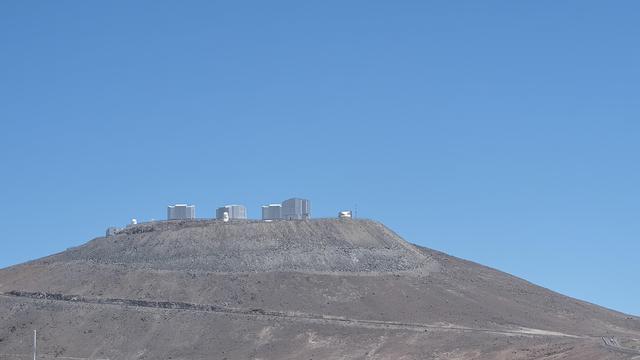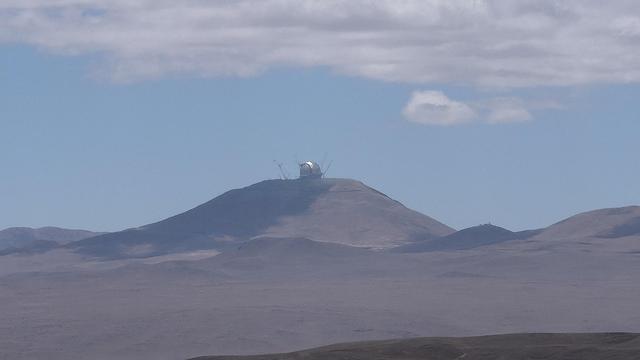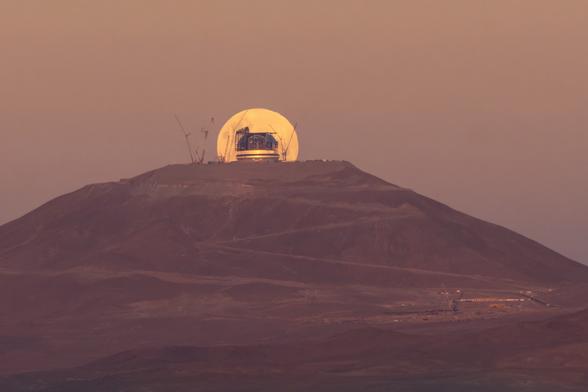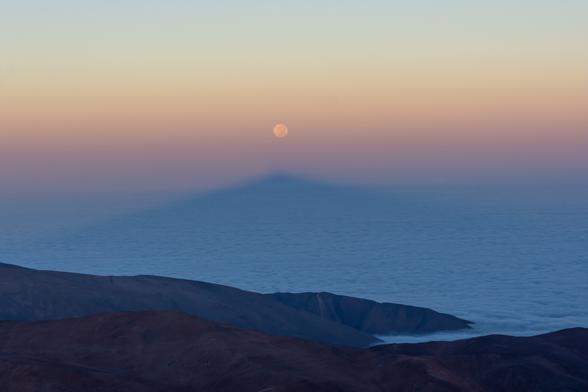
My tax €€€ at work in the best possible sense - real science, leading to real progress and understanding.

Thanks #ESO 🙂

#Paranal #armazones #VLTI #ELT #chile #atacama

@ChristophWendel @esoastronomy #ESO:
"
AES Andes gibt Aufgabe von INNA bekannt – geplanter Industriekomplex nahe Paranal abgewendet
"
".. ESO begrüßt diese Entscheidung und erwartet, dass das Projekt in Kürze auch offiziell beim chilenischen Umweltdienst (SEA) zurückgezogen wird, womit das endgültige Aus für INNA formell bestätigt wäre."

https://www.eso.org/public/germany/news/eso2602/

2.2.2026

#AESAndes #Astronomie #Chile #CTAO #ELT #INNA #Nachthimmel #Paranal #SEA #Südsternwarte #VLT #VLTI

AES Andes gibt Aufgabe von INNA bekannt – geplanter Industriekomplex nahe Paranal abgewendet

AES Andes hat angekündigt, sich aus dem Megaprojekt INNA zurückzuziehen, das in unmittelbarer Nähe zum Paranal-Observatorium der Europäischen Südsternwarte (ESO) geplant war. Die ESO begrüßt diese Entscheidung und erwartet, dass das Projekt in Kürze auch offiziell beim chilenischen Umweltdienst (SEA) zurückgezogen wird, womit das endgültige Aus für INNA formell bestätigt wäre.

www.eso.org
Les essais laser marquent le début d'une nouvelle ère dans le domaine de l'interférométrie

La semaine dernière, quatre lasers ont été projetés dans le ciel au-dessus du site de Paranal de l'Observatoire Européen Austral (ESO) au Chili. Chacun de ces lasers sert à créer une étoile artificielle, que les astronomes utilisent pour mesurer puis corriger le flou causé par l'atmosphère terrestre. Le lancement spectaculaire de ces lasers, un pour chacun des télescopes de huit mètres de Paranal, marque une étape importante du projet GRAVITY+, une mise à niveau importante et complexe du Very Large Telescope Interferometer (VLTI) de l'ESO. GRAVITY+ offre au VLTI une puissance d'observation accrue et une couverture du ciel beaucoup plus large qu'auparavant.

www.eso.org

GRAVITY+ läutet neue Ära der Interferometrie ein
https://www.mpe.mpg.de/8111918/news20251028

#VLT #VLTI #ESO

GRAVITY+ läutet neue Ära der Interferometrie ein

Over the weekend, four lasers were set off into the skies above the European Southern Observatory’s (ESO’s) Paranal site in Chile. The lasers are each used to create a fake star, which astronomers use to measure and then correct the blur caused by Earth's atmosphere. The striking launch of these lasers, one from each of the 8-metre telescopes at Paranal, is a significant milestone of the GRAVITY+ project — a large and complex upgrade to ESO’s Very Large Telescope Interferometer (VLTI) which was designed and developed by the Max Planck Institute for Extraterrestrial Physics (MPE). GRAVITY+ unlocks a greater observing power and a much wider sky coverage for the VLTI than previously possible.

C'est #StarWars au #VLTI ! Bravo à toutes les équipes de l'ESO et en particulier à l'équipe GRAVITY+ du @liraastro.bsky.social !

J'étais dans la salle de contrôle à distance à Munich quand on a vu le signal de la binaire. Magique.

https://mastodon.social/@esoastronomy/115525057160000851

Oxygen discovered in most distant known galaxy

Two different teams of astronomers have detected oxygen in the most distant known galaxy, JADES-GS-z14-0. The discovery, reported in two separate studies, was made possible thanks to the Atacama Large Millimeter/submillimeter Array (ALMA), in which the European Southern Observatory (ESO) is a partner. This record-breaking detection is making astronomers rethink how quickly galaxies formed in the early Universe.

www.eso.org

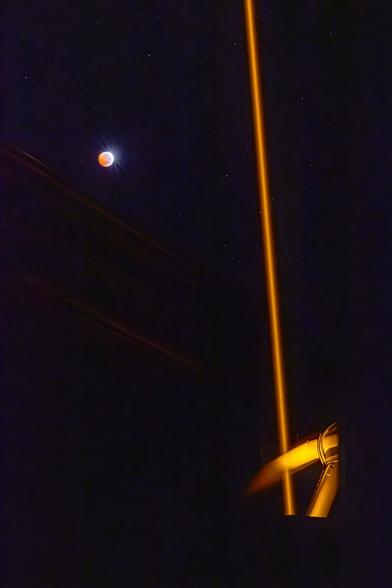
Cette semaine, nous testions l'optique adaptative de l'instrument #GRAVITY+ de l'interféromètre du #VLT (#VLTI). Avant l'installation des étoiles laser sur les télescopes unitaires 1, 2 et 3, nous avons qualifié le système avec le télescope 4, équipé d'étoiles lasers depuis des années pour d'autres instruments.

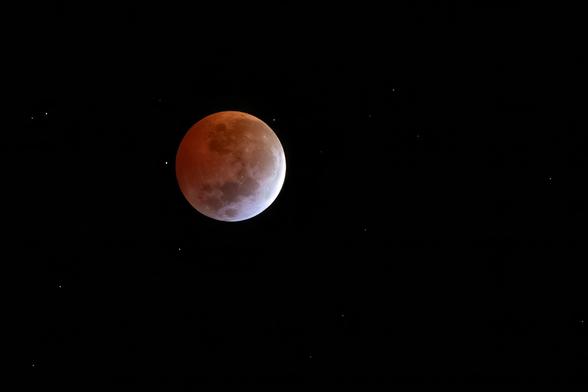
J'étais au QG de l'@esoastronomy en Allemagne, mais Anthony Berdeu était sur place et a pu capturer la magie de la #Lune dans le désert d'#Atacama.

Mon collègue Anthony Berdeu (LIRA) est actuellement au #VLTI au Chili et m'envoie quotidiennement des images époustouflantes de la #comète C/2024 G3 (ATLAS). J'ai donc assemblé son passage au périhélie entre le 11 et le 15 janvier 2025 vu par les sondes spatiales SDO et SOHO.
World's darkest and clearest skies at risk from industrial megaproject

On December 24th, AES Andes, a subsidiary of the US power company AES Corporation, submitted a project for a massive industrial complex for environmental impact assessment. This complex threatens the pristine skies above ESO’s Paranal Observatory in Chile’s Atacama Desert, the darkest and clearest of any astronomical observatory in the world [1]. The industrial megaproject is planned to be located just 5 to 11 kilometres from telescopes at Paranal, which would cause irreparable damage to astronomical observations, in particular due to light pollution emitted throughout the project’s operational life. Relocating the complex would save one of Earth's last truly pristine dark skies.

www.eso.org
🛑📢🌍 A network of optical telescopes 🔭 – the Very Large Telescope Interferometer (#VLTI) – has for the first time captured detailed images of a star outside our #galaxy 📸. The star WOH G64 🌟 is 2000 times larger in diameter than the #Sun ☀️ and lies 160,000 light-years away. Scientists, examining the gas and dust surrounding it, can tell that this red #supergiant 🔴 is in its final life phase and will soon explode into a #supernova 💥.
👉 https://www.eso.org/public/unitedkingdom/news/eso2417/?lang
Astronomers take the first close-up picture of a star outside our galaxy

“For the first time, we have succeeded in taking a zoomed-in image of a dying star in a galaxy outside our own Milky Way,” says Keiichi Ohnaka, an astrophysicist from Universidad Andrés Bello in Chile. Located a staggering 160 000 light-years from us, the star WOH G64 was imaged thanks to the impressive sharpness offered by the European Southern Observatory’s Very Large Telescope Interferometer (ESO’s VLTI). The new observations reveal a star puffing out gas and dust, in the last stages before it becomes a supernova.

www.eso.org