Gratifying to see my essay cited in the new book, 'Timeless Joyce: A Hundred Years of Ulysses' by Asun Lopez-Varela Azcárate, 2023. Quite generous use of it, I'd say, especially regarding the identification of the star, Aldebaran, and extensive paraphrases of the mythological material on oxen and bees, lacking direct citations within the text. Attentive readers of the book might like to look at this for sources https://www.mdpi.com/2077-1444/9/11/375 #Ulysses #Ulysses100 #Aldebaran #JamesJoyce #FinnegansWake
A Ruby and Triangled Sign upon the Forehead of Taurus: Modalities of Revelation in Megalithic Archaeoastronomy and James Joyce’s Novels Ulysses and Finnegans Wake

This paper proceeds from the concurrent interpretation of two distinct, apparently unrelated disciplinary contexts, at the crossroads of the positivism of archaeology and the imaginary world of literature. The character of the reciprocal relationship between megalithism in Neolithic Portugal and the writings of the twentieth-century author, James Joyce, is transfigured through the introduction of a third element of interpretation, a deeply paradoxical current of Jewish thought, with messianic dimensions, antithetical to the forces of mythic reconciliation present in Joyce’s fiction and in archaeological conceptions of ‘symbolic systems’ in antiquity, which tend to erase the innumerable singulars of experience. Applying a cryptotheologically-inflected exegesis immanent to the materials of text and archaeology in the light of their respective orientation to the same astral phenomenon, I seek to generate insights unanticipated within interpretations restricted to the disciplinary boundaries, theories and methodologies of archaeology and literary criticism as discrete entities. Within allegorised readings of archaeology and an archaeologicised reading of Joyce’s texts I bring into play non-synchronous elements which both disrupt the idealised harmonies of social and religious conformity and illuminate hitherto unseen connections between diverse, seemingly incommensurable contexts, beyond the discursive conventions of detached objectivity, without relinquishing irreduceible remnants to a totalising synthesis.
MDPI
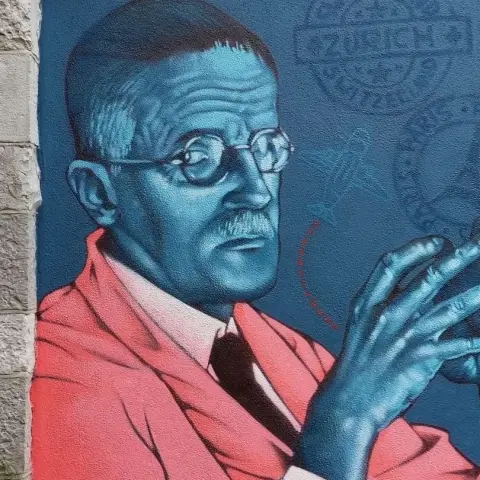
James Joyce mural in Galway by #thisisfriz - love, love, love 💙💗💙
#JamesJoyce #Ulysses100 #lovegalway #noranovel
Nora Barnacle and James Joyce mural in Galway by #thisisfriz - love, love, love 💙💗💙
#norabarnacle #JamesJoyce #Ulysses100 #lovegalway #visitgalway #AbbeygateStreet #noranovel
For Joyce's birthday and the #Ulysses100 Centenary on February 2, 2022, I created a list of new work in Joyce Studies for Modernist Studies Ireland's blog that may be of continued interest: https://moderniststudiesireland.org/2022/02/02/ulysses-100/
Celebrating 100 Years Since Ulysses: New Work in Joyce Studies

Modernist Studies Ireland
100 years of 'invoking ardent sympathetic constellations' #Ulysses100 #BloomsDay2022
https://www.mdpi.com/2077-1444/9/11/375
A Ruby and Triangled Sign upon the Forehead of Taurus: Modalities of Revelation in Megalithic Archaeoastronomy and James Joyce’s Novels Ulysses and Finnegans Wake

This paper proceeds from the concurrent interpretation of two distinct, apparently unrelated disciplinary contexts, at the crossroads of the positivism of archaeology and the imaginary world of literature. The character of the reciprocal relationship between megalithism in Neolithic Portugal and the writings of the twentieth-century author, James Joyce, is transfigured through the introduction of a third element of interpretation, a deeply paradoxical current of Jewish thought, with messianic dimensions, antithetical to the forces of mythic reconciliation present in Joyce’s fiction and in archaeological conceptions of ‘symbolic systems’ in antiquity, which tend to erase the innumerable singulars of experience. Applying a cryptotheologically-inflected exegesis immanent to the materials of text and archaeology in the light of their respective orientation to the same astral phenomenon, I seek to generate insights unanticipated within interpretations restricted to the disciplinary boundaries, theories and methodologies of archaeology and literary criticism as discrete entities. Within allegorised readings of archaeology and an archaeologicised reading of Joyce’s texts I bring into play non-synchronous elements which both disrupt the idealised harmonies of social and religious conformity and illuminate hitherto unseen connections between diverse, seemingly incommensurable contexts, beyond the discursive conventions of detached objectivity, without relinquishing irreduceible remnants to a totalising synthesis.

MDPI