#Hokusai #ClevelandArt #Uki
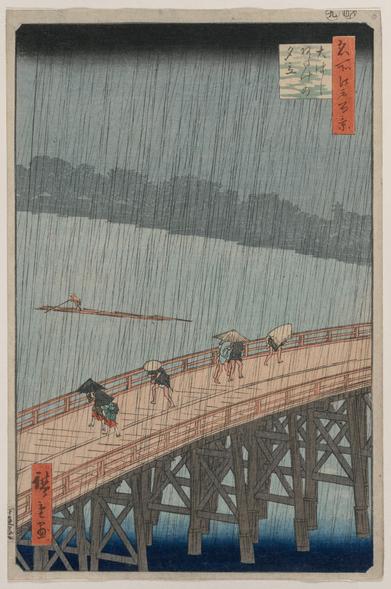
https://clevelandart.org/art/1930.183.c
uki-efi-boot automatically scans directories in your esp for efi executables and adds entries to your UEFI boot options while uki-snapper automatically creates boot entries/UKIs for snapper snapshots.
@ct_Magazin Nutzt heutzutage noch jemand #Grub/#Grub2?
Vor allem wenn man parallel boot machen will, ist doch #UKI mit einer dedizierten EFI-partition (im besten Fall das #Linux sogar auf einer zweiten platte, SD, oder microSD Karte installieren) und dann halt einfach den Linux bootloader im EFI registrieren.
So pfuschen einem gerade bei dual-boot die Windows Updates nicht immer dazwischen.
Ok, desktop environments könnte bessere GUI integration für "efibootmgr --bootnext" haben, aber sonst?
The recording of my third talk with Pragyan and Vitaly at All Systems Go! about UKI, composefs and remote attestation for Bootable Containers is now available: https://app.media.ccc.de/v/all-systems-go-2025-362-uki-composefs-and-remote-attestation-for-bootable-containers
#ASG2025 #AllSystemsGo #AllSystemsGo2025 #UKI #composefs #bootc #BootableContainers #RemoteAttestation
With Bootable Containers (bootc), we can place the operating system files inside a standard OCI container. This lets users modify the con...
We are bringing UKI and strong boot integrity guarantees with composefs to Bootable Containers. We demonstrated our latest progress on that front at DevConf.cz 2025: https://pretalx.devconf.info/devconf-cz-2025/talk/739KGC/
Using composefs and fs-verity, we can link a UKI to a complete read only filesystem tree, guarenteeing that every byte of every file is verified on load. This is done, similar to Git, using only hashes. This means that the signature on the UKI effectively signs the whole tree. With composefs, file content is split from the metadata which enables de-duplication at the file level. We can thus host any number of OS images on a single filesystem and there is no need to reserve space on the system in advance for each image. This frees us from fixed size disk image formats such as dm-verity which is used in a lot of image based systems. We illustrate this architecture by building an OS image using an OCI container via the familiar Containerfile syntax, then pushing it to a container registry and finally deploying it on a system. We will also explain how this will be integrated with the Bootable Containers project (bootc).