ICYMI: on the latest #TechstrongTV I join the Gang to go deep on #Google #acquisition of #CNAP (#cloud #cybersecurity) with #Wiz, esp. how it hits #AWS, #Azure, #Cisco, #Splunk, #Crowdstrike, #PANW, ++. Just don't call it #DevSecOps!

Plus, #AI is failing, even for religion!

https://techstrong.tv/videos/videos/techstrong-gang-march-19-2025

Techstrong Gang - March 19, 2025 - Techstrong TV

Alan, Mike, Mitch, Andi Mann and Lisa Martin, CMO Advisor for The Futurum Group, dive into why Google is spending $32 billion to acquire Wiz, a provider of a cloud native application protection platform (CNAPP).Then, the gang discusses the challenges organizations are running into as they attempt to operationalize artificial intelligence (AI) before discussing the impact AI might have on religion.

Techstrong TV

ICYMI, on the latest #TechstrongTV I join the Gang to go deep on #Google #acquisition of #CNAP (#cloud #cybersecurity) with #Wiz, esp. how it hits #AWS, #Azure, #Cisco, #Splunk, #Crowdstrike, #PANW, ++. Just don't call it #DevSecOps!

Plus, #AI is failing, even for religion!

https://techstrong.tv/videos/videos/techstrong-gang-march-19-2025

Techstrong Gang - March 19, 2025 - Techstrong TV

Alan, Mike, Mitch, Andi Mann and Lisa Martin, CMO Advisor for The Futurum Group, dive into why Google is spending $32 billion to acquire Wiz, a provider of a cloud native application protection platform (CNAPP).Then, the gang discusses the challenges organizations are running into as they attempt to operationalize artificial intelligence (AI) before discussing the impact AI might have on religion.

Techstrong TV

ICYMI, on the latest #TechstrongTV I join the Gang to go deep on #Google #acquisition of #CNAP (#cloud #cybersecurity) with #Wiz, esp. how it hits #AWS, #Azure, #Cisco, #Splunk, #Crowdstrike, #PANW, ++. Just don't call it #DevSecOps!

Plus, #AI is failing, even for religion!

https://techstrong.tv/videos/videos/techstrong-gang-march-19-2025

Techstrong Gang - March 19, 2025 - Techstrong TV

Alan, Mike, Mitch, Andi Mann and Lisa Martin, CMO Advisor for The Futurum Group, dive into why Google is spending $32 billion to acquire Wiz, a provider of a cloud native application protection platform (CNAPP).Then, the gang discusses the challenges organizations are running into as they attempt to operationalize artificial intelligence (AI) before discussing the impact AI might have on religion.

Techstrong TV

Super new drop from #TechstrongTV! I join the Gang to go deep on #Google #acquisition of #CNAP (#cloud #cybersecurity) with #Wiz, esp. how it hits #AWS, #Azure, #Cisco, #Splunk, #Crowdstrike, #PANW, ++. Just don't call it #DevSecOps!

Plus, #AI is failing, even for religion!

https://techstrong.tv/videos/videos/techstrong-gang-march-19-2025

Techstrong Gang - March 19, 2025 - Techstrong TV

Alan, Mike, Mitch, Andi Mann and Lisa Martin, CMO Advisor for The Futurum Group, dive into why Google is spending $32 billion to acquire Wiz, a provider of a cloud native application protection platform (CNAPP).Then, the gang discusses the challenges organizations are running into as they attempt to operationalize artificial intelligence (AI) before discussing the impact AI might have on religion.

Techstrong TV

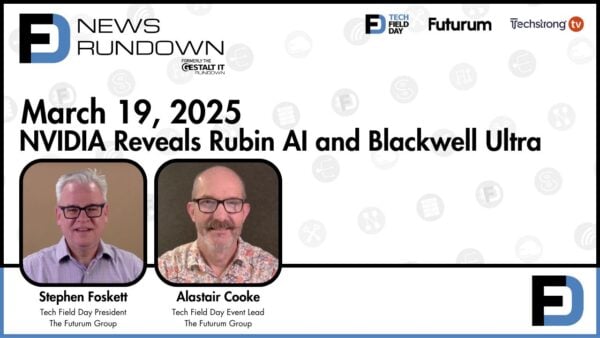
NVIDIA Reveals Rubin AI and Blackwell Ultra || Tech Field Day News Rundown: March 19, 2025

NVIDIA unveiled new AI-focused chips at its GTC conference, including the Blackwell Ultra series launching this year and the next-gen Vera Rubin GPUs set for 2026. CEO Jensen Huang emphasized the company’s shift to an annual release cycle, a departure from its previous biennial schedule. This move reflects NVIDIA’s response to the growing AI market and increasing competition. This and more on the Rundown.

https://youtu.be/49b4_OrMpvI

Apple Podcasts | Spotify | Overcast | Amazon Music | Audio | YouTube

2:29 – Taara Spun Out from Google’s Parent Company Alphabet

Alphabet has spun off Taara, its laser-based internet backbone provider, into an independent company focused on delivering high-speed connectivity to underserved regions. The newly formed company will continue developing its wireless optical communication technology, which aims to provide reliable internet without the need for traditional fiber infrastructure.

Read More: Alphabet spins off laser-based Internet backbone provider Taara

6:41 – Intel Names Lip-Bu Tan as New CEO

Intel has appointed Lip-Bu Tan as its new CEO, succeeding Pat Gelsinger who stepped down in December 2024. Tan, formerly CEO of Cadence Design Systems and an Intel board member, aims to revitalize the company by streamlining operations and focusing on advanced chip manufacturing, including AI server chips, to better compete with industry leaders like TSMC. Following the announcement, Intel’s stock surged nearly 8%, reflecting investor optimism about Tan’s strategic vision.

Read More: Intel Names Lip-Bu Tan as New CEO

12:38 – DevOps Gets Empowered by Semaphore Going Open Source

Semaphore has open-sourced its core CI/CD platform under the Apache 2.0 license, aiming to provide developers with greater flexibility and transparency. This move addresses the limitations of existing CI/CD solutions by combining enterprise-grade reliability with the customizability of open-source software. By making its codebase publicly accessible, Semaphore empowers developers to explore, modify, and enhance the platform to suit their unique requirements, fostering a community-driven approach to innovation.

Read More: Semaphore Goes Open Source: A New Dawn for DevOps Professionals

16:38 – Microsoft’s New Quantum Chip Greeted with Major Skepticism

Microsoft’s recent announcement of its Majorana 1 quantum chip, claimed to be a significant advancement in quantum computing, has been met with skepticism from the scientific community. Experts question the validity of Microsoft’s findings, citing a lack of peer-reviewed evidence and unproven underlying physics, leading to concerns about the legitimacy of the breakthrough.

Read More: Microsoft’s New Quantum Chip Greeted with Major Skepticism

22:04 – Solo.io Launches Kagent for Agentic AI-Driven Cloud Ops

Solo.io has launched Kagent, an open-source agentic AI framework designed to automate cloud-native operations within Kubernetes environments. Built on Microsoft’s AutoGen, Kagent integrates with existing tools to streamline tasks like configuration, troubleshooting, and network security, enabling DevOps teams to leverage AI-driven automation.

Read More: Solo.io’s Kagent Brings Agentic AI to Cloud-Native Operations

25:37 – Amazon, Google, and Meta Nuclear Datacenters by 2050

Amazon, Google, and Meta are investing heavily in nuclear energy as part of their strategy to achieve net-zero carbon emissions by 2050. These tech giants plan to power their operations with 100% renewable energy, with nuclear energy playing a key role in meeting their ambitious sustainability goals. Alongside nuclear, they are exploring advanced technologies like carbon capture to reduce their environmental impact and address the urgency of climate change.

Read More: Amazon, Google, Meta Are Going Super Nuclear by 2050

29:38 – NVIDIA Reveals Rubin AI and Blackwell Ultra

Nvidia unveiled new AI-focused chips at its GTC conference, including the Blackwell Ultra series launching this year and the next-gen Vera Rubin GPUs set for 2026. CEO Jensen Huang emphasized the company’s shift to an annual release cycle, a departure from its previous biennial schedule. This move reflects Nvidia’s response to the growing AI market and increasing competition.

Read More: Nvidia announces Blackwell Ultra and Rubin AI chips

40:58 – The Weeks Ahead

Upcoming Tech Field Day Events

Networking Field Day 37 – March 19 – 20

Tech Field Day Extra with HPE – April 8

AI Infrastructure Field Day 2 – April 23 – 24

Mobility Field Day 13 – May 7 – 8

Security Field Day 13 – May 29 – 30

Host Information

Stephen Foskett is the President of the Tech Field Day Business Unit and Organizer of the Tech Field Day Event Series, now part of The Futurum Group. Connect with Stephen on LinkedIn or on X/Twitter.

Alastair Cooke is a Tech Field Day Event Lead, now part of The Futurum Group. You can connect with Alastair on LinkedIn or on X/Twitter and you can read more of his research notes and insights on The Futurum Group’s website.

Gestalt IT and Tech Field Day are now part of The Futurum Group.

The Gestalt IT Rundown is your look at the IT news of the week. Be sure to subscribe to Gestalt IT on YouTube for even more weekly video content.

#AI #NVIDIAGTC #Rundown #AWSCloud #DemitasseNZ #GestaltIT #Google #GoogleCloud #Intel #IntelBusiness #Meta #Microsoft #Nvidia #SFoskett #TechFieldDay #TechstrongTV #TheFuturumGroup

https://wp.me/p4YpUP-n5B

NVIDIA Reveals Rubin AI and Blackwell Ultra || Tech Field Day News Rundown: March 19, 2025

YouTube

OpenAI Not For Sale as They Prepare Proprietary Chip | The Gestalt IT Rundown: February 12, 2025

A group of investors, led by Elon Musk’s startup xAI and other backers, has made a $97.4 billion bid to take control of OpenAI, aiming to refocus the organization on open-source AI and safety amid rising tensions between Musk and OpenAI CEO Sam Altman over its shift to a for-profit model. Meanwhile, OpenAI is advancing its AI hardware strategy with plans to launch a custom-designed AI chip in 2024, fabricated by TSMC using 3-nanometer technology to reduce reliance on Nvidia. Initially deployed on a limited scale, the chip is designed to optimize AI model performance, with OpenAI’s expanding chip team already working on future iterations with enhanced capabilities. This and more on The Rundown.

https://youtu.be/Ng59i8nmVI4

Apple Podcasts | Spotify | Overcast | Amazon Music | Audio | YouTube

2:44 – Turn/River Capital Acquires SolarWinds

With its $4.4 billion acquisition of SolarWinds, Turn/River Capital seeks to take the IT management software firm private, allowing it to focus on long-term growth without the pressure of quarterly earnings. This deal aligns with a broader surge in private-equity buyouts in the software sector, driven by declining borrowing costs, and comes after SolarWinds’ turbulent past, including a major 2020 cyberattack that compromised government and corporate clients.

Read More: SolarWinds To Be Acquired By Turn/River Capital In $4.4B All-Cash Deal

Read More: Turn/River’s $4.4 Billion Acquisition of SolarWinds Could Signal More IT-Related Deals

5:21 – WEKA Restructure to Focus on AI

WEKA is restructuring its go-to-market functions to align with the rapid growth of generative AI, following a strong 2024 in which it raised $140 million in funding and surpassed $100 million in annual recurring revenue. CEO Liran Zvibel emphasizes that this strategic shift will position the company for long-term success, with plans to expand headcount by approximately 120 employees to support large-scale enterprise AI and GPU acceleration deployments.

Read More: WEKA restructures for the GenAI era

9:23 – Cisco One Silicon Shows Big at Cisco Live EMEA

Cisco Live EMEA is happening this week and Cisco has had some big announcements. The biggest news comes with investments in new service provider hardware and data center infrastructure as well. The moves appear to be positioned to help Cisco customers take advantage of AI while also offering a custom advantage. The newest platforms are all powered by Cisco’s Silicon One chips. The newest A-series and K-series CPUs help offload processing to the edge and give Cisco an opportunity to challenge merchant silicon vendors in the space. For more on this we’re going on site to Tom Hollingsworth in Amsterdam at Cisco Live for more.

Read More: Tech Field Day Extra at Cisco Live EMEA Day One

12:50 – Hammerspace is Changing the AI Training Game

Hammerspace is challenging conventional reliance on object storage for AI workloads by advocating for universal, protocol-agnostic data access instead. The company has emphasized the importance of intelligent data orchestration across various storage types, ensuring seamless access to relevant datasets without disruptive migrations. As AI adoption continues to grow, Hammerspace highlights the need for metadata-driven automation and hybrid access models to optimize performance and scalability in enterprise environments.

Read More: Hammerspace challenges object storage norms for AI

17:31 – French President to Invest $112B in AI

French President Emmanuel Macron announced $112 billion in private investments for the AI ecosystem, with funds expected to be deployed in the coming years, coinciding with Paris hosting the Artificial Intelligence Action Summit. This investment will primarily focus on AI data centers, with the country positioning itself as an ideal location for AI infrastructure due to its low-carbon electricity and stable grid, which Macron emphasized as a competitive advantage for attracting global investments.

Read More: Macron unveils $112B AI investment package, France’s answer to US’ Stargate

22:36 – Huawei Shows Revenue Growth Despite Ban

Huawei expects to meet its 2024 revenue target of ¥860 billion ($118.25 billion), marking 22% growth compared to 2023. Despite sanctions, its ICT business remains strong, its consumer sector is growing, and its smart car solutions are expanding quickly. This success is notable considering Huawei’s challenges, including the sale of its Honor brand and the difficult economic environment in China.

Read More: Huawei revenue growing fast, suggesting China’s scoffing at sanctions

26:49 – Sam Altman Says OpenAI is Not for Sale

A group of investors has made a $97.4 billion offer to take control of OpenAI, aiming to restore the organization’s focus on open-source AI and safety. The investors are led by Elon Musk’s startup xAI and several other backers. Tensions between Musk and OpenAI’s CEO Sam Altman have escalated as Musk challenges OpenAI’s shift to a for-profit model and its current management.

Read More: Musk-led investor group offers $97.4 billion for OpenAI — Altman declines

33:06 – OpenAI to Take On NVIDIA with Proprietary Chip

OpenAI is preparing to launch its own AI chip in 2024, aiming to reduce its reliance on Nvidia. The custom-designed chip, to be fabricated by TSMC using 3-nanometer technology, will focus on running AI models and will initially be deployed on a limited scale. OpenAI’s chip team, which has recently doubled in size, is also working on future versions with enhanced capabilities.

Read More: OpenAI is reportedly getting closer to launching its in-house chip

38:13 – The Weeks Ahead

Cloud Field Day 22 – February 19 – 20

Networking Field Day 37 – March 19 – 20

Gestalt IT and Tech Field Day are now part of The Futurum Group.

The Gestalt IT Rundown is your look at the IT news of the week. Be sure to subscribe to Gestalt IT on YouTube for even more weekly video content.

#AI #ITNews #Rundown #Cisco #CiscoNetworking #DemitasseNZ #GestaltIT #HammerspaceInc #Huawei #OpenAI #SFoskett #SolarWinds #TechFieldDay #TechstrongTV #TheFuturumGroup #WekaIO

https://wp.me/p4YpUP-mUe

OpenAI Not For Sale as They Prepare Proprietary Chip | The Gestalt IT Rundown: February 12, 2025

YouTube
#SymLink: Stephen Foskett reports on Cloud Field Day 21, highlighting key presentations from VMware, Platform9, and Qumulo on the evolution of cloud technologies. @sfoskett #SFoskett #VMware #Platform9Sys #Qumulo #CFD21 #TechstrongTV #Video
https://techstrong.tv/videos/techstrong-gang/techstrong-gang-october-29-2024
Techstrong Gang - October 29, 2024 - Techstrong TV

Alan, Mike, Jon, Bonnie and special guest Stephen Foskett, president of The Tech Field Day arm of The Futurum Group, discuss how cloud computing is evolving following an event held last week.Then, the gang turns its attention to how artificial intelligence (AI) is being applied to weather forecasting before discussing how the heat generated by data centers might be put to good agricultural use.

Techstrong TV

Commvault Shift’s Cyber Resilience for the AI Era | The Gestalt IT Rundown: October 16, 2024

https://youtu.be/ywM-ey-IR7Q

At Commvault SHIFT 2024, The Futurum Group’s Daniel Newman and Patrick Moorhead sat with CEO Sanjay Mirchandani, who discussed Commvault’s strategic pivot towards a cloud-first approach in cyber resilience. This shift involves key acquisitions, such as Appranix and Clumio, and new partnerships with AWS and Google, aimed at enhancing cloud data protection and recovery. Mirchandani also introduced the concept of “Continuous Business,” highlighting its distinction from traditional business continuity by emphasizing ongoing readiness and adaptability in a dynamic digital landscape.

Apple Podcasts | Spotify | Overcast | Amazon Music | Audio | YouTube

2:57 – Chip Boom Continues with Record-Breaking Demand

Global semiconductor sales jumped 20.6% year-on-year in August 2024, reaching $53.1 billion, with the Americas leading the growth at 43.9%, driven by AI, cloud computing, and automotive demand. Despite the strong recovery, supply chain disruptions and ongoing US-China geopolitical tensions pose significant risks to the industry. While export controls and national security concerns remain, the sector is expected to continue rebounding due to persistent demand across multiple sectors.

Read More: Global semiconductor sales up 20.6% to record $53.1B as trade wars rage on

5:47 – Accenture Pushes Agentic AI Built on NVIDIA

Accenture is positioning itself at the forefront of the emerging agentic AI wave by expanding its partnership with Nvidia to leverage advanced AI capabilities within its operations. The company is launching the Accenture Nvidia Business Group, which will employ an “army of agents” to tackle complex workflows, enhance efficiency, and deliver customized solutions for clients. While agentic AI presents significant opportunities for innovation, Accenture acknowledges the challenges of data security, ethical considerations, and the necessity for human oversight as these systems become increasingly autonomous.

Read More: Accenture Melds Smarts and Wares with NVIDIA for Agentic AI Push

10:53 – AMD AI Chips to Challenge NVIDIA

AMD announced the release of its MI325X AI accelerator in 2025, followed by the MI350 series, which will feature 256GB of memory and 6TBps throughput, surpassing NVIDIA’s H200 series. Additionally, the company introduced the AMD Pensando Pollara 400 Ethernet accelerator and a new 5th Gen EPYC processor that improves performance by up to 17%, while CEO Dr. Lisa Su stressed the importance of leveraging open-source software and building an ecosystem around the ROCm stack to compete effectively in the market. For more on this story, let’s bring in Techstrong.ai’s Mike Vizard to discuss what this means.

Read More: AMD Extends AI Accelerator Lineup to Challenge NVIDIA

13:22 – Geopolitics’ Impact on Digital Infrastructure

In his latest column on Every.to, Gareth Edwards explores the British government’s decision to transfer sovereignty of the Chagos Islands to Mauritius, an event that will lead to the retirement of the widely used .io domain suffix in the tech and gaming industries. This geopolitical shift highlights the interconnectedness of global politics and digital infrastructure, as the Internet Assigned Numbers Authority (IANA) prepares to eliminate the “IO” country code, impacting numerous existing websites. Citing historical precedents like the fall of the Soviet Union and the breakup of Yugoslavia, Edwards cautions tech founders to consider the implications of their domain name choices, as real-world events can significantly affect the digital landscape.

Read More: The Disappearance of an Internet Domain

16:53 – Cisco sells their stake in Rubrik

Cisco has sold its nearly $6 million stake in cybersecurity firm Rubrik, following the company’s April IPO. Despite the sale, the two companies maintain a strategic partnership, with Rubrik joining Cisco’s SolutionsPlus program in August, making its products available on Cisco’s Global Price List.

Read More: Cisco sells stake in cybersecurity firm Rubrik – report

20:49 – CTERA’s Data Intelligence Enhances GenAI with File Data

CTERA has launched its Data Intelligence offering, designed to enhance retrieval-augmented generation, or RAG, by linking cloud file services data to chosen GenAI models, providing real-time private context to improve response accuracy. CEO Oded Nagel highlighted that the service enables organizations to securely integrate their proprietary data with AI, delivering relevant insights while maintaining data privacy, through features such as semantic engines, identity-based access, and customizable virtual assistants. CTERA’s solution supports both on-premises and cloud deployments, addressing challenges related to unstructured data and facilitating effective AI interactions within enterprise environments.

Read More: CTERA launches Data Intelligence to link file data to AI models

25:28 – Commvault Shift’s Cyber Resilience for the AI Era

At Commvault SHIFT 2024, The Futurum Group’s Daniel Newman and Patrick Moorhead sat with CEO Sanjay Mirchandani, who discussed Commvault’s strategic pivot towards a cloud-first approach in cyber resilience. This shift involves key acquisitions, such as Appranix and Clumio, and new partnerships with AWS and Google, aimed at enhancing cloud data protection and recovery. Mirchandani also introduced the concept of “Continuous Business,” highlighting its distinction from traditional business continuity by emphasizing ongoing readiness and adaptability in a dynamic digital landscape.

Read More: Shifting to Cloud-First Cyber Resilience with Commvault

Gestalt IT Live Blog: Commvault Shift 2024 Live Blog

As we discussed on the September 25th episode of The Rundown, Commvault announced the acquisition of Clumio. This integration, which will launch later this year, aims to accelerate Commvault’s vision of a resilient, cloud-first enterprise by leveraging Clumio’s expertise in AWS to bolster cyber recovery and resilience for customers and partners.

Read More: Commvault Acquires Clumio and Extends Cloud Resilience Capabilities on AWS

Commvault announced significant updates including full availability of its Commvault Cloud platform on AWS, support for Google Workspace protection, and a partnership with Pure Storage to help financial customers comply with the EU’s Digital Operational Resilience Act (DORA), which comes into effect in January 2025. The new offerings, such as Cloud Rewind and the Cyber Resilience Dashboard, aim to enhance cyber resilience by enabling rapid recovery from cyber incidents while ensuring that applications and data are restored efficiently and securely across multiple cloud environments.

Read More: Commvault expands cloud and cyber resilience solutions, including Cloud Rewind

38:51 – The Weeks Ahead

Security Field Day 12 – October 16 – 17

Cloud Field Day 21 – October 23 – 24

Networking Field Day 36 – November 6 – 7

Gestalt IT and Tech Field Day are now part of The Futurum Group.

The Gestalt IT Rundown is your look at the IT news of the week. Be sure to subscribe to Gestalt IT on YouTube for even more weekly video content.

#AgenticAI #CommvaultShift #Rundown #Accenture #AMD #AShimmy #Cisco #Commvault #CTERA #GarethEdwards86 #GestaltIT #Nvidia #RubrikInc #SFoskett #TechFieldDay #TechstrongTV #TheFuturumGroup #TheSixFiveMedia

https://wp.me/p4YpUP-mJF

Commvault Shift's Cyber Resilience for the AI Era | The Gestalt IT Rundown: October 16, 2024

YouTube

Data Infrastructure Is A Lot More Than Storage

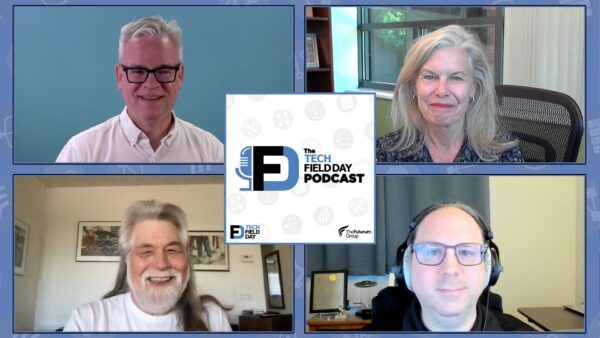
The rise of AI and the importance of data to modern businesses has driven us too recognize that data matters, not storage. This episode of the Tech Field Day podcast focuses on AI data infrastructure and features Camberley Bates, Andy Banta, David Klee, and host Stephen Foskett, all of whom will be attending our AI Data Infrastructure Field Day this week. We’ve known for decades that storage solutions must provide the right access method for applications, not just performance, capacity, and reliability. Today’s enterprise storage solutions have specialized data services and interfaces to enable AI workloads, even as capacity has been driven beyond what we’ve seen in the past. Power and cooling is another critical element, since AI systems are optimized to make the most of expensive GPUs and accelerators. AI also requires extensive preparation and organization of data as well as traceability and records of metadata for compliance and reproducibility. Another question is interfaces, with modern storage turning to object stores or even vector database interfaces rather than traditional block and file. AI is driving a profound transformation of storage and data.

Infrastructure Beyond Storage

The rise of AI has fundamentally shifted the way we think about data infrastructure. Historically, storage was the primary focus, with businesses and IT professionals concerned about performance, capacity, and reliability. However, as AI becomes more integral to modern business operations, it’s clear that data infrastructure is about much more than just storage. The focus has shifted from simply storing data to managing, accessing, and utilizing it in ways that support AI workloads and other advanced applications.

One of the key realizations is that storage, in and of itself, is not the end goal. Data is what matters. Storage is merely a means to an end, a place to put data so that it can be accessed and used effectively. This shift in perspective has been driven by the increasing complexity of AI workloads, which require not just vast amounts of data but also the ability to access and process that data in real-time or near real-time. AI systems are highly dependent on the right data being available at the right time, and this has led to a rethinking of how data infrastructure is designed and implemented.

In the past, storage systems were often designed with a one-size-fits-all approach. Whether you were running a database, a data warehouse, or a simple file system, the storage system was largely the same. But AI has changed that. AI workloads are highly specialized, and they require storage systems that are equally specialized. For example, AI systems often need to access large datasets quickly, which means that traditional storage systems that rely on spinning disks or even slower SSDs may not be sufficient. Instead, AI systems are increasingly turning to high-performance storage solutions that can deliver the necessary bandwidth and low latency.

Moreover, AI workloads often require specialized data services that go beyond simple storage. These include things like data replication, data reduction, and cybersecurity features. AI systems also need to be able to classify and organize data in ways that make it easy to access and use. This is where metadata management becomes critical. AI systems need to be able to track not just the data itself but also the context in which that data was created and used. This is especially important for compliance and reproducibility, as AI systems are often used in regulated industries where traceability is a legal requirement.

Another important aspect of AI data infrastructure is the interface between the storage system and the AI system. Traditional storage systems often relied on block or file-based interfaces, but AI systems are increasingly turning to object storage or even more specialized interfaces like vector databases. These new interfaces are better suited to the needs of AI workloads, which often involve large, unstructured datasets that need to be accessed in non-linear ways.

Power and cooling are also critical considerations in AI data infrastructure. AI systems are highly resource-intensive, particularly when it comes to GPUs and other accelerators. These systems generate a lot of heat and consume a lot of power, which means that the data infrastructure supporting them needs to be optimized for energy efficiency. This has led to a shift away from traditional spinning disks, which consume a lot of power, and towards more energy-efficient storage solutions like SSDs and even tape for long-term storage.

The rise of AI has also blurred the lines between storage and memory. With the advent of technologies like CXL (Compute Express Link), the distinction between memory and storage is becoming less clear. AI systems often need to access data so quickly that traditional storage solutions are not fast enough. In these cases, data is often stored in memory, which offers much faster access times. However, memory is also more expensive and less persistent than traditional storage, which means that data infrastructure needs to be able to balance these competing demands.

In addition to the technical challenges, AI data infrastructure also needs to address the growing need for traceability and compliance. As AI systems are increasingly used to make decisions that impact people’s lives, whether in healthcare, finance, or other industries, there is a growing need to be able to trace how those decisions were made. This requires not just storing the data that was used to train the AI system but also keeping detailed records of how that data was processed and used. This is where metadata management becomes critical, as it allows organizations to track the entire lifecycle of the data used in their AI systems.

In conclusion, AI is driving a profound transformation in the way we think about data infrastructure. Storage is no longer just about performance, capacity, and reliability. It’s about managing data in ways that support the unique needs of AI workloads. This includes everything from specialized data services and interfaces to energy-efficient storage solutions and advanced metadata management. As AI continues to evolve, so too will the data infrastructure that supports it, and organizations that can adapt to these changes will be well-positioned to take advantage of the opportunities that AI presents.

https://youtu.be/P9O_9WBMtdI

Apple Podcasts | Spotify | Overcast | Amazon Music | YouTube Music | Audio

Learn more about AI Data Infrastructure Field Day 1 on the Tech Field Day website. Watch the event live on LinkedIn or on Techstrong TV.

Podcast Information:

Stephen Foskett is the Organizer of the Tech Field Day Event Series, now part of The Futurum Group. Connect with Stephen on LinkedIn or on X/Twitter.

Camberley Bates is the VP and Practice Lead at The Futurum Group. You can connect with Camberley on LinkedIn and her podcast Infrastructure Matters through The Futurum Group.

Andy Banta is a consultant at MagnitionIO and a storage expert promoting simplicity and economy. You can connect with Andy on X/Twitter or on LinkedIn. Learn more about Andy on his Substack.

David Klee is the Founder at Heraflux Technologies. You can connect with David on X/Twitter or on LinkedIn. Learn more about David on his personal website or about Heraflux Technologies on their website.

Thank you for listening to this episode of the Tech Field Day Podcast. If you enjoyed the discussion, please remember to subscribe on YouTube or your favorite podcast application so you don’t miss an episode and do give us a rating and a review. This podcast was brought to you by Tech Field Day, home of IT experts from across the enterprise, now part of The Futurum Group.

#AI #AIDIFD1 #TFDPodcast #Andybanta #CamberleyB #KleeGeek #SFoskett #TechFieldDay #TechstrongTV #TheFuturuemGroup

https://wp.me/p4YpUP-mEb

AI Data Infrastructure Field Day 1 - Tech Field Day

AI Field Day and AI Data Infrastructure Field Day Tech Field Day is hosting AI Field Day 5 in September and our first-ever AI Data Infrastructure Field Day in October. What’s the difference? AI Field Day is focused on building and running AI applications in the enterprise, including training and inferencing hardware and software. AI […]

Tech Field Day

Exploring the Importance of Solid Data Infrastructure at AI Data Infrastructure Field Day 1

The use of artificial intelligence technology is taking hold in the enterprise, and many are discovering the importance of a solid data infrastructure for these new applications. No matter what model or technology is used, or whether it’s part of training or inferencing or RAG, data is the foundation for productive AI applications. That’s why the next Tech Field Day event will focus on AI Data Infrastructure, serving as a companion to our recent AI Field Day event, happening October 2 and 3. Tune in live or watch our recordings. Here’s a quick overview of what to look forward to.

https://youtu.be/aJU0x6fBf7M

AI Data Infrastructure Field Day is broadcast live on LinkedIn and Techstrong TV starting at 8:00 AM Pacific time Wednesday and Thursday, with more presentations throughout the day. All of our sessions will be recorded and posted to YouTube in case you miss anything!

Kicking things off Wednesday October 2 at 8:00 AM Pacific with MinIO, who are building an enterprise object store for AI data. MinIO will discuss the considerations for large-scale object storage for AI, including connectivity, caching, and observability. Google Cloud presents at 10:30 AM, focusing on storage solutions for different stages of the AI pipeline. We recently heard about Google Cloud storage at our Cloud Field Day event, and this will dive deep into Vertex integration and managed AI services. After lunch we’ll hear from HPE at 1:30 PM. HPE recently announced NVIDIA AI Computing by HPE, a new private AI solution that provides turnkey accelerated computing.

On Thursday we will start with Infinidat at 8:00 AM. They are bringing advanced cybersecurity and AI features to their leading enterprise storage platform. At 10:30 AM we welcome enterprise SSD leader Solidigm back to Tech Field Day. Their presentation focuses on the way SSDs can bring TCO and performance benefits to AI workloads. We’ll wrap up AI Data Infrastructure Field Day at 2:00 PM with Pure Storage. Their consolidated scale-out storage platform known as FlashBlade is seeing rapid adoption with AI workloads.

You can also catch the AI Data Infrastructure Field Day delegates on our Tech Field Day podcast, including two special episodes recorded next week. Check out our appearances on Techstrong Gang and the Gestalt IT Rundown, too. And tune in for behind-the-scenes shorts, Tech Talks, and extras recorded in Silicon Valley!

All of our sessions are broadcast live on LinkedIn at the Tech Field Day page and recorded and shared on YouTube. You can also catch the sessions on Techstrong TV, with our coverage continuing on Techstrong AI. We welcome participation on X/Twitter, LinkedIn, and Mastodon using hashtag AIDIFD1.

You can learn more about the event and our panel of independent technical influencers by The Tech Field Day website. Each of our delegates has their own blog, podcast, or social media platform where they share their thoughts on enterprise technology from servers to storage to networking and beyond. We’re proud to have Camberley Bates and Steven Dickens from The Futurum Group joining us on the delegate panel, and we look forward to their analysis and reactions.

Thank you for joining AI Data Infrastructure Field Day live October 2 and 3. While you are on YouTube, please subscribe to our channel, and please follow our LinkedIn page for more Field Day content.

#AIDIFD1 #CamberleyB #Google #GoogleCloud #HPE #INFINIDAT #MinIO #PureStorage #SFoskett #Solidigm #StevenDickens3 #TechFieldDay #TechstrongGroup #TechstrongTV #TheFuturumGroup

https://wp.me/p4YpUP-mDY

AI Data Infrastructure Field Day 1 - Tech Field Day

AI Field Day and AI Data Infrastructure Field Day Tech Field Day is hosting AI Field Day 5 in September and our first-ever AI Data Infrastructure Field Day in October. What’s the difference? AI Field Day is focused on building and running AI applications in the enterprise, including training and inferencing hardware and software. AI […]

Tech Field Day