SarahMougenot
Arriving on Mastodon for the first time as part of "Trumpguarding" my tech and switching from US to EU alternatives. No idea what I'm doing here yet!
 Gabor Hrasko
What if Big Tech embraced the user-owned web — not to empower users, but to quietly rebuild control under the banner of openness? The last article of my mini series reveals the playbook of re-centralization and the safeguards Europe must deploy now.
#UserOwnedWeb #DigitalAutonomy #OpenWeb #Fediverse #SolidProject #EuropeanAlternatives #TechForEurope #TechTonicShift #EDAI

 ghrasko
What if Big Tech embraced the user-owned web — not to empower users, but to quietly rebuild control under the banner of openness? This article reveals the playbook of re-centralization and the safeguards Europe must deploy now.
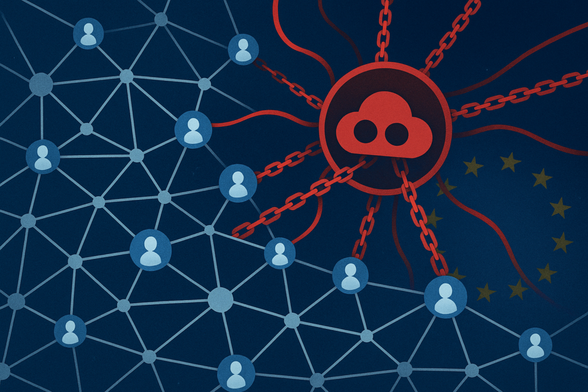
This document is Part 1 of the User-Owned Web series. Following the conceptual introduction (“Two Roads to the User-Owned Web”), it explores how control, value, and innovation shift when users—not platforms—own their data. Solid, ActivityPub, and similar user-owned web architectures serve as examples of this broader paradigm.
https://techtonicshift.vivaldi.net/2025/10/19/power-dynamics-of-the-user-owned-data-economy/
#UserOwnedWeb #DigitalAutonomy #OpenWeb #Fediverse #SolidProject #EuropeanAlternatives #TechForEurope #TechTonicShift #EDAI

The shift toward a user-owned data economy is transforming the foundations of digital power. When users control their data instead of platforms, technology, markets, and regulation begin to realign.
https://techtonicshift.vivaldi.net/2025/10/19/power-dynamics-of-the-user-owned-data-economy/
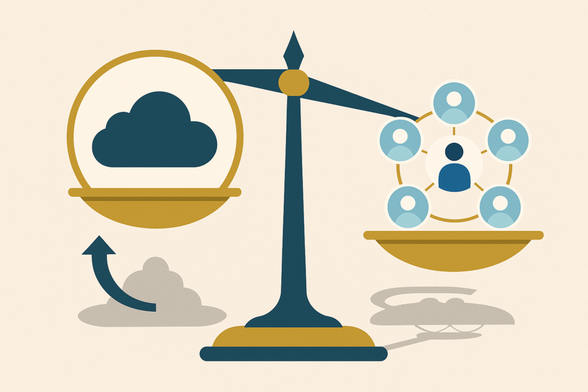
The web we know is efficient—but fragile. Power and innovation have drifted away from users and into platforms.
A new generation of open architectures - ActivityPub, Solid, and beyond - offers a way to take control back.
My latest article, “Roads to the User-Owned Web,” launches a 3-part series on how these models could reshape digital autonomy in Europe.
https://techtonicshift.vivaldi.net/2025/10/16/roads-to-the-user-owned-web/
#UserOwnedWeb #DigitalAutonomy #OpenWeb #Fediverse #SolidProject #EuropeanAlternatives #EDAI #TechTonicShift

The web we know is efficient—but fragile. Power and innovation have drifted away from users and into platforms. A new generation of open architectures—ActivityPub, Solid, and beyond—offers a way to take control back.
https://techtonicshift.vivaldi.net/2025/10/16/roads-to-the-user-owned-web/
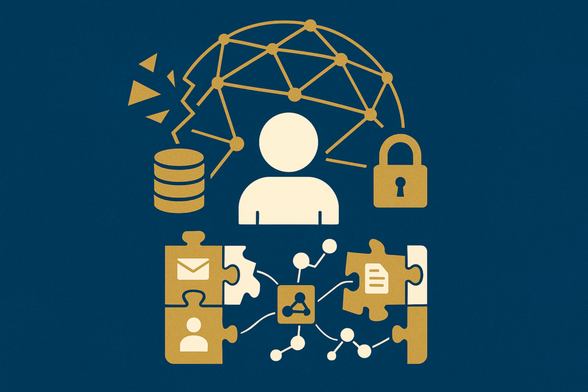
I have to return to an article I published two weeks ago: “Why Even Try? A European Answer to Digital Pessimism“, because it turns out the problem may be deeper than I thought. Do we really believe this little in ourselves? Where does this deep-seated defeatism come from?
I’ve said it before: when I talk about the idea of European digital autonomy, I don’t do so naively. The nature of an idea is that it detaches from current limitations and dares to propose a direction. It might never be fully realized, but it offers guidance. If we start from a place of disbelief, we end up with nihilism.
I was glad to see that the TLDR News EU YouTube channel recently published a video asking whether Europe needs its own social media platforms. But I was disheartened to see that the main argument for it was the EU’s ability to better control content and thus counter foreign influence, like Elon Musk’s political meddling via X (formerly Twitter).
To me, that’s missing the point entirely. We don’t need European alternatives so the EU can control them. We need them so no one can. Platforms aligned with European values should be resilient against both corporate and political dominance. Their virality shouldn’t be driven by profit-maximizing algorithms but by human sharing—one follower at a time. Mastodon and the Fediverse show this is already feasible, even if imperfect.
Yes, such platforms may not thrive under traditional business models—but isn’t that a feature, not a bug? One of our core European values is that not everything should be subject to market forces.
The TLDR video also lists the usual difficulties: network effects, lower quality of European tech, fragmentation. They question whether EU algorithms might also generate echo chambers. But this presumes that European platforms would merely copy American designs—an assumption I strongly reject. Most concerning is the implicit conclusion that building something based on European values would be too complicated to attempt:
- Europe lacks the digital infrastructure the US has, especially in AI and cybersecurity
- The EU doesn’t have the same startup culture
- The EU consists of 27 separate markets and languages
I agree with these facts. But to use them as reasons to give up is terrifying. Have we truly lost the spirit of “not because it is easy, but because it is hard”—the very mindset that once made America great?
It’s hypocritical and unsustainable to celebrate European values while depending entirely on foreign platforms that directly undermine them. That’s like applauding environmentalism while importing goods made with child labor and environmental destruction—as long as it’s far from Europe, we pretend we’re clean.
If we accept that European values can only survive by outsourcing their violation elsewhere, then basically we agree that Elon Musk was right when he said: “The biggest weakness of the West was empathy.”
Yes, the challenge is enormous—but not impossible. Do we really think Europe lacks the minds to build strong AI models? That we can’t scale up our search engines, maps, or data centers? That multilingual platforms can’t be enhanced with translation tools—just like the US platforms already use? This isn’t a lack of cognitive capacity. It’s not even a lack of production capability. We are on par with our global peers in that regard.
What we lack is alignment across all levels—users, entrepreneurs, and policymakers. I know the foundation is shaky. It always was. But if we don’t address this now, in 10–20 years there may be nothing left to preserve.
Regardless of whether you’re conservative or progressive, you’ll find that the European culture and values you care about are no longer there. Despite all our differences, I still believe we Europeans could think together—about what we share, what we want to preserve, and what kind of digital future we want to shape. We must.
📌 Explore my full strategy and share your thoughts: 👉 European Digital Autonomy Initiative
Follow me on Mastodon:
TechTonicShift (@[email protected]) – Vivaldi Social
Gabor Hrasko (@[email protected]) – Mastodon
#EDAI #DigitalSovereignty #EuropeanAlternatives #TechTonicShift #EuropeanValues
https://techtonicshift.vivaldi.net/2025/05/18/so-we-europeans-are-hopeless-right/
#ByEuropean #DigitalSovereignty #EDAI #EuropeanAlternatives #EuropeanValues #TechTonicShift
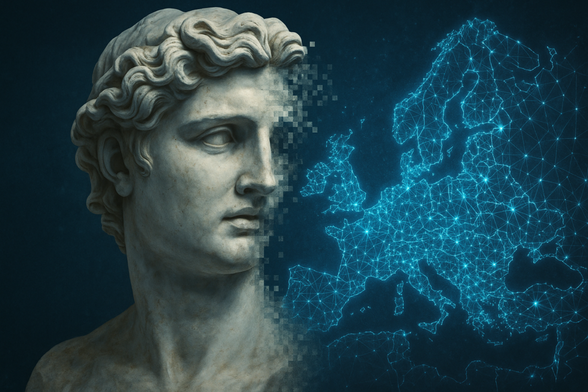

Many still believe European digital autonomy is just a dream. But what if this disbelief is our real weakness? If we really believe in European culture, we can’t be so defeatist as to think we have no chance of preserving it.
🧭 "So We Europeans Are Hopeless, Right?" – my latest piece
https://techtonicshift.vivaldi.net/2025/05/18/so-we-europeans-are-hopeless-right/
#EDAI #DigitalSovereignty #EuropeanAlternatives #TechTonicShift #EuropeanValues #BuyEuropean

Over the past few weeks, I’ve received a number of encouraging responses to my posts and articles about the European Digital Autonomy Initiative (EDAI). Many of you appreciated the focus on European or open-source alternatives, the importance of using privacy-respecting services, or the need for stronger EU policy and public funding in this field.
All of that is great — and yes, it is part of the vision.
But if I may be honest: I have the feeling that my core message may not have come through clearly yet.
What is the actual novelty here?
I do not claim to be the first or the only one working on these questions. Quite the opposite: I now realise how many excellent initiatives already exist. Many people and organisations have long been developing European alternatives, advocating for open technologies, or working on digital sovereignty policies. I salute that.
The EDAI is not meant to replace any of these. It is meant to connect them.
My approach is not about a single issue or a specific action. It is about seeing these efforts as parts of a larger system. A system that has been missing from most public debates: a strategic framework that connects awareness, governance, and innovation.
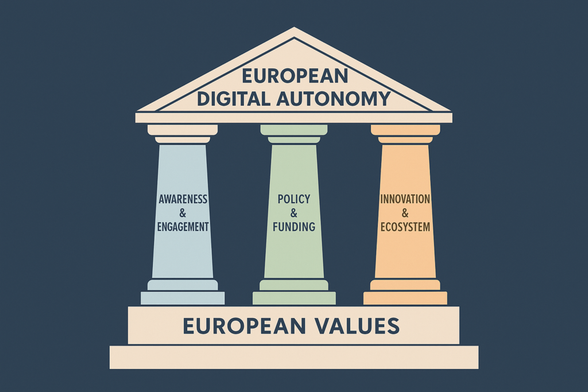
I call these the three pillars of European Digital Autonomy:
- Awareness & Engagement: digital culture, visibility, user habits, values
- Policy & Funding: institutions, regulations, incentives, coordination
- Innovation & Ecosystem: tools, platforms, open standards, services
Many initiatives already operate in one or two of these domains. But what I haven’t seen — and what I believe could make a real difference — is a shared framework where we see how these elements reinforce each other.
A better search engine is great. So is better funding regulation. So is media literacy. But the breakthrough will only come when these things are mutually catalytic.
From independence to interdependence
Everyone will naturally focus on what they know best. A coder will code. A researcher will analyse. An activist will mobilise. That’s how it should be.
But if we want more than partial improvements — if we want strategic change — we need to understand how all these efforts fit together. That’s what the EDAI attempts to provide: a systemic lens and a space to align our steps.
It doesn’t mean giving up independence. It means recognising interdependence.
If this speaks to you, stay tuned. In the coming days, I will ask for your thoughts on how we might go about finding collaborators for this idea within the Fediverse community. It’s not a fully-formed plan yet — and that’s exactly why your input could make a real difference.
Follow me on Mastodon:
TechTonicShift (@[email protected]) – Vivaldi Social
Gabor Hrasko (@[email protected]) – Mastodon
#EDAI #DigitalSovereignty #EuropeanAlternatives #TechForEurope #OpenSource #DigitalAutonomy #EuropeanValues #BuyEuropean #TechTonicShift
https://techtonicshift.vivaldi.net/2025/05/11/the-bigger-picture/
#BuyEuropean #DigitalAutonomy #DigitalSovereignty #EDAI #EuropeanAlternatives #EuropeanValues #OpenSource #TechForEurope #TechTonicShift