 Chuck Darwin
Risking life and limb for glory: Olympic surf competition was held on world’s ‘heaviest wave’
The world’s “heaviest wave” is born near the South Pole, where fierce storms pound the ocean’s surface like angry fists,
sending pulses of energy racing north, unimpeded, for thousands of miles.
That force is all but invisible until it suddenly rides up a steep, smooth ramp on the ocean floor, curls into a spectacular barrel
— more like a slab of concrete than water
— and slams, with astonishing fury, into a razor-sharp coral reef on the southern tip of #Tahiti.
Locals call the wave #Teahupo’o, which loosely translates to “wall of skulls.”
It has fascinated and terrified the world’s elite ocean athletes since it was first surfed in the 1980s.
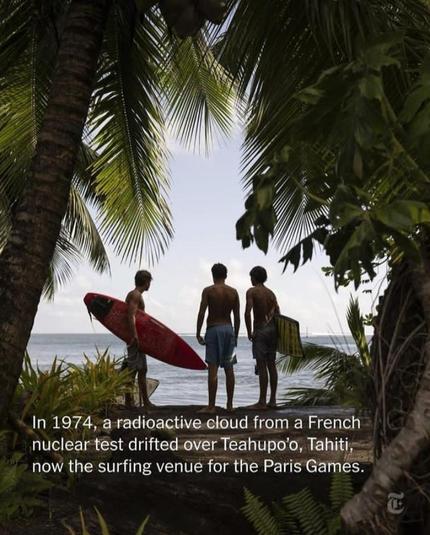
Teahupo’o (pronounced “cho-poo”), just offshore of its namesake fishing village on the island’s lush coast, was the site of the second Olympic surfing tournament.
Holding the event nearly 10,000 miles from the epicenter of the Summer Games in Paris is a bold choice that has some safety-conscious experts shaking their heads and ghoulish spectators licking their chops

Olympic surf competition to be held on world's 'heaviest wave'
Two of the five athletes on the U.S. Olympic surf team hail from San Clemente; a third lives in Oceanside. They will compete in massive, barreling swells in Tahiti, a bold choice that has some safety-conscious experts shaking their heads.
 UberZeitgeist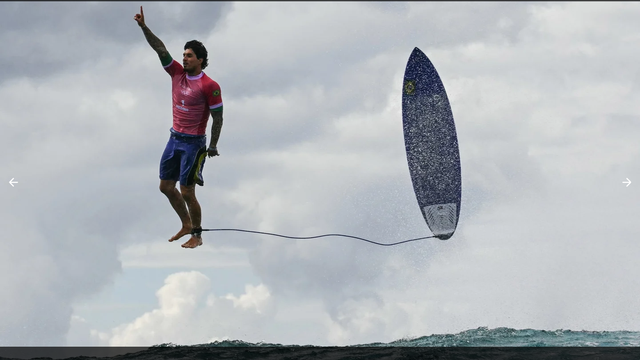
 Radhe Mishra