Resources for African American History Month: Selected Digital Collections – Teaching with the Library

Teaching with the Library Primary Sources & Ideas for Educators

ISSN 2691-6916

Share & Subscribe to this blog

  • Home
  • Resources for African American History Month: Selected Digital Collections
  • Article image… See online at https://www.loc.gov/collections/?fa=subject_topic:african+american+history&loclr=blogtea

    Resources for African American History Month: Selected Digital Collections

    February 10, 2026, Posted by: Colleen Smith

    Share this post:

    This is the second post in a series that looks at different resources from the Library that support teaching and learning about the achievements and contributions of African Americans throughout U.S. history.  The first post highlighted several primary source sets from Teaching with the Library; today’s post brings attention to the Library’s digital collections.

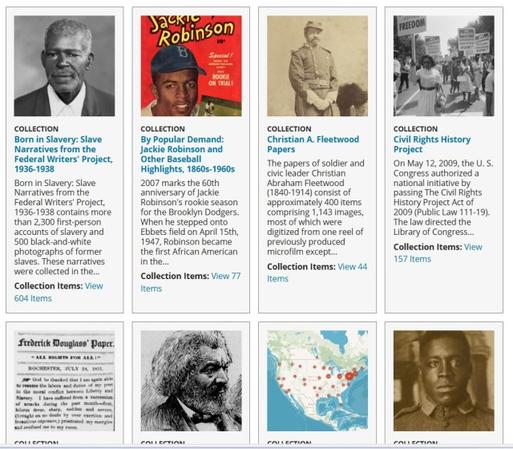
    More than twenty-five of the Library’s digital collections relate to the rich histories, cultures, traditions, and contemporary experiences of African Americans. A few are highlighted below, along with ideas for using collection items in the classroom.

    Selected Collections

    African American Photographs Assembled for the 1900 Paris Exposition 

    W. E. B. Du Bois compiled a series of photographs for the “American Negro” exhibit at the 1900 Paris Exposition. His goal was to show the diversity and successes of African Americans as a counter to common stereotypes. The Library of Congress holds approximately 220 mounted photographs reportedly displayed in the exhibition.

    • Teachers might use items in this collection to introduce, investigate, or reinforce aspects of DuBois’s approach to combating racism and segregation.
    • Images from the collection are powerful visuals of African Americans holding professions in diverse fields. This may help broaden students’ understanding of African American life at the time and bring attention to the experiences, successes, challenges, and contributions of African American individuals and communities.

    By Popular Demand: Jackie Robinson and Other Baseball Highlights, 1860s-1960s 

    To honor the remarkable life and legacy of Jackie Robinson, Library staff put together this collection featuring sources from across many different divisions of the Library.

    • The colorful prints and photographs make this an inviting collection to explore with younger learners. Teachers could bring some of these visuals to support existing materials they use to celebrate Robinson and his contributions.
    • For older learners, consider sending them to this set of brief essays. Topics include Robinson’s career and the greater subject of segregation in the sport of baseball.

    Zora Neal Hurston

    This collection features digitized plays by Hurston (1891-1960), an author, anthropologist, and folklorist.

    • A timeline offers a glimpse into Hurston’s life and career and could help students find an angle or selected topic for further research.
    • Teachers interested in finding more on Huston’s work might also consult this resource guide from the American Folklife Center, where Hurston’s audio recordings are held. The guide highlights unique unpublished and published materials.

    Frederick Douglass Newspapers, 1847 to 1874

    Douglass, a leader in the black press, used the medium to communicate and persuade the public on the abolition of slavery and women’s rights. With this collection, students can explore newspapers edited by Frederick Douglass.

    • These articles and essays are helpful for finding your way through the collection and identifying aspects to explore further. For example, this post gives further context to Douglass’s famous speech, “What to the American Slave is Your Fourth of July?
    • Ask students to consider how Douglass used the media of his time to capture public attention. In what ways do public figures use media today to communicate a message? What differences and similarities do students notice?

    We hope this overview is helpful for considering how you might bring some of the Library’s digital collections to your classroom. If you are interested in more ways for students to engage with materials from the Library, you might check out the latest transcription campaign from By the People: the papers of Christian Fleetwood an African American Union soldier during the Civil War.

    Do you enjoy these posts? Subscribe! You’ll receive free teaching ideas and primary sources from the Library of Congress.

    Categories

    Continue/Read Original Article Here: Resources for African American History Month: Selected Digital Collections | Teaching with the Library

    Tags: 1900 Paris Exposition, 25 Collections, African American History Month, American Negro, Blogs, By the People, Christian Fleetwood, Colleen Smith, Frederick Douglass Newspapers, History of Black Americans, Jackie Robinson, Library of Congress, Selected Digital Collections, Teaching with the Library, W.E.Ba. Du Bois, Zora Neal Hurston
    #1900ParisExposition #25Collections #AfricanAmericanHistoryMonth #AmericanNegro #Blogs #ByThePeople #ChristianFleetwood #ColleenSmith #FrederickDouglassNewspapers #HistoryOfBlackAmericans #JackieRobinson #LibraryOfCongress #SelectedDigitalCollections #TeachingWithTheLibrary #WEBaDuBois #ZoraNealHurston
    One Source, Multiple Versions, Many Perspectives: Teaching Key Documents in U.S. History – Teaching with the Library

    Teaching with the Library Primary Sources & Ideas for Educators

    ISSN 2691-6916

    Share & Subscribe to this blog

  • One Source, Multiple Versions, Many Perspectives: Teaching Key Documents in U.S. History
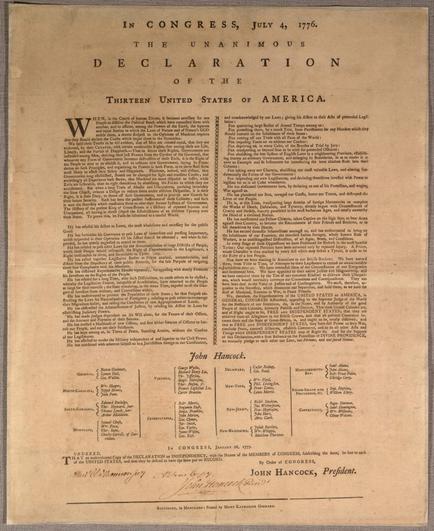
  • In Congress, July 4, 1776. The unanimous declaration of the thirteen United States of America.

    One Source, Multiple Versions, Many Perspectives: Teaching Key Documents in U.S. History

    Posted by: Colleen Smith, January 27, 2026

    This blog post is by Lee Ann Potter, director of Professional Learning and Outreach Initiatives at the Library of Congress. 

    At the recent annual meeting of the American Historical Association (AHA) in Chicago, I presented a K-16 teacher workshop titled “Revolutionary History Teaching.”  As the title suggested, I engaged participants with primary sources and teaching strategies related to the American Revolution.

    To introduce an activity focused on the Declaration of Independence, I asked the participating teachers if they invited their students to read the founding document.  They all said yes, doing so was part of their regular approach in both history and civics classes.

    “Which version?” I asked, to which I received few responses and many quizzical looks.

    I proceeded to divide the teachers into smaller groups and provided each with a facsimile of a different version of the Declaration. The versions I shared included:

    I encouraged the teachers to read their versions, to consider their students’ capabilities and background knowledge, as well as their course objectives, and to discuss within their small groups the associated pros and cons of inviting students to read their version rather than simply the document’s text.

    Then we engaged in a larger group discussion about each version.  The group with The Pennsylvania Evening Post was particularly interested in the advertisements that also ran in the edition and discussed how news was shared and spread in the 1770s; the group with the Dunlap Broadside also discussed the sharing of information and noted that the names of most of the delegates to the Second Continental Congress were missing, but they were present on the Goddard Broadside; the Goddard Broadside also prompted curiosity about Mary Katharine Goddard; those reading the rough draft commented on the value of sharing rough drafts with students and suggested that the section related to slavery, that was not included in the final document, would be of particular interest to their students; and the Journal was described as providing an interesting play-by-play of the document and other events and issues from the perspective of Congress.

    Our conclusion after a rich discussion: Sharing multiple versions of the Declaration with students may encourage knowledge of its contents to transform into curiosity about its context.

    Have you tried a similar approach with other seminal documents?  If so, what have the results been? Please share your experience in the comments!

    Do you enjoy these posts? Subscribe! You’ll receive free teaching ideas and primary sources from the Library of Congress.

    Categories

    Continue/Read Original Article Here: One Source, Multiple Versions, Many Perspectives: Teaching Key Documents in U.S. History | Teaching with the Library

    #AmericanHistory #classrooms #democracy #IdeasForEducators #LibraryOfCongress #LibraryOfCongressBlog #ManyPerspectives #MultiplesVersions #OneSource #PrimarySources #Teaching #TeachingWithTheLibrary

    Paleontology, Past and Present: A New Primary Source Set for Educators – Teaching with the Library

    Norman Ross of the division of Paleontology, National Museum, preparing the skeleton of a baby dinosaur some seven or eight million years old for exhibition. 1921.

    Teaching with the Library Primary Sources & Ideas for Educators, ISSN 2691-6916

  • Home
  • Paleontology, Past and Present: A New Primary Source Set for Educators
  • Norman Ross of the division of Paleontology, National Museum, preparing the skeleton of a baby dinosaur some seven or eight million years old for exhibition. 1921.

    Paleontology, Past and Present: A New Primary Source Set for Educators

    November 20, 2025, Posted by: Colleen Smith

    This post is by Jessica Fries-Gaither, a 2024-2025 Albert Einstein Distinguished Educator Fellow at the Library of Congress.

    Primary sources are excellent tools for conveying the nature and practices of science. By providing a firsthand look at the types of questions scientists pose as well as the methods and strategies they employ to answer them, primary sources humanize the scientific endeavor in ways that other materials cannot. And there may be no scientific discipline better suited to such an “inside look” than paleontology. The study of fossilized remains and what they can teach us about Earth’s history is rife with uncertainty, incomplete data sets, and an ever-evolving understanding of the subject.

    A new primary source set from the Library of Congress features 18 primary sources that teachers can use to bring forward the nature of science while also addressing science content standards about paleontology, the fossil record, and geologic time. Through close looking and thoughtful analysis of these items, students can learn about significant paleontological discoveries and practice the types of thinking and questioning employed by professional paleontologists.

    The set includes primary sources in diverse formats (photographs, drawings and engravings, newspaper articles, maps, diagrams, and even a piece of congressional legislation) spanning the early years of paleontology to present day. Dig in and discover:

    • newspaper accounts recounting major discoveries, including Tyrannosaurus rex and fossilized dinosaur eggs!
    • engravings of petrified wood and fossil skulls from Robert Hooke’s Micrographia and Charles Darwin’s Voyage on the H.M.S. Beagle.
    • photographs showing how fossil remains are discovered in the field, as well as how skeletons are constructed and displayed.
    • maps sharing the distributions of rocks and fossils from different geologic time periods.
    Toxodon skull, side view. In The Zoology of the Voyage of the H.M.S. Beagle. 1839.

    The Paleontology, Past and Present primary source set also includes background information, teaching suggestions, and links for additional information and primary sources. We hope that you and your students will find it to be a helpful resource!

    Categories

    Continue/Read Original Article Here: Paleontology, Past and Present: A New Primary Source Set for Educators | Teaching with the Library

    #colleenSmith #educators #libraryOfCongress #libraryOfCongressBlog #paleontology #past #present #primarySourceSet #primarySources #teachingWithTheLibrary

    Community Helpers, Leaders, and Primary Sources – Teaching with the Library – Library of Congress

    Delano, Jack, photographer. Chicago, Illinois. Ida B. Wells Housing Project. A meeting of the Cub Scouts in the community center. Chicago United States Cook County Illinois, 1942. Mar. Photograph. https://www.loc.gov/item/2017828851/.

    Teaching with the Library Primary Sources & Ideas for Educators

    ISSN 2691-6916

  • Home
  • Community Helpers, Leaders, and Primary Sources
  • Community Helpers, Leaders, and Primary Sources

    Posted by: Colleen Smith, September 30, 2025

    The concept of community helpers or leaders offers a starting place for teaching civics to young learners. Students can make a connection to the idea, reflect on their experiences with it, and ask meaningful questions about the importance of helpers and leaders.

    A new primary source set, Community: People and Places, includes items related to helpers and leaders in a community. By modeling and then guiding students in a thinking routine of observing a source, reflecting on what it shows, and asking their own questions about it, teachers can support young learners’ work with primary sources and build understanding of important civic concepts such as:

    • explaining the roles of important local community members;
    • identifying helpers and leaders, including in their school, neighborhood, and town or city;
    • describing the responsibilities of individual leaders to meet the needs of different people and communities.
    Rothstein, Arthur, photographer. Health clinic. Shafter migrant camp. Shafter, California. Kern County California Shafter United States, 1940. Mar. Photograph. https://www.loc.gov/item/2017774794/.

    Instructional Strategies

    Select several sources from the set that highlight community helpers and leaders. Teachers might want to select items that reflect a range of people and places, such as:

    Using these or your own selections, model how to make observations about an item. Show one item and talk through your process: What do I see? What people or objects are shown? Students might participate with you and add to your observations.

    Students may naturally offer reflections about the image. Model reflecting and support their thinking with questions such as: What do I think is happening in the image? What does this image show about helping someone or something? Students may have their own reflections to share, as well as new questions.

    Finally, encourage students to ask even more questions about the item. What do they wonder about? You might begin with a question you have about the item to help students get started. Students may need support in bringing their questions back to the ideas of communities, leaders, and helpers.

    Teachers might follow this same process for other images or let students select an item that they want to explore. Depending on the needs and dynamics of their classroom, teachers could set up other activities that ask students to observe, reflect, and question but in different ways, such as with a gallery walk, primary source stations, and small group talks.

    To close the activity, invite students to name community helpers or leaders in their school. Students could create their own source by drawing a helper or leader at work. In their drawing they should show what a person is doing (role) and how a person is helping (responsibilities).

    We’ll be sharing more teaching ideas related to the Community: People and Places set in the coming weeks. If you use the set, we’d love to hear what strategies you have: Please share in the comments!

    Continue/Read Original Article Here: Community Helpers, Leaders, and Primary Sources | Teaching with the Library

    #2025 #America #DonaldTrump #Education #Health #History #Libraries #Library #LibraryOfCongress #LibraryOfCongressBlog #Politics #Resistance #Science #TeachingWithTheLibrary #Technology #Trump #TrumpAdministration #UnitedStates

    Announcing “American Stories: A Reading Road Trip” | Teaching with the Library

    Teaching with the Library Primary Sources & Ideas for Educators

    ISSN 2691-6916

  • Home
  • Announcing “American Stories: A Reading Road Trip”
  • Announcing “American Stories: A Reading Road Trip”

    September 26, 2025

    Posted by: Colleen Smith

    As America approaches its historic 250th birthday in 2026, the Library of Congress, its Affiliated Centers for the Book, and PBS Books are working in partnership to create a captivating video series that explores the vibrant literary heritage of the United States.

    Each installment of “American Stories: A Reading Road” Trip will focus on a different U.S. state or territory, showcasing the profound influence that local writers, poets, and storytellers have had on the cultural identity of their region. Each program will also include iconic authors, unforgettable books, hidden-gem bookstores, amazing libraries, and the real-life locations that inspired great works.

    In addition, each episode will feature items in a variety of media from the vast collections of the Library of Congress—maps, photographs, sheet music, and more—that help illustrate the stories and reveal surprising connections.

    The first episode launched on September 10 and the second episode was released on September 17! They focus on Rhode Island’s and Georgia’s rich literary legacies.

    Among the items from the Library’s collections that are included in the Rhode Island program are:

    • A photograph of America’s first purpose-built library (1747), the Redwood Library in Newport, RI.
    • A map of Rhode Island that was published in Hamburg, Germany in 1797.
    • A clip from a video of Michael Harper, who was the Poet Laureate for the State of Rhode Island, reading his poetry at the Library of Congress in 1989. The complete video is available here.

    Among the items from the Library’s collections that are included in the Georgia program are:

    For more of the featured items, see the Rhode Island episode page and the Georgia episode page. As each episode is released, it will be available through the Library’s series website.

    Editor’s Note: Read the rest of the story, at the below link.

    Continue/Read Original Article Here: Announcing “American Stories: A Reading Road Trip” | Teaching with the Library

    #AmericanStories #Blogs #Episodes #Georgia #LibraryOfCongress #Reading #ReadingRoadTrip #RhodeIsland #RoadTrip #September2025 #TeachingWithTheLibrary

    Community: People and Places – A New Primary Source Set for Educators | Teaching with the Library

    Teaching with the Library Primary Sources & Ideas for Educators

    ISSN 2691-6916

    Share & Subscribe to this blog

  • Home
  • Community: People and Places – A New Primary Source Set for Educators
  • Suburban Resettlement Administration poster

    Community: People and Places – A New Primary Source Set for Educators

    September 23, 2025, Posted by: Colleen Smith …Share this post…

    What is a community? What makes a community?

    Generating and investigating questions about communities — what and where they are, how they form, and who participates in them — gives young learners an opportunity to engage in meaningful inquiry about a core aspect of civic life. A new primary source set from the Library of Congress features 18 items that help students identify, connect to, and expand on aspects of what makes communities function and thrive.

    The set is highly visual, making the resource more accessible for young learners. It includes a teacher’s guide with ideas for using the set to explore concepts such as:

    • community helpers,
    • students as leaders in their community,
    • how communities have changed over time, and
    • examples of community in rural, urban, and suburban places.
    Chicago, Illinois. Ida B. Wells Housing Project. A meeting of the Cub Scouts in the community center

    By observing the everyday people, places, and activities of different communities, students can reflect on the idea that they are part of and can participate in their own communities.

    We hope you enjoy the set and look forward to learning how you use the resource with your students. Please share your ideas and experiences in the comments!

    Continue/Read Original Article Here: Community: People and Places – A New Primary Source Set for Educators | Teaching with the Library

    #2025 #America #Blogs #Books #community #Education #Health #History #Libraries #Library #LibraryOfCongress #Opinion #PrimarySources #Reading #Science #Teaching #TeachingWithTheLibrary #Technology #UnitedStates

    Closer Look: Library Collections Pages | Teaching with the Library

    Teaching with the Library Primary Sources & Ideas for Educators, ISSN 2691-6916

    Closer Look: Library Collections Pages

    June 24, 2025, Posted by: Cheryl Lederle

    Many of the online collections from the Library of Congress include tools to help researchers, including student researchers, find what they need in the collection. Exploring those expert resources early in their research process can give students valuable context, a better understanding of what might be in the collection, and can help them decide whether or not to examine the collection further, reducing frustration and improving search results.

    Though the available information varies by collection, collections typically include a tab “About this Collection” as well as the “Collection Items” tab. Some collections also have a tab of “Articles and Essays” for additional context. The left navigation of the “About…” page links to related resources, when available, and includes information about “Rights and Access.”

    Featured Content, a carousel highlighting select items, is a prominent feature of the “About this Collection” pages. Students might browse the carousel to get a sense of the kinds of items in the collection, or they might select an item and examine it to glean information and to generate questions to inspire and focus additional research.

    Continue/Read Original Article Here: Closer Look: Library Collections Pages | Teaching with the Library

    #2025 #Blogs #Books #CloserLook #Education #History #Libraries #Library #LibraryCollections #LibraryOfCongress #Opinion #Reading #Science #TeachingWithTheLibrary #Technology