 Jolie Tiac
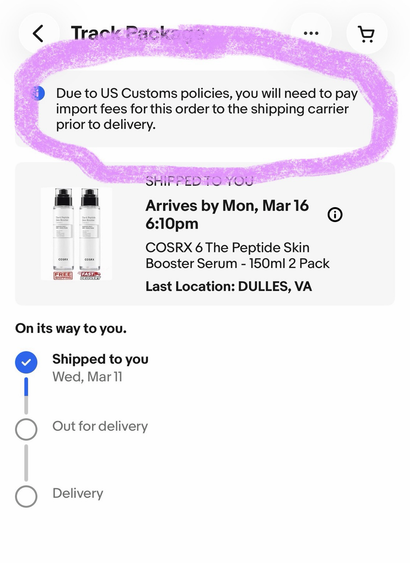
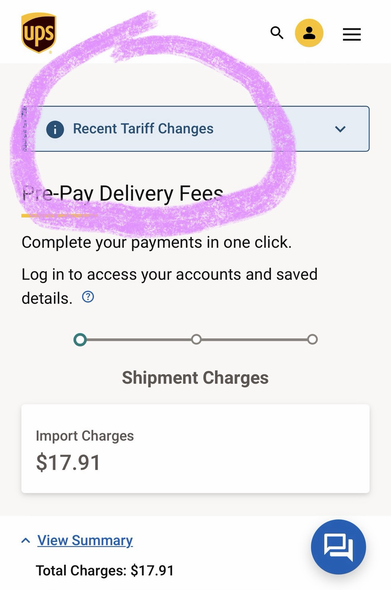
Look at this madness. Thanks, Trump!
💸
#tarrifs #FDT #currentaffairs #wtf #caitradio #TariffsImpact #news
💸
#tarrifs #FDT #currentaffairs #wtf #caitradio #TariffsImpact #news
U.S. Customs Crackdown, Tariffs, and Retail
Author(s): Scott Douglas Jacobsen
Publication (Outlet/Website): The Good Men Project
Publication Date (yyyy/mm/dd): 2025/07/11
Attorney Jie Shi, representing Fortune 500 U.S. retailers, discusses the significant impact of new U.S. customs rules, including DHL’s temporary suspension of high-value B2C shipments and tightened de minimis enforcement. She outlines how these changes affect small businesses, global supply chains, and consumers, leading to delays, higher costs, and legal risks. Shi explains how shifting trade policies and post-pandemic disruptions transform contract practices and logistics planning. She urges small businesses to stay informed, prioritize documentation, and observe industry strategies. Policymakers, she argues, must balance enforcement with economic stability to avoid unintended harm to consumers and small enterprises.
Scott Douglas Jacobsen: Today, we’re here with Jie Shi. Let me begin with a brief introduction. Jie is an attorney representing Fortune 500 U.S. retailers in complex maritime disputes and global shipping matters. She holds bar admissions in both China and the United States. Her work focuses on high-stakes issues at the intersection of international trade and law.
She has recently addressed the legal implications of record freight rate surges during the COVID-19 pandemic, potential Shipping Act violations, and broader global supply chain challenges. She closely follows developments regarding U.S. tariffs, the de minimis exemption, and regulatory trends in maritime commerce. So, how will the new U.S. customs rules affect cross-border e-commerce?
Jie Shi: The new rules are significant. DHL Express recently temporarily suspended business-to-consumer shipments over $800 into the U.S. starting April 21, in response to U.S. Customs and Border Protection’s requirements for formal entry processing. These changes increase compliance burdens for high-value shipments.
During the pandemic, we saw how fragile and interconnected the global supply chain is. A disruption at any point in that network, such as at ports or customs clearance, can ripple through the entire system. Delays, inventory shortages, and cost increases become inevitable.
If carriers are unable or unwilling to handle specific shipments due to compliance requirements, it could mean fewer goods reaching the U.S. market. Given typical transit times of four to six weeks for ocean freight, the downstream effects include port slowdowns, potential job losses in logistics sectors, and higher consumer prices.
Even now, major shipping lines are cancelling sailings—this week, blank sailings accounted for over 40% of some trans-Pacific routes—signalling a reduction in overall shipping capacity. So, while we may not feel the immediate impact, the effects are likely to become visible soon.
Jacobsen: What about the impact on small businesses that rely on international shipping?
Shi: Small businesses are particularly vulnerable. Many rely on platforms like Temu or AliExpress to reach U.S. customers. These companies often take advantage of the de minimis provision, which allows goods under $800 in value to enter the U.S. duty-free with minimal paperwork.
If that threshold is lowered, or if enforcement tightens—especially targeting Chinese-origin shipments—these businesses will face higher duties, longer customs processing, and more paperwork. For small sellers operating on thin margins, these added costs may not be sustainable.
Initially, DHL announced the pause due to these challenges, although they later resumed service after discussions with U.S. authorities. But uncertainty remains. If enforcement continues to tighten, we may see more carriers limit services, disproportionately affecting small business sellers.
Jacobsen: What is the reasoning behind lowering the de minimis threshold or ending exemptions for some countries?
Shi: U.S. lawmakers and trade officials argue that the de minimis exemption is being exploited, particularly by Chinese e-commerce exporters. There’s concern that it gives an unfair competitive advantage and enables duty evasion or the import of unsafe or counterfeit goods.
The push to revise de minimis thresholds is part of a broader trade policy shift, focused on economic security, enforcement of fair trade practices, and tightening oversight on direct-to-consumer imports. While the intent is to level the playing field for U.S. retailers and manufacturers, the consequences are far-reaching and complex, especially for cross-border e-commerce.
I am not sure it’s entirely fair to describe the de minimis exemption as a loophole. The provision exists to facilitate trade, reduce customs friction, and allow consumers to receive goods at lower prices. In cross-border e-commerce, sellers and buyers rely on these streamlined systems to function efficiently.
That said, the main argument from U.S. lawmakers is that the de minimis rule is being exploited, particularly by companies shipping directly from China, and that tightening the rule is necessary to protect national economic interests. However, this shift also puts significant pressure on small businesses in the United States.
With tariffs in place, it is unclear how those businesses can absorb the additional costs. Even large corporations are reluctant to take on that burden—they need liquidity and operate under tighter margins. Due to this uncertainty, planning has become very difficult.
Jacobsen: How will these changes affect broader aspects of global supply chains, such as delays, disruptions, inventory management, and delivery timelines?
Shi: These changes will impact all of that. Many parties are involved in the supply chain: third-party logistics providers, ocean carriers, freight forwarders, shippers, vendors, suppliers, and manufacturers at origin, as well as warehouses and distribution centers at U.S. ports.
There is now additional time and cost related to U.S. customs compliance. One emerging trend is that some suppliers may try to reroute their cargo through third countries before sending it to the United States, attempting to avoid the higher tariffs on Chinese-origin goods.
However, U.S. Customs and Border Protection is becoming increasingly vigilant about such transshipment tactics. If a shipment is misdeclared—say, it falsely states origin as Thailand but originated in China—it may be flagged. That could result in the entire container being rejected, returned, or subject to additional inspection and penalties. This creates further delays and cost burdens in the whole supply chain. Every link in that chain feels the strain, and every stakeholder pays more.
Jacobsen: What about consumers? Under these new customs regulations, what can they expect in terms of delivery timelines, pricing of imported goods, and delays?
Shi: Consumers are already beginning to feel the effects. There are more delays. For example, many U.S. consumers buy goods from platforms like Temu, which is now shifting its business model in response to the tightening customs environment.
Temu has started displaying estimated tariffs and duties at checkout. In some cases, those fees exceed the price of the goods themselves. So consumers may pay double or even triple what they expected. This adds up quickly for everyday shoppers and reduces the appeal of ordering internationally.
Some consumers may switch platforms or stop ordering from abroad altogether. However, these developments could be devastating for small businesses that depend on platforms like Temu—they could lose customers and struggle to sustain their operations.
Jacobsen: Will specific industries, such as fashion or electronics, be impacted more than others?
Shi: Yes. Industries like fast fashion and consumer electronics depend highly on low-margin, high-volume cross-border shipping. They also tend to source heavily from China and Southeast Asia. Any increase in compliance burdens or tariffs hits these sectors hard.
These businesses are already under pressure from shifting consumer demand, logistics disruptions, and regulatory changes. Adding customs complications and unpredictable tariffs makes their operational planning even more difficult.
From my experience representing major U.S. retailers, I’ve learned they heavily rely on goods manufactured in China. For fashion retailers in particular—companies like Target, for example—these tariffs are hitting hard. That’s why many are now renegotiating contracts with Chinese suppliers. In some cases, suppliers are willing to absorb part of the tariff cost to keep shipments flowing, but the challenge is the unpredictability of U.S. trade policy. You never know if the current administration might change direction the next day.
Jacobsen: How can small businesses mitigate these ongoing and upcoming challenges? Any strategies they can consider?
Shi: For small businesses, it depends on their position in the supply chain. If both the buyer and seller are small businesses, there may be room to renegotiate terms and share costs. However, if a small business works with a large platform or carrier, it typically has little leverage.
Take Temu, for example. They recently shifted their business model to what’s a “semi-managed” system. Under this model, instead of Temu handling fulfillment, merchants are now responsible for shipping the products directly to the consumer’s country. That change increases the burden on small businesses, especially with new tariffs and customs regulations.
Many of these businesses have little to do now besides waiting and seeing how policies evolve. They cannot easily reroute cargo through other countries, especially given the heightened scrutiny from U.S. Customs aimed at preventing transshipment fraud.
Jacobsen: Will there be long-term effects on international trade relations?
Shi: Absolutely. We are still recovering from the damage to the global supply chain caused by the COVID-19 pandemic. And now it’s 2025—many disruptions are still with us. While the full ramifications of current tariff policies are hard to predict, they are shifting global trade dynamics.
Before the pandemic, ocean carriers had minimal pricing power, and large retailers controlled most of the negotiations. During the pandemic, that flipped. Shipping demand surged, and carriers gained the upper hand. That forced many retailers to rethink logistics and invest more in third-party support to stabilize their supply chains.
From a legal perspective, this shift has also changed contracting behaviour. Before the pandemic, many companies relied on long-standing contracts with standard terms. During the crisis, some rushed into agreements without comprehensively documenting terms, which led to a wave of post-pandemic litigation. Now, parties are far more cautious—conducting detailed document reviews, revising contract language, and being much more specific in allocating obligations and risks.
If the tariff regime remains in place, we can expect that trend to continue. Legal teams advise businesses to create thorough paper trails, clearly document negotiations, and preserve every communication. During such chaotic times, it can be tough to resolve disputes later on if you do not have records.
Jacobsen: How can policymakers balance enforcing trade rules and protecting the interests of consumers and small businesses?
Shi: It’s a delicate balance. On one hand, there is legitimate concern about trade compliance, unfair competition, and national security. On the other hand, overly aggressive enforcement, especially in ways that target low-value shipments, can inadvertently hurt small businesses and consumers the most.
Policymakers need to take a nuanced approach. That might include targeted enforcement instead of blanket restrictions, offering transitional support to small businesses affected by sudden rule changes, and fostering more dialogue between regulators, logistics providers, and the small business community. There has to be a middle ground that ensures compliance without stifling entrepreneurship or burdening end consumers with excessive costs.
Jacobsen: Can you talk a little bit more about that? Specifically, how can policymakers focus on trade enforcement while also addressing the risk mitigation needs of consumers and small businesses? Because consumers will likely face higher costs, small companies will likely deal with longer delivery times and stock issues.
Shi: It’s essential for policymakers to take a forward-looking approach. During the pandemic, I observed that many policymakers were caught off guard, not out of negligence but simply because the situation evolved so rapidly. Once the crisis unfolded, they tried to secure any cargo they could, often agreeing to pay inflated prices to get essential goods into the country.
But those efforts had costs. Port congestion worsened, logistics systems broke down, and companies couldn’t get products on the shelves quickly. Many large businesses even went bankrupt because of those disruptions.
For small businesses, the key lesson is to plan and stay informed about industry developments. Platforms like Temu have introduced new models to support small businesses during turbulent times. They are continuing to evolve those models, though I would need to review the specifics.
The worst-case scenario for a small business is cargo stuck at the origin with no plan for resolution. That can lead to abandoned shipments and significant financial loss. To minimize risk, small businesses should observe how larger companies adapt and consider applying similar strategies.
Whatever direction they choose, small businesses must prioritize documentation. From a legal and compliance standpoint, keeping everything in writing is essential. U.S. Customs is now asking for more detailed documentation and records. Before the current tariff environment, some importers may have simplified paperwork, not out of bad faith, but to streamline the process. Today, that approach is risky.
In the current climate, where timing and cost efficiency are everything, it’s critical to have a paper trail. For example, if you’re preparing for the holiday season, you must ensure that goods arrive on time and are stocked on shelves. For small business owners, being proactive about compliance and documentation can make the difference between surviving and failing in this environment.
Jacobsen: That’s incredibly helpful. I’ve asked for everything I need for today. Thank you for your time, Jie—I appreciate it.
Shi: Oh, thank you so much. Yes, my focus is usually on the legal side of these issues, so I had to think through some of your questions from a policy perspective. But I appreciate the thoughtful conversation.
Jacobsen: You’re very welcome.
Shi: Thank you so much. Have a great day.
Jacobsen: You too. Bye-bye.
Last updated May 3, 2025. These terms govern all In Sight Publishing content—past, present, and future—and supersede any prior notices. In Sight Publishing by Scott Douglas Jacobsen is licensed under a Creative Commons BY‑NC‑ND 4.0; © In Sight Publishing by Scott Douglas Jacobsen 2012–Present. All trademarks, performances, databases & branding are owned by their rights holders; no use without permission. Unauthorized copying, modification, framing or public communication is prohibited. External links are not endorsed. Cookies & tracking require consent, and data processing complies with PIPEDA & GDPR; no data from children < 13 (COPPA). Content meets WCAG 2.1 AA under the Accessible Canada Act & is preserved in open archival formats with backups. Excerpts & links require full credit & hyperlink; limited quoting under fair-dealing & fair-use. All content is informational; no liability for errors or omissions: Feedback welcome, and verified errors corrected promptly. For permissions or DMCA notices, email: [email protected]. Site use is governed by BC laws; content is “as‑is,” liability limited, users indemnify us; moral, performers’ & database sui generis rights reserved.
#crossBorderTrade #retailIndustry #tariffsImpact #USCustomsCrackdown #USTradePolicy

Estée Lauder shares plunged 7% in pre-market trading after the U.S. cosmetics giant issued a full-year earnings outlook and sales forecast that missed Wall Street expectations, citing restructuring costs and tariff impacts.

Razer Laptops Fall Prey to Intensifying Trump Tariff Campaign
#RazerLaptops #TrumpTariffs #TechIndustry #Switch2 #Nintendo #TariffsImpact #USEconomy #PriceIncrease #TechDisruption #Micron
Read Full Article :- https://www.techi.com/razer-laptops-us-sales-halted-trump-tariffs/

 In-Sight Publishing
 Yonhap Infomax News
 The Times of Central Asia
 The Times of Central Asia
 Headlines Africa
 WYM Mod
 TECHi
TECHi