 the cranky hermit🌻
#StarshipAlexandria Episode 2 - The Etched City
https://podcastaddict.com/starship-alexandria/episode/198057979
https://podcastaddict.com/starship-alexandria/episode/198057979
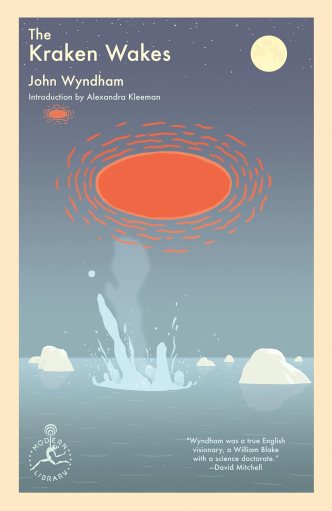
The Kraken Wakes
Adrian Tchaikovsky announced the other day that he and Emma Newman were starting a new podcast: Starship Alexandria, where they will take turns recommending sci-fi and fantasy books, with most of the episode devoted to discussing them. Their first episode dropped a couple of weeks ago, and Newman made the first recommendation: The Kraken Wakes by John Wyndham.
This is a classic science fiction novel from 1953 that I had never heard of. I had heard of Wyndham and a few of his other books but not this particular one. The story sounded interesting so I decided to check it out.
Whenever I read old novels, particularly sci-fi, I’m reminded of how tight old school writing used to be, and how fast paced the books were. This is no exception. The story told here in 246 pages is one that would take at least 500 pages with contemporary approaches, assuming it wasn’t made into a trilogy or larger series. There’s a lot to be said for telling an epic scale story in a manner that can be completed in a couple of days.
This is an alien invasion story, but with a twist. It begins with fireballs entering the atmosphere. All of them go into the sea, entering the deepest parts of the oceans. The selectivity implies an intelligence behind whatever is going on. A few of the fireballs are shot at, and immediately explode, implying they were containers under high pressure.
Attempts are made to send submersibles down to the ocean depths, but whatever is down there destroys them, killing the crew. When ships passing over the deep regions start to be attacked and sunk, various militaries send atomic bombs down. A few make it down and detonate. But at some point, the bombs stop detonating, as though something is capturing and disabling them. As the sinkings become increasingly common, ships start having to avoid the deepest parts of the ocean, crashing world trade.
All of this takes place over a period of years. The story is told through the eyes of Mike Watson. He and his wife Phyllis work in Britain as reporters for the EBC, a fictional competitor to the BBC. Mike and Phyllis are at a few key events in the story, but most of the narrative is based on news from around the world as they’re able to glean it.
This book has some interesting innovations for a 1953 novel. The invaders’ technology is very alien. Their method of attacking ships appears to be based on some kind of focused vibrations. At a certain point they send biological robots to attack island and coastal regions. And eventually, they attack humanity by melting the polar ice caps, causing sea levels worldwide to rise. It’s hard to read these portions of the novel today without thinking about climate change.
The most interesting thing about this novel is how little is able to be learned about the aliens, and how people react to the limited information. For a long time there is a debate whether it even is aliens. Conspiracy theories run rampant before the evidence becomes overwhelming.
There is speculation that their natural habitat must be a high pressure one, possibly Jupiter. (This is never confirmed, saving the novel from being too outdated.) Which, it is thought, is why they target the deepest regions of Earth’s oceans. Early on there are arguments about whether, due to the different environment they live in, there’s any necessary reason for hostilities between them and humanity.
A recurring theme in the book is how people react over the years as information becomes available, and to proposals about what needs to be done. Politics, business interests, and just overall refusal to accept what’s happening, keep getting in the way. This happens so much throughout the novel, that if I’d read it before Covid, I might have found it too cynical. Today it seems prescient.
Of course, Wyndham was writing this book in the early Cold War years, when memory of World War II was still fresh. His memories of those events would include the often ugly realities, instead of the heroic stories most of us grew up with. Strangely enough, I find it comforting to realize people in the past were just as blinkered in their reactions.
A minor spoiler. We never meet the aliens. There is never a conversation with them. They’re just too different. They are only known through their effects. The closest we get is speculation about what they might be like. I’m generally not a fan of sci-fi that never shows the damn aliens. (It seems like it became a popular move after 2001 A Space Odyssey, but Kubrick didn’t show his aliens because 1960s technology couldn’t do it well.) That said, in this book it ends up fitting with the theme of having to work with limited information.
Overall I enjoyed the book and recommend it. The Godzilla theme song kept running through my head as I read it. It had that kind of feel. (BTW, Godzilla Minus One, if you haven’t seen it yet, a damn good movie!)
Often when I recommend old books, it has to be with caveats about the quality of the writing or social attitudes in the story, but not this time. It’s aged relatively well. Which isn’t to say it isn’t very dated, but not in a way that I found too distracting.
Worth checking out if you’d like a quick read!
#AdrianTchaikovsky #Aliens #EmmaNewman #podcasts #sciFi #ScienceFiction #StarshipAlexandria

Big, somewhat leftfield news: I am kicking off a podcast with the wonderful @emmanewman.bsky.social under the title Starship Alexandria. It's a cosy book and film recommendation show where we take it in turns to rec things to one another and discuss them.
For all Science Fiction fans out there, here’s a brand new Podcast, co-hosted by Adrian Tchaikovsky and Emma Newman. It was really good and will both remind you of books you’ve already read, and/or flag up those you’ve missed! What’s not to like? #ScienceFiction #SciFi #Bookstodon #AdrianTchaikovsky #EmmaNewman
#StarshipAlexandria
Edited to add another #
https://podcasts.apple.com/gb/podcast/starship-alexandria/id1806388787

Listen to Starship Alexandria - Episode 1 - The Kraken Wakes by Emma Newman and Adrian Tchaikovsky on Podcast Addict. For this very first episode of Starship Alexandria, Emma puts forward John Wyndham’s classic SF novel The Kraken Wakes (1953) for Adrian to read and consider (published in the US as Out of the Deeps.) Other media mentions: The War of the Worlds, HG Wells Ellen Ripley (Sigourney Weaver), Aliens franchise, dir. Ridley Scott, James Cameron et al The Quatermass fran
 SelfAwarePatterns
 Roseanna Cunningham 🏴🖖