 RenézuCode
#riscv64 #deepcomputing #roma #spacemit #k3 #t2sde #t2linux #kde #plasma #waylang #img #powervr #mesa3d #framework 13 #pro #prototype

SpacemiT K3 Pico-ITX RISC-V Chassis Kit Review – Part 2: What works, what doesn’t in Bianbu OS 4.0

Last month, I received the SpacemiT K3 Pico-ITX Chassis Kit based on the company's K3 16-core RISC-V SoC, and started the review with an unboxing, a teardown, and a first boot to Bianbu OS 4.0. Since the system features a 10Gbps Ethernet SFP+ cage, I also had to order a 10GbE SFP+ to Copper adapter, as my 10GbE networking gear is exclusively based on RJ45 ports. In this review, I'll check system information in Bianbu OS 4.0.1, run a few benchmarks, test 10GbE, GbE, and WiFi 6 networking performance, play YouTube videos at various resolutions, run AI workloads (LLM), check all/most features work as expected, and measure the power consumption of the SpacemiT K3 "Pico-ITX Chassis Kit" mini PC. Bianbu OS 4.0 System Information Before running anything, I updated the system: 594 packages were updated. For reference, the update also involved updating the EC (Embedded Controller) firmware: Let's double-check the
Linux 7.1 Release – Main changes, Arm, RISC-V, and MIPS architectures
Linus Torvalds has just released Linux 7.1 on LKML: So it's only Sunday morning back home, but it's Sunday afternoon where I am right now, so I'm doing the 7.1 release at the regular time - just not in the regular timezone. This obviously means that the merge window opens tomorrow, but I'll be in yet another timezone by then, so timing will all be a bit irregular. Normally I try to front-load the merge window and do as much as possible the first few days - this time I'm not sure that will work out with my laptop and a couple of long flights without internet, but I've made sure that I have fetched the early pull requests (thank you - you know who you are), so I will be able to do some of it off-line. Anyway, possible slight hiccups in the merge window aside, the news today
The MilkV Jupiter 2/SpacemiT K3
This is a fascinating box–so much so that after almost three weeks playing with it, I amassed so much material that I nearly decided to split my review into two parts, but in the e(...)
#ai #hardware #homelab #linux #reviews #riscv #sbc #spacemit
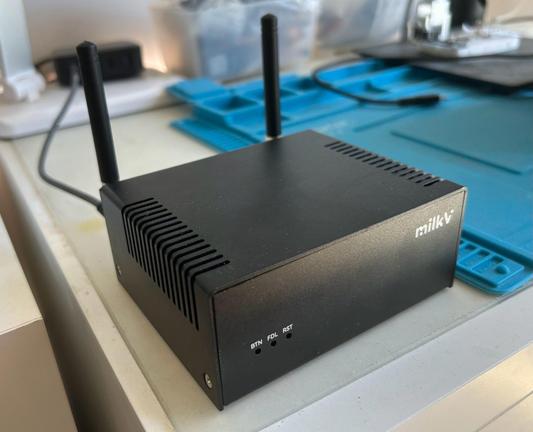
First quick test of my #SpacemIT K3 I am really impressed, if i would smuggle that thing to my father he would not notice anything, very snappy tested the web version of Discord and that's one of those web pages that make any SBC suffer but works pretty well.
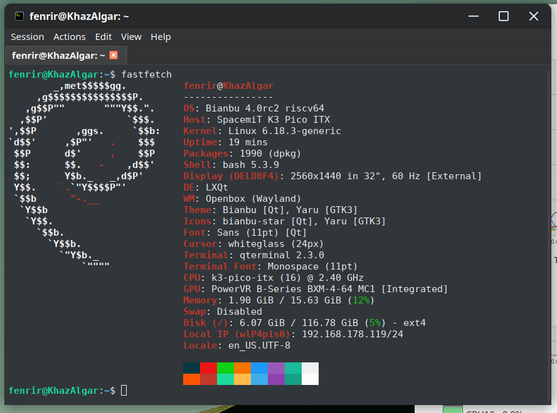
And here it is, my own #SpacemIT K3... so hyped, made sure I have a proper beefy USB charger to run it, but missed the point you need a splitter to get a video signal out of it... FFFFFF lol so proper test sadly has to wait.
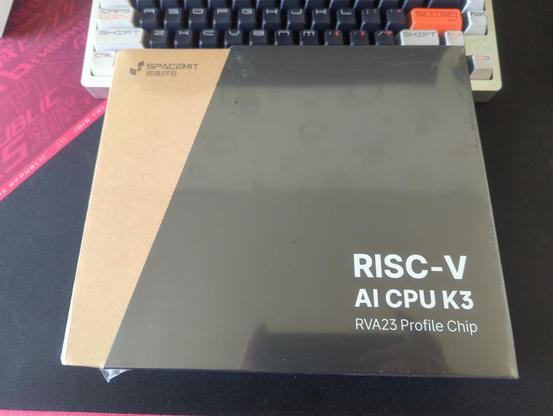
SpacemiT K3 Pico-ITX Chassis Kit Review – Part 1: Unboxing, teardown, and first boot
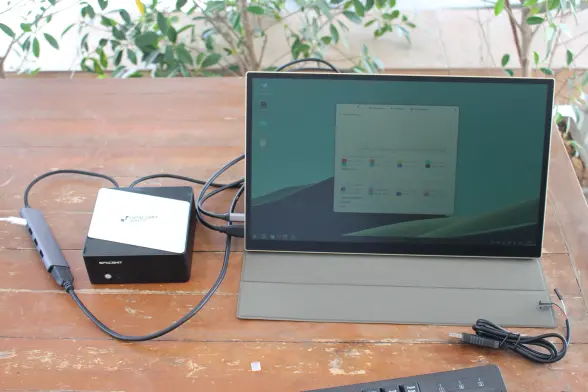
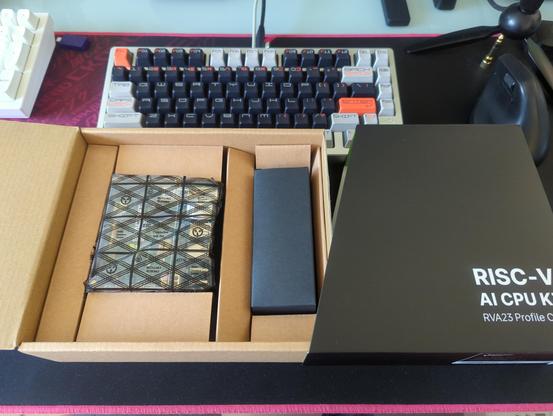
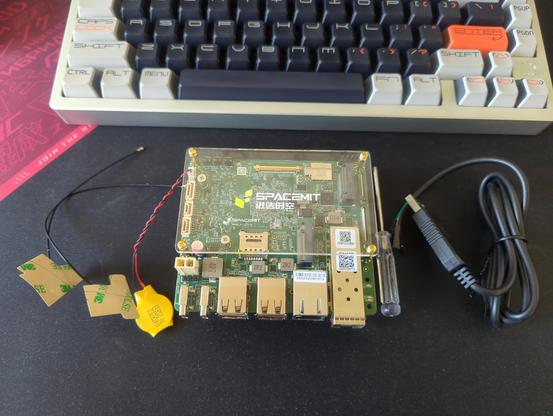
SpacemiT has sent me a K3 Pico-ITX Chassis Kit for review. It's based on the K3 Pico-ITX motherboard with the SpacemiT K3 16-core RISC-V Edge AI processor housed in a compatible chassis. I'll start the review with an unboxing, a teardown, and a first boot to the pre-installed Bianbu OS. In the second part of the review, I'll perform feature testing and run several benchmarks (see early K3 benchmarks for reference) to evaluate the status of the software and performance of the system. SpacemiT K3 Pico-ITX Chassis Kit unboxing I received a kit in a retail package reading "RISC-V AI CPI K3 RVA23 Profile Chip" and a UGREEN USB-C dock with a few USB-A ports, HDMI output, and 100W USB PD support. The dock will make perfect sense once we connect the system for our first boot. I was initially expecting a Pico-ITX SBC, so I was a little surprised
Firefly CSC2-N48SPK3 – A 2880 TOPS RISC-V AI server with 48 SpacemiT K3 Nodes, 48 NVMe SSDs
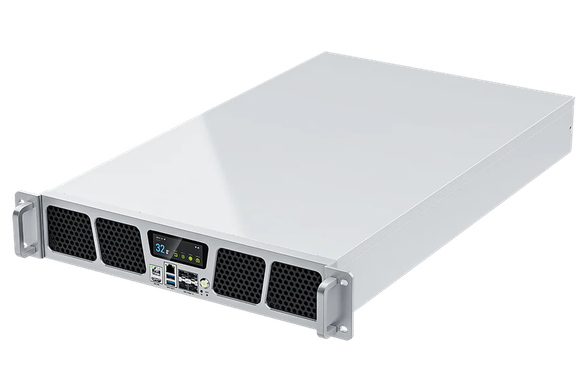
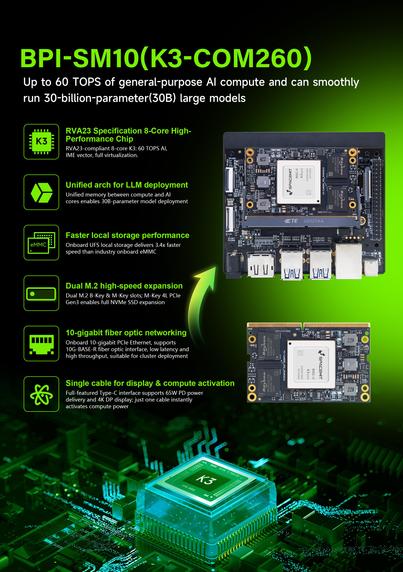
After SpacemiT officially launched the K3 Pico-ITX SBC, and the K3 chip entered volume production, an Edge AI mini PC, and a laptop motherboard (for Framework 13) have been released. To add to the list, Firefly has recently launched the CSC2-N48SPK3, a massive 2U rack-mounted server based on multiple SpacemiT K3 SoCs designed to bring RISC-V computing power to enterprise racks. While consumer devices and modular laptops are great for developers, large-scale server-side AI workloads require more powerful hardware. The CSC2-N48SPK3 addresses this with up to 48 SpacemiT K3 RISC-V compute nodes, each with an octa-core X100 SoC delivering up to 60 TOPS (Sparse) AI performance, up to 32GB LPDDR5 RAM, 128 GB UFS storage, and an optional NVMe SSD. To manage all of these nodes, Firefly relies on a Rockchip RK3588 octa-core Arm processor as the central control node. Firefly CSC2-N48SPK3 specifications: Server Form Factor – 2U rack-mounted 48 Node high-density
 cnx-software.com [Unofficial]
 Tao of Mac
 지지 ᚠד (Jiji Freya Daniel), 黄法官
 Keldrim
 Banana Pi Open Source Hardware