There are few soil animals as adorable as springtails!

This Platunurida sp. is a cousin of the famous 'giant' springtails in New Zealand. Instead of colourful spines, it has a flattened body, so it can squeeze into cracks in decaying logs, where it lives. They're surprisingly fast at escaping into the cracks, so it's difficult to get a good photo of them!

#Entomology #Macrophotography #SoilBiodiversity #Nature #SoilFauna #NaturePhotography #Soil #SoilEcology #TheWorldBeneathOurFeet

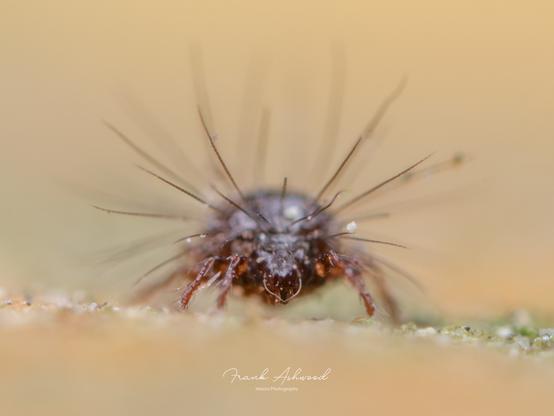
It's week 3 of fatherhood, and today I was granted special dispensation from shopping, housework, nappies and feeding, to do a brief spot of macrophotography in the sunshine, brilliant!

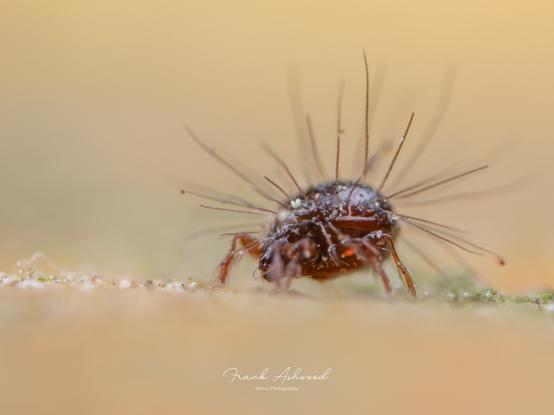
The highlight was this incredible Oribatid mite, sporting long defensive spines (Neotrichozetes spinulosa). I've nicknamed it the Hellraiser mite, which seems to be catching on - feel free to use it too!

#Macrophotography #SoilBiodiversity #SoilEcology #Acari #Entomology #Nature #NaturePhotography #Acarology #Mite

My slightly late offering for day ten of #invertober (common earthworm) 🪱

Did you know earthworms have a special lip-like first head segment called a prostomium (meaning 'before the mouth')? They use it to sense and manipulate food, and move through soil!

#SoilBiodiversity #Macrophotography #Entomology #Earthworm #SoilEcology #Soil #Nature

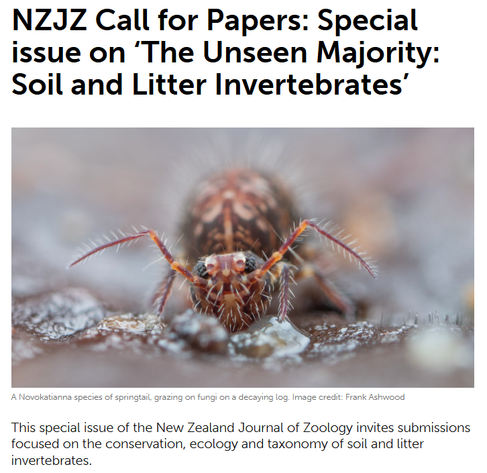
SOIL BIODIVERSITY SPECIAL ISSUE!

Are you researching the conservation, ecology or taxonomy of soil and litter invertebrates?

Then consider submitting your paper to this Special Issue of the New Zealand Journal of Zoology, edited by me, Carlos Barreto and Andrew Barnes (what a dream team!).

Just send me preliminary manuscript info by 30 November 2025.

More information: https://www.royalsociety.org.nz/news/nzjz-soil/

#SoilBiodiversity #SoilEcology #SoilFauna #Soil

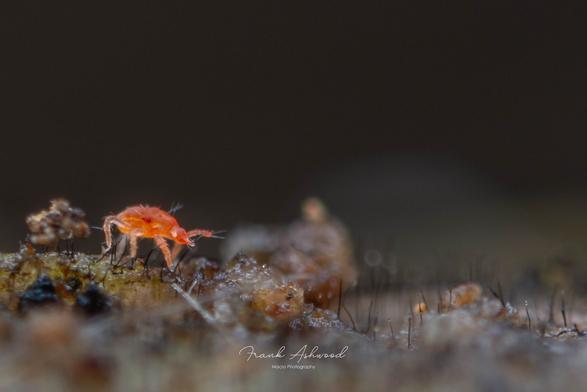
An alien creature traversing a distant world, or baby mite navigating the micro-fungi strewn surface of a decaying log? Arguably it's both!

Take a closer look at the life beneath your feet, and you'll discover a whole new world of dazzling complexity.

#SoilBiodiversity #SoilEcology #Acarology #Entomology #Macrophotography #Nature #NaturePhotography #Soil

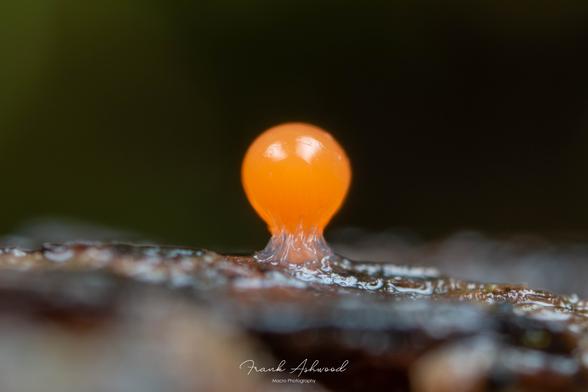
These are the beautiful spore-producing structures of plasmodial slime molds. Which is your favourite colour?

Originally considered Fungi, these Myxomycetes are now classed as Amoebozoans - single celled organisms with thousands of nuclei... not animals or fungi but something else entirely!

#SoilBiodiversity #SoilEcology #Fungi #MacroPhotography #Nature #MoldMonday #Soil

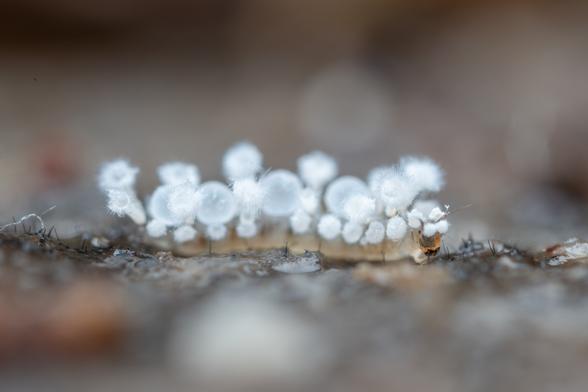
This festival of waxy lumps is a baby biting midge, AKA a Forcipomyia larvae. Before they grow up to be bloodsuckers, they're surprisingly cute.

They're very common on decaying logs here in Aotearoa, but I don't often photograph them. However, my good friend and fellow macrophotographer Andy Murray loves them, and has a whole webpage dedicated to them - so go check that out!

https://www.chaosofdelight.org/forcipomyia

#SoilBiodiversity #SoilEcology #SoilFauna #Mesofauna #Macrophotography #Macro #Nature #NaturePhotography

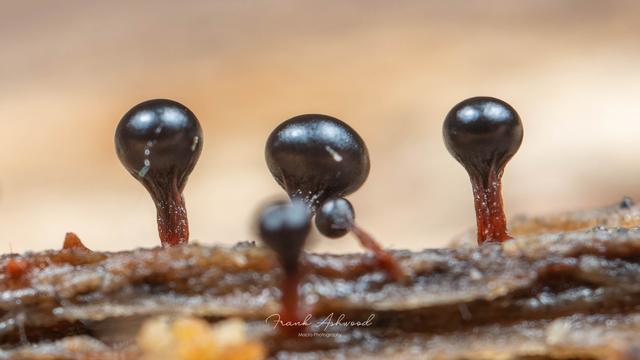
Yesterday we had earthworm cocoons, today I bring you springtail spermatophores!

Springtails, like many other soil invertebrates, reproduce by a male leaving these structures (a blob of sperm-rich fluid on a stalk), which the female will sniff out, collect and use to fertilise her eggs. Very romantic!

#SoilBiodiversity #SoilEcology #Entomology #Macrophotography #Nature #NaturePhotography #Collembola #Soil

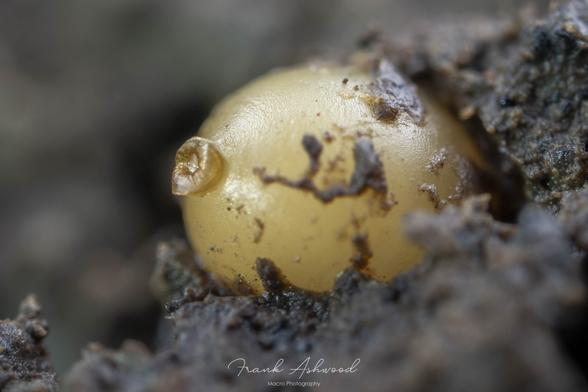
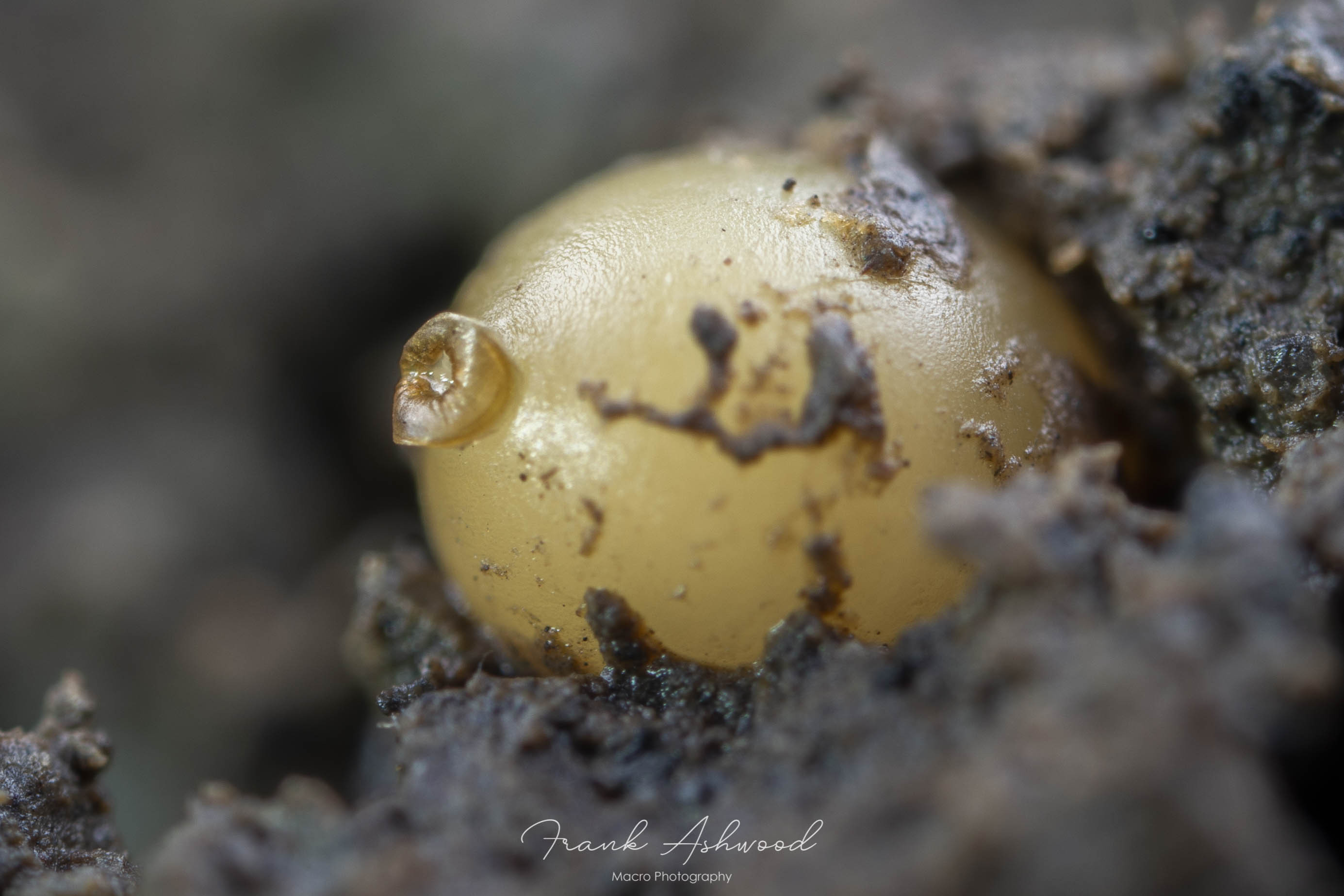
Did someone bury a tiny lemon?

Nope, this is an earthworm cocoon!

After mating, both earthworms will produce a cocoon like this (they're hermaphrodites), containing a fertilised egg. Inside, a baby earthworm will grow, before hatching out the end like a tiny pink noodle. Inside the cocoons, wormlings are protected from drought, flooding and low oxygen conditions, and will hatch when conditions are good again!

#Soil #SoilEcology #SoilBiodiversity #Earthworm #Macrophotography #Nature #NaturePhotography #Entomology

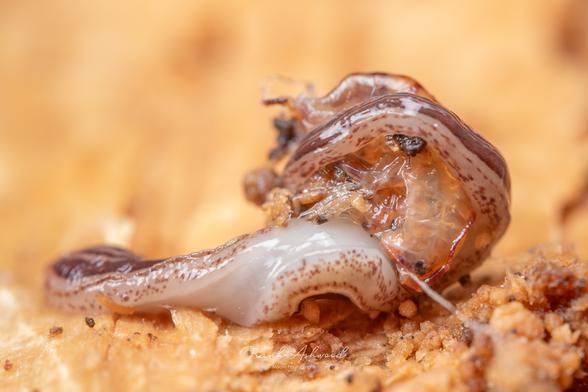
Predatory flatworms are found in damp habitats, such as under logs. They have an eversible tube-like throat called a ‘pharynx’, which externally digests their prey alive.

Here's one feeding on a land-hopper, a type of exclusively terrestrial shrimp found in the Southern Hemisphere. The New Zealand flatworm is an invasive species in parts of Europe, where it's threatening earthworm populations.

#SoilBiodiversity #SoilEcology #Entomology #Nature #Macrophotography #Worms

×

Did someone bury a tiny lemon?

Nope, this is an earthworm cocoon!

After mating, both earthworms will produce a cocoon like this (they're hermaphrodites), containing a fertilised egg. Inside, a baby earthworm will grow, before hatching out the end like a tiny pink noodle. Inside the cocoons, wormlings are protected from drought, flooding and low oxygen conditions, and will hatch when conditions are good again!

#Soil #SoilEcology #SoilBiodiversity #Earthworm #Macrophotography #Nature #NaturePhotography #Entomology

@frankashwood Super cool. It’s like there’s another world at our feet.

@joncounts @frankashwood there is. You can find more than 1k beings discoverable by naked eye in a handful of soil¹. And more than a billion adding bacteria, fungi and other microscopic beings.

¹depends on soil ofc. This is about German forest soil.

Just got aware that numbers might have changed cause I just remembered from a German science show for kids. So information is around 30 years old.
I'm feeling old now😂

@frankashwood One of the delights of teaching about the earthworm in biology class was finding out how much time Darwin spent investigation and writing about their importance as a species.
@magsamond yep! His final book was all about his work on them, published the year he died!
@frankashwood indeed; I loved that the person who gave us evolution and tree of life thinking also gave us the science of composting. Yea!
@frankashwood I taught in the same school for decades; the earthworm was a mandatory detailed study. Slowly we could see the population decline in our school grounds (rural Ireland) from flourishing to almost gone. I regret not keeping a log of the population decline.
@frankashwood Wow, I see these in my garden all the time and I didn't know what they were. Thanks & congratulations on your upcoming book!