20 Great Neko Case Songs
Neko Case, July 7, 2013. image: Jackman ChiuNeko Case’s music is a keen blade. The deep and enduring love of humanity is on one edge. Outrage in the face of our cruel histories and tendencies is on the other. Her songs are rooted in the conviction that we could do so much better, surrounded by natural wonders and possibilities of which we are all a part and connected, if only we could see it. The human spirit in such a world in all its sublime and terrifying complexity is too big to contain in any capacity, let alone in one easily labelled genre. And what a voice hers is to convey its violent beauty.
To illustrate the depth and breadth of her artistry, here are 20 great Neko Case songs to drop oneself into and walk around as one would in a fully realized landscape. As each one makes slender cuts to the senses in tales of love and cruelty, anger and empathy, considerations of how those forces so often take up the same spaces in a heart become painfully and joyfully apparent.
***
Timber
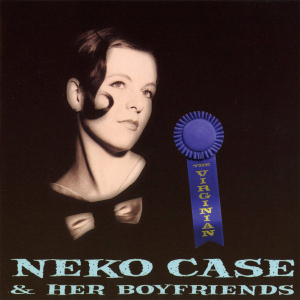
After stints in Vancouver B.C. punk bands Miaow and Cub in the early-to-mid Nineties, Neko Case went down another stylistic avenue on her 1997 solo debut The Virginian. Case embraced her Patsy Cline instincts, complete with an appropriated twang. But she didn’t forget her punk energy evident on this cut, albeit channeled into the sound of Sixties-era country music.
The metaphor of a planted tree and its ultimate fall due to unnurtured love is true to the that tradition’s songwriting form. But it would also provide an early glimpse into Case’s fascination with human affinities to the natural world, with us being as much a part of the landscape as any fallen tree. With Her Boyfriends backing band laying down an energetic country shuffle, that’s never more than a suggestion as it sits perfectly at home in your local honky tonk’s jukebox.
Listen: Timber
South Tacoma Way
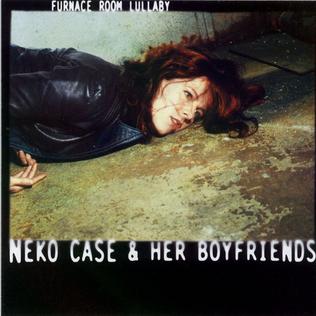
On 2000’s Furnace Room Lullaby, Neko Case delves deeper into more personal territory. “South Tacoma Way” is an evocation of childhood memories of hometowns, coupled with the melancholy that comes in revisiting them as an adult. The subjects of grief and of leaving things (and people) behind is, as always, open-ended. It’s the images as they’re tied to emotions that mean the most here, a familiar characteristic in Case’s material.
“South Tacoma Way” trades in polaroid snapshots of friendship, loss, and mourning as a world once remembered fades away. The song’s melody and changes carry a story that’s less a pop music construction and more like an impressionistic indie film. The music is spacious and echoey in support of Case’s reflective vocal as emotional landscapes meet physical geography. We listeners are witness to them becoming bittersweetly entwined.
Listen: South Tacoma Way
Furnace Room Lullaby
Filled with mournful murder ballad violence and regret, this song lives in the eerie stillness after the grisly deed is done. “Furnace Room Lullaby” is a story of a woman’s desperation and the lengths to which she goes to save herself from her oppressor, only to be oppressed in turn by the weight of her deed. This is older, weirder country music; the kind that wafts up through the floorboards as the furnace rumbles below.
Case’s voice delivers the drama here as always as she captures the sound of a soul caught in a choice between two terrible realities – living with a throne on her chest, or with the punishing guilt when she refuses that burden. The story ties it to established folk traditions. But there are contemporary implications here as well, with so many women similarly caught today.
Listen: Furnace Room Lullaby
Deep Red Bells
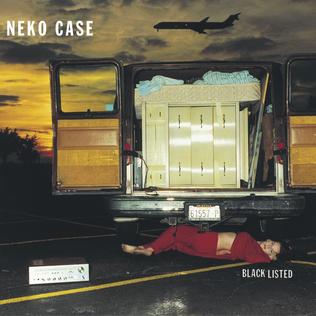
Written in response to missing women and violence in the Pacific Northwest, “Deep Red Bells” featured on Neko Case’s third album, 2002’s Blacklisted, is full of outrage and sadness. The song is not concerned with specific events so much as with the lingering effects that violence toward marginalized women has on the collective psyche – and what it says about the human lives we value, and about those we don’t.
Musically, the song evokes the same burnished nocturnal quality that will go on to mark her output hereafter. The low guitar leads and pedal steel riding on brushed snare accompany the lyrical balance between anger and compassion. The titular bells toll for those lost on the highway, but also for those who remain in a world where it’s so easy to cast women’s lives aside as acceptable losses.
Listen: Deep Red Bells
I Wish I Was the Moon
A highpoint on Blacklisted, “I Wish I Was the Moon” explores the loneliness and weariness of feeling trapped in one’s own life, wishing to be set apart from a merciless world if only for a while. The narrator’s story suggests the betrayal of empty promises, and good things turned bad as time steals youth away. It’s an interior monologue of all-too common spiritual desolation and longing told with uncommon pathos and sensitivity.
Case’s delicately strummed acoustic guitar as a counterbalance to her keening voice is joined by pedal steel, accordion, bass, and drums that come in as if in a supportive embrace. As lyrics evoke images of distance and coldness, the music makes the song sound as warm as the light from a midnight candle burning in a window. In its seeming despair, the song’s resonance brings compassionate relief.
Listen: I Wish I Was the Moon
These Are the Fables
While she built a concurrent solo career, Neko Case formed Vancouver-based The New Pornographers with bandmate A.C. Newman, a songwriter and musician remarkably sympatico with Case’s own approach to impressionistic non-linear lyrics and clear-eyed melodic intent. Case’s lead on Newman’s song from 2005’s Twin Cinema that focuses on imagery and emotional resonance is a sterling example of how her vocals bring his words and melody to life.
“These Are the Fables” is colourful and textural, with fantastical visions that suggest the wonderment and complexity of fine details in single moments; mythical and elemental images that suggest transcendence even amid the mundane and predictable. It demonstrates Case’s artistic versatility, rooted in Sixties psychedelia as it meets with Twenty-first century art rock. Within that mix, she’s in full command of an expansive stylistic range beyond any one genre.
Listen: These Are the Fables
Hold On, Hold On
Featured on the acclaimed 2006 record Fox Confessor Brings the Flood, “Hold On, Hold On” proves Neko Case to be a songwriter of keen insight on the subject of internal turmoil. A woman leaves a wedding reception, valium in hand as given to her by the bride. With these few details come the suggestion that an unpleasant scene unfolded just before, unleashing a tide of harsh self-reflection.
The jangly folk-rock sound communicates the turbulent minor chord emotions behind Case’s lead. The song is illustrative of one who cannot thrive in the traditional world from which she seeks escape, tired of waiting to feel like her friends do about love and stability. The hold on, hold on is the song’s catchy refrain, but is also the insistent, hectoring one that the narrator wishes to expunge from her mind and heart for good.
Listen: Hold On, Hold On
Star Witness
Concerning a confrontation with death, “Star Witness” is more fulsomely a love song, too. The connection between love and death is inextricable, with one tying us to the world and each other while the other takes people out of it and sometimes very suddenly. This leaves those who remain to wonder why. In this, we’re all star witnesses compelled to make sense out of senselessness.
For such heavy subject matter, the music is delightfully light with Case’s beloved reverbed guitar echoing in a decidedly nocturnal world. Even her voice is winsome and airy as she sings the vividly lurid lyrics of glass in her thermos, blood on her jeans, and wolves around town tonight. The strings, backing vocals, and outro piano sound as if they’re descending from heaven as the lyrics scrabble in the blood-soaked earth. The contrast is masterful.
Listen: Star Witness
Maybe Sparrow
There is a certain helplessness in the knowledge that one can’t keep another completely safe in an unpredictable world. “Maybe Sparrow” captures the essence of this in a world full of innocents who too often fly into territories for which they are not prepared. The natural world in its beauty and danger makes an appearance here, an enduring metaphor to the uncertainty of life found in Neko Case’s work.
This richly arranged song features Garth Hudson of The Band adding colourful filigrees on the organ. The jangling acoustic guitar voices the rapidly beating heart of the titular sparrow fleeing in vain from diving hawks. Case’s “la di da” is a cry of sorrow and frustration in the face of cold realities as compassion for another’s fate without the power to alter it becomes less a virtue and more of a burden.
Listen: Maybe Sparrow
This Tornado Loves You
Taken from 2009’s elementally-titled Middle Cylone, “This Tornado Loves You” is a unique love song that is quite literally all-consuming and full of grand gestures one dare not refuse. Is this the voice of a would-be lover in single-minded pursuit and damn the consequences? Or is it about how vulnerable human beings really are in the face of nature’s unpredictable fury? Given the choice, what difference would it really make?
Case displays her ability to uniquely synthesize musical ingredients, supplementing the brushed drums and low-twang guitars with plucked strings and helicopter rhythms that whirl like deadly weather systems. Yet it is also crystalline in its sonic detail, belying the violence of broken necks that line the ditch, and making the invitation to run out to meet me, come into the light frighteningly compelling even if it spells doom.
Listen: This Tornado Loves You
People Got a Lot of Nerve
Neko Case explores the themes of autonomy and nature on this single from Middle Cyclone. The music takes us on a jangly folk-rock flight of fancy featuring killer whales in tanks and incarcerated elephants. “People Got a Lot of Nerve” is about captivity and the common expectation that animals and humans alike should only exist to meet our expectations even at cost to their agency and true nature.
In this, people have indeed got a lot of nerve, imposing unrealistic, presumptive, hard-coded, and downright cruel limitations on the natural world and on each other, our single-mindedness leading to pain and suffering all around. Full of ringing 12-string guitars that sound like the sun coming out, the sober subject matter becomes musically joyful, operating on multiple levels lyrically as animal captives kept in cages and tanks mirror our own imprisonment.
Listen: People Got a Lot of Nerve
Magpie to the Morning
Once again, the natural world is the higher power in a song about venturing into the light when the world of night seems endless. Yet as always in Neko Case’s songwriting world, the night isn’t all bad. There are still songs to keep us company well before dawn as we crave the comfort of daylight, however fleeting that comfort may be.
Case’s voice on this is both ruminative and insistent as she sings about being in the moment, reminded by the local corvids to not let fading summer pass her by. And yet “Magpie to the Morning” suggests how easy it is to let that happen while we dwell in dark places. In addition to the Middle Cyclone version, a stripped-down dobro and banjo bonus track version on her next record makes it sound, wonderfully, much older than it actually is.
Listen: Magpie to the Morning | Magpie to the Morning (outtake)
Man
A stunning barrage of fuzzy, Sixties-influenced indie rock, “Man” is a ferocious single taken from 2013’s The Worse Things Get, The Harder I Fight, The Harder I Fight, The More I Love You. This is a tune about what’s allowed to one gender and denied to others; authority, ownership, credit, and equal reward in a world created primarily by men and with men primarily in mind. This is a reclamation of manhood, putting the “man” back in human where it belongs.
“Man” is propelled by Case’s clarion vocal in a song of defiance that declares what’s true—that freedom means wielding the power to define oneself and one’s own life while allowing the same for everyone. Case makes an artistic statement about who gets to do that and who is defined as the default human within artificial, rigid hierarchies designed to keep things as they’ve been defined, not necessarily how they are.
Listen: Man
City Swans
Another driving pop-oriented tune from The Worse Things Get … record, “City Swans” recalls her work with the New Pornographers as it meets with her own brand of roots-meets-art rock. This is an aural film about a night out on the town and the attempts to capture what it is we admire in another while finding out something about ourselves in the process.
The song is both anthemic and introspective, full of reverence and a kind of amourous disorientation while touching on insecurity. These are part and parcel of connecting with others, particularly after putting in miles on personal odometers with dings in the sides to prove them. This is a song of well-earned experience. But there is a touch of lingering innocence here, too, in being surprised by something new after thinking one has seen everything.
Listen: City Swans
Night Still Comes
A deeply harrowing, musically rewarding rumination, “Night Still Comes” is an acknowledgement of what the inside of chronic depression is like, plagued by dark urges that cannot be understood or countermanded from the outside. This is a song of struggle, its narrator engaged in chemical warfare with their own brain, that same creative center producing so much beauty and sense of selfhood having become a betrayer.
“Night Still Comes” is a song about that which is impossible to accept or dismiss, never soothed even by the most loving forces in our lives. The song rests on a waltz rhythm, its tone working against that traditionally airy and open form. Its chorus is both catchy and heartbreaking; the cry of one isolated by illness, feeling out of reach as a veil of night not fully expressible or understood separates them from the world.
Listen: Night Still Comes
Supermoon
In 2016, Neko Case put out a record with k.d. lang and Laura Veirs under their last names, reviewed at the time as an alt-folk answer to the Harris/Parton/Ronstadt Trio albums. The result was not the close three-part harmonies associated with those previous albums. It was more of a distillation of what each songwriter and singer is great at, all on one record.
Written against Laura Veirs’ melody, “Supermoon” is starkly arranged, with k.d. lang’s distinctive backing vocal floating behind it among the weeping, lilting strings. The low guitar that’s a mainstay in Case’s solo work is in place supplementing her lyrics that explore humanity’s exploitative relationship to nature, driven by a pathological need for control. The result is sobering in a song about dominance over our environment instead of engagement with it, to the cost of our own souls.
Listen: Supermoon
Bad Luck
From 2018’s Hell-On, “Bad Luck” explores the liminal space between the power we have and our vulnerability to forces that render us powerless. “Bad Luck” took on special resonance after a housefire disrupted Case’s life while she was away recording the album in Sweden. It was as if the event and the sentiment of the song were eerie reflections of each other which is not an ideal way to prove a thesis.
Musically, the song injects a compelling Motown-style feel into subject matter that otherwise should sound morose. Instead, it’s undeniably celebratory. Its jubilant, layered vocals are anthemic for all who are subject to forces we cannot control. When things go wrong, it’s only because they’re bound to do so eventually. This makes “Bad Luck” a vehicle to remove fear, judgement, and self-loathing, becoming an unexpected comfort to us instead.
Listen: Bad Luck
The Halls of Sarah
Neko Case provides an authoritative voice on “Halls of Sarah”, a tune concerning a facet of oppression and exploitation that’s subtle and therefore more dangerous. It’s the impulses some men follow to make a woman into his muse or source of power, doing so without her consent or ceding territory to her in return. The song suggests misplaced senses of ownership, false connection, and other destructive perceptions that weigh down and dehumanize women.
The lilting acoustic guitar kicking the song off is coupled with a less-expected baritone saxophone lurking behind it. The sonic landscape is beautifully wintry and overcast with the undercurrent of voices that make it uplifting somehow, too. There’s anger here. But it’s mostly overlaid by sorrow, compassionate to the plight of anyone caught up in the grinding gears of someone else’s ambitions, entitlements, or senses of comfort.
Listen: The Halls of Sarah
Oh, Shadowless
A new song on 2022’s Wild Creatures compilation, “Oh Shadowless” is a Lennoneque nocturne that trades in pleasant musical surprises – shifts in tone and tempo that keep us on our toes, exploring a tempestuous psychedelia-flavoured instrumental section before returning to the lullaby-like main melody. This is a late-night half-awake musing during the still wee hours when one can’t seem to fall asleep.
As much as her work provokes one’s thinking about challenging subject matter, this one is a reminder that Neko Case’s music is just as much about the comfort that we’re all in this together as it is about struggle. The enormity of nature and the universe is present here, as always. But her voice, capable of embodying a tornado when needed, is dulcet and soothing as she sends us off for the good night’s sleep that eludes her.
Listen: Oh, Shadowless
Winchester Mansion of Sound
Combining a kind of East meets West melodic sensibility, this cut from 2025’s Neon Grey Midnight Green is a love song to a departed musician, Flat Duo Jets’ Dexter Romweber—and if we think she’s talking about romance, we aren’t really listening as the song itself says. A bright and sparkling piano leads this song that pulls from memory, children’s rhyme (“Down Down Baby”), and Case’s appreciation for Robbie Basho’s operatic and similarly piano-led folk tune “Orphan’s Lament”.
The tune is a collage of imagery, in part a lament but also decidedly celebratory. In the end it sounds as if Neko Case is singing this in celebration of music itself and its power to unlock feelings and sensations that cannot be accessed any other way. In this, the song is a tune of immense gratitude, not only for music from beloved musicians, but also in being empowered and gifted to make it oneself.
Listen: Winchester Mansion of Sound
***
Runners-up and bubbling under:
- The Next Time You Say Forever
***
The emotional dance that one can hear in Neko Case’s music between rage, compassion, great sensitivity, wonder, and refusal of bullshit covers a range that rivals that of the musical territory she inhabits. At the center of it all is her voice, an extraordinary instrument by any measure and one that seems to harbour all of those states of mind and of heart that we all feel so keenly, yet can’t always find the words to express.
You can learn more about Neko Case’s newest releases and news at nekocase.com.
Last year, she put out an autobiography, The Harder I Fight the More I Love You. You can buy it here.
To read her more personal material and get previews of her work in progress, you can visit and sign up for her newsletter, Entering the Lung.
Enjoy!
#20GreatSongs #AltCountry #artRock #folkRock #NekoCase #singerSongwriters Robin Bannks
 offbeat amsterdam
 The Delete Bin

 Defector | The last good website. [Unofficial]
 Dr Pink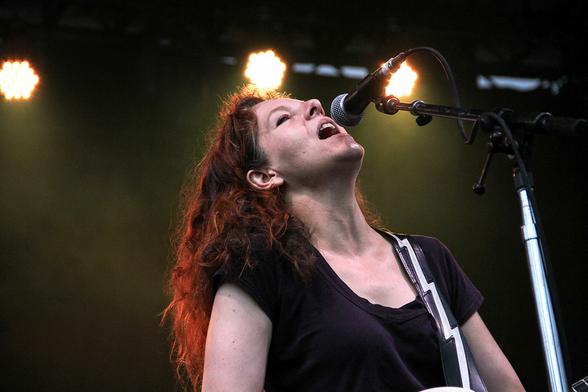
 Dan Tappan
 Flipturns 🏊♀️ 📷 🦋