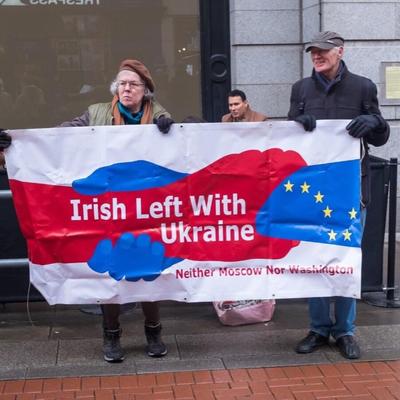
 Irish Left With Ukraine - Neither Moscow nor Washington
Five questions for the western left on Ukraine and imperialism – by Simon Pirani
Five questions for the western left on Ukraine and imperialism
Russia’s war: stop trying to delegitimise resistance
Link :
https://europe-solidaire.org/spip.php?article78328
British writer, historian and energy researcher Simon Pirani confronts what he terms “campism” — the tendency in parts of the western left to treat Ukrainian resistance as a NATO proxy rather than genuine anti-colonial struggle. Structured as five questions addressed to a sceptical comrade, the article contests the claim that the Ukraine war is simply inter-imperialist, argues for the colonial character of Russian domination over Ukraine, and defends arms supplies on historically grounded socialist principles, drawing on Bangladesh, the Malvinas and the French Resistance as precedents. Written as the US-Israeli assault on Iran reopens campist divisions, Pirani calls for principled internationalism over geopolitical simplicity. [AN]
he second of two linked articles. The first is here: European socialism, imperial militarism and the defence of Ukraine
In the labour movement and civil society organisations in the UK, support for Ukrainian resistance to Russian imperialism is countered by those who argued that Ukraine is only a proxy of western powers.
The underlying idea, that the only “real” imperialism is western – and that resistance to Russian or Chinese imperialism, or their puppets in e.g. Syria or Iran, is therefore illegitimate – has its roots in twentieth-century Stalinism. But it retains its hold, in part, because the western empire’s crimes are so horrific. It is Gaza, and climate change, that angers young people in the UK above all.
This “campism” (division of the world into a US-centred “camp” and other, not-so-bad camps) transmits itself, in part, through activists who seek simple principles on which to build social movements. [1]
It has reared its ugly head again during the US-Israeli war on Iran this month, treating the theocratic, authoritarian regime as the victim rather than the Iranian people caught between that regime and the murderous US-Israeli onslaught.
This article is a plea to avoid such simplicity. It has grown out of an email, written last year to one such activist, who told me I was wrong to support the provision of arms to Ukrainians resisting Russian aggression. I asked him these five questions, and I still hope he will reply.
1. What is the character of Russian imperialism, and what is its relationship to Ukraine?
We often hear, or read, on the “left” that the war in Ukraine is an “inter-imperialist war”. I don’t agree. There’s certainly an inter-imperialist conflict that forms the context, but the actual war is between Russia (an essentially imperialist country) and Ukraine (clearly not an imperialist country). I’ll come back to the character of the war below (question 2). But I think we agree that Russia is essentially imperialist. What sort of imperialism?
For all socialists in the 19th and early 20th centuries, Russia was the most fearsome empire and Ukraine was its oldest, and largest, colony. Throughout the Soviet period, as far as I know, none of the versions of socialism or communism, however exotic, argued that Ukraine and the other 13 non-Russian republics had somehow disappeared or lost their right to self-determination.
As far as extreme Stalinists were concerned, that right was guaranteed by the Soviet constitution and all was fine. There were plenty of arguments about the extent to which the speaking of Ukrainian in Ukraine, Kazakh in Kazakhstan, Azeri in Azerbaijan etc should be implemented. But as far as I’m aware, not even when Stalinist nationalities policy zig-zagged into extreme insanities, did anyone suggest that these were not nations with their own language and culture.
Russia emerged from the Soviet period as a severely weakened empire, or a would-be empire, but still an empire. The large stock of nukes and gigantic army made up for what Russia lacked in terms of its economy.
A large part of Putin’s project is to strengthen the Russian empire. That was what the incredibly brutal wars in Chechnya in the 1990s and early 2000s were about, and a large part of what the Russian intervention in Syria was about. In my view, this is essentially what the war in Ukraine is about too.
What about Ukraine? The friend I was arguing with wrote to me: “we’re not talking about an ’oppressed people’ in the sense we may talk of resistance in Palestine, we’re talking about an advanced capitalist state’s army, which is supported by NATO (North Atlantic Treaty Organisation) powers and in a war with another state’s army, with all the consequences that brings”.
Let’s unpack this. Of course there’s no comparison, in Ukraine or anywhere else, to the long-running history of violent ethnic cleansing in Palestine, let alone the genocide now being carried out. It would be analytically meaningless, and I’d say morally dubious, to try to make a comparison. So let’s not try.
I would not compare Ireland’s situation to Palestine either, but I would say that Ireland – which also has an “advanced capitalist state”, right? – and Ukraine are both examples of countries that have historically been subject, by Britain and Russia respectively, to long-term forms of imperial domination.
Some people think that in the post-Soviet period, Russian domination of Ukraine has been fading away. I myself thought that in the early 2000s, and how wrong I turned out to be.
Certainly the Ukrainian bourgeoisie tried to carve out for itself an independent economic path (or rather, a path towards closer economic integration with Europe), with some success. Other republics took distance, economically, from Russia: Azerbaijan towards Turkey, some of the central Asian states towards China. But Ukraine’s aspirations took a crushing blow from the 2008-09 financial crisis. Russia attempted to reassert control through local politicians, but found itself in a cul-de-sac in 2014. The Kremlin then opted for military subversion.
2. What caused the war (which is relevant to how it might be stopped)?
The standard explanation of the 2014 invasion by campists and “realists” is that Putin’s hand was forced by NATO. To my mind (i) that’s a heap of happy horse manure, and (ii) while there was a strand of thinking (albeit not consistent or dominant) in the NATO powers that Putin should be more tightly controlled, it is just deceptive to present this as the cause of the invasion. Actually, Yanukovich was forced out by a popular movement – extremely politically heterogenous, but a movement all the same – and Putin felt forced to act.
I remember going to Kyiv literally the day after Yanukovich left. I met a friend. She said: “the Russians are going to invade”. I said: “no they won’t. That would be madness, it would ruin all they have been trying to do with the economy for years”. It was madness, it did ruin Russia’s economic strategy, but they did it anyway.
Why? I was then working at the Oxford Institute for Energy Studies, in which context I had to interact with Russian business people and researchers. I spent several years asking them: why did they think the Kremlin did it? The best answer I got was: “Because they could, given the confusion in Ukraine at that moment. And because if they had not taken the opportunity, they would have had to answer to the military, and to the nationalists, as to why they had not done it.” (A forthcoming book by Alexandra Prokopenko answers a slightly different question, i.e. why didn’t the Russian elite, most of whom saw the war as a disaster, do more in 2022 to stop it.) [2]
What was the social reality of the initial invasion in 2014? What were Russian troops and the Russian-supported forces in Donetsk and Luhansk up to in 2014-21? The “campists” and “realists” have little or nothing to say about this. The answer is that they were terrorising people who disputed their right to set up tinpot dictatorships, jailing trade unionists, putting in place an arbitrary, dictatorial legal system, attempting to stop people speaking or teaching kids the Ukrainian language, and so on.
It’s estimated that as well as wrecking the economy, these bastards managed to reduce the population by half between 2014 and 2018 or so. Many people who were young and able to leave, left.
Surely this was not an inter-imperialist war? And without understanding this, it’s impossible to claim seriously that the conflict post-2022 is an inter-imperialist war. Militarily, it’s a war between Russia and Ukraine, and grew out of the 2014-21 war. No matter how much support is being given to Ukraine by the western powers – and it’s actually pretty small scale by historical standards – this is not a conflict between two imperialist armies.
3. Are there circumstances in which, against a background of inter-imperialist conflict, socialists would take the side of one state against another?
Of course there are – which is another hole, or a crater, more like – in “campist” and “realist” arguments.
Sure, there’s an inter-imperialist conflict going on. But I would say socialists are justified in supporting Ukraine because we stand for nations’ right to self-determination, free of imperialist bullying.
An example of this is Iran, which is surely as much an “advanced capitalist state” as Ukraine, and also surely close geopolitically to Russia and China. Does that mean that as socialists we are indifferent to the attack on Iran by the US and Israel? Of course not. Neither were we indifferent to the attack on Iraq in 2003.
In fact I can think of examples of socialists actually supporting a capitalist, perhaps would-be imperialist, power invading another country. One such is the Indian invasion of Bangladesh in 1971, when Pakistan was threatening to crush the Bangladeshi independence movement militarily. [3] I wrote to an Indian socialist friend to ask about this, and she replied:
I am not sure if it’s correct to refer to India at that time as a “would-be imperialist power”, although it certainly was the dominant power in South Asia. But you are right in thinking that Indian socialists, including the Communist Party of India and the Communist Party of India (Marxist), with the exception of the Maoists, supported the Indian intervention to halt what I would subsequently call a genocidal assault on East Bengal, with an especially horrifying number of rapes. No doubt [the Indian prime minister] Indira Gandhi was being opportunistic, and, as I found later when I visited Bangladesh, workers there had no illusions in her or in India. But the rapes and killings had to be stopped, and she did it.
If we go back to the 1930s and 40s there are numerous examples of socialists supporting the supply of weapons to states, and quasi-state formations, by imperialist countries. Socialists in the UK and across Europe supported the supply of weapons by British and American imperialism to the French resistance, which was led by a bunch of reactionary bourgeois politicians, who after the war led reactionary bourgeois governments. I do not know what Irish socialists thought of the supply of weapons to the IRA (Irish Republican Army) by Nazi Germany, but certainly they made no vocal demands that the arms be sent back.
Of course there are political reasons to be cautious about focusing on the supply of weapons, to do with our larger attitude to militarism and our attitude to the state. (I have mentioned these in this related article.) [4]
But let’s again consider Ukraine specifically. In his email, my friend contrasted Palestinians (an “oppressed people”) to Ukrainians (who have “an advanced capitalist state’s army”). What difference does this make?
In my view, the absence of a Palestinian capitalist state with weapons is a key factor that has allowed the genocide to proceed in Gaza. It’s no accident that the Israeli right has spent the last quarter of a century making sure that no steps are taken in the direction of the formation of such a state (the “two state solution”).
If only Palestinians had had that advanced state with an army, that Ukrainians have!
To see what happens to people attacked by Russia without a fully-fledged state and army to protect them, we have only to look to Chechnya, which was subject to a war of mass extermination as a result.
4. Is there a difference between the manner of social control in Russia on one side, and Ukraine, Poland and other eastern European countries on the other? And does this make any difference?
Last year, I picked a polemical argument with people who talk about the war in Ukraine being a confrontation between authoritarianism and democracy, because I think that that folds too easily into the western imperialist powers’ narratives. But the issue of bourgeois democracy is not irrelevant.
In Ukraine, however dire the situation, it is still possible – as we saw, dramatically, with the “anti-corruption” demonstrations last summer – for people to demonstrate, to criticise the government in the media, etc, in other words to exercise the rights of free speech and assembly – with a risk of repression that I suppose is comparable to the UK, i.e. low.
In Russia, this is obviously not the case. We have seen no movements involving street demos since 2022, and the standard punishment for criticising the war on social media is seven or eight years in prison. Numerous people have been killed for opposing the government. Our socialist and anarchist friends and comrades are either in jail, or have left the country, or, if they can not do so, have stopped doing any public political activity or organising.
Does this difference matter? Does it mean that some of the considerations that were discussed in the 1940s – that the axis powers, i.e. not only Germany which was fully Nazi but also fascist Italy and fascist Spain – represented a threat to democracy that was qualitatively different from the threat posed by the British, French and American bourgeoisies? I think it matters, and I think that again has implications for whether socialists favour the Ukrainian side in the war.
5. Can we make clear that we favour the use of weapons by the capitalist state for one thing (defending Ukrainian people) but not another (general rearmament)?
In his email, my friend said he would find it difficult to justifying arms deliveries to working-class Brits who are faced with monstrous spending cuts. We need to discuss this seriously, analytically.
I think it’s obvious that there are some uses of force by the state that we favour, and some we don’t. If we were on a counter-demo against a bunch of fascists outside a hotel being used to house migrants, and were significantly outnumbered, and all that was protecting the hotel was a line of cops, we would not be urging the cops to go away, would we? We would not lambast their defence of the hotel in the same terms that we lambast many other things that police officers do, would we?
Obviously we would hope not to be in that situation, and we would put all the emphasis on mobilising to ensure that the counter-demos were bigger.
But working-class Ukrainians never hoped to be in the situation they are in either.
This argument can easily be extended to examples of military force. I asked some Argentine comrades about the Malvinas war of 1982. [5] Many in the largely-underground labour movement urged the military dictatorship, which had killed, tortured and imprisoned many thousands of their friends and comrades, to divert its resources to fight the armed forces sent by Margaret Thatcher to the islands. One comrade wrote to me that the Argentine Trotskyist organisations
held a critical position, differentiating the Malvinas cause (which they supported) from the military leadership of the military junta, which they considered a genocidal dictatorship that used the war to remain in power.
Sections of the left proposed the nationalisation of British-owned properties, the confiscation of British assets, and the non-payment of the external debt to Great Britain, seeking to make the war “popular” and not directed by the military junta.
The Argentine left maintained a position of national sovereignty over the islands, denouncing the British occupation since 1833. It criticised the dictatorship’s handling of the war, viewing the conflict as a way in which the military junta sought to perpetuate its power. The general approach is sovereigntist and anti-imperialist, differentiating it from the positions of the center-right or liberal sectors.
Were the Argentine socialists right to support the war, and to call for it to be “made popular”, even in the face of a brutal, inhuman dictatorship?
Why, now, should we not put demands on the racist, anti-working-class, genocide-supporting Starmer government to step up UK arms shipments to Ukraine?
My friend said in his email that he “simply could not face [working class people in dire circumstances], or the people I work with around [climate impacts] and defend the absurd amount of money which has gone to continuing this bloody stalemate”.
I would suggest to him that he could say to his comrades: the state can fund this stuff if it has the will to do so. The state can tax the rich, or whatever. It’s not an either/or. It’s a matter of principle.
The damage done by western “leftists”’ cynical attempts to delegitimise Ukrainian resistance has already been done. At least since 2014, and rising to a crescendo in 2022. Always wrapped up in earnest-sounding, empty words about “anti imperialism”. The damage is not to Ukrainian people – that is done by Russian bombs, and by the gangsters and torturers that the Kremlin has put in charge of Donbas – but rather damage to socialism, damage to its development as a movement. [6]
Simon Pirani, 12 March 2026.
A linked article: European socialism, imperial militarism and the defence of Ukraine
There are detailed discussions of UK “left” groups’ attitude to Russia’s war on the Red Mole substack, e.g. here, here, here and here.
Simon Pirani is a British writer, historian and energy researcher, honorary professor in the School of Modern Languages and Cultures at the University of Durham, and former senior research fellow at the Oxford Institute for Energy Studies (2007–21). He is the author of Burning Up: A Global History of Fossil Fuel Consumption (Pluto Press, 2018) and writes the People & Nature blog at peoplenature.org.
P.S.
https://peopleandnature.wordpress.com/2026/03/12/russias-war-stop-trying-to-delegitimise-resistance/
Notes for ESSF by Adam Novak
Footnotes
[1] On campism and its roots in Stalinist ideology, see Marc Bonhomme, “Ukraine and the Weak Link: Anti-Imperialism in the Age of Neo-Fascism”, Europe Solidaire Sans Frontières, 5 March 2026. Available at: https://www.europe-solidaire.org/spip.php?article78229
[2] Alexandra Prokopenko, Russia Elites Transformation, Carnegie Endowment for International Peace, forthcoming 2026. Preview available at: https://carnegieendowment.org/russia-eurasia/politika/2025/12/russia-elites-transformation
[3] The Indo-Pakistani War of 1971 resulted in the creation of Bangladesh from what had been East Pakistan. Indian military intervention halted the Pakistani army’s campaign of mass killings against the Bengali population. The conflict is estimated to have caused between 300,000 and 3 million deaths.
[4] Simon Pirani, “European socialism, imperial militarism and the defence of Ukraine”, People and Nature, 12 March 2026. Available at: https://peopleandnature.wordpress.com/2026/03/12/european-socialism-imperial-militarism-and-defence-of-ukraine/. Also published on Europe Solidaire Sans Frontières. Available at: https://www.europe-solidaire.org/spip.php?article78305
[5] The Malvinas/Falklands War (April–June 1982) was fought between Argentina and the United Kingdom over the Falkland Islands (Islas Malvinas), which Argentina claims and which have been under British control since 1833. Argentina’s military junta, led by General Leopoldo Galtieri, launched the invasion partly to shore up collapsing domestic support; Britain under Margaret Thatcher dispatched a naval task force and retook the islands after ten weeks of fighting.
[6] On the impact of campism on the European left’s response to the war, see also Simon Pirani, “European socialism, imperial militarism and the defence of Ukraine”, Europe Solidaire Sans Frontières, 12 March 2026. Available at: https://www.europe-solidaire.org/spip.php?article78305; and Luisa Martinez, “No concessions to any imperialism! The Zapatistas’ Clear Stand on Ukraine”, Europe Solidaire Sans Frontières, 8 September 2025. Available at: https://www.europe-solidaire.org/spip.php?article76176
About the author, Simon Pirani :
Hello. My name is Simon Pirani. I write here about the climate and ecological crisis; energy and energy workers; science, technology and society; history; and other things. The site also has articles by guest authors, interviews, reviews and pamphlets.
From 2011 until February 2021, I was writing here under a pseudonym, Gabriel Levy. I am no longer doing so.
I am an energy researcher and historian. My book, Burning Up: A Global History of Fossil Fuel Consumption (Pluto Press, 2018) is relevant to some themes on this site. You will find other things I have written at simonpirani.com.
People & Nature articles have been republished by the Ecologist, Open Democracy, Red Pepper, Libcom, The Pensive Quill, RS21, London Green Left, Climate and Capitalism and elsewhere. My writing on Russia, Ukraine and Kazakhstan has appeared in LeftEast, The Russian Reader and Russian- and Ukrainian-language sites including OpenLeft, Commons.ua and Nihilist.
People & Nature is not really a news or campaigning site – but I have featured campaigns such as solidarity with Kazakh oil workers, Ukrainian trade unionists and victims of political repression in Russia.
For more, see People & Nature greatest hits of the 2010s, and for even more, the (entire) site contents.
Comments, correspondence and guest posts welcome.
#Campism #Crimea #DifferentUsesOfWeapons #EuropeanMilitarism #EuropeanUnion #europeanUnion #FrenchResistanceAgainstTheGermanNazisDuringWorldWar2ArmedByBritishAndUSAImperialism #InternationalistPrinciples #ireland #NATO #politics #putin #Russia #SimonPirani #Ukraine #war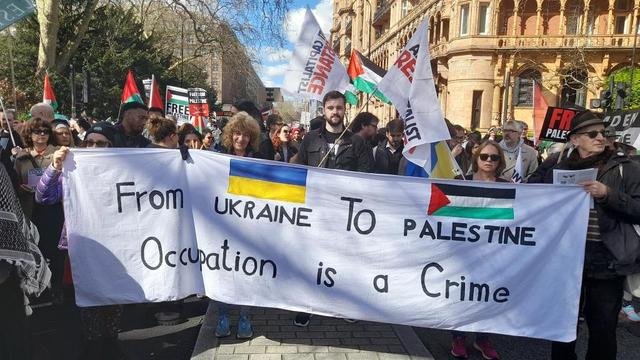
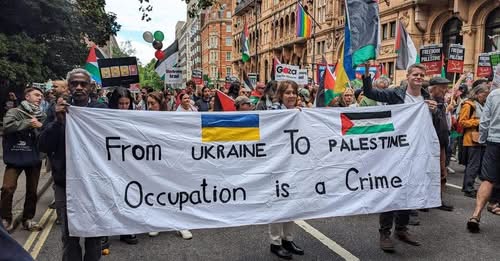
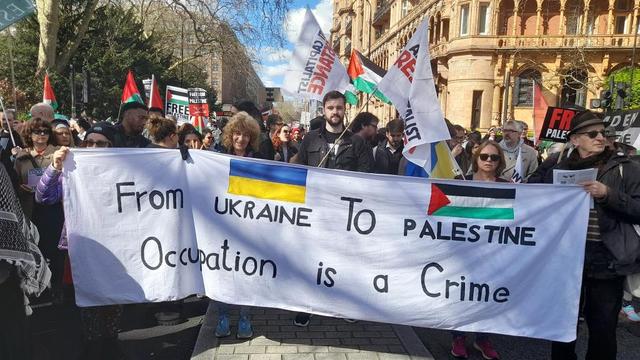
 Sempre e per sempre dalla stessa parte


 ∫connessioniprecarie - Rss Bot