“A simile is just a metaphor with the scaffolding still up”*…

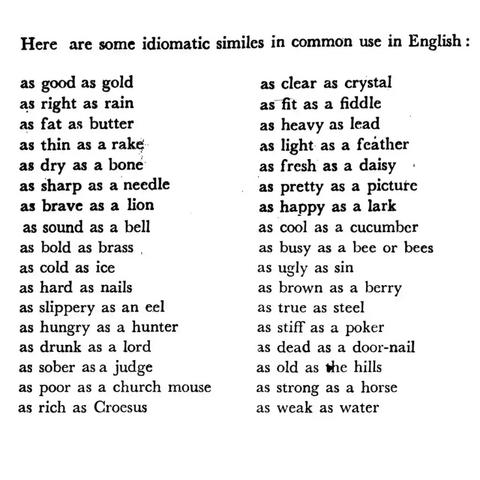
From the 1964 textbook Examine Your English

Russell Samora has been fooling around with figures of speech; with his colleagues at The Pudding, he’s fielded a fascinating analysis of of that comparative workhorse, the simile…

Similes are all around us. But, if you haven’t considered this figure of speech since grade school, here’s a refresher: similes compare a shared quality of two things, often using “like” or “as.”

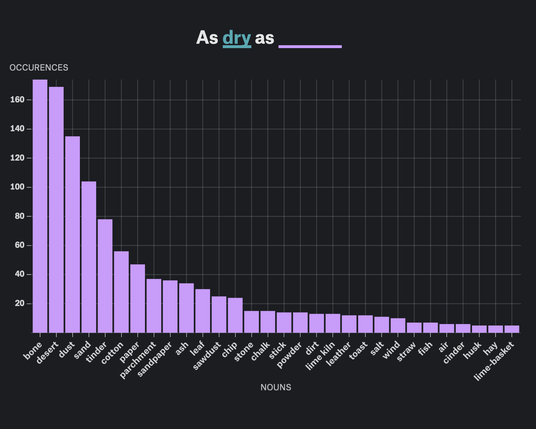
I pulled every simile in the form “as ___ as ___” from tens of thousands of fiction books for the top 500 most common adjectives… I thought it would be a trivial exercise, but the more I poked around, the more questions I had…

Samora explains how similes are structured and how they are used (and with what relative frequency) in literature. He examines some of the most common– and several special cases (“The Ironic Ones”). And he explains his methodology and sources… all in the context of a lovely interactive data visualization.

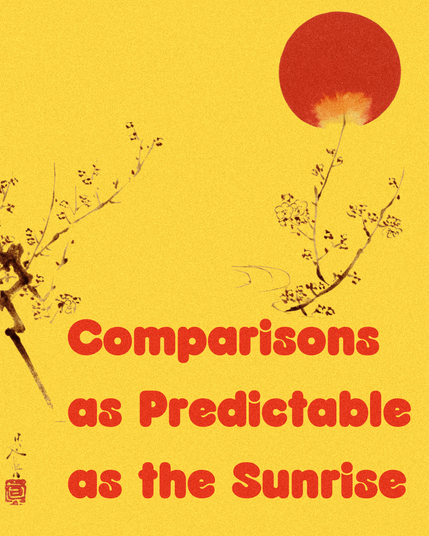
It’s as cool as hell: “Comparisons as Predictable as the Sunrise,” from @pudding.cool.

James Geary

###

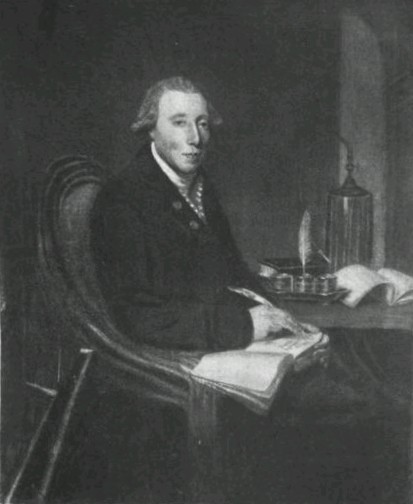
As we agree with Steve Martin that “a day without sunshine is like, you know, night,” we might recall that it was on this date in 1789 that Richard Kirwan published his essay in support of the phlogiston theory (the belief, that dates to alchemical times, in the existence of a fire-like element (dubbed “phlogiston”) contained within combustible bodies and released during burning. Kirwan was among the last of its advocates.

A well-regarded scientist in the late 18th and early 19th centuries, Kirwan met and corresponded with Black, LavoisierPriestley, and Cavendish. Indeed, while scientific history remembers him as a defender of an incorrect theory, his work probably spurred Priestley and Lavoisier, who respectively discovered and named the actual elemental agent of combustion, oxygen.

But Kirwan is also remembered for a personal eccentricity (one of many) that led to some referring to him (all too poignantly) as “crazy as a bed bug”: he hated bugs (especially flies). Kirwan paid his servants a bounty for each one they killed.

source

#bugs #Cavendish #culture #dataVisualization #eccentricity #figureOfSpeech #history #infographics #language #Lavoisier #literature #phlogiston #Priestley #RichardKirwan #Science #simile #similes

🟠 Comparisons as Predictable as the Sunrise
By Russell Samora @russell
at @puddingviz.bsky.social #ThePudding
An analysis of 200,000 similes from popular fiction.

#Literature #English #EnglishSimiles #Similes
https://pudding.cool/2026/05/similes/

A Statistical Examination of Similes in Popular Fiction

📰 Original title: Analysis of similes in literature

🤖 IA: It's not clickbait ✅
👥 Users: It's not clickbait ✅

View full AI summary: https://en.killbait.com/a-statistical-examination-of-similes-in-popular-fiction.html?utm_source=mastodon_world&utm_medium=social&utm_campaign=killbait.mastodon_world

#literature #similes #fiction #literaryanalysis

A Statistical Examination of Similes in Popular Fiction

Russell Samora, with design and illustration by Shelly Tan, conducted an in-depth study of similes used across popular fiction for The Pudding. Moving beyond simple word counts, the analysis explores the types of words employed, unexpected outliers, and instances of ironic usage. One particularly notable focus is the simile pattern “___ as hell.” The earliest recorded use in the exact structure was found in the 1954 novel The Refuge, where the phrase is used to describe a character's attractiveness. Interestingly, while most nouns in similes represent tangible concepts or traits, “hell” in this context functions simply as an intensifier equivalent to “very,” making it a unique entry in the dataset. The analysis offers insights into how writers creatively employ language and how certain expressions gain popularity over time. This study contributes to understanding patterns in literary expression, highlighting both conventional and surprising choices in figurative language. Readers interested in statistical visualization and the nuances of fiction writing will find this examination both informative and engaging. Additional related analyses include word usage on NYC streets, trends in romance novel covers, and decade-specific language in Billboard song titles.

KillBait

A Statistical Examination of Similes in Popular Fiction

📰 Original title: Analysis of similes in literature

🤖 IA: It's not clickbait ✅
👥 Users: It's not clickbait ✅

View full AI summary: https://en.killbait.com/a-statistical-examination-of-similes-in-popular-fiction.html?utm_source=mastodon_social&utm_medium=social&utm_campaign=killbait.mastodon_social

#literature #similes #fiction #literaryanalysis

A Statistical Examination of Similes in Popular Fiction

Russell Samora, with design and illustration by Shelly Tan, conducted an in-depth study of similes used across popular fiction for The Pudding. Moving beyond simple word counts, the analysis explores the types of words employed, unexpected outliers, and instances of ironic usage. One particularly notable focus is the simile pattern “___ as hell.” The earliest recorded use in the exact structure was found in the 1954 novel The Refuge, where the phrase is used to describe a character's attractiveness. Interestingly, while most nouns in similes represent tangible concepts or traits, “hell” in this context functions simply as an intensifier equivalent to “very,” making it a unique entry in the dataset. The analysis offers insights into how writers creatively employ language and how certain expressions gain popularity over time. This study contributes to understanding patterns in literary expression, highlighting both conventional and surprising choices in figurative language. Readers interested in statistical visualization and the nuances of fiction writing will find this examination both informative and engaging. Additional related analyses include word usage on NYC streets, trends in romance novel covers, and decade-specific language in Billboard song titles.

KillBait

@thepudding has "pulled every simile in the form “as ___ as ___” from tens of thousands of fiction books for the top 500 most common adjectives".

Here's what that revealed.

https://pudding.cool/2026/05/similes/

#dataviz #DataVisualization #language #writing #books #similes

Comparisons as Predictable as the Sunrise

An analysis of 200,000 similes from popular fiction.

The Pudding
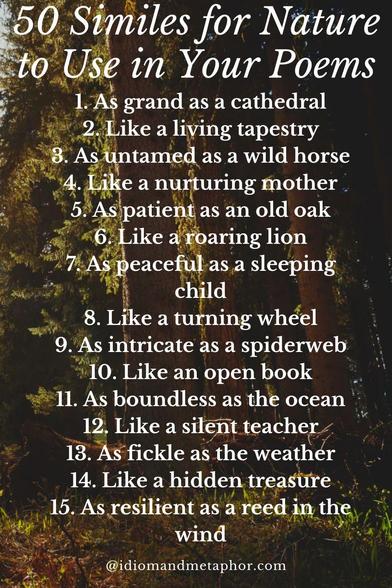
Similes for Nature – Paint Your Words with Vivid Imagery
🌿Want to make your writing come alive? ✍️ Explore the most captivating similes for nature, from “as bright as emerald” to “like a whisper in the wind.” Perfect for storytellers, poets, and nature lovers.
👉 See the full list and spark your creativity: https://idiomandmetaphor.com/similes-for-nature/
#NatureWriting #CreativeWriting #Similes #WritingTips #PoetryLovers #Storytelling #NatureInspiration #WritersCommunity #WritingSkills

More similes

Open Mentions challenged us to complete this sentence: As unmotivated as…

As unmotivated as…

… a teenager on laundry day.

… a wage slave ten minutes before knocking off time.

… an anime sequel.

… pandas dating

… an oil executive at a climate conference

… Trump at a tribunal

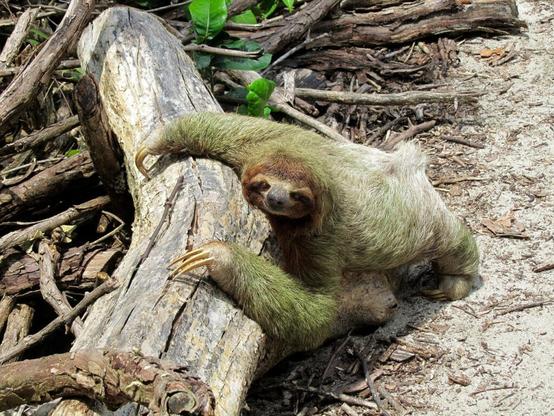
… a depressed sloth at nap time on do nothing Monday during the festival of laziness

#funWithWords #similes

My similes

Matt challenged us to complete this sentence: As unmotivated as…

As unmotivated as…

… a kitty in clean laundry.

… a DOGE team member asked to do actual accounting work.

… a man, going through his twelfth divorce, answering questions about the benefits of child support payments.

… a cat taking medication

… an author with writers’ block

#cats #similes

Similes Countdown (longplay) for the ZX81

YouTube
#LearnEnglish with #NLSLearn
#Similes
www.nlslearn.com/similes.html