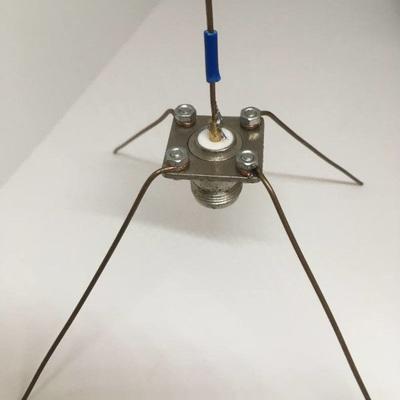
 notforsale ground station
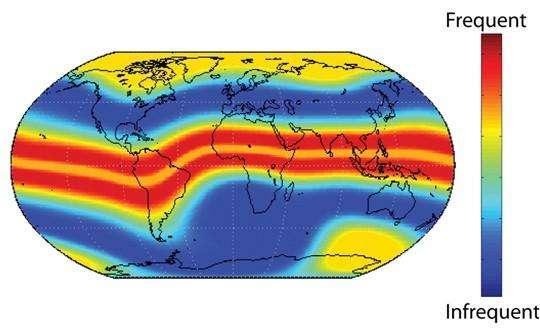
#Scintillation events are most frequent and intense in the regions around the magnetic equator and also, but to a lesser extent, at the poles. #tinygs #amsat #hamradio #satellite

Radiaсode is a portable radiation detector, dosimeter and spectrometer that uses a highly sensitive scintillation detector for analyzing environmental radiation levels in real time. 20 times faster than a conventional Geiger counter. Radiacode detects isotopes from the radiation spectrum. Analyze food for radioactive contamination and accurately determine the acceptable concentration. Excellent tool for scientific experimentation, research and safety.
I've had four instances of #RetinalMigraine in the past seven days and it's freaking me out. Anyone else experience this and have ideas of triggers? I have a doctor's appointment but it's not until mid January. Keeping a log of instances until then.

Identify Radioactive Samples With This DIY Gamma-Ray Spectrometer
If you're a radiation enthusiast, chances are you've got a Geiger counter lying around somewhere. While Geiger counters are useful to detect the amount of radiation present, and with a few tricks can also distinguish between the three types of radiation (alpha, beta and gamma), they are of limited use in identifying radioactive materials. For that you need a different instrument called a gamma-ray spectrometer.
Spectrometers are usually expensive and complex instruments aimed at radiation professionals. But it doesn't have to be that way: physics enthusiast [NuclearPhoenix] has designed a hand-held gamma spectrometer that's easy to assemble and should fit in a hobbyist budget. It outputs spectral plots that you can compare with reference data to identify specific elements.
The scintillator and sensor are wrapped in black tape to block out ambient light.
The heart of the device is a scintillation crystal such as thallium-doped sodium iodide which converts incoming gamma rays into visible light. The resulting flashes are detected by a silicon photomultiplier whose output is amplified and processed before being digitized by a Raspberry Pi Pico's ADC. The Pico calculates the pulses' spectrum and generates a plot that can be stored on its on-board flash or downloaded to a computer.
[NuclearPhoenix] wrote a convenient program to help analyze the output data and made all design files open-source. The hardest part to find will be the scintillation crystal, but they do pop up on auction sites like eBay now and then. We've featured an Arduino-based gamma spectrometer before; if you've always wanted to roll your own scintillators, you can do that too.
#news #science #toolhacks #gammarayspectroscopy #raspberrypipico #scintillation
Digital X-Ray Scanner Teardown Yields Bounty of Engineering Goodies
We'll just go ahead and say it right up front: we love teardowns. Ripping into old gear and seeing how engineers solved problems -- or didn't -- is endlessly fascinating, even for everyday devices like printers and radios. But where teardowns really get interesting is when the target is something so odd and so specialized that you wouldn't normally expect to get a peek at the outside, let alone tramp through its guts.
[Mads Barnkob] happened upon one such item, a Fujifilm FCR XG-1 digital radiography scanner. The once expensive and still very heavy piece of medical equipment was sort of a "digital film system" that a practitioner could use to replace the old-fashioned silver-based films used in radiography, without going all-in on a completely new digital X-ray suite. It's a complex piece of equipment, the engineering of which yields a lot of extremely interesting details.
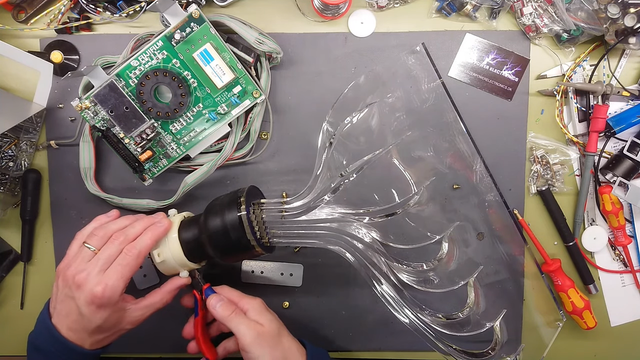
The video below is the third part of [Mads]' series, where he zeroes in on the object of his desire: the machine's photomultiplier tube. The stuff that surrounds the tube, though, is the real star, at least to us; that bent acrylic light pipe alone is worth the price of admission. Previous videos focused on the laser scanner unit inside the machine, as well as the mechatronics needed to transport the imaging plates and scan them. The video below also shows experiments with the PM tube, which when coupled with a block of scintillating plastic worked as a great radiation detector.
We've covered a bit about the making of X-rays before, and a few of the sensors used to detect them too. We've also featured a few interesting X-ray looks inside of tech, from a Starlink dish to knock-off adapters.
Thanks for the heads up on this one, [Adrian]!
#medicalhacks #teardown #acrylic #laser #lightpipe #medical #photomultiplier #pm #radiography #scanner #scintillation #xray
 Wolfgang Busch
 David D. Levine
 Paula Gordon
 Heathen
 Ada Palmer
 Ansgar Schmidt

 hackaday unofficial