 < Matteo | Cavalleri >
Are you an early career researcher doing awesome interdisciplinary research? Of course you are! 🫵
Applications are now open for @wiley.com 2026 Advanced Science Young Innovator Award. Apply today and through the deadline (June 15)
Are you an early career researcher doing awesome interdisciplinary research? Of course you are! 🫵
Applications are now open for @wiley.com 2026 Advanced Science Young Innovator Award. Apply today and through the deadline (June 15)
This is awesome news.
Gene therapy has been around for many years, but early attempts at it were largely unsuccessful.
It now looks like it may be a treatment whose time has finally come.
Obviously this is based on just 1 patient, and we need not only more patients but also much longer follow-up to be sure how useful it will be, but still, this looks really promising.
The best science images of 2023 – Nature’s picks

Our universe could be twice as old as current estimates, according to a new study that challenges the dominant cosmological model and sheds new light on the so-called "impossible early galaxy problem."
It looks like there is a promising nasal spray calcium channel blocker that is highly effective at stopping SVT incidents without adverse side effects. In double-blind RCT trials at present, I think.
See https://www.thelancet.com/journals/lancet/article/PIIS0140-6736(23)00776-6/fulltext
Booked my 4th #CovidVaccine shot.
Wife, who has autoimmune problems booked her 5th the same day.
This is fucking brilliant. #scienceFTW
Moon science: Results from our 🌚moon satellite that purposefully crashed into the dark side of the moon after 180+ days of lunar orbit showed that our moon is engulfed in a permanent, lopsided dust cloud that GROWS and GLOWS during annual events like meteor showers.
The lunar dust cloud with neon was discovered using data from a detector box on board the Lunar Atmosphere Environment Explorer called the LDEX 🌚
#science #moon #scientist #astrobiology #nasa #space #LADEE #scienceFTW
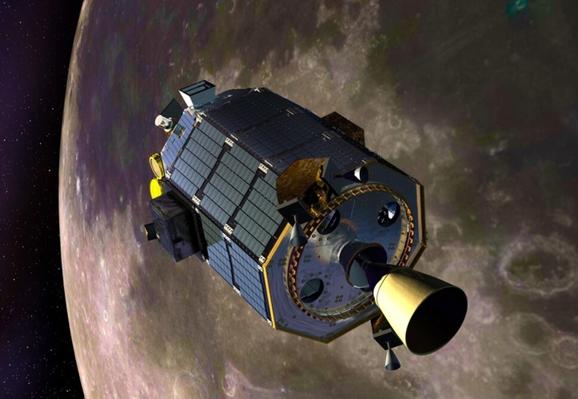
Moon science fact: Data from our 🌚 #moon satellite confirmed that the its thin atmosphere contains neon, a gas commonly used in electric signs on Earth because of its intense glow.
Scientists thought there was neon in the moon's atmosphere for decades, but it was not until NASA’s Lunar Atmosphere and Dust Environment Explorer (LADEE) that it was confirmed.
Moon dust can be extremely toxic to astronauts.
#nasa #space #scientist #neon #moon #science #scienceFTW #astronaut

 Adam Jacobs 🇺🇦
 Serge 🔻
 Jon Granrose
 Ben Lorica 罗瑞卡
 Ian Robinson
 Why Not Zoidberg? 🦑
 axel.
axel. NatureAndSpace🌳🌎🌌