 Ingrid Hoeben Ⓥ 🇧🇪
Lekkere diervrije stukjes, ideaal voor ‘n smoske; merk Albert Heijn (Terra).
Tip: koop de grootste pack.. met de overschot heb je een proteine-snack in de frigo:)
Leve alle kippetjes! 🐔

Lekkere diervrije stukjes, ideaal voor ‘n smoske; merk Albert Heijn (Terra).
Tip: koop de grootste pack.. met de overschot heb je een proteine-snack in de frigo:)
Leve alle kippetjes! 🐔

Ursprünglich für andere Zwecke gebaut, ist die ESA-Mission SMOS heute ein wichtiges Werkzeug der Klimabeobachtung. Eine neue Auswertung zeigt: Ihre Daten machen sichtbar, wie sich Wälder weltweit über 15 Jahre hinweg strukturell verändert haben.

🔊 #NowPlaying on #fip
S.Mos & Biggie & Sadat X & Thelonious Monk:
🎵 Consecutive seconds


Update October 2023: RFI problems in #Russian Arctic
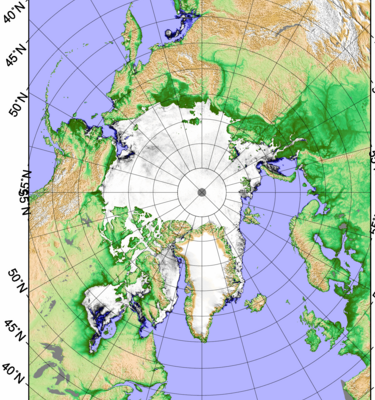
#Arctic 2023/24 winter season: a first view at L3 #SMOS #SeaIce thickness data
https://spaces.awi.de/pages/viewpage.action?pageId=467536209
Glad to hear from ESA that their SMOS satellite is back to nominal operation after an anomaly observed last Friday (anomaly of the satellite, not the sea ice) .
Thanks to the CNES and ESA FOS team!
Btw, new preprint in review
https://doi.org/10.5194/essd-2023-326

Abstract. Accurate satellite measurements of the thickness of Antarctic sea ice are urgently needed but pose a particular challenge. The Antarctic data presented here were produced using a method to derive the sea-ice thickness from 1.4 GHz brightness temperatures previously developed for the Arctic, with only modified auxiliary data. The ability to detect thin sea- ice thicknesses using this method is limited to cold conditions, meaning it is only possible during the freezing period, typically March to October. The SMOS level 3 sea-ice thickness product contains estimates of the sea-ice thickness and its uncertainty up to a thickness of about 1 m. The sea-ice thickness is provided as daily average on a polar stereographic projection grid with a sample resolution of 12.5 km, while the SMOS brightness temperature data used has a footprint size of about 35–40 km in diameter. Data from SMOS have been available since 2010, and the mission’s operation has been extended to continue until at least the end of 2025. Here we compare two versions of the SMOS Antarctic sea-ice thickness product which are based on different level 1 input data (v32 based on SMOS L1C v620, and v33 based on SMOS L1C 724). A validation is performed to have a first baseline reference for future improvements of the retrieval algorithm and synergies with other sensors. Sea-ice thickness measurements to validate the SMOS product are particularly rare in Antarctica, especially during the winter season and for the valid range of thicknesses. From the available validation measurements, we selected datasets from the Weddell Sea that have varying degrees of representativeness: Helicopter-based EM Bird (HEM), Surface and Under-Ice Trawl (SUIT), and stationary Upward-Looking Sonars (ULS). While the helicopter can measure hundreds of kilometers, the SUIT’s use is limited to distances of a few kilometers and thus only captures a small fraction of an SMOS footprint. Compared to SMOS, the ULS are point measurements and multi-year time series are necessary to enable a statistically representative comparison. Only 4 of the ULS moorings have a temporal overlap with SMOS in the year 2010. Based on selected averaged HEM flights and monthly ULS climatologies we find a small mean difference (bias) of less than 10 cm and a root-mean-square deviation of about 20 cm with a correlation coefficient R>0.9 for the valid sea-ice thickness range between zero and about one meter. The SMOS sea-ice thickness showed an underestimate of about 40 cm with respect to the less representative SUIT validation data in the marginal ice zone. Compared with sea-ice thickness outside the valid range we find that SMOS strongly underestimates the real values which underlines the need for combination with other sensors such as altimeters. In summary, the overall validity of the SMOS sea-ice thickness for thin sea-ice up to a thickness of about 1 m has been demonstrated through validation with multiple datasets. To ensure the quality of the SMOS product, an independent regional sea-ice extent index was used for control. We found that the new version v3.3 is slightly improved in terms of completeness, indicating less missing data. However, it is worth noting that the general characteristics of both datasets are very similar, also with the same limitations. Archived data are available on the PANGAEA repository at https://doi.org/10.1594/PANGAEA.934732, (Tian-Kunze and Kaleschke, 2021) and operationally via https://spaces.awi.de/display/CS2SMOS.
 WinFuture.de
 Sami 🐾 (COMMS 3/5)
 fip 🎶 #NowPlaying Bot
 Thomas Lavergne
 Polar Remote Sensing, Bremen
 Guppy@ロケみる集会
 Miguel Colom
 Lars Kaleschke