The Boroughs – Season 1, Episode 4: Forbidden Fruit (2026) – Review
As we reach the midway point of the season, it’s time for another upshift of mystery to keep those stakes steadily rising. We have a marauding alien on the loose that considers cerebrospinal fluid a delicacy; we have a trio of pensioners that are determined to avenge their dead friend but uncovering whatever this conspiracy is; we have clues that tie the owners of the titular retirement village know something is going on and finally, we have the discovery of a strange peach tree whose fruit seems to contain healing properties. The plot, as they say, is thickening.
Obviously, this is par for the course for this sort of thing as the people behind The Boroughs have quite famous previous experience, but while the overall patterns of this show tend to be fairly similar to a certain other show, it’s still an impressive selling point that this plucky group of coffin dodgers can keep up with other monster-busting casts a third of their age.
After being caught at the funeral home after their impromptu autopsy of Jack, Sam takes the rap and is taken to the Manor, while Wally and Judy hid and while they wait to see what happens to their colleague, Sam gets into something of a threatening conversation with Boroughs CEO, Blaine Shaw, where both make the story of The Boy Who Cried Wolf into thinly veiled warnings. Released back into the populous, Sam’s determination has merely increased and once he reunites with his partners in crime, they cook up a plan to lure in and take down the creature that’s been literally leeching off them.
Meanwhile Art is reaping the benefits of taking a huge bite of a peach as it finds that not only does it have restorative properties, but his renewed vigour stretches to him losing the grey in his hair as it adds a youthful snap to his step. But before he can share his miraculous discovery, he takes an emotional gutshot when he finds that his wife has kept an item of Jack’s clothing, which fully confirms her feelings about her dead lover. His elation about his youthful transformation all but shattered, he bumps into Blaine’s wife, Anneliese Shaw, who has some rather disturbing advice – but before he can properly think about it, the effects of that space peach wear off with agonising effects.
Somewhat out of the loop is Renee, who us already finding that her relationship with security guard Paz hitting speed bumps already. But while ignorant of fluid sucking aliens or miracle fruit, she has a case of her own when she discovers that head of security, Hank, apparently is actually a prison warden named Milton Hauser who died in the 70s. After looking up his son and questioning for info, Paz discovers something freakish in the restricted areas of the Boroughs.
But as we get back to Sam, Judy and Wally, they find that their well laid plan isn’t quite so well laid as they thought – but after the creature escapes through a trap door located in Sam’s oven, that plot just keeps on thickening.
We’re reaching that point where a huge breakthrough feels like it’s tantalisingly on the horizon as all those little details the denizens of the Boroughs have learnt so far are painting quite the picture. Obviously, we have no idea how it fits together just yet, but as the various threads threaten to intersect at any moment, we’re at that stage where we’re practically yelling at the screen for the slower members of the cast to get up to speed with everybody else. Yes, it’s a case of characters not communicating vastly important pieces of information in order to draw out that all-important tension, but if it worked for nearly ten years in that other Duffer Brothers show, then it’ll sure as hell work here. In fact, while I’m loathe to mention Stranger Things in these review in an attempt to avoid too much comparison, “Forbidden Fruit” really does bring back warm memories of the simpler days of the first season where the cast wasn’t quite so crowed and the scale wasn’t quite so huge.
Just watching these characters go about their own little obsessions and get caught up in amateur monster hunting, or detective work really is its own reward at this point and while I may suggest that the show is starting to plateau a little bit, it’s the solo arc of Art and his wonder fruit means the show gets to fully plough into one of its biggest influences. The second I first heard of the premise of The Boroughs, my brain immediately thought of Ron Howard’s Cocoon, even if the cast’s attitude to extraterrestrials is more Sigourney Weaver than Don Ameche and watching Art take full advantage of his energised state ends up being incredibly sweet.
Not only has the grey in his hair gone, but he’s even able to thwart a robbery in a convenience store due to a punch from his earlier years – but after we get the requisite montage of him enjoying life (he doesn’t smoke younger folk at basketball unfortunately), his comedown is devestating after he discovers exactly how much Jack’s death has hit her. Worse yet, when the effects of the peach wear off, it’s disastrous and it’s made all the worse by the rather unsettling presesence of Anneliese Shaw who seems to be just as unsettling as her husband.
Elsewhere, Renee manages to finally catch up to her peers by launching fully into her own investigation about the origins of brutish security head Hank. While it may also be beneficial to discover just why the producers hired someone who looks noticely similar to 2016 David Harbour, we discover that Hank isn’t just complicit in the conspiracy, he’s actually a sizable part of it considering that he apparently died in the 70s. Furthermore, he seems to have what sounds like a whole bunch of aliens like Scar locked in a special room which Paz manages to uncover before his ass is knocked out.
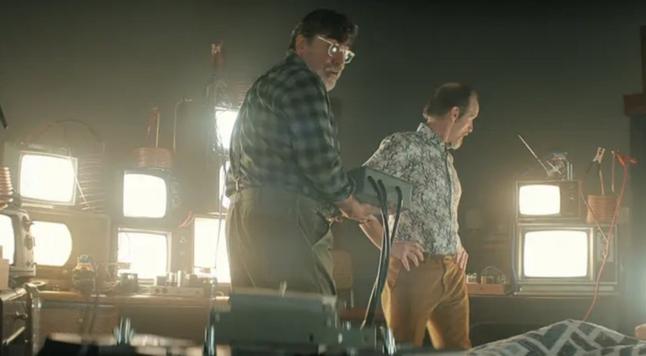
But while all this means that some sort of narrative crescendo is surely about to occur, still the most beguiling thread is the hunt for an alien that leads to some of that improvisation fans of that other show will surely appreciate. Fashioning a dummy that uses a humidifier to expell Sam’s cerebrospinal fluid into the air (don’t ask), Sam, Judy and Wally hope to lure the creature into a trap marked by dozens of old-school televisions. Hoping the screens will have the same, explosive effects on the creature as it does on it’s blood, the low-tech, high hopes approach to monster mashing prove to be the most endearing connection to Stanger Things yet and the easy banter of the trio meshes well with the tension when the creature actually shows up.
If you’re not trying to cram the entire show into a single sitting, there’s a tendency to feel during shows like this that maybe it’s time everyone got a bit of a move on and start swapping notes. But then, if I’m feeling impatient, it’s only because I’m fully invested in the plot and characters and in eager to find out what the hell is going to happen next. But with Art writhing in agony on a bathroom floor and the gang discovering that aliens have a secret passage in everyone’s ovens (strange choice), we’ve still got a ways to go.
🌟🌟🌟🌟
#2026 #AlfreWoodard #AlfredMolina #AugustineFrizzell #CarlosMiranda #ClarkePeters #DenisOHare #GeenaDavis #JenaMalone #Netflix #SciFi #SethNumrich #TheBoroughs #TVReview JL Roberson

 Htaggert
 Silver Spook Games
 Yesterday's Rose
 Khaleer
 icastico
 Walt
Walt
 We Have Issues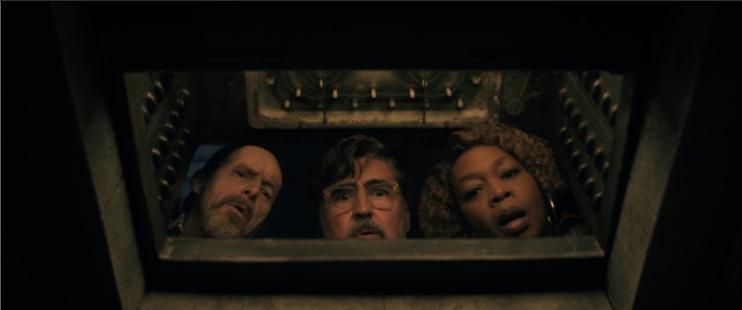
 The Funny Pages