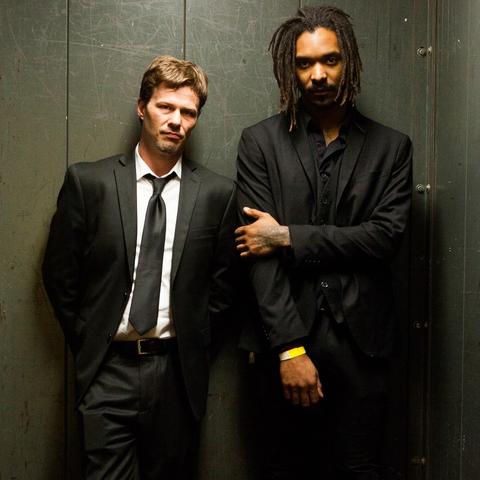
¡Un grito en forma de canción! 🎶 lea Shico y Rosk estrenan ‘Our Love’, una poderosa declaración sonora que fusiona amor, rabia y resistencia. ¡No te pierdas este lanzamiento con tanto mensaje! #OurLove #leaShico #Rosk #NuevaMúsica

Más aquí: https://zurl.co/UftfQ

Amor, rabia y resistencia: ‘Our Love’, la nueva declaración sonora de lea Shico y Rosk - Periodistas Unidos

Periodistas Unidos es un colectivo de periodistas que buscan la libertad de expresión, la defensa de periodistas y la integración de diversas disciplinas culturales para la transformación de la sociedad.

Periodistas Unidos

Meet Neu! a famous german krautrock band:

https://www.youtube.com/watch?v=zndpi8tNZyQ

#music #rosk #krautrock

Just for the info: krautrock stands for "sauerkraut rock"

NEU! - Hallogallo

YouTube

Tomorrow’s Rain – Ovdan Review

By Twelve

Tomorrow’s Rain is an interesting beast. The Israeli six-piece treads between doom and gothic metal, and made a splash with their debut Hollow in part because of the sheer number of guest musicians who participated in the album. Now, four years later, the band returns with their sophomore full-length, Ovdan (“Loss”), an album with a deeply personal backstory. This was recorded after vocalist and founding member Yishai Swartz suffered a heart attack severe enough to warrant open heart surgery. The result is a noticeable shift in sound for Tomorrow’s Rain, but one still grounded in the band’s founding principles—and yes, with a lot of guest musicians chiming in. Knowing all of this, it’s easy to come into Ovdan with high expectations—but I’ve always been a “let the music do the talking” kind of listener… so let’s talk about it.

As mentioned earlier, the music Tomorrow’s Rain plays sits somewhere between doom and gothic metal. The vocal style—or styles; there is no singular style on an album with four guest vocalists—shifts between baritone and tenor singing and fairly standard roars or snarls. The music supports this approach, favoring grim, bleak, or downright angry riffs backed by extensive keyboard work for melody or atmosphere. Guest musicians appear on five out of ten tracks; singers Andreas Vingback (Dark Funeral) and Tony Wakeford (Sol Invictus) on “Roads,” Attila Csihar (Mayhem) on “Muaka,” Michael Broberg (Unanimated) and Anja Huwe (Xmal Deutschland) on “I Skuggornas Grav,” and Jan Lubitzki (Depressive Age) on “Burning Times.” Michael Denner (Mercyful Fate and King Diamond) also contributes guitars on “Turn Around.” Across these songs, I can also infer inspiration from other acts—”Roads” opens the album with a saxophone melody that invokes White Ward, while the acoustic passages on “Muaka” remind of Rosk. “Turn Around” is a lean and mean gothic metal powerhouse that vaguely resurrects Charon. All of this is to say that there is a lot of influence from all kinds of metal informing the Tomorrow’s Rain sound here on Ovdan.

It would be a monumental task to blend all of the above into an album with a singular, cohesive identity. While I couldn’t say Tomorrow’s Rain does a poor job with this, I’m not convinced they fully rise to the occasion either. The trouble is that some styles work better than others, resulting in an uneven album. Take opener “Roads,” for instance. The album opener carefully treads through six minutes of bleak, shivering atmosphere; the low cleans a perfect complement to the dismaying music. There are subtle synth leads, the aforementioned saxophone, and a really strong vocal performance. Then, without warning or buildup, the song erupts into a seventh minute of metal that feels at odds with the rest of the song. “Burning Times” stands stronger, with great piano leads and a heavy, gothic feel. It is a very good song, but the only one that sounds quite like it on Ovdan. Elsewhere, “Muaka” is a very well-written song, but the ugly snarling performance from Csihar is completely at odds with it, and the juxtaposition makes the song unlikeable, rather than memorable.

What Tomorrow’s Rain does extremely well on Ovdan is atmosphere. “I Skuggornas Grav” is one of the best songs here, a hauntingly quiet piece that gives singers, bassist, and keys real chances to shine. As much as I didn’t like “Muaka,” its acoustic intro and synth-led outro are phenomenal. Similarly, “Convalescence” shines through its plucked guitar leads, cathartic narrations, and gorgeous string sections. This becomes a pattern throughout Ovdan—in an album that seems to be looking everywhere for an identity to call its own, these emotional, atmospheric passages shine as its true strength. Songs like “Room 124” that focus on being “just” metal don’t really make an impact on me. But “I Skuggornas Grav?” Those echoing cleans will be in my head for the rest of the day now.

From Hollow to Ovdan, Tomorrow’s Rain give the impression of a band still trying to find the sound that works best for them. There’s a little bit of everything here. Some of it works well, and some of it isn’t so great, but all of it has meaning, feeling, and care. There’s a great base here, a good foundation for something great to come. Ovdan isn’t quite it, but it gives plenty of reason to think it won’t be long before it’s here.

Rating: 2.5/5.0
DR: 7 | Format Reviewed: 320 kbps mp3
Label: AOP Records
Websites: tomorrowsrain.bandcamp.com | facebook.com/TomorrowsRain
Releases Worldwide: April 19th, 2024

#25 #2024 #AODRecords #Apr24 #Charon #DarkFuneral #DepressiveAge #DoomMetal #GothicMetal #IsraeliMetal #KingDiamond #Mayhem #MercyfulFate #Ovdan #Review #Reviews #ROSK #solInvictus #TomorrowSRain #Unanimated #WhiteWard #XmalDeutschland

Tomorrow's Rain – Ovdan Review | Angry Metal Guy

A review of Ovdan by Tomorrow's Rain, available worldwide April 19 via AOD Records.

Angry Metal Guy
Akkoma

Among the Rocks and Roots – Pariah Review

By Carcharodon

Some albums need a particular reviewer to get the appreciation they deserve. A reviewer who connects with, and is able to extol virtues of, the record, like a preacher patiently explaining some of the finer tenets of an obscure religion to the untrve masses. Roquentin was the man that Richmond duo Among the Rocks and Roots’ sophomore album, Raga, deserved. And needed, frankly. On other occasions, an album lands itself a reviewer who is spectacularly ill-equipped to deal with it. AtRaR’s third album, Pariah, is that record and I am that man. Knowing only that Raga scored a 4.0 and that Roqqy is on a permanent, entirely non-suspicious sabbatical, I stepped up, feeling that Pariah needed reviewing. I still feel that but I also now feel that it should have been reviewed by someone else. I expect AtRaR may feel the same if they read this.

The first thing to understand about Pariah1 is that it comprises only four compositions and yet clocks in at just over an hour and a half in length. Like its predecessors, with which I belatedly acquainted myself, this is an album for which structure is an abstract and distant concept. Drawing on post-hardcore, noise, drone, elements of jazz, and more, AtRaR explore semi-free form compositions, relying as heavily on hypnotic repetition as they do shifts in style and tempo. The concluding part of a trilogy that has explored the battle to conquer addiction, Pariah fairly seethes with an unstable anger. Far from coming to terms with life or reaching inner peace, AtRaR seems to glare at the world, baring its teeth.

Mesmerizing percussion and distorted bass lines form the spine of the record, over which rage the bellowed post-hardcore vox. A grimy, gritty blend of early Swans and Primitive Man, with some of the harsh unpredictability of Duma, Pariah rails against racism, white supremacy, and inequality (“Triumph”), as much as it paints the self-loathing of, and inner strength needed to beat, addiction (“III”). Passages of relative calm, like the contemplative, almost mournful strings introduced around 14 minutes into the title track, serve both to give much-needed breathing space and to enhance the stripped-back noise that bookends them. Devoid of breathers, mercy, or respite, “III” sees AtRaR at their rawest. The dual vocals, operating almost in call-and-response style in places, are propelled forward by d-beat drumming and thudding bass, which reaches a weird kind of groove around the 9-minute mark, feeling unstoppable. Although quieter musically, “Triumph” is by far the most uncomfortable thing on Pariah. Relying as much on unsettling static-laden electronica, and mesmerizing drumming as it does anything else, “Triumph” is built around the increasingly fraught audio from a police stop, which arrives at about the halfway point, with the balance of music and samples each serving to heighten the tension of the other.

Closing track “Love” initially offers up a sense of peace and melody not seen anywhere else on Pariah, with acoustic guitar work that could have come straight off ROSK’s Remnants, to which synths and strings are added, alongside clean female vocals. However, the layers gradually build, as more and more percussion is added, alongside squealing synths, electronica, and deliberately disharmonious vocals, making for a half-hour-plus aural soundscape that is very hard to put into words. Unusually for an album like Pariah, it is Abdul Hakim Bilal’s bass which, for me, is the star of the show. When it’s there, it gives energy, groove, drive, and a semblance of structure to the record, when it’s not there, I want it back. AtRaR has a raw, vitriolic feel to it, which the vocals, a joint effort between Hakim Bilal and co-conspirator Samuel Goff, play to, even in the slower, insistent passages of “Love” and “Pariah.” This sense is deliberately enhanced by the production, which feels claustrophobic and oppressive: each time closer “Love” crashes to its conclusion, I feel like a weight is lifted off.

Roquentin described Raga as a “manifestly real album.” The same can be said of Pariah. Exhausting and often deeply uncomfortable listening, you feel AtRaR. However, unless you are willing to focus and dedicate yourself to this record, there is absolutely no point in listening to Pariah. While I got a lot more out of this record than I expected, I cannot sustain the concentration (nor slip into a receptive catatonic state) long enough to take in everything this record is in a single sitting. Whether this is my fault or the record’s (I can’t help but feel the latter), others can decide. How then to score, or even describe, Among the Rocks and RootsPariah … a deeply unsettling, chaotically emotive, exhaustingly overlong triumph? Maybe?

Rating: 3.0/5.0
DR: 6 | Format Reviewed: 320 kbps mp3
Label: Cacophonous Revival Recordings
Websites: amongtherocksandroots.bandcamp.com | facebook.com/amongtherocksandroots
Releases Worldwide: December 8th, 2023

#2023 #30 #AmericanMetal #AmongTheRocksAndRoots #AvantGarde #CacophonousRevivalRecordings #Dec23 #Drone #Duma #Noise #Pariah #PostHardcore #PrimitiveMan #Remnants #Review #Reviews #ROSK #Swans

Among the Rocks and Roots - Pariah Review | Angry Metal Guy

A review of Pariah by Among the Rocks and Roots, available worldwide on December 8th, via Cacophonous Revival Recordings.

Angry Metal Guy