Forscher warnen vor „Heißzeit“

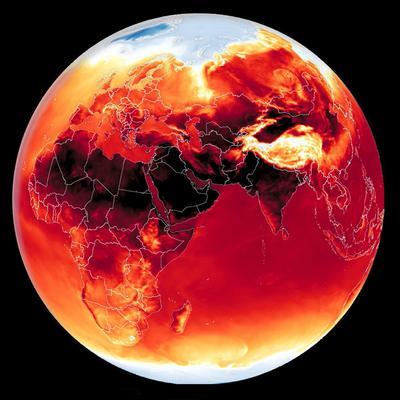
Erreichen bestimmte #Erdsysteme #Kipppunkte, dann wird sich die Erwärmung wahrscheinlich weiter beschleunigen. Eine Übersichtsarbeit legt nun nahe, dass der Mensch die Erde vielleicht schon näher an diese Punkte geführt hat als angenommen. Die Forschenden warnen vor #Heißzeit-Szenarios mit ausgeprägtem #Treibhausklima.

Neben Hans Joachim #Schellnhuber, dem Generaldirektor des Internationalen Instituts für Angewandte Systemanalyse (#IIASA) in Laxenburg bei Wien, war an der soeben im Fachblatt „#OneEarth“ erschienenen Arbeit unter anderem auch der Direktor des Potsdam-Instituts für Klimafolgenforschung (#PIK) in Deutschland, Johan #Rockström, beteiligt. Die Krux an den viel diskutierten klimatischen Kipppunkten ist, dass nachdem sie überschritten sind, stufenweise #Rückkoppelungsprozesse abzulaufen drohen. Deren Auswirkungen wären auch mit großen Anstrengungen zur #Treibhausgasreduktion kaum noch beizukommen.

Dazu zählen etwa das Abschmelzen der großen #Eisschilde über #Grönland und der Antarktis, das viele Meter an #Meeresspiegelanstieg bringen würde. Ebenso immer wieder genannt wird das Auftauen von großen Flächen #Permafrostböden, was dort gespeicherte #Treibhausgase austreten lassen würde. Auch das weitere massive Schrumpfen der #Regenwälder würde das #Weltklima sehr stark destabilisieren. Und nicht zuletzt würde das Abreißen der atlantischen Umwälzströmung (Atlantic Meridional Overturning Circulation, #AMOC) und damit des #Golfstromes, der etwa für das relativ milde #Klima in #Europa sorgt, sehr rasch starke negative Effekte auf Land, Leute und #Umwelt haben.

https://science.orf.at/stories/3234161

#Klimadatastrophe

Nahe Kipppunkte: Forscher warnen vor „Heißzeit“

Erreichen bestimmte Erdsysteme „Kipppunkte“, dann wird sich die Erwärmung wahrscheinlich weiter beschleunigen. Eine Übersichtsarbeit legt nun nahe, dass der Mensch die Erde vielleicht schon näher an diese Punkte geführt hat als angenommen. Die Forschenden warnen vor „Heißzeit“-Szenarios mit ausgeprägtem Treibhausklima.

ORF.at

“This is not the time for resignation; it’s a time of heightened urgency.”

In a blog post ahead of the #Davos World Economic Forum annual meeting #WEF26, PIK Director Johan #Rockström and Carlos Afonso Nobre from University of São highlight the importance of the 1.5C limit, naming four deciding factors.

https://www.weforum.org/stories/2026/01/climate-policy-scientific-roadmap/

For some climate impacts, devastation can be followed by the painstaking work of recovery. But many natural systems, like our tropical coral reefs, face permanent decline. Our chance to save them is to act now. Op-ed PIK Director Johan #Rockström in “Wired” (€).
https://www.wired.com/story/the-earth-is-nearing-an-environmental-tipping-point/
The Earth Is Nearing an Environmental Tipping Point

Today’s global coral bleaching events are the worst kind of climate warning.

WIRED
Allarme Rosso: 2,5 Gradi di Calore, Rockström Avverte: "Danni Inevitabili - Notizie Buzz!

La Soglia Critica Oltre Cui Non Si Torna Indietro Johan Rockström , scienziato svedese di fama mondiale e figura di spicco nell'ecologia planetaria, non usa mezzi termini quando pa

Notizie Buzz!

“We must, at least so far, admit failure”

Ten years after the #ParisAgreement, which aims to keep #GlobalHeating well below 2°C and to pursue efforts to limit it to 1.5°C: here are the comments from PIK Directors Johan #Rockström and Ottmar #Edenhofer

⬇️
https://www.pik-potsdam.de/en/news/latest-news/we-must-at-least-so-far-admit-failure-pik-directors-rockstrom-and-edenhofer-on-ten-years-paris-agreement

Breaking Boundaries | The Science Of Our Planet (2021)

https://kolektiva.media/w/x8P4gY3TmpN8GJcWkcfn5H

Breaking Boundaries | The Science Of Our Planet (2021)

PeerTube

60% of global land now beyond safe ecological limits.

“Times of India" on our recent study about functional biosphere integrity. PIK Director Johan #Rockström: #ClimateChange, #Biodiversity loss & land use must be treated as part of one interconnected crisis.
👇
https://timesofindia.indiatimes.com/science/earth-in-danger-60-of-global-land-now-beyond-safe-ecological-limits-scientists-warn/articleshow/123771682.cms

Earth in danger! 60% of global land now beyond safe ecological limits, scientists warn | - The Times of India

Science News: A recent study reveals that human activities have pushed 60% of Earth's land outside the safe operating zone, threatening ecosystems. Deforestation, a

The Times of India

30 min talk by Johan #Röckstrom on the current state of #Climate measures and #EarthSystemScience at #republica25 #rp25

https://www.youtube.com/watch?v=Nq2QAVA32NM

re:publica 25: Johan Rockström - Decisive Decade:  From Global Promises to Planetary Action

YouTube

With every 1/10 degree of human-caused global warming, “we will experience more extreme events, particularly heat waves but also droughts, floods, fires and human-reinforced hurricanes/typhoons”. PIK Director Johan #Rockström on the new five-year #WMO forecast.

https://apnews.com/article/climate-change-deadly-record-heat-wildfires-hurricanes-535b4df63b476d0f36ec553a1a78669d

The world could break another annual temperature record in the next five years

Top weather agencies warn that the world should get ready for several years of even more record-breaking heat that pushes the globe to more deadly, fiery and uncomfortable extremes. Wednesday's five-year forecast from the World Meteorological Organization and the U.K. Meteorological Office says there’s an 80% chance the world will break another annual temperature record in the next five years and it’s even more probable that the world will again exceed the international temperature threshold set 10 years ago. Scientists say that means more heat deaths, wildfires, nastier hurricanes, downpours and droughts.

AP News

OUT NOW!

Groundbreaking study in Nature co-authored by PIK Director Johan #Rockström. Projections of the #Climate & environment up to year 2100 for different policy pathways, coupling the #PlanetaryBoundaries framework to the Integrated Assessment Model IMAGE
https://www.pik-potsdam.de/en/news/latest-news/how-the-world-can-develop-without-ruining-itself

How the world can develop without ruining itself

14.05.2025 – A groundbreaking scenario study in the top journal Nature is now looking far beyond today, presenting projections of the climate and environment up to the end of the century for different policy pathways. The reference point is the “planetary boundaries”, which define the safe operating space for humanity. According to the study, sustainability will remain a critical issue for decades to come, but ambitious measures can achieve a situation at least similar to 2015 by 2050, and significantly improve it by 2100. The study was co-authored by the Potsdam Institute for Climate Impact Research (PIK).

Potsdam Institute for Climate Impact Research