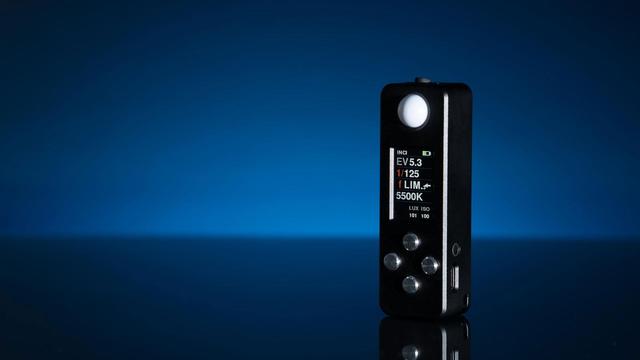
Hero shot for my review of the LUMO meter which dropped this past weekend on diyphotography.net. Details on the shot using only practical elements in he comments.

Read the review at: https://www.diyphotography.net/lumo-light-meter-review/

Sony A7rIV
Sigma 65mm 2.0 DG DN
1/30th | f 4.0 | iso 100
Godox AD300pro (2)

#brandonjacksonphoto #brandonjacksonphotography #productshot #practicaleffects #revenilabs #lumometer

...this seems like a pretty huge issue with something intended for photography.

(and this is before you get into the fact that it's designed to use cheap, crappy laser rangefinders that I wouldn't trust to be accurate or last longer than five minutes.)

I'll stick with a proper optical rangefinder, thanks.

#ReveniLabs #FilmPhotography

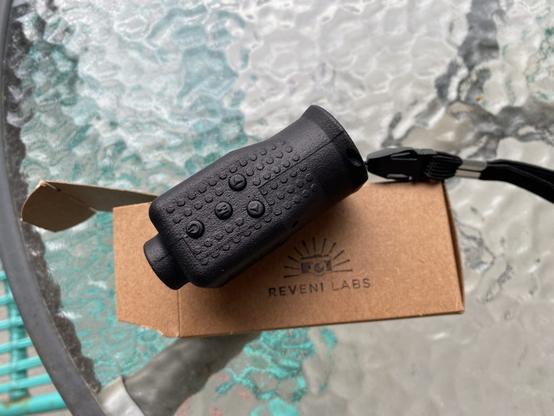
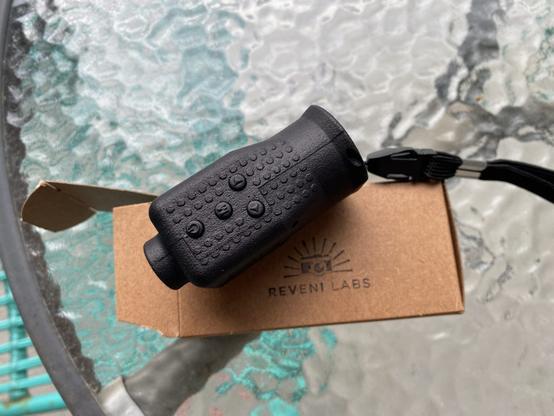
Checking out the new Reveni Labs Incident Meter, a stunning and unique handheld light meter that punches well above its weight.

https://www.youtube.com/watch?v=50DJPhoZqvo

#revenilabs #lightmeter #filmphotography #believeinfilm #shootfilmbenice #youtube

Knuckleduster | Reveni Labs Incident Meter Review

YouTube

A rather interesting take on the Incident Meter with the latest invention from Reveni Labs. #revenilabs #photography #believeinfilm #shootfilmbenice

http://www.alexluyckx.com/blog/2023/07/31/knuckleduster-reveni-labs-incident-meter/

Knuckleduster | Reveni Labs Incident Meter

The latest meter from Reveni Labs. The new Incident meter is an all-in-one powerhouse. Exposure, Colour Temp, Flash, incident and reflective metering. All in one attractive kit that is certainly the most unique I've ever worked with!

Alex Luyckx | Blog

Optical Review Blog No. 25 – Olympus OM F.Zuiko 1:1,8 f=50mm

When it comes to a 50mm lens, they are often overshadowed by faster fifties, the f/1.4 and f/1.2 and even crazier f/0.95. But sometimes, all you need is something at f/1.8, and the Olympus F.Zuiko, 50mm f/1.8, is a spectacular choice for your OM-System. While the lens has gone through several changes since its inception, this chrome nose version fits in nicely next to my 50mm f/1.4 chrome nose and is a tack sharp option for the more budget-minded Olympus user.

Lens Specifications
Make: Olympus
Model: OM-System Auto-S F.Zuiko 1:1,8 f=50mm
Focal Length: 50mm
Focal Range: ∞ - 0.45m
Aperture: f/1.8 - f/16, 6 Blades
Structure: 6 Elements in 4 Groups

The lack of distortion is a lovely touch on the Zuiko 50/1.8 - Chart shot at ~5′ at f/8.
Olympus OM-1n - Olympus OM-System Auto-S F.Zuiko 1:1,8 f=50mm - Ilford Delta 400 @ ASA-400 - Adox FX-39 II (1+9) 10:00 @ 20C

Build Quality
Like all other lenses in the OM-System, the F.Zuiko 50/1.8 compact lens with small-scale SLR bodies, the lens itself is primarily metal in construction with a sturdy feel without adding extra weight. The focusing ring is smooth, almost buttery that makes focusing easy and fast with enough resistance to allow for precision without reducing gross movements. The aperture ring feels a bit loose, with the stops not locking strong enough to allow for a quicker sign without missing the mark. And the fact that the lens only stops down to f/16 is a bit of a minor issue with me, not a hard no, but I would like to have that f/22 available for any landscape work.

While you cannot see it here, at f/1.8 you will get a bit of swirl with the right background.
Olympus OM-1n - Olympus OM-System Auto-S F.Zuiko 1:1,8 f=50mm - Ilford Delta 400 @ ASA-400 - Adox FX-39 II (1+9) 10:00 @ 20CAt f/4 the depth of field is only increased by a bit but gives you that same subject separation in a pleasing manner.
Olympus OM-1n - Olympus OM-System Auto-S F.Zuiko 1:1,8 f=50mm - Ilford Delta 400 @ ASA-400 - Adox FX-39 II (1+9) 10:00 @ 20CYou start to get a far sharper image here at f/8.
Olympus OM-1n - Olympus OM-System Auto-S F.Zuiko 1:1,8 f=50mm - Ilford Delta 400 @ ASA-400 - Adox FX-39 II (1+9) 10:00 @ 20CNo real difference at f/11, but still a good sharp image.
Olympus OM-1n - Olympus OM-System Auto-S F.Zuiko 1:1,8 f=50mm - Ilford Delta 400 @ ASA-400 - Adox FX-39 II (1+9) 10:00 @ 20CStopped down to f/16 you get a wide depth-of-field and a snappy image.
Olympus OM-1n - Olympus OM-System Auto-S F.Zuiko 1:1,8 f=50mm - Ilford Delta 400 @ ASA-400 - Adox FX-39 II (1+9) 10:00 @ 20C

Image Quality
When it comes to image quality, this lens does not disappoint! One of the best things about the lens is that there's no distortion even when shooting close. With the lens wide open at f/1.8, there is a great deal of corner fall-off, but that was to be expected; once you have it stopped down past f/2.8, the fall-off disappears. The lens' real sweet spot is once you get to f/4 through to f/16. You will have that across the board; even at f/1.8, the items in focus will be sharp, and once you hit that f/4 mark, there is a particular snap to your images. While I could not get the effect in these images, if you have the lens wide open and shooting against a busy background, you will get a lovely swirl in your out-of-focus elements, which is something I did not expect. Other than that, the out-of-focus areas are soft and pleasing to the eye.

Olympus OM-1n - Olympus OM-System Auto-S F.Zuiko 1:1,8 f=50mm - Ilford Delta 400 @ ASA-400 - Adox FX-39 II (1+9) 10:00 @ 20COlympus OM-1n - Olympus OM-System Auto-S F.Zuiko 1:1,8 f=50mm - Ilford Delta 400 @ ASA-400 - Adox FX-39 II (1+9) 10:00 @ 20COlympus OM-1n - Olympus OM-System Auto-S F.Zuiko 1:1,8 f=50mm - Ilford Delta 400 @ ASA-400 - Adox FX-39 II (1+9) 10:00 @ 20COlympus OM-1n - Olympus OM-System Auto-S F.Zuiko 1:1,8 f=50mm - Ilford Delta 400 @ ASA-400 - Adox FX-39 II (1+9) 10:00 @ 20COlympus OM-1n - Olympus OM-System Auto-S F.Zuiko 1:1,8 f=50mm - Ilford Delta 400 @ ASA-400 - Adox FX-39 II (1+9) 10:00 @ 20C

Applications
When it comes to any 50mm lens, the best applications are an excellent daily carry option for your camera. And the F.Zuiko 50/1.8 certainly fills this role nicely. While you have a good 45cm close-focus ability, it allows the lens to be a poor man's macro lens. Having tried some closeup work, I'm not too fond of the lens for this with only an f/16 minimum aperture. The only time I'll use it when shooting against a flat focal plane, and being able to shoot wide-open gives you that beautiful out-of-focus swirl if you get the focus at the right spot. This element also helps make for an excellent portrait lens for both individual and small groups. And having that f/1.8 makes it ideal in low-light conditions or with a flash. I would also consider this lens for landscape and architectural work in a pinch.

Olympus OM-1n - Olympus OM-System Auto-S F.Zuiko 1:1,8 f=50mm - Ilford Delta 400 @ ASA-400 - Adox FX-39 II (1+9) 10:00 @ 20COlympus OM-1n - Olympus OM-System Auto-S F.Zuiko 1:1,8 f=50mm - Ilford Delta 400 @ ASA-400 - Adox FX-39 II (1+9) 10:00 @ 20COlympus OM-1n - Olympus OM-System Auto-S F.Zuiko 1:1,8 f=50mm - Ilford Delta 400 @ ASA-400 - Adox FX-39 II (1+9) 10:00 @ 20COlympus OM-1n - Olympus OM-System Auto-S F.Zuiko 1:1,8 f=50mm - Ilford Delta 400 @ ASA-400 - Adox FX-39 II (1+9) 10:00 @ 20COlympus OM-1n - Olympus OM-System Auto-S F.Zuiko 1:1,8 f=50mm - Ilford Delta 400 @ ASA-400 - Adox FX-39 II (1+9) 10:00 @ 20C

The Low Down
On the used market, the F.Zuiko 50/1.8 is a fair price, and you can get a good copy for, under 100$, most are running between 50-80$ with some outliers above 100$, but I haven't seen any above 120$ making it a budget-friendly option for a standard lens on the used market. And you still get I feel better performance and image quality than the Zuiko 50/1.4 and doesn't cost as much, although it also depends on the 50/1.4 you get. The one thing to watch out for in these early chrome-nose versions is the coating; while not the best out there, I never encountered any significant issues with lens flare or aberrations. It is an excellent choice and makes for a good middle ground in any three-lens prime kit and would even work well on a mirrorless camera when adapted.

Further Reading
Don't just take my view on the F.Zuiko 50.1.8, check out these other reviews.
Phillip Reeve - Review: Olympus F.Zuiko Auto-S 1.8/50
Imaging Resource - Olympus 50mm f/1.8 OM F.Zuiko

#opticalreviewblog #8f50mm #adoxfx39ii #canada #gear #gearreview #ilforddelta400 #lens #lensreview #oakville #olympus #olympusom1n #olympusomsystemautosfzuiko11 #ontario #optics #revenilabs #sheridancollege #zuiko

Optical Review Blog No. 25 - Olympus OM F.Zuiko 1:1,8 f=50mm

While often overshadowed by the faster f/1.4, the f.Zuiko 50mm f/1.8 is a suburb addition to anyone's OM-System, especially if you're looking for a budget-friendly fifty without sacrificing quality.

Alex Luyckx | Blog

Hits The Spot – Reveni Labs Spotmeter

When it comes to metering for precision, there is nothing better than a spot meter, but most spot meters these days are expensive, both new and on the used market. The first and only spot meter I've used is the Pentax Spotmeter V. This analogue 1° spot meter has become the accessory that always gets thrown in my bag when I'm out with my Crown Graphic Hasselblad or Mamiya for precision tripod-based work. The meter served me through almost my entire War of 1812 project, Canadian Confederation and most recently, the Railway project. A simple easy to use device that allowed me to execute a bit of Zone System work. But there is one downside to the Spotmeter V, it takes up a lot of room in the camera bag and isn't easily pocketable. Enter Reveni Labs, after their successful hot shoe based lightmeter, Matt cooked up his next entry, a compact spot meter and he certainly hit the spot with this beauty.

Overview
Moving from the Pentax Spotmeter V to the ReveniLabs Spotmeter is a bit of a jarring experience; first and foremost, this is a small unit that can easily fit in any camera bag and not take up much space. Matt also includes a neck lanyard making it easy to carry around and work in the field. Compared to the Spotmeter V, it is about the length and depth of the handle and has way more functionality. The unit is based around the same type of sensor as the original Reveni Labs meter but cowled to allow for the desirable 1.5° circle that so many precision metering applications require. The meter is powered by a pair of LR44 batteries, and Matt even included a micro USB port to allow for easy update of the meter's firmware. The meter's display is based on the same bright OLED screen but is housed behind a sighting lens (more on that later) but has a great deal of information, including a target reticle, meter status, aperture, shutter speed, EV, and ISO displayed right there. Apertures cover everything from f/0.7 to f/1024 (perfect for pinhole), shutter speeds from 60 minutes to 1/8000th of a second and ISO ranges from 1 to 12800. But where the meter shines is the four different operational modes, there is your standard single reading mode (the mode I use the most), you can also do a two-point averaging mode picking the highlight and shadow, and the meter will automatically calculate the average EV and display the appropriate exposure times. And while these two options can handle about 80% of your work, there's much more to the meter. Matt worked hard with tons of amazing photographers to include a Zone System Method, where you can pick and assign a metering reading, say a grey card can be put into Zone V or a white surface into Zone X. The meter can then compute that Zone V value and display it. And if you're a fan of Nick Carver's Precision Metering Method, that's in there also and works the same way as the Zone System mode allowing you to meter and assign a value and then calculate it out. And Matt worked directly with Nick to ensure that the system was accurate and correct.

Mamiya m645 - Mamiya-Sekor C 45mm 1:2.8 N - Cinestill BwXX @ ASA-200 - Ilford Ilfotec HC (1+63) 10:00 @ 20CMamiya m645 - Mamiya-Sekor C 1:2.8 f=80mm - Cinestill BwXX @ ASA-200 - Ilford Ilfotec HC (1+63) 10:00 @ 20CMamiya m645 - Mamiya-Sekor C 150mm 1:3.5 N - Cinestill BwXX @ ASA-200 - Ilford Ilfotec HC (1+63) 10:00 @ 20CMamiya m645 - Mamiya-Sekor C 1:2.8 f=80mm - Cinestill BwXX @ ASA-200 - Ilford Ilfotec HC (1+63) 10:00 @ 20C

Build Quality
Continuing to take advantage of 3D printing, the spot meter features a well-constructed exterior shell that follows a similar style to the original hot shoe meter in a matte black finish. Despite a rugged appearance, this is not the best choice for harsh conditions. You do not want to be taking this thing out in the rain as it is far from waterproof or shockproof. Any exposure to moisture will damage the internal electronics, and any significant drop will damage the meter or knock something out of alignment. That said, the meter is lightweight and takes up only a little space in any camera bag. The fluted design makes it comfortable to hold in your hand when metering. The OLED screen is big and bright for a meter this size, and it appears so for two reasons. The first is that the screen is behind the sighting lens, the second is that during the use of the meter, you hold it up to one eye and sight with the other superimposing the meter's readout over the scene. But probably the best improvement over the original hot shoe meter is that Matt has more real estate. The function buttons are much larger and easier to use and press, no need to aim with a fingernail. You can use your whole finger and not risk pressing the wrong button. The buttons are also well laid out and provide excellent feedback. With a good deal of in-field practice, I can operate the meter without having to look where I'm pressing.

Hasselblad 500c - Carl Zeiss Planar 80mm 1:2.8 - Cinestill BwXX @ ASA-200 - FPP D96 (Stock) 6:00 @ 20CHasselblad 500c - Carl Zeiss Planar 80mm 1:2.8 - Cinestill BwXX @ ASA-200 - FPP D96 (Stock) 6:00 @ 20CHasselblad 500c - Carl Zeiss Planar 80mm 1:2.8 - Cinestill BwXX @ ASA-200 - FPP D96 (Stock) 6:00 @ 20CHasselblad 500c - Carl Zeiss Planar 80mm 1:2.8 - Cinestill BwXX @ ASA-200 - FPP D96 (Stock) 6:00 @ 20C

Operations
If you have worked with the first Reveni Labs meter, then working with the spot meter will be a walk in the park. Despite the radical differences between the two, operationally, they follow a similar user interface and have a similar user experience. The primary controls are focused on a four-button array at the top of the meter, with a power/reading button, menu button and two control arrows. These are much larger than the previous meter and are readily manipulated with bare fingers as they are spaced better. The display is much more prominent thanks to the OLED screen and viewing lens and the capacity to superimpose itself over the scene is an excellent take on the traditional spot meter scope style interface. Your screen will display everything you need, from shutter speed, aperture, EV, mode, and targeting recital. Press the 'M' or menu button to access the different ways, then use the arrow keys to adjust the settings and modes. You can choose to run the meter in either shutter or aperture priority modes. In single mode , you can pick a single area to take a meter reading from or use the "M" button set to compare mode, and the meter will constantly be reading the scene as you change your target. Similarly, in compare mode , you can pick a highlight and shadow. The meter will calculate the average reading between the two, which is excellent for shooting slide film or wanting that five-stop difference for the zone system. But you don't have to work that way; you can use the meter's built-in Zone Mode , which will allow you to choose the zone, so if you have a grey card or something in your scene equal to middle grey select the zone and take a meter reading and the software will do the rest. But you can also pick any of the other zones to take metering from, and the software can calculate out from there. If you're a student of Nick Carver's Precision Metering Method, set the meter into PMM Mode and then you can meter for each of the different scenes in the Precision Metering Method let the software do the rest. While the first two modes let you handle things mostly yourself, the second two modes will make life so much easier for those who want an easy way to crack into advanced methods of metering.

Mamiya m645 - Mamiya-Sekor C 35mm 1:3.5 N - Kodak TMax 100 @ ASA-32 - Ilford Ilfotec HC (1+31) 5:00 @ 20CMamiya m645 - Mamiya-Sekor C 35mm 1:3.5 N - Kodak TMax 100 @ ASA-32 - Ilford Ilfotec HC (1+31) 5:00 @ 20CMamiya m645 - Mamiya-Sekor C 35mm 1:3.5 N - Kodak TMax 100 @ ASA-32 - Ilford Ilfotec HC (1+31) 5:00 @ 20CMamiya m645 - Mamiya-Sekor C 35mm 1:3.5 N - Kodak TMax 100 @ ASA-32 - Ilford Ilfotec HC (1+31) 5:00 @ 20C

Experience
One of the strongest features of this meter is the size; it's compact, lightweight and can fit in almost any bag you have available to you! You can also wear it around your neck, and it stays out of the way, making it accessible for precision metering if you have your camera on a tripod or handheld. I know I love having the capability to use the Zone System without having the camera plopped down on a tripod. Especially when working with either my Mamiya m645 and Hasselblad 500c while on the road. The one thing that I noticed with the meter is the length of time it takes to boot up, mainly because there's a lot of information in the boot sequence. Despite all that power and ease of use of high-end metering methods and modes, the spot meter is a fair-weather meter. You don't want to take this meter out in any inclement weather, including rain, snow, and cold weather. It has no form of weather sealing, and any moisture will cause the meter to malfunction or cease to function altogether. And the cold weather will shorten the battery life. The meter does take a pair of easily purchased LR44 batteries, which carry a decent life for the meter, providing you aren't running it for long periods; in ideal conditions, I managed to shoot ten rolls of film with the meter before needing to replace the batteries. While I haven't needed to update the meter's software, a simple micro USB plug will connect the meter to any personal computer which detects the meter as an external storage device. It works on both a Windows 10 machine and macOS running on an Apple MacBook running an Intel processor. I have not yet tested the functionality on Windows 11 or the new M1 Apple machines.

Mamiya m645 - Mamiya-Sekor C 45mm 1:2.8 N - Ilford FP4+ @ ASA-125 - Adox FX-39 II (1+9) 6:00 @ 20CMamiya m645 - Mamiya-Sekor C 1:2.8 f=80mm - Ilford FP4+ @ ASA-125 - Adox FX-39 II (1+9) 6:00 @ 20CMamiya m645 - Mamiya-Sekor C 150mm 1:3.5 N - Ilford FP4+ @ ASA-125 - Adox FX-39 II (1+9) 6:00 @ 20CMamiya m645 - Mamiya-Sekor C 45mm 1:2.8 N - Ilford FP4+ @ ASA-125 - Adox FX-39 II (1+9) 6:00 @ 20C

Lowdown
Spot meters are not for everyone, but if you're looking for something compact and allows for easy access to some of the more advanced metering techniques, then the Reveni Labs spot meter is undoubtedly an excellent place to start. While you will still need to understand, it certainly can help kickstart that in a practical means rather than theoretical only. And I know if I can learn something useful, it sticks much easier than any academic book learning. The meter costs 225$ Canadian, which is about on par for a used Sekonic, well below a new spot meter. If you want to purchase one, they are available for pre-order as Mat is still working on catching up with the Kickstarter rewards; you can put in your order through the ReveniLabs Website. While I still keep my Pentax Spotmeter V around, I know I have a strong replacement ready for when it finally kicks the bucket. It may also kick me in the pants to start working more with the Zone System and Precision Metering Method.

Further Reading
Check out these other reviews of the Reveni Labs Spotmeter.
Mat Marrash - Reveni Labs Spotmeter Review
Todd Korol - Reveni Labs Spotmeter Review
Nick Carver - Reveni Labs Spotmeter Review

#reviews #camera #canada #cinestillbwxx #elora #gear #hasselblad500c #ilfordfp4 #kodaktmax100 #lightmeter #mamiyam645 #oakville #ontario #paris #revenilabs #revenilabsspotmeter #revew #sheridancollege #spotmeter #toronto

Hits The Spot - Reveni Labs Spotmeter

Taking a look at the newest product from ReveniLabs, a compact pocket Spot Meter.

Alex Luyckx | Blog

Classic Camera Revival – Episode 117 – Reduce, Reuse, Recycle

When it comes to Film Photography, most of the technology behind the medium has not changed that much since its inception. But some things are still struggling and need to rest in peace, or often in pieces. The gang sits around and hashes out formats and technologies that need to be put to bed, with items like Selenium Meters, 126 formats, APS, among the things. And they also talk about new advances in film photography and technology behind them like ReveniLabs Meters. Recycling old cameras and lenses from systems that aren't too popular to formulate new cameras again. ReveniLabs and, more specifically, the Press Pan, built from dead Nikon FEs and Mamiya Press lenses.

How do you know when a camera is no longer good for actual use? When it's a 126 and it uses nothing but Selenium to control exposure.Zeiss Ikon Contaflex 126 - Carl Zeiss Tessar 45/2,8 - Kodak TMax 100 @ ASA-100 - Ilford Microphen (Stock) 8:00 @ 20CZeiss Ikon Contaflex 126 - Carl Zeiss Tessar 45/2,8 - Kodak TMax 100 @ ASA-100 - Ilford Microphen (Stock) 8:00 @ 20CZeiss Ikon Contaflex 126 - Carl Zeiss Tessar 45/2,8 - Kodak TMax 100 @ ASA-100 - Ilford Microphen (Stock) 8:00 @ 20C

Want a subscription to SilverGrain Classics and are a fan of Classic Camera Revival? Visit their shop online and buy a magazine or a subscription? Looking for a good spot to get your gear and material fix check out Burlington Camera (Burlington, ON), Downtown Camera (Toronto, ON), Film Plus (Toronto, ON), Belle Arte Camera (Hamilton, ON), Pond's FotoSource (Guleph, ON), Foto Art Camera (Owen Sound, ON). In Quebec, Photo Service (Montreal, QC) and Studio Argentique (Montreal, QC), Out West there's Kerrisdale Cameras (BC), The Camera Store (Calgary, AB) and Beau Photo Supply (Vancouver, BC). Additionally you can order online at Argentix (Quebec), buyfilm.ca (Ontario), the Film Photography Project or Freestyle Photographic. Looking for development options, check out these labs that have our support, Boréalis Photo Lab, Old School Photo Lab, The Darkroom, and Film Rescue International.

Also you can connect with us through email: classiccamerarevivial[at]gmail[dot]com or by Facebook, we're at Classic Camera Revival, Twitter @ccamerarevival, and Instagram (@classiccamerarevival)!

#classiccamerarevival #110 #aps #ccr #notes #podcast #presspan #revenilabs #shownotes

Classic Camera Revival - Episode 117 - Reduce, Reuse, Recycle

Photography is old technology, and while film photography is going strong, some things should go away formats and techs, but sometimes you can still make old things work in new ways!

Alex Luyckx | Blog

Returning to Elora

Ontario is blessed with a tonne of amazing rural communities that have stood the test of time. They never undertook vast urban renewal plans through the 20th Century and have stayed close to their roots in the mid to late 19th Century. And one such community is Elora, not only with natural wonders of the Gorge and the Falls but also with architectural splendour. Back on the Canada Day long weekend, I went into Elora to shoot some video work and to meet up with two fellow hosts of the Classic Camera Revival for a quick jaunt around the village.

A slightly different view of the restored Elora Mill.
Mamiya m645 - Mamiya-Sekor C 45mm 1:2.8 N - Kodak TMax 100 @ ASA-100 - Argentix T-Grain Developer (1+4) 6:00 @ 20C Bill trying to score a shot of a classic car through a gate.
Mamiya m645 - Mamiya-Sekor C 45mm 1:2.8 N - Kodak TMax 100 @ ASA-100 - Argentix T-Grain Developer (1+4) 6:00 @ 20C A high level bridge over the Elora Gorge.
Mamiya m645 - Mamiya-Sekor C 45mm 1:2.8 N - Kodak TMax 100 @ ASA-100 - Argentix T-Grain Developer (1+4) 6:00 @ 20C Same Bridge, different angle.
Mamiya m645 - Mamiya-Sekor C 45mm 1:2.8 N - Kodak TMax 100 @ ASA-100 - Argentix T-Grain Developer (1+4) 6:00 @ 20C One of the beautiful stone houses that occupies the village.
Mamiya m645 - Mamiya-Sekor C 45mm 1:2.8 N - Kodak TMax 100 @ ASA-100 - Argentix T-Grain Developer (1+4) 6:00 @ 20C In addition to craft beer, there's also a craft distillery in town!
Mamiya m645 - Mamiya-Sekor C 45mm 1:2.8 N - Kodak TMax 100 @ ASA-100 - Argentix T-Grain Developer (1+4) 6:00 @ 20C

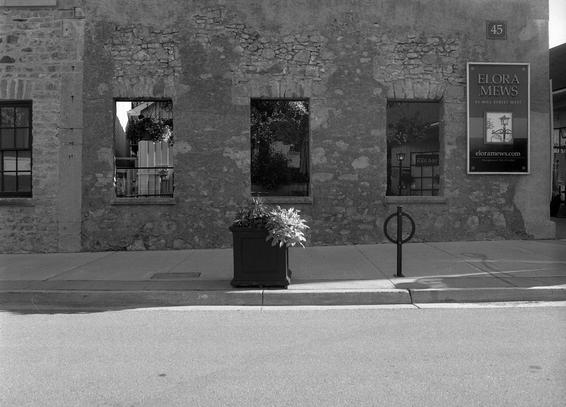
I went simple going with my trusty Mamyia m645 and a roll of Kodak TMax 100 and developed in the house T-Grain developer from Argentix.ca an excellent alternative to Kodak TMax Developer or Ilfotec DD-X. I also brought along for a first (well technically second at this point) run with the new Reveni Labs Spotmeter and I'm rather pleased with the results I got. Although the day had some fairly low contrast to deal with I should have used something like Ilfotec HC to bump that up. But these are the things you deal with in hindsight.

#photography #argentixca #canada #ccr #classiccamerarevival #elora #kodaktmax100 #mamiyam645 #ontario #revenilabs

Returning to Elora

A quick return to Elora on a far nicer day than last time to visit the community, see friends, and try out a new Spotmeter!

Alex Luyckx | Blog
Reveni Labs Light Meter review - Kosmo Foto

Canada's Reveni Labs debuted a truly tiny light meter on Kickstarter in 2020. What's it like to shoot with?

Kosmo Foto