गुड फ्राइडे और ईस्टर (Good Friday and Easter) 2026: बलिदान से जीत तक की पूरी कहानी और महत्व #GoodFriday2026 #EasterSunday2026 #JesusChristSacrifice #ResurrectionofJesus #ईसाईधर्मकेत्योहार #GoodFriday2026 #EasterSunday #JesusChrist #FaithAndHope #Sacrifice #NewBeginnings #Easter2026 #PeaceAndLove

https://vrnewslive.com/good-friday-and-easter-2026-jesus-christ-sacrifice/

गुड फ्राइडे और ईस्टर (Good Friday and Easter) 2026: बलिदान से जीत तक की पूरी कहानी और महत्व - VR NEWS LIVE NEWS

गुड फ्राइडे और ईस्टर (Good Friday and Easter) 2026: बलिदान से जीत तक की पूरी कहानी और महत्व

VR News Live
"In the Garden" (sometimes rendered by its first line "I Come to the Garden Alone" is a #gospel song written by American songwriter #CAustinMiles (1868–1946), a former pharmacist who served as editor and manager at Hall-Mack publishers for 37 years. It reflects on #MaryMagdalene's witness about the #resurrectionOfJesus at #TheGardenTomb. According to Miles' great-granddaughter, the song was written "in a cold, dreary.
https://www.youtube.com/watch?v=my4NTwwtBes
"In the Garden” - Ella Fitzgerald with Ralph Carmichael’s Choir & Orchestra

YouTube
"In the Garden" (sometimes rendered by its first line "I Come to the Garden Alone" is a #gospel song written by American songwriter #CAustinMiles (1868–1946), a former pharmacist who served as editor and manager at Hall-Mack publishers for 37 years. It reflects on #MaryMagdalene's witness about the #resurrectionOfJesus at #TheGardenTomb. According to Miles' great-granddaughter, the song was written "in a cold, dreary.
https://www.youtube.com/watch?v=ZxSY0AGULrA
In The Garden

YouTube

When Jesus Stands in the Middle of Our Fear

A Day in the Life of Jesus

There are moments in the Gospels when I find myself standing shoulder to shoulder with the disciples, feeling their confusion more than their courage. The scene in Luke 24:36–43, echoed again in John 20:19–23, is one of those moments. The disciples are gathered behind locked doors, not out of theological reflection but out of fear. They know the tomb is empty. They have heard the testimony of the women. Scripture has been opened to them. And yet, when Jesus suddenly stands among them, their first instinct is terror. Luke tells us they think they are seeing a ghost. I am struck by how honest the text is. Resurrection joy and resurrection doubt coexist in the same room. Luke even says they were “filled with joy and doubt,” a phrase that feels uncomfortably familiar to anyone who has tried to believe deeply while still carrying fear.

What Jesus does next is pastorally insightful. He does not rebuke them first. He invites them closer. “Look at my hands. Look at my feet. Touch me.” The Greek word Luke uses for “touch,” psēlaphaō (ψηλαφάω), implies deliberate, careful handling. Jesus is not offended by their need for confirmation. He understands that fear often distorts perception. Then comes the moment that feels almost ordinary—Jesus asks for food. Broiled fish. He eats it in front of them. Resurrection, here, is not abstract theology but embodied reality. As commentator Darrell Bock notes, “The physicality of Jesus’ resurrection anchors faith in history, not imagination.” This is no resuscitation like Lazarus in John 11, and yet it is no ghostly apparition either. Paul will later reflect on this mystery in 1 Corinthians 15:42–50, describing a body that is raised imperishable—continuous with what was, yet transformed beyond decay. I find comfort here: God does not discard creation; He redeems it.

As I sit with this scene, I realize how often Jesus still enters rooms where fear has locked the doors. The disciples had done everything “right” by the standards of caution and self-preservation. And yet, safety did not bring peace. Jesus does not wait for the doors to open; He comes and stands “in the middle of them.” That phrase matters. He does not hover at the edges of their anxiety. He meets them where fear is most concentrated. N.T. Wright once observed that resurrection is not God’s escape plan from the world but His declaration that the world still matters. The risen Jesus standing in that room is proof that God’s future has already begun, even when His people are still trembling.

This brings me to the study’s reminder about representation. The disciples’ fear did not disappear instantly, but their encounter with the living Christ transformed their calling. Today, resurrection faith still surprises people—not because it lacks evidence, but because it contradicts cultural expectations. We prefer strength without suffering, victory without scars. Jesus insists on showing His wounds. He sends His followers into the world not as triumphant ideologues but as living witnesses. The question posed in the study lingers with me: what do people think of Christ when they think of me? For many, belief will not begin with an argument but with the presence of “living, breathing Christians” who embody the peace Jesus speaks into fearful rooms. As Augustine once wrote, “Christ preached Himself through His members.” That is both a gift and a responsibility.

The final tension in this passage is what Jesus calls foolishness. The disciples knew the Scriptures, yet they could not reconcile suffering with glory. The Hebrew prophets had spoken of a suffering servant, yet their imaginations were shaped by power, not humility. In that sense, the world has not changed. A suffering Savior still confounds us. We want God to intervene before the cross, not through it. And yet the resurrection declares that suffering was not the interruption of God’s plan but the pathway to its fulfillment. Faith, then, is not the denial of confusion but the willingness to step beyond cultural values and trust God’s redemptive logic. Every day, I must decide whether I will be baffled by the Good News or shaped by it.

May you be blessed today as you walk with Jesus who enters fearful places, speaks peace, and invites honest faith. May your life quietly testify that Christ is alive—not as an idea, but as a living presence who still stands in the middle of His people and sends them into the world with hope.

For further reflection on the meaning of the resurrection and embodied faith, see this thoughtful article from The Gospel Coalition:
https://www.thegospelcoalition.org/article/why-the-resurrection-matters/

FEEL FREE TO COMMENT, SUBSCRIBE, AND REPOST, SO OTHERS MAY KNOW


#ChristianDiscipleship #embodiedResurrection #fearAndFaith #Luke24Devotion #resurrectionOfJesus

When Truth Walks the Streets and Lies Hide in the Shadows

A Day in the Life of Jesus

There are moments in the life of Jesus that feel triumphant and radiant, and then there are moments like this one—quiet, unsettling, and revealing of the human heart. Matthew 28:11–15 does not describe a miracle performed by Jesus, nor a sermon preached to the crowds. Instead, it pulls back the curtain on what happens when undeniable truth collides with entrenched power. As I sit with this passage, I am struck by how quickly the resurrection of Jesus creates motion in two very different directions. On one side, a group of women hurry through Jerusalem with hearts pounding, carrying astonishing news that death has been defeated. On the other, religious leaders gather behind closed doors, crafting a narrative meant to suppress that same truth. Both groups are responding to the same event, yet their responses could not be more different.

Matthew tells us that some of the guards who had been posted at the tomb went directly to the chief priests and reported “everything that had happened.” The Greek text implies completeness—they did not withhold details. These were not sympathetic witnesses trying to promote a movement; they were professional guards whose very failure could cost them their lives. Their testimony is striking precisely because it comes from reluctant mouths.

Yet rather than leading the religious leaders to repentance or awe, the report triggers fear and calculation. A council is called, money is produced, and a lie is carefully constructed. As one commentator observes, “The leaders do not attempt to disprove the resurrection; they attempt to explain it away” (R.T. France, The Gospel of Matthew). That distinction matters. The resurrection was not dismissed as impossible; it was treated as dangerous.

What unfolds next reveals the moral cost of denying truth. The guards are bribed to say they fell asleep, an explanation that collapses under its own weight. Roman discipline would not tolerate sleeping on duty, and a story involving multiple guards asleep simultaneously strains credibility. Matthew does not belabor the logic because he does not need to. The lie survives not because it is convincing, but because it is convenient. The leaders even promise protection—“If the governor hears about it, we’ll stand up for you.” Power shields falsehood, at least for a time. This is one of the most sobering realities in Scripture: lies often persist not because they are true, but because they are useful.

As I reflect on this, I cannot ignore the courage of the disciples that follows in the pages of Acts and church history. These same disciples who are accused of stealing a body go on to endure imprisonment, beatings, exile, and martyrdom. People may die for what they believe is true, but no one willingly dies for what they know is a fabrication. N.T. Wright makes this point plainly, noting that the resurrection faith of the early church is historically unintelligible without a genuine encounter with the risen Christ. The lie told by the council spreads, Matthew says, “to this very day,” but it does not generate transformed lives. The truth of the resurrection does.

What moves me most in this passage is how Jesus Himself is absent from the scene—and yet entirely central to it. He does not confront the council. He does not expose the lie publicly. He allows truth and falsehood to reveal their own fruit over time. This is deeply instructive for discipleship. Jesus does not force belief; He invites it. The resurrection creates a dividing line, and every generation must decide how it will respond. Even now, the world still buzzes with explanations, denials, distractions, and alternative narratives. Yet the choice remains essentially the same as it was that morning in Jerusalem: to receive the risen Christ or to find a way to keep Him at a distance.

Walking with Jesus today means recognizing that belief is not merely intellectual assent; it is moral and relational commitment. To believe in the resurrection is to allow it to reorder our loyalties, our fears, and our hopes. It means choosing truth even when it is inconvenient, costly, or disruptive. I often ask myself, as gently as I ask you now: where do I rush like the women, eager to tell the good news, and where do I retreat like the council, tempted to manage the truth rather than surrender to it? The resurrection does not leave us neutral. It invites us into life.

May you walk today with confidence that the risen Jesus is not threatened by denial, nor diminished by lies. His life continues to speak, to transform, and to call hearts toward truth.

Grace and peace to you as you seek to walk more closely with Jesus and allow His resurrection life to shape your own.

For further reflection, see “Why the Resurrection Matters” from Christianity Today:
https://www.christianitytoday.com/ct/2020/april-web-only/why-resurrection-matters.html

FEEL FREE TO COMMENT, SUBSCRIBE, AND REPOST, SO OTHERS MAY KNOW


#ChristianFaith #discipleship #Matthew28 #resurrectionOfJesus #TruthAndDeception

He Still Calls Them Brothers

A Day in the Life of Jesus

There are moments in the Gospel narrative that feel as though time slows down, not because little is happening, but because so much is being revealed at once. Matthew 28:8–10 is one of those moments. The resurrection morning has already shattered expectations, overturned grief, and redefined reality. The women leave the tomb carrying two emotions that rarely coexist—fear and joy. Matthew is deliberate in holding those together. “So they departed quickly from the tomb with fear and great joy” (italics added). Resurrection is not safe news; it is world-altering news. It unsettles everything that once felt certain, even as it fills the heart with hope that death no longer has the final word.

As I walk with these women in the text, I am struck by how Jesus meets them “as they were running.” He does not wait for them to calm themselves, collect their thoughts, or rehearse proper theology. He meets them in motion, in obedience, in trembling faith. His first word to them is almost disarming in its simplicity: “Greetings”—the Greek chairete, a word that can just as easily be rendered “rejoice” or even “good morning.” The risen Christ greets frightened disciples with joy. Before explanation, before instruction, before mission, He offers presence. They respond instinctively, falling at His feet, grasping what they once thought they had lost forever. Worship erupts not from polished liturgy, but from recognition. They know Him.

Jesus immediately follows that greeting with reassurance: “Do not be afraid.” This is not a dismissal of their fear but a reorientation of it. Fear no longer defines the situation because Jesus is alive. Then comes the commission: “Go and tell my brothers…” These words are easy to read quickly, but they carry extraordinary theological and pastoral weight. By calling the disciples “my brothers,” Jesus publicly restores those who had abandoned Him. As one commentator notes, “The designation ‘brothers’ is an implicit declaration of forgiveness” (R.T. France, The Gospel of Matthew). Before the disciples ask for forgiveness, before they explain themselves, before they demonstrate renewed faithfulness, Jesus names them family.

That detail becomes even more moving when we remember where the disciples actually are. The women are told to instruct them to go to Galilee, but fear keeps the disciples hidden in Jerusalem, behind locked doors (John 20:19). Failure has a way of shrinking our world. Shame convinces us that retreat is safer than obedience. Peter’s denial, Judas’s betrayal, and the collective flight of the others have left them hollowed out and unsure whether there is still a place for them in Jesus’ story. Yet Jesus does not wait for them to become brave. He goes to them first, stepping into their locked room, speaking peace into their fear (Luke 24:36). Later, He will meet them again in Galilee, just as promised, and restore Peter by a charcoal fire, undoing denial with love (John 21).

What becomes clear as I sit with this passage is that resurrection does not merely defeat death; it reclaims failed disciples. Jesus does not resurrect and then start over with better people. He resurrects and returns to the same men who ran away. This is where the title “He Won’t Give Up” moves from sentiment to substance. Grace is not exhausted by human weakness. The risen Christ specializes in second chances—and third, and fourth. As Augustine once wrote, “God loves each of us as if there were only one of us.” That love is not theoretical. It walks into locked rooms. It speaks forgiveness before repentance is eloquently formed. It calls cowards “brothers” and sends them back into the world as witnesses.

This moment with the women also reshapes how we understand discipleship. The first witnesses of the resurrection are not priests or rulers but faithful women who stayed near the cross and came to the tomb in love. Their testimony becomes the bridge between empty tomb and restored community. Discipleship, then, is not about having an unbroken record of courage but about staying responsive to Jesus when He appears unexpectedly in our path. Like the women, we often carry mixed emotions—fear because obedience feels costly, joy because Jesus is alive. The good news of this passage is that Jesus meets us there, too, and entrusts His message to imperfect hands.

As I reflect on this day in the life of Jesus, I am reminded that the resurrection story is not only about what happened to Him, but about what He continues to do with us. He restores relationships before assigning responsibility. He names us family before asking us to serve. He refuses to define us by our worst moments. N.T. Wright captures this beautifully when he writes, “The resurrection is not the end of the story; it is the beginning of God’s new work in and through His people.” That work begins not with scolding, but with peace, forgiveness, and renewed calling.

May you walk today with the assurance that the risen Jesus still meets His people where they are, still speaks peace into fear, and still calls the forgiven “brothers” and “sisters” as He sends them forward in hope.

For further reflection on the resurrection appearances and their significance for discipleship, see this article from The Gospel Coalition on the meaning of Jesus’ post-resurrection encounters: https://www.thegospelcoalition.org/article/why-jesus-appeared-after-the-resurrection/

FEEL FREE TO COMMENT, SUBSCRIBE, AND REPOST, SO OTHERS MAY KNOW


#DiscipleshipAfterFailure #ForgivenessAndRestoration #JesusAppearsToTheWomen #resurrectionOfJesus #SecondChancesInChrist

When Jesus Speaks Our Name

A Day in the Life of Jesus

There are moments in the Gospels where the scene is so tender and personal that it feels almost intrusive to read it too quickly. John 20:10–18 is one of those moments. I find myself slowing down here, lingering with Mary Magdalene in the early morning light, standing outside the tomb, overwhelmed by grief and confusion. The resurrection has already happened, yet for Mary, the world still feels broken. She is not searching for victory; she is searching for a body. That detail matters. It reminds me that God often begins His greatest revelations in the very places where our understanding has collapsed.

Mary’s tears are not theatrical; they are honest. John tells us she is weeping, and the Greek verb klaíō suggests audible, uncontrolled sorrow. Even when angels appear—two of them, seated where Jesus’ body had been—her grief dulls the wonder of the moment. When they ask, “Why are you crying?” she answers with aching simplicity: “Because they have taken away my Lord, and I don’t know where they have put him.” She has not yet made the leap to resurrection faith. Like many of us, she knows loss far better than hope. And yet, even here, Jesus is already near.

When Mary turns and sees Jesus standing there, she does not recognize Him. John makes no attempt to soften that reality. Her eyes see, but her heart cannot yet comprehend. Grief has a way of narrowing our expectations, training us to anticipate absence rather than presence. Augustine once observed that “she sought the living among the dead, because she had not yet learned to hope beyond death.” I recognize myself in that description more than I would like. There are times when Jesus is standing closer than I realize, but my assumptions about how He should appear keeps me from seeing Him clearly.

Jesus repeats the angels’ question: “Why are you crying?” Then He adds another: “Whom are you looking for?” That second question reaches deeper. It is not merely about emotion, but about desire and direction. Mary assumes He is the gardener, a detail John includes with careful irony. The One through whom creation came into being is mistaken for a caretaker of the soil. And yet, even in that misunderstanding, there is truth. Jesus is, in a very real sense, the gardener of new creation, tending what sin and death have tried to destroy. As N. T. Wright notes, “John wants us to see resurrection not as escape from the world, but as the beginning of God’s renewal of it.”

Everything changes with a single word: “Mary.” Jesus does not explain. He does not argue. He speaks her name. In Hebrew thought, a name is more than a label; it represents identity and calling. The Greek text uses María, spoken with recognition and intimacy. In that moment, recognition floods back. “Rabboni!” she cries—Teacher, Master. The veil lifts, not because Mary reasons her way to faith, but because she is known. This is consistent with Jesus’ own words earlier in John’s Gospel: “The sheep hear his voice. He calls his own sheep by name and leads them out” (John 10:3). Resurrection recognition comes not through analysis, but through relationship.

Jesus’ next words can feel abrupt if we read them carelessly: “Do not hold on to me, for I have not yet ascended to the Father.” This is not a rejection of Mary’s love, but a redirection of it. The verb haptomai implies clinging, an understandable response after so much loss. But Jesus is teaching Mary—and us—that the relationship is changing. The resurrected Christ cannot be contained at the tomb. There is movement ahead, mission unfolding. As Gregory the Great wrote, “She sought Him as He was, but He revealed Himself as He would now be.” Jesus is preparing her for a faith that will soon be sustained by the Holy Spirit rather than physical presence.

Then comes the commission. Mary is sent to the disciples with a message of astonishing intimacy: “I am ascending to my Father and your Father, to my God and your God.” This is the first time Jesus speaks this way so directly, placing His followers within His own filial relationship with the Father. The resurrection does not merely restore Jesus to life; it restores humanity to belonging. Mary becomes the first witness of the risen Christ, the first to proclaim, “I have seen the Lord!” Her grief becomes testimony. Her tears become proclamation.

I am struck by the quiet urgency of this scene. Jesus does not linger at the tomb. As the study rightly notes, there is work to be done. The ascension must come, the Spirit must be given, the mission must expand beyond one garden in Jerusalem. Mary, too, has work to do. She moves from mourning to witness in a single encounter. That pattern continues to shape discipleship today. We do not meet the risen Jesus simply for personal comfort, though comfort is given. We meet Him so that we may bear witness to His living presence.

What stays with me most is this simple truth: Jesus is near, even when I do not recognize Him. Mary’s story reassures me that delayed recognition does not mean abandoned faith. Jesus does not shame her confusion; He meets it. He speaks her name. And He sends her forward. Karl Barth once said, “The resurrection is not an idea that can be grasped; it is a person who must be encountered.” That encounter still happens—in Scripture, in prayer, in quiet moments when Christ calls us by name and reorients our vision.

May you, like Mary, discover that the risen Jesus is closer than you expected, calling you out of sorrow and into joyful witness as you walk with Him today.

For further reflection on this passage, see this article from Crossway:
https://www.crossway.org/articles/jesus-appears-to-mary-magdalene-john-20/

FEEL FREE TO COMMENT, SUBSCRIBE, AND REPOST, SO OTHERS MAY KNOW


#ADayInTheLifeOfJesus #JesusAppearsToMaryMagdalene #John20Devotional #MaryMagdaleneWitness #resurrectionOfJesus

Seeing, Running, Believing

When Resurrection Breaks Open the Heart
A Day in the Life of Jesus

There are moments in the Gospel narratives where the reader is invited not merely to observe but to run alongside the disciples, to feel their breath shorten and their thoughts race as events outrun understanding. John 20:2–9 is one such moment. I find myself returning to it often, especially when faith feels suspended between hope and comprehension. “They have taken the Lord’s body out of the tomb,” Mary Magdalene says, her words trembling with confusion and grief. Nothing in her voice suggests resurrection—only loss. And yet, what unfolds next becomes the turning hinge of history. The resurrection does not begin with triumphant certainty; it begins with bewilderment, movement, and the slow dawning of belief.

John’s account is strikingly personal. He does not hide the human detail that he outran Peter to the tomb, nor does he conceal his hesitation to step inside. When he stoops and sees the linen cloths lying there, something arrests him. The Greek verb blepō suggests careful noticing, not yet comprehension. Peter, characteristically bold, enters the tomb and sees more closely. The grave is not ransacked. The linen wrappings lie undisturbed, and the face cloth—soudarion—is rolled up separately, still shaped as if a head had once rested within it. This is no act of theft. As many commentators have observed, no grave robber would unwrap a body only to leave the linens intact. Raymond Brown notes that the arrangement of the cloths points to an orderly, intentional departure, not a hurried removal. Resurrection leaves behind evidence not of chaos, but of completion.

What grips me here is that belief does not arrive all at once. John tells us plainly, “Then I went in too, and saw, and believed—for until then we had not understood the Scripture that he must rise from the dead.” The verb shifts now to horaō, seeing with perception. Faith begins to awaken, not because every theological question is answered, but because reality presses in with quiet authority. The resurrection does not shout. It invites. Augustine once reflected that the folded cloths were a sign that Jesus left death not as one escaping but as one finishing a task. The work was done. Death had been met and overcome from the inside.

This passage gently teaches us patience with the process of belief, both in ourselves and in others. The stages outlined in the study are not a formula but a pastoral observation drawn from lived experience. Some first hear of the resurrection and dismiss it as impossible, a fabrication born of grief or wishful thinking. Mary herself begins there. Others, like Peter, investigate and are left puzzled. Facts alone do not always produce faith. Still others come to belief only through personal encounter, as Mary does later when Jesus calls her by name. And finally, belief matures into devotion, when Thomas confesses, “My Lord and my God.” Each stage matters. None are wasted. Faith is not rushed into existence; it is formed.

I often remind myself—and those I walk with—that Jesus did not rebuke the disciples for their slowness here. He did not demand instant clarity. Even after the resurrection, understanding unfolded gradually. Luke tells us that Peter returned home “wondering to himself what had happened.” Wonder is not unbelief; it is faith stretching toward comprehension. N.T. Wright has written that resurrection belief in the early church was not born from predisposition but from encounter. No one was expecting this. Something happened that forced a reinterpretation of Scripture, life, and God’s purposes. The disciples did not invent the resurrection; they stumbled into it.

The detail of the linen cloths has always spoken to me pastorally. They suggest that Jesus did not simply leave the tomb; He transformed it. Death’s trappings were left behind, still bearing the shape of what once was, but emptied of power. How often our lives resemble those cloths—old fears, former identities, past sins still lying there, shaped by memory but no longer containing life. Resurrection does not erase the past; it renders it powerless. Paul later echoes this truth when he writes that Christ was “raised for our justification” (Romans 4:25). What once bound us no longer defines us.

I want to say gently what the Gospel itself implies: give faith time to breathe. If you are running toward the tomb with questions, you are not failing. If you stand at the entrance, hesitant to go in, you are not excluded. Even belief that begins with uncertainty is honored when it continues moving toward Jesus. The risen Christ meets people where they are, not where they think they should be. He calls Mary by name. He invites Thomas to touch. He walks with confused disciples on the Emmaus road. Resurrection faith is relational before it is doctrinal.

John’s Gospel tells us that belief followed seeing, but it also tells us that Scripture eventually caught up with experience. The disciples later realized that the Scriptures had said this all along. The Law, the Prophets, and the Psalms had been whispering resurrection long before the tomb was empty. Hosea’s promise that God would raise His people on the third day, Isaiah’s vision of death being swallowed up, and the psalms that speak of God not abandoning His Holy One to decay—all of these threads converge here. Faith matures when experience and Scripture begin to interpret one another.

December 19 sits close to the Church’s Advent rhythm, a season of waiting and expectation. Even as we move toward Christmas, the resurrection quietly shapes our anticipation. The child born in Bethlehem is born with an empty tomb already in view. The linen cloths of John 20 anticipate the swaddling cloths of Luke 2, reminding us that incarnation and resurrection belong together. Jesus enters fully into human vulnerability so that He might lead humanity fully into new life.

As this day unfolds, I invite you to walk gently with Jesus through your own stages of belief. If you are skeptical, keep listening. If you are puzzled, keep looking. If you believe, keep committing your life anew to the risen Lord. Resurrection is not merely an event to affirm; it is a presence to live with. Christ is not only risen; He is present, shaping ordinary days with extraordinary hope.

May the Lord bless you as you seek to walk with Jesus today. May your faith, whatever stage it is in, be met with His patience and grace. And may the quiet evidence of resurrection—seen, remembered, and trusted—steady your heart as you follow Him.

For further reading, you may find this article helpful:
https://www.biblegateway.com/resources/commentaries/IVP-NT/John/Empty-Tomb

FEEL FREE TO COMMENT, SUBSCRIBE, AND REPOST, SO OTHERS MAY KNOW


#BeliefAndDiscipleship #EasterTheology #emptyTomb #John20Devotion #resurrectionOfJesus #StagesOfFaith

When the Stone Is Already Rolled Away

A Day in the Life of Jesus

There are moments in the life of Jesus that resist being rushed past, and the resurrection morning is one of them. Mark tells us that when the Sabbath ended, Mary Magdalene, Mary the mother of James, and Salome went out to purchase spices so they could anoint Jesus’ body. Their actions are tender and deeply human. They are not planning for resurrection; they are preparing for grief. They are doing what love does when hope seems spent. I find myself drawn to these women because they show us that faith often continues in motion even when clarity has not yet arrived. They rise early, they carry their spices, and they walk toward the tomb with unanswered questions echoing between them.

As they walk, their concern is painfully practical: who will roll away the stone? Mark notes that it was very large, a detail that underscores both physical reality and emotional weight. In Scripture, stones often represent finality, boundaries, or obstacles beyond human strength. The women assume, reasonably so, that death still reigns. Yet when they arrive, the stone is already moved. Resurrection often meets us this way—God has been at work ahead of us, solving problems we believed would define the limits of our obedience. The Greek verb Mark uses for “rolled away” implies decisive action, not partial movement. God has done fully what the women feared they could never do themselves.

Inside the tomb, they encounter a young man clothed in white—an unmistakable sign of divine presence. His words are among the most insightful ever spoken into human fear: “You are looking for Jesus the Nazarene, who was crucified. He is not here; He has risen.” The angel does not deny the crucifixion; he names it. Resurrection does not erase suffering—it transforms it. The Jesus who lives is the same Jesus who died. This matters deeply for discipleship because it assures us that God does not bypass pain to bring life; He passes through it. As N. T. Wright has often noted, the resurrection is not an escape from the world but the launching of God’s new creation within it.

The message continues with remarkable grace: “Go, tell His disciples—and Peter.” That last phrase lingers with pastoral weight. Peter, who denied Jesus, is named explicitly. Resurrection is not only victory over death; it is restoration for the ashamed. John Calvin observed that the resurrection is the “principal article of faith,” because without it, grace would remain abstract. Here, grace becomes personal. Peter’s failure does not exclude him from the future Jesus is unfolding. Neither do ours. The risen Christ goes ahead of His disciples to Galilee, just as He promised. Faith is anchored not merely in surprise but in trustworthiness. Jesus keeps His word even when His followers falter.

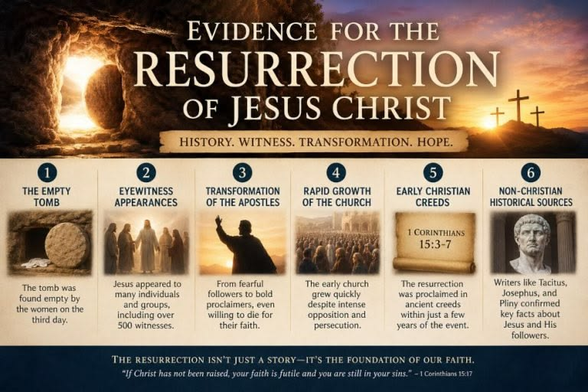
This brings us to the reality of the resurrection itself. First, Jesus kept His promise to rise from the dead. That simple truth stabilizes everything else He said. If He was faithful in the face of death, He will be faithful in the details of our lives. Second, the resurrection ensures that the ruler of God’s eternal kingdom is not a memory or an idea, but the living Christ. Christianity does not proclaim principles alone; it proclaims a Person who lives. Third, as Paul argues in 1 Corinthians 15, Christ’s resurrection secures our own. “If Christ has not been raised, your faith is futile,” Paul writes, but because He has been raised, death no longer has the final word.

Fourth, the same power that raised Jesus is now at work in us. Resurrection is not only future-oriented; it is present and formative. The Spirit brings life to places in us that have grown morally tired or spiritually numb. Growth, change, and repentance are not self-improvement projects; they are resurrection realities. Finally, the resurrection provides the substance of the church’s witness. We are not simply offering ethical teaching or inspirational stories. We are bearing witness to an event that redefined history. As Michael Green once wrote, “The resurrection was not an appendix to the gospel; it was the gospel.”

Mark ends this account with an unsettling honesty: the women flee trembling and bewildered, too frightened to speak. Resurrection does not immediately produce composure; it produces awe. Faith often begins not with confidence but with holy disorientation. God has done something so new that it takes time to find language for it. If you have ever felt overwhelmed by what God is doing in your life—unsure how to explain it or even fully grasp it—you are in good company. Resurrection invites us to grow into understanding as we walk forward in obedience.

As we consider this day in the life of Jesus, we are reminded that resurrection is not merely something to be believed; it is something to be lived. The stone is already rolled away. The tomb is empty. Jesus goes ahead of us. And like the women, we are invited to keep walking—even when our hands still carry spices meant for a reality that no longer exists.

May the risen Christ meet you today in your early-morning assumptions, your unanswered questions, and your quiet acts of devotion. May you discover that God has already been at work ahead of you, and may the life of Jesus reshape not only what you believe, but how you live.

For further study on the historical and theological significance of the resurrection, see this article from The Gospel Coalition:
https://www.thegospelcoalition.org/article/why-the-resurrection-matters/

FEEL FREE TO COMMENT, SUBSCRIBE, AND REPOST, SO OTHERS MAY KNOW


#ADayInTheLifeOfJesus #emptyTomb #Mark16Devotional #PowerOfTheResurrection #resurrectionOfJesus

Nothing Can Stop the Morning

A Day in the Life of Jesus

There is a strange stillness in Matthew 27:62–66, a silence that feels heavy rather than peaceful. Jesus is dead. His body has been taken down, wrapped, and placed in a tomb carved into limestone—a cave designed to hold what life has abandoned. And yet, on this day in the life of Jesus, the real action does not come from His followers, but from His enemies. I have often found that detail unsettling and instructive. The chief priests and Pharisees, who publicly rejected Jesus, privately remembered His words more clearly than the disciples who loved Him. They went to Pilate not to mourn, but to secure. Not to reflect, but to control. Their fear reveals something important: even in death, Jesus was still perceived as dangerous to the systems built to contain Him.

Matthew is careful with his language. “The next day,” he tells us, placing this moment at the close of the first day of Passover. Liberation is being celebrated across Jerusalem, yet the religious authorities are busy preventing what they fear might become the ultimate exodus. They quote Jesus accurately—“After three days I will rise again”—and their solution is decisive. Seal the tomb. Post guards. Eliminate every possible explanation except resurrection itself. Ironically, in trying to prevent deception, they establish the strongest apologetic foundation for the empty tomb. As D.A. Carson once observed, “The precautions of Jesus’ enemies only served to make the reality of the resurrection more certain.” The very measures intended to suppress hope become witnesses to its inevitability.

I find it revealing that Pilate distances himself at this point. “Use your own guard,” he says. Rome is done with Jesus. Religion, however, is not. The temple police are stationed, the stone is sealed with cord and clay, and official authority is pressed against the mouth of the grave. In the ancient world, a sealed tomb represented finality. The seal was not merely physical but symbolic—it declared that death had won and that the matter was closed. Yet Matthew wants us to see what the Pharisees could not: every precaution they took only narrowed the possibilities. If the tomb is later found empty, no human explanation will suffice. No rock, no seal, no guard can restrain the purposes of God.

What strikes me most as I walk through this passage with you is the contrast between fear and faith. The disciples are silent, scattered, and confused. The religious leaders are active, organized, and anxious. Both groups misunderstand the moment, but in opposite ways. The disciples underestimate the promise. The leaders overestimate their power. Jesus, meanwhile, does nothing at all—at least nothing visible. He rests. The Son of God lies still, not because He is defeated, but because the Father’s timing is perfect. This is one of the hardest lessons of discipleship: learning that God’s apparent inactivity is not absence, and His silence is not surrender.

The study rightly notes that the tomb was likely large enough to walk into, a common burial cave in the limestone hills around Jerusalem. That detail matters because it underscores the physicality of what is about to happen. Christianity does not proclaim a spiritual idea or a symbolic victory. It proclaims a bodily resurrection. When Jesus rises, He does not slip past the guards unnoticed or dissolve into myth. He leaves an empty space where a body once lay. N.T. Wright has written that the resurrection was not the resuscitation of a corpse nor the survival of a soul, but “the beginning of God’s new creation.” The sealed tomb becomes the womb of that new creation, and no human authority can stop its labor.

There is also a deeply pastoral word here for those of us who live between Friday and Sunday, between promise spoken and promise fulfilled. The leaders believed that if they could control the environment, they could control the outcome. We often fall into the same pattern. We seal our fears, post mental guards, and assume that if we manage risk carefully enough, we can prevent loss, disappointment, or change. But the resurrection tells us something far more hopeful and far more disruptive: God’s redemptive work is not subject to our permissions or prevented by our precautions. As the angel will later declare, “He is not here; He has risen, just as He said.” The Greek verb ēgerthē carries the sense of divine action—He was raised. God did what only God could do.

The study concludes with a promise that deserves to be lingered over: because Jesus rose, nothing that happens to us can prevent us from rising again and enjoying eternity with our Lord. That is not sentimental comfort; it is theological certainty. Paul will later echo this truth in 1 Corinthians 15, insisting that if Christ has not been raised, our faith is futile. But because He has been raised, death no longer has the final word. The sealed tomb becomes a signpost, pointing not to defeat but to deliverance. Even when all evidence suggests finality, God is still at work.

As I reflect on this day in the life of Jesus, I am reminded that resurrection power often works quietly before it works visibly. The guards stand watch. The seal remains unbroken. The stone does not yet move. But heaven is not anxious. The Father is not improvising. The Son is not trapped. What looks like stillness is actually certainty. And that truth invites us to trust God not only for eternal life someday, but for faithful endurance today. If no force on earth could keep Jesus in the grave, then no force in your life—fear, grief, failure, or injustice—can ultimately separate you from the life He promises.

May this passage steady your heart as you walk with Jesus today. When circumstances feel sealed and hope feels guarded, remember the tomb. Remember that the greatest obstacle became the greatest evidence. And remember that nothing can stop the morning God has already ordained.

For further reflection on the historical and theological significance of the guarded tomb, see this article from The Gospel Coalition:
https://www.thegospelcoalition.org/article/the-resurrection-and-the-guarded-tomb/

May the risen Christ bless your desire to walk closely with Him, strengthening your faith in seasons of waiting and anchoring your hope in the certainty of His victory.

FEEL FREE TO COMMENT, SUBSCRIBE, AND REPOST, SO OTHERS MAY KNOW


#ChristianHope #emptyTomb #guardsAtTheTomb #lifeOfJesus #Matthew276266 #resurrectionOfJesus