#Remyelination in the CNS is influenced by myeloid cells, including resident
#microglia & infiltrating
#monocytes. This study shows that infiltrating monocytes inhibit the efficiency of CNS remyelination
@PLOSBiology https://plos.io/3RryCLF 
Monocyte-secreted Wnt reduces the efficiency of central nervous system remyelination
Remyelination in the central nervous system (CNS) is influenced by myeloid cells, which includes resident microglia and infiltrating monocytes that are difficult to distinguish. This study shows that infiltrating monocytes inhibit the efficiency of remyelination, revealing their specific contribution in CNS remyelination.
People with #MultipleSclerosis: “We need #remyelination and #brainRegeneration therapies”
The world: We got a trial on the Effects of Laughter Yoga on Fatigue, Sleep Quality and Psychological Well-Being in Patients With Multiple Sclerosis!
https://clinicaltrials.gov/study/NCT06783413
#MSchat #Neurology
Just curious, has anyone else around here been following studies on
#remyelination involving
#clemastine fumarate (and its impact on
#oligodendrocytes, etc.)? It's not my dissertation area, but every year or so I go back into check research, and it seems there's always a new treasure trove. Like, say, this one:
https://www.frontiersin.org/articles/10.3389/fcell.2021.733945/full
Clemastine Ameliorates Myelin Deficits via Preventing Senescence of Oligodendrocytes Precursor Cells in Alzheimer’s Disease Model Mouse
Disrupted myelin and impaired myelin repair have been observed in the brains of patients and various mouse models of Alzheimer’s disease (AD). Clemastine, an H1-antihistamine, shows the capability to induce oligodendrocyte precursor cell (OPC) differentiation and myelin formation under different neuropathological conditions featuring demyelination via the antagonism of M1 muscarinic receptor. In this study, we investigated if aged APPSwe/PS1dE9 mice, a model of AD, can benefit from chronic clemastine treatment. We found the treatment reduced brain amyloid-beta deposition and rescued the short-term memory deficit of the mice. The densities of OPCs, oligodendrocytes, and myelin were enhanced upon the treatment, whereas the levels of degraded MBP were reduced, a marker for degenerated myelin. In addition, we also suggest the role of clemastine in preventing OPCs from entering the state of cellular senescence, which was shown recently as an essential causal factor in AD pathogenesis. Thus, clemastine exhibits therapeutic potential in AD via preventing senescence of OPCs.
 PLOS Biology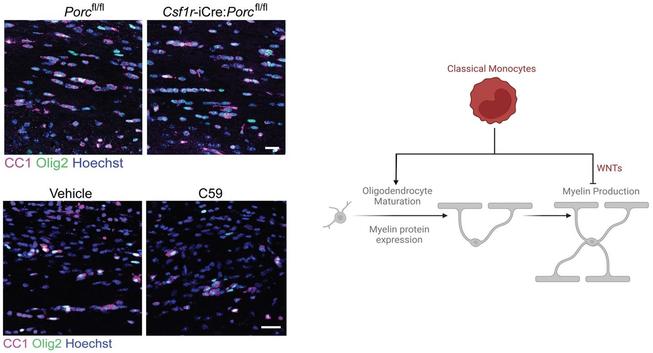
 Bruno Amaral
 cbn2
cbn2