 stroz (he/him)
 Fake Scrum Stats Memes & Humor
#scrum #scrumteam #dev #developer #releasepackage #releasemanagement #release #database #memes #Meme #Humor #humour
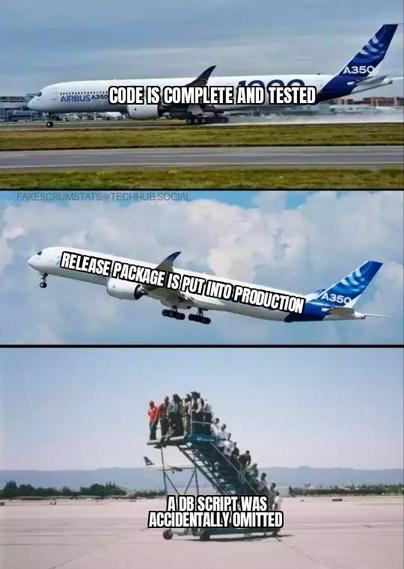
#scrum #scrumteam #dev #developer #qa #release #releasepackage #releasemanagement #production #memes #Meme #Humor #humour
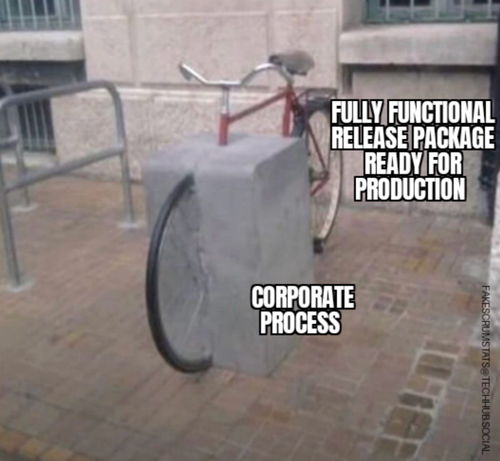
 Solo ingeniería
🚀 La gestión de releases es clave para lanzar software de calidad. Conoce el ciclo de vida, estrategias y herramientas que todo desarrollador debe dominar. 💻✨
Lee más 👉 https://www.soloingenieria.org/ingenieria-de-software/gestion-de-releases/
Imagen creada con IA.
#GestiónDeReleases #IngenieríaDeSoftware #DesarrolloDeSoftware #DevOps #ReleaseManagement

Un release mal gestionado no solo afecta al software, afecta la confianza del usuario. 🎯 La diferencia entre un buen equipo y uno excelente está en cómo planifica sus entregas.
#GestiónDeReleases #IngenieríaDeSoftware #DesarrolloDeSoftware #DevOps #ReleaseManagement
 Jan
Jan 

Urgh, doing public releases on an official public registry, but not providing any tagged commits.😑
How should I know, which commit belongs to a release then!?
We've officially entered the era of software develsloppers.
#SoftwareDevelsloppers #Slop #NoNotAISlop #Releasemanagement #OpenSource
#scrum #scrumteam #dev #developer #qa #release #releasepackage #releasemanagement #production #executives #leadership #memes #Meme #Humor #humour

 Bram Esposito
Blog: WooCommerce Brands rollout
With WooCommerce 9.4, WooCommerce Brands is getting rolled out to a cohort (5%) of installs. If you do not want to participate in this change set the option woocommerce_remote_variant_assignment to a higher value, e.g. 111 While this is a good feature, it can break your existing brands solution as it did in my case on […] …
#ecommerce #ReleaseManagement #WooCommerce #WordPress
https://bramesposito.com/blog/2025/01/14/woocommerce-brands-rollout/
With WooCommerce 9.4, WooCommerce Brands is getting rolled out to a cohort (5%) of installs. If you do not want to participate in this change set the option woocommerce_remote_variant_assignment to a higher value, e.g. 111 While this is a good feature, it can break your existing brands solution as it did in my case on […] …
#ecommerce #ReleaseManagement #WooCommerce #WordPress
https://bramesposito.com/blog/2025/01/14/woocommerce-brands-rollout/

 InfoQ
InfoQ#CaseStudy - #Slack has developed a custom #KubernetesOperator to address limitations in managing StatefulSet deployments.
Introducing the Bedrock Rollout Operator - written to offer improved control & features for deploying stateful applications in Kubernetes clusters: https://bit.ly/46C7HTY

 ATIX AG
🗓️ Our orcharhino Ask Me Anything Workshop is tomorrow! 🗓️
Join us tomorrow at 4 p.m. CEST for a unique opportunity to engage directly with our developers, consultants, and the orcharhino team. Feel free to submit your questions in advance.
Register now: https://orcharhino.com/en/events/orcharhino-ask-me-anything-workshop/
#orcharhino #datacenter #automation #patchmanagement #releasemanagement #workshop #freeworkshop
