Essay: “The Poet” by William Maccall
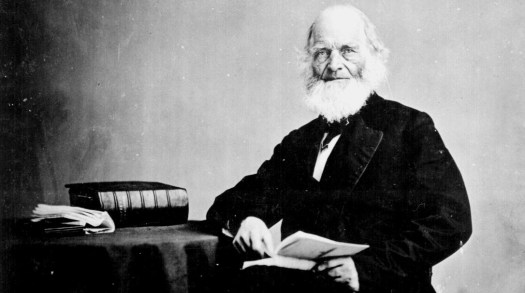
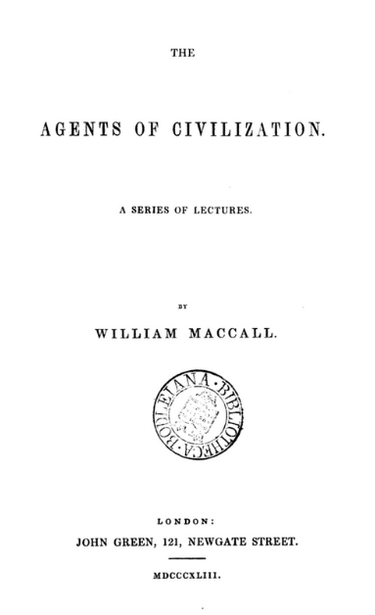
Delivered as one in a series of lectures in the autumn of 1840, the following essay by William Maccall was originally published in his book The Agents of Civilization in 1843. In it, the author—a lesser-known Scottish writer and Unitarian minister—expounds on the role of poets in the development of a civilized, cultured society. Unavoidably, he has a lot to say on the subject of poetry itself: its origins, character, and purpose. Written almost two centuries ago, Maccall’s view of poets and poetry remains relevant, inspiring, and thought-provoking.
With very few exceptions, I have preserved the original spelling and punctuation. Alterations have been made in the division of paragraphs, in order to make Maccall’s train of thought easier to follow in this digital format.
Below the essay, you will find several discussion points, along with suggestions for further reading. Do feel free to share your thoughts in the comments section at the bottom of this page. And if you like this kind of content, you can subscribe to my monthly Newsletter and never miss a post from the Grammaticus blog.
Poetry is composed of two things;—of the natural perception of the beautiful, and of the artistic development of this perception. In the former sense, we are all poets; in the latter sense, only a few possess the divine gift, and merit the distinguished name. We are all poets; for we are all capable of seizing, among the aspects of the actual, that harmony of proportions which constitutes beauty, and of finding in the field of the possible and the spiritual, that image of perfection of which eternal grace and sublimity are simply the embodiments. That meanest event, the most insignificant object, if suggestive to us of brighter thoughts and deeper feelings than those that people the range of our ordinary musings, become for us a poetical event—a poetical object.
Poetry, like religion, lies not in the outward universe, but in the inward soul. We take no glory from the region of being without us, which we have not first given from the region of being within. The circumstances that surround us may excite a particular series of contemplations, or stimulate to a particular series of actions; but they cannot in any sense be called the creators of such contemplations or of such actions; for it was our own brain or heart that had previously clothed the circumstances with their suggestiveness. There must, therefore, be in all minds the tendency to idealise the common, and to rise above the habitual, from the plastic energy which is the natural endowment of all minds, which moulds and colors the whole mass mass of existence, and which can modify everything, indeed, but individual identity. If the process by which we receive ordinary revealings from creation be itself a species of creation, that process guarantees a further process, by which we are made the recipients of extraordinary revealings from the same source.
To take a familiar instance. When we gaze on some picturesque landscape, the impressions that it produces, which differ not from our customary impressions, we are not entitled to denominate poetical; its poetry consists in the nobler and newer impressions that it bestows. But both the old and the fresh impressions are emanations from ourselves; they are not peculiarities of the landscape. And the extraordinary impressions are the necessary offspring of the ordinary, because the ordinary were once extraordinary; the whole of our career is a train of transitions by which the uncommon becomes the common; and the susceptibility to former extraordinariness and uncommonness, must be of course identical with the susceptibility of wonder and admiration at present novelty.
The entire life of every man may thus be proved to be poetical, however mechanical and prosaic in the texture of its incidents. If every man has the natural perception of the beautiful, and the natural perception of the harmonious, and if this perception lies at the foundation of poetry; if the relation of every man to the universe is a plastic and spiritualizing relation, and if this relation is the first evolvement of poetry; if every man has the susceptibility of the uncommon and the extraordinary, and if the interweavement of this susceptibility with his activities is the continued progress of poetry; —then must every man be poetical.
It does not alter the case to say, that few are conscious of all this from an analysis of their faculties. Multitudes of men are ignorant of the facts of human physiology; but that does not stop in those who are ignorant, the play of the lungs, or the circulation of the blood. From the artificial notions that prevail in the world on all subjects, many suppose that poetry is only a special mode of composition, in contradistinction to prose. When told, what I have just been propounding, that poetry is an essential and unpausing vitality of every rational intelligence, they would immediately conclude that such a doctrine is a monstrous paradox. But it is a paradox to them, only because their literary associations are as conventional as their social life. Let them forget their literary conventionalism, and give themselves up to the fresh impulses of nature, and they will quickly discover that what I have been declaring is an eternal truth.
Suppose each person now before me, were to furnish me with his autobiography, what would be its most striking and interesting features? Not the outward fact; but the successive steps of mental growth: and one of the prime movers in that mental growth must have been imagination. The aim to construct a world of unspeakable splendor beyond and above the tangible, must ever have been present, though it might seldom clothe itself with utterances that could convey to others any accurate picture of its aspirings. Yet what were its various phases, but so many poetical unfoldings,—unfoldings which, if incorporated into the symmetry of an artistic form, would have constituted poems such as those that have made the Miltons and the Shakespeares famous?
When we group vividly before our fancy, the past, the present, the future of our being—our doubts, our temptations, our hopes, our plans, our deeds—what we have vanquished, what we have yet to vanquish—the knowledge that we have gained, the knowledge that we seek—the mysteries that we have pierced, the mysteries whose meaning still evades the grasp of our researches,—and when we give to this contemplation the continuity and the comprehension of a whole, are we not thus doing the highest labor of the poet, though our epic poem is written only on the tablets of our brain?
When we select a portion of this epic poem of our life, and dwell less on its relation to ourselves than on its positive constituents, and crowd it with the human creatures who gave it its animation, and with their words, and acts, and manners, and garb, and character, and place ourselves as coagents among them, fulfilling a part prominent or subordinate with them, but still only fulfilling a part,—we have unconsciously created, in what seemed merely a reverie, the whole of a dramatic poem. When we select another portion of this epic poem of our life, and cluster round it our burning sympathies for some object of affection or of patriotism, no whisper of emotion may flow from our lips, yet this process, forgotten almost as soon as finished, was the rapid and unwitting engraving of a lyrical inspiration upon our heart.
We all live, and think, and dream, more poetry than the greatest Poet has ever written. This does not lessen the merit of those to whom the name of Poet is more peculiarly applied. Their merit remains the same, whether or not we admit that all men are poets in the sense of poetical feeling, and conception, and aspiring. The power to give an artistic incorporation to an idea must always be an additional power to that which simply conceives the idea; a power therefore to be venerated and admired by those who possess it not. If it had no higher titles to praise, it would at least have that of spontaneous and conscientious employment in the elaboration of something definite; whereas the involuntary poetry that traverses our mind is no more worthy either of approval or of blame than the involuntary working, in health or sickness, of our material mechanism.
But the Poet is more than a worker, as distinguished from the recipient of unspontaneous musings. He does what God did at creation; he communicates to an idea a permanent form, and makes an evanescent phantasy a visible, substantial, symmetrical reality. Few hath the Great Spirit endowed with this noble prerogative—the prerogative of garbing an idea in a drapery of sublimity or of grace; and therefore those few should be more willingly and fervently honored by the sons of men.
I have prefixed these remarks on the nature of poetry, in order that you might more accurately perceive the influence of the Poet as an Agent of Civilization. All men possessing the poetical faculty, it is the province of the Poet to nourish, to excite, to enlighten that faculty. This is his province; whether he employ prose or verse, truth or fiction, the simplest artistic exhibitions, or the most complicated. The value of his agency must therefore be ascertained from the value of that universal faculty in human beings to which he speaks.
And what is the distinguishing value of that faculty? To give an interest and an attraction to duty which no other influence could present. Sympathy might occasionally urge us to generous deeds; a conviction of conscience might make us scrupulously perform what we conceived to be right; the deep motives of religion might support amid trial and struggle, and hallow the peril that they could not dispel: but Man need more than this—profound and perennial as are these and divers other sustainments. He needs something which, on the hardest sphere—on the meagrest detail of the habitual—may cast the rich lavishment of an impalpable glory, and vision of the supernatural, and revealing of the miraculous. He needs something which may tell him at every step, that what environs him, however fair, and brilliant, and happy, is but a diminutive fragment of his being. He needs not only to be pervaded by the thought that he belongs to the Immortal and the Infinite, and that his mind is endowed with powers that can march with an archangel’s boldness on the verge of eternal mysteries.
This thought gives him the persuasion of his mental strength; of the magnitude and manifoldness of the objects that he can embrace, and of his destiny as a child of the Everlasting God. But he need something also, which, while softening and irradiating the actual, and making it eloquent with multiplied meanings, yet does so without that feeling of awfulness and of stringent consciousness which the metaphysical, the spiritual, the religious, are apt to occasion. Even those whose worldly circumstances are the most satisfactory, would scarcely be content to smile responsively to their smiling fortune, if they could not make their position radiant with hues and glad with melodies borrowed from the fairyland of their fancy.
We never meet with a bliss, but we imagine a greater; we never meet with a success, but we imagine a more triumphant; we never gather a harvest on the field of truth, but we imagine a more abundant; we never gaze on a scene of nature, but we imagine a lovelier; we never contemplate a work of art, but we imagine a more sublimely conceived and a more elaborately finished. In these various cases, it is the poetical faculty within us that speaks; and which speaks thus, not, as might at first sight appear, to fill us with useless discontentment, but to pervade us with higher pleasures than what could have fallen to our lot, if what we saw and attained perfectly succeeded in satisfying the yearning of our bosom.
If there was a definite attainable goodness, or a definite attainable truth, or a definite attainable beauty, our life would cease to be life, and our mind to be mind. It is in the search for the unattainable that our attainable felicity is placed. In our wanderings through heaven and earth, through space and time, our heart bounds rapturously at every renewed rush of our daring footsteps, not on account of the conquests that we have already gained, or the path of progress over which we have rapidly swept, but on account of the heights that are still above us, and the wonders that are still before us. And all poetry, by whatever name it may name itself, is a picture of our wondrous march towards the unattainable.
Let it not be said that this poetical faculty in man requires rather to be checked than to be indulged, or that duty can best be performed where it is only moderately active. There are some isolated cases, in which imagination, unchecked, unregulated, becomes prejudicial, and conducts to a prostration of vigor and resolution. But such cases are few, and their very fewness makes them the more observed.
One of the greatest defects in the majority of men is unquestionably the undevelopment of the poetical faculty. This is specially notable in this country. The English are remarkable for the weakness of the poetical faculty. It is a singular fact, that England, which has produced the greatest poets that the world has ever seen, is the least poetical of countries in the character of its inhabitants. The effect of this unpoetical character is, that the English, who have many noble qualities, have a less continued and a less elevated range of happiness than other nations in many respects far inferior.
Everything here is done too much as a matter of business. Religion is mechanical; morality a catalogue of details, instead of a fortress of principles; social relations hard and angular; friendship a habit instead of a sympathy; conversation a petty gossip about the news of the day, instead of a discursive grasp of the most suggestive and instructive topics of human thought. And this is what renders the education of the English people so difficult. They are quick enough in apprehension, disposed enough to receive information; but then it is an apprehension that is exercised not manysidedly, but onesidedly. Religious people read only religious books, and political reformers read only political productions, and scientific investigators read only scientific treatises. So that if the country were not divided into hostile parties any measure for the common benefit from being passed, there would still exist the obstacle that I have mentioned—the miserable onesidedness in the popular search for knowledge, and which would seriously interfere with the operations of any extensive plan for harmonising the intelligence of the general mind.
One of the first and most unceasing attempts of every true friend of the people, should therefore be, to show them that all truth is not embraced in religious or political truth; that even admitting the justice of every political dogma for which they contend, still every such dogma has but a limited connection with the boundless world of literature from which the main elements of their intellectual strength, and moral stability, and introspective wellbeing and fullness must be drawn; and that the pursuit of any object, however excellent in itself, becomes the absurdest of monomanias and the narrowest of sectarianisms, unless it has an excursive and electrical contact with numberless points of contemplation far remote from the immediate aim.
The people would become to a considerable extent their own educators, if more of the poetical were thrown round the aspects of their life. They would see that they are not merely members of the commonwealth of England, but members of the commonwealth of enlightened and enlightening minds, to whom, in all periods of history, poetry has been a harmonizing principle. It is not mere change in its institutions that this country wants, though these have become obviously and imperatively necessary; it wants far more the culture of a humanizing spirit, which would refine the feelings, call forth the affections, purify and expand the reflective faculties, and which, ever aiming towards catholicity of sentiment, of perception, and of aspiring, would evolve the good from the husk of error and sin—would transmute antipathy into love, and evil into excellence—and would teach men to gaze, not on the changeable in each other, which they hate or despise, but on the unchangeable, which is the glory of their common nature, and which makes them one with their Father in heaven.
Ministers of the Gospel might do much towards this; but they do not. They speak of the transcendant worth of the Christian religion, of the benevolence it inculcates, and of the doctrine of equality which it proclaims,—yet, in the same breath, they urge their flocks Judaisingly to shun the Samaritan touch of all beyond the pale of their sect; and while with the one hand they point to the bloodstained cross of Jesus, as a symbol of universality of human redemption, with the other they point to the mansions in the skies that are reserved for the aristocracy of the elect.
Political agitators might also do much in this holy cause; but they do not. They address themselves to the inflamed passion and the insane prejudices of their adherents, instead of to their judgment, their convictions, their faith, of their kind and generous tendencies; they rouse the animal appetite for slaughter, not the calm determination to make every sacrifice for freedom: they speak of man’s right and of man’s might, and in this they do well; but they do not speak of man’s duties, or of man’s brotherhood, or of the reciprocities that should bind the human family together.
What, consequently, ministers of the Gospel, and political agitators, and other popular teachers fail to do, poetry must do; fulfilling now, as it has more or less always fulfilled, the blissful mission of throwing a gorgeous drapery of idealism around humanity, and of connecting, by the most harmonious relations, the perfectibility of the individual with the perfectibility of the race.
In tracing, as best as we can, the early history of the world, from such instruments as are afforded us, it is evident that the Poet must have arisen as an Agent of Civilization immediately after the Hero. To tell the Hero’s deeds, in order that others might be roused to similar heroism for the sake of the fatherland, was an aspect of patriotism as natural as the heroism itself. It is only necessary to suppose this rude tradition clothed with the rudest artistic form, and we have before us—the birth of poetry. The great object of poetry, to idealise the actual, here attained its commencement, in the exaggerated expression of wonder and admiration at what was the grandest then known manifestation of human character. Narrative poetry must therefore have preceded every other species of poetry. From the narration of the Hero’s deeds, there was an easy transition to the appeals which urged to the performance of deeds as distinguished. These appeals would mingle in the inspired utterances of the Bard, either when, in time of peace, he was entertaining his listeners with a glowing description of what their forefathers had done, or when he cast his stirring voice into the roar of battle, to impel his countrymen to add a fresh wreath to the glory of their native land. And these appeals, strong and striking, however barbarous, were the beginnings of lyrical composition.
We have only to conceive a further process, and we see this lyrical composition taking a wider range. We have to conceive the Poet giving still more intensity and earnestness to his warlike appeals, by allusions to the beauty and the fame of a country, which many a wellwon fight, and many a fascinating association, made dear—to its woods, its hills, its streams—to the fertility of its soil, and the abundance of its flocks—its varying aspects in the vicissitude of the seasons—the occupations of its inhabitants, their happiness, their domestic enjoyments;—and these incidental allusions would, afterwards, themselves become separate topics of lyrical poetry.
Music would owe its origin to the first and most uncultivated form of lyrical poetry. The earliest warcry of earth’s primeval combatants, would be nothing more than a short rapid shout of encouragement. Afterwards, each tribe would be desirous, both from motives of pride and of convenience, of being distinguished by a warcry of its own. To bestow on it this distinction, they would be obliged to give it a peculiar sound—varying its tones in such a manner, as that it could not be confounded with that of the enemy. And such variation, however small—however abrupt in its transitions—was music; for the simplest idea of music is that of the attachment of a definite meaning to a consecutive series of sounds.
It is unnecessary to follow the progress of poetry in the perfectionment of its narrative and lyrical forms—such as the epic, the dramatic, or the didactic. What I have stated, suffices to show the origin and the value of the Poet, as an Agent of Civilization. The work that the Poet has done, in times of refinement, is manifest to any one who has a moderate acquaintance with literature. What he has done, in the times of man’s first slow gropings after selfculture, is not so well known, and, therefore, has claimed more of my attention.
I would willingly enlarge on the influence and mission of the Poet, in the most virtuous and interesting periods of Greek and Roman history; in the middle ages, when the Troubadours of France and the Minnesingers of Germany were the creators of all that was graceful, glorious, good, and generous in the nations of Europe; in subsequent centuries, when the German Minnesingers, with poetical talent far inferior to their predecessors, but with objects, aims, and instrumentalities far more widely and popularly useful, prepared the way for the Reformation; in the reign of Elizabeth, a period unequalled for dramatic genius and fertility; in the epoch made memorable by the French Revolution,—when a Scottish peasant fell, crushed, into the grave—the giant victim of a world unworthy of him—but left the renown of a lyrical Poet, unrivalled and inimitable. But such lengthened speculations would demand details equivalent to a history of poetry.
There is a simple means, however, of proving to yourselves the value and extent of the Poet’s humanizing and idealizing power. Read your Bible; which, from first to last, is one long sublime poem: —read it with an earnest, believing spirit, and you will not be at a loss to discover the source, and the means, and the worth of the Poet’s influence on the Civilization of a nation or of a world.
DISCUSSION POINTS
- Maccall sums up the purpose of poetry by saying that “the great object of poetry, to idealise the actual.” What do you think he means by that?
- The author describes poetry as “an essential and unpausing vitality of every rational intelligence.” In your opinion, what is it that makes poetry so powerful and lively?
- Maccall likens the work of a poet to that of God. What is the parallel he draws between the two in this essay?
- There are many theories regarding the historical origins of music. The author brings music in close connection with poetry; explain how.
- This essay is highly critical of religious dignitaries and professional politicians. What exactly are Maccall’s objections?
ADDITIONAL RESOURCES
Maccall, William (entry in the Dictionary of National Biography)
William Maccall (Wikipedia entry with bibliography)
COVER IMAGE
“A Reading from Homer” also known as “Listening to Homer“. Oil painting by Laurence Alma-Tadema (1836–1912).
#Bible #civilization #culture #English #EnglishLiterature #essay #literature #longform #poetry #poets #reading #readingComprehension #Unitarians #WilliamMaccall grammaticus








 EveryLibrary