 エミリーの英会話スタディ
【英語初心者】フリートークに挑戦/日本人あるある/Japanese /Cambly English conversation【オンライン英会話やってみた】
#Cambly #camblyconversationenglish #camblyvideointroduction #learningEnglish #オススメ #オンライン英会話 #キャンブリー #やってみた #初回レッスン #初心者 #効果 #失敗 #英語初心者...

【英語初心者】フリートークに挑戦/日本人あるある/Japanese /Cambly English conversation【オンライン英会話やってみた】
#Cambly #camblyconversationenglish #camblyvideointroduction #learningEnglish #オススメ #オンライン英会話 #キャンブリー #やってみた #初回レッスン #初心者 #効果 #失敗 #英語初心者...
(Review)
I couldn't pronounce the "R" sound in words like "Really" properly, which messed up the rhythm. It was a mess.
I wanted to pronounce "But" more softly and casually, but I couldn't do it.
The long sentences at the end were tough.
I'm generally bothered by the Japanese-style vowels and intonation.
I really want to connect with the world.
My goal is to connect with the world.
I wanna build connections globally.
But I am struggling to improve my ENglish.
So, I am starting a project that I post simple English messages little by little and read them in my voice.
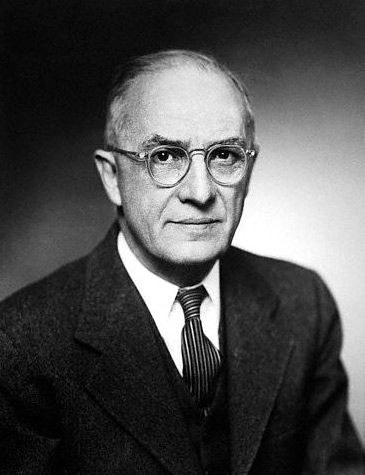
‘The First Dandelion’ by Walt Whitman
Whitman’s poem featured in this post is a very short one, originally published in the Herald newspaper on 12th March 1888. It just so happened that immediately after its publication, a major blizzard hit the state of New York, which made the poet’s timing rather unfortunate, and the subject of many jokes.
It reminded me of a similar beginning of spring we’ve had over here in my neck of the woods this year: within days of the official arrival of spring, we suddenly had subzero temperatures and plenty of snow. It didn’t last long, though, and the meadows are already full of spring wildflowers—including dandelions!
Simple and fresh and fair from winter's close emerging, As if no artifice of fashion, business, politics, had ever been, Forth from its sunny nook of shelter'd grass— innocent, golden, calm as the dawn, The spring's first dandelion shows its trustful face.How did you like this poem? Are there any other flowers that you associate with the arrival of spring? Tell us about it in the comments section below!
VOCABULARY EXERCISE
Match the following words with their definitions / synonyms:
CLOSE | EMERGE | ARTIFICE | FORTH | NOOK | DAWN
To check your answers, click here.
RELATED BLOG POSTS AND RESOURCES
How to interpret a poem (with a little help from Walt Whitman)
Cover photo by Natalia Luchanko on Unsplash.
#AmericanLiterature #dandelions #EnglishLanguage #EnglishVocabulary #learningEnglish #poem #poetry #reading #readingComprehension #readingSkills #spring #vocabulary #WaltWhitman
‘Spring Storm’ by William Carlos Williams
William Carlos Williams (1883–1963) was one of the most important American poets of the 20th century: a modernist of the imagist kind, he was known for using simple and colloquial language to express his ideas—a feature many critics now consider typical of modern American poetry. This can be contrasted with the modernists such as T. S. Eliot, whose works, to the contrary, resort to complex vocabulary, imagery and symbolism, and which can give off a rather elitist vibe.
William Carlos WilliamsThe poem presented here, ‘Spring Storm’, serves as a good example of imagism: there are no complex, intertextual references or intellectual pretences. Instead, the poet shares an image coming straight from everyday life, one we are all familiar with. Of course, the image is not here for its own sake: it does stand for something.
After you read the poem, reflect on the symbolism of a spring storm and the change of seasons. There’s the literal change from winter to spring; what can it mean as a symbol? What does it mean to you?
The sky has given over its bitterness. Out of the dark change all day long rain falls and falls as if it would never end. Still the snow keeps its hold on the ground. But water, water from a thousand runnels! It collects swiftly, dappled with black cuts a way for itself through green ice in the gutters. Drop after drop it falls from the withered grass-stems of the overhanging embankment.VOCABULARY EXERCISE
Find the words in the poem with the following meaning:
To check you answers, click here for the answer key.
ADDITIONAL RESOURCES
Free e-books by William Carlos William (via Project Gutenberg)
Image credit: cover photo by Pratik Gupta on Unsplash.
#AmericanLiterature #EnglishLiterature #EnglishVocabulary #imagism #learningEnglish #modernism #poem #poetry #reading #readingComprehension #spring #WilliamCarlosWilliams
Confusing verbs: lay & lie
In response to a recent question from several of my students, here’s a grammar post about two confusing verbs: lie and lay. (Actually, it’s three verbs, but we’ll come to that later.)
TO LAY
‘To lay’ means to put something down. It is followed by a direct object, i.e. it’s a transitive verb—after it we have to use a noun or a pronoun.
Take this blanket and lay it on the ground.
Its Simple Past and Past Participle form is LAID:
He laid the books on the table.
We have laid the foundation for our future cooperation.
The Present Participle, which we use to form all continuous tenses is LAYING:
We are laying down new rules.
This verb is often used with different prepositions, forming phrasal verbs with various meanings. Here are a few examples:
TO LIE
‘To lie’ means to be in a horizontal position. It is not followed by a direct object, i.e. it’s an intransitive verb.
I feel very sleepy. I’m going to lie down.
BE CAREFUL: the Simple Past form is LAY – same as the infinitive / present tense of ‘to lay’:
He lay in bed all day because he was unwell.
The Past Participle form is LAIN:
She had lain on the sofa for some time before she got up.
The Present Participle is LYING:
How long have you been lying in the sun? Your skin is so red!
This verb is also used to make a number of phrasal verbs, some of which are very frequent, such as:
TO LIE = to deceive
Finally, there’s the verb ‘to lie’, meaning to say something untrue in order to deceive. This verb is regular (just be careful with spelling): its Past Simple and Past Participle is LIED, and the Present Participle is LYING.
Stop lying to me!
I have never lied to anyone.
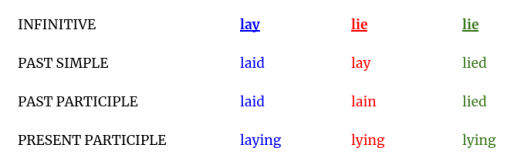
To recap, here’s the overview of the main forms of these three verbs:
You can now practise these verbs a bit using the online grammar exercise I’ve prepared on this topic.
#EnglishGrammar #EnglishLanguage #EnglishVocabulary #grammarPractice #grammarQuiz #learningEnglish #verbs
‘A Prayer in Spring’ by Robert Frost
Looking for some peace and quiet? Robert Frost’s poem ‘A Prayer in Spring’ just might give you some inspiration.
As I often mention in my poetry posts, try to read this poem out loud—it has a great rhythm that you might completely miss out on if you read it silently. And that would be unfortunate, because the rhythm is intentional: it contributes to the message of the poem. Its stable consistency adds to the sense of calm.
How did Frost create this effect? You will notice the steady AABB rhyme pattern, but there’s more. The poem is written in iambic pentameter, which is a five-set series of iambs (an iamb is a metrical unit consisting of two syllables, where the first one is unstressed and the second one stressed).
English language learners can do a simple vocabulary exercise found below the poem, and there’s also a selection of additional resources on Robert Frost and iambic pentameter.
Oh, give us pleasure in the flowers to-day; And give us not to think so far away As the uncertain harvest; keep us here All simply in the springing of the year. Oh, give us pleasure in the orchard white, Like nothing else by day, like ghosts by night; And make us happy in the happy bees, The swarm dilating round the perfect trees. And make us happy in the darting bird That suddenly above the bees is heard, The meteor that thrusts in with needle bill, And off a blossom in mid air stands still. For this is love and nothing else is love, The which it is reserved for God above To sanctify to what far ends He will, But which it only needs that we fulfil.VOCABULARY EXERCISE FOR ESL LEARNERS
Match the following words found in the poem with their definitions:
ORCHARD (n.) | DILATE (v.) | THRUST (v.) | SWARM (n.) | SANCTIFY (v.) | DART (v.)
To check your answers, please click here.
ADDITIONAL RESOURCES
‘A Prayer in Spring’ read by Robert Frost
Iambic pentameter – an Encyclopedia Britannica entry
‘October’ by Robert Frost
#AmericanLiterature #English #EnglishLiterature #EnglishVocabulary #learningEnglish #poetry #readingSkills #RobertFrost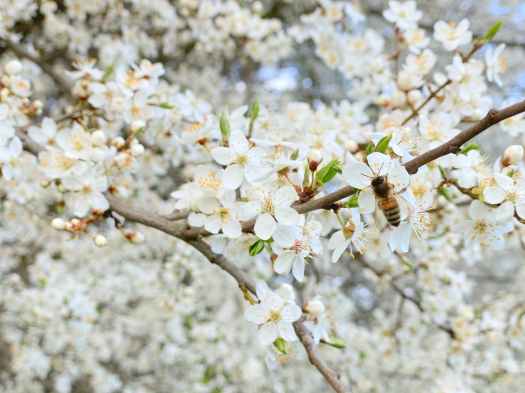
Grammar practice: the causative have
In this post we’ll do a bit of grammar practice on a special use of the verb ‘have’, namely the causative have.
This structure is used when you want to say that you didn’t do something by yourself, but they you’ve simply arranged (i.e. caused) for someone else to do it for you.
It always follows the following pattern: have + object + Past Participle
Compare these two examples:
I have washed my car. – This is Present Perfect, where ‘have’ is the auxiliary verb. The sentence says that I washed the car by myself – ‘I’ is the subject.
I had my car washed. – Look at the pattern, with the object between the causative have and the Past Participle. This sentence implies that I asked someone else to wash the car for me.
Here’s another typical example:
I have cut my hair. – I did it myself.
I had my hair cut. – Someone else did it, presumably a hairdresser.
You can use the causative have in different tenses. For example:
I‘m having my hair cut. (I’m at the hairdresser’s right now.)
I‘ve had my hair cut. (Someone’s done it for me at some point in the past.)
I’m going to have my hair cut. (I intend to ask someone to do it.)
I’m sure this wasn’t very difficult. You can now click here to complete a simple grammar quiz on this topic.
#EnglishGrammar #EnglishTeacher #grammarPractice #grammarQuiz #learningEnglish
 Hiroko Yamaguchi
 penguen
 Begrepen.be
 grammaticus