 Hacker News
Byte Type: Supporting Raw Data Copies in the LLVM IR
 mailjunkhaw
 Lola Montero Santos
Any recommendations of #datascience articles/sources which define #data, #rawdata, #information and(or) #knowledge and the relationship between these terms? I am familiar with a lot of information technology, legal & political science literature, but not so much within data science. Is this also part of the conversation in the practical sphere of #dataprocessing?
 Data @ Analytics
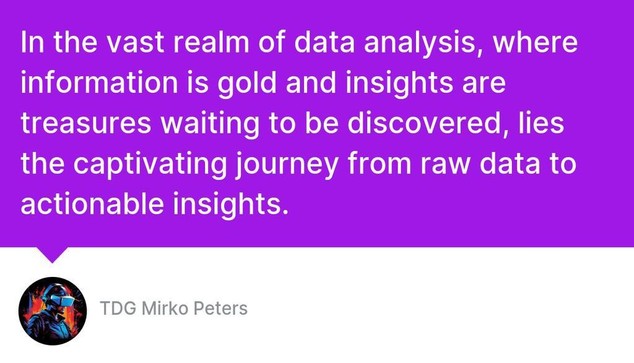
From Raw Data to Actionable Insights: The Journey of Data Analytics
▸ https://lttr.ai/AGWWX
#VastRealm #DataAnalysis #TreasuresWaiting #CaptivatingJourney #RawData #TransactionMadeOnline #ReduceAttritionRates #YoungProfessionalsResiding #SwitchProvidersDue #PoorNetworkCoverage
 beSpacific
#COVID is not gone but data on COVID is - #JHU has stopped collecting data as of 03 / 10 / 2023 After three years of around-the-clock tracking of #COVID19 data from around the world, Johns Hopkins has discontinued the #Coronavirus Resource Center’s operations. The site’s two #RawData #repositories will remain accessible for information collected from 1/22/20 to 3/10/23 on cases, deaths, vaccines, testing and demographics. #PublicHealth #pandemic #endemic #LongCovid #disabilities
 Pj
Pj“Extensive global #wetland loss over the past three centuries”
https://www.nature.com/articles/s41586-022-05572-6
Behind paywall, but linked to interesting raw data repository and with 76 references

Extensive global wetland loss over the past three centuries - Nature
We reconstruct the spatial distribution and timing of wetland loss through conversion to seven human land uses between 1700 and 2020, elucidating the magnitude and land-use drivers of global wetland losses to improve assessments of wetland loss impacts.
 Arie van Deursen
“Thus, more than 97% of the 41 manuscripts did not present the raw data supporting their results when requested by an editor”
“No raw data, no science: another possible source of the reproducibility crisis.” https://molecularbrain.biomedcentral.com/articles/10.1186/s13041-020-0552-2
#reproducibility #reproducibilitycrisis #rawdata #molecularbrain #miyakawa

No raw data, no science: another possible source of the reproducibility crisis - Molecular Brain
A reproducibility crisis is a situation where many scientific studies cannot be reproduced. Inappropriate practices of science, such as HARKing, p-hacking, and selective reporting of positive results, have been suggested as causes of irreproducibility. In this editorial, I propose that a lack of raw data or data fabrication is another possible cause of irreproducibility.As an Editor-in-Chief of Molecular Brain, I have handled 180 manuscripts since early 2017 and have made 41 editorial decisions categorized as “Revise before review,” requesting that the authors provide raw data. Surprisingly, among those 41 manuscripts, 21 were withdrawn without providing raw data, indicating that requiring raw data drove away more than half of the manuscripts. I rejected 19 out of the remaining 20 manuscripts because of insufficient raw data. Thus, more than 97% of the 41 manuscripts did not present the raw data supporting their results when requested by an editor, suggesting a possibility that the raw data did not exist from the beginning, at least in some portions of these cases.Considering that any scientific study should be based on raw data, and that data storage space should no longer be a challenge, journals, in principle, should try to have their authors publicize raw data in a public database or journal site upon the publication of the paper to increase reproducibility of the published results and to increase public trust in science.
 GameSense.co
A new Aliens game is in development by Survios, the makers of great VR titles Raw Data, Sprint Vector. #RawData https://gamesense.co/game/raw-data/news/discuss/an-aliens-game-is-coming-to-pc-consoles-and-vr-from-the-makers-of-raw-data/
 pasqui023
https://molecularbrain.biomedcentral.com/track/pdf/10.1186/s13041-020-0552-2
tldr:researcher must share the #rawdata to fight the #reproducibilitycrisis