America’s Pax Silica Prompts P7 Billion Power Expansion In New Clark City

Pax Silica – the United States’ Pax Silica flagship effort on artificial intelligence (AI) and supply chain security that includes the Philippines – prompted the P7 billion investment of the National Grid Corporation of the Philippines (NGCP) to ensure a stable power supply for New Clark City in Tarlac province, according to a news report by the Manila Bulletin.

To put things in perspective, posted below is an excerpt from the Manila Bulletin report. Some parts in boldface…

The National Grid Corporation of the Philippines (NGCP) plans to invest nearly ₱7 billion in a dedicated substation to guarantee a stable power supply for New Clark City in Capas, Tarlac, anticipating a surge in demand from a planned artificial intelligence (AI) industrial hub.

Joshua Bingcang, president and chief executive officer of the Bases Conversion and Development Authority (BCDA), said the investment promotion agency is currently in talks with NGCP to finalize the project’s details. The grid operator is drafting the alignment plan for the substation, which Bingcang noted should be finalized “soon.”

Our target with them is by [the] end of 2028, the dedicated power connection should be already installed in New Clark City,” he told reporters last week.

Bingcang added that the BCDA initially offered to fund the project to jump-start construction, with NGCP reimbursing the agency later. However, NGCP declined the offer because the substation is already integrated into its capital expenditures.

Under its Transmission Development Plan 2024 to 2050, NGCP outlined plans to construct the Capas 230-kilovolt (kV) substation to meet the growing power needs of the emerging metropolis. According to the plan, NGCP will allocate ₱6.95 billion to develop the facility.

To facilitate the project, Bingcang said the BCDA is offering land along the Subic-Clark-Tarlac Expressway (SCTEX) to ensure an unimpeded route for the transmission line into New Clark City. Once operational, the substation is expected to give locators in the AI hub the confidence to manufacture high-value inputs without risking operational pauses due to power shortages.

The AI hub will span more than 1,600 hectares within New Clark City as part of the United States-led Pax Silica partnership, which aims to encourage investment among member countries to bolster the global AI supply chain.

To meet the site’s massive energy requirements, Bingcang said the BCDA expects a foreign investor to build a solar energy project capable of generating up to 500 megawatts. Furthermore, the agency is drafting plans for an embedded power plant to secure baseload power and enhance the hub’s overall energy reliability.

In a separate interview with Business 360, Bingcang disclosed that the BCDA is also negotiating with US investors to construct a dedicated pipeline to transport jet fuel from Subic Bay to Clark International Airport, supporting the logistics needs of companies within the AI hub. The agency is also exploring a separate pipeline along SCTEX to deliver fuel or liquefied natural gas.

Additionally, the BCDA is advancing a public-private partnership (PPP) project for New Clark City’s information and communications technology (ICT) infrastructure. According to a bid bulletin published by the PPP Center, the agency aims to conclude the procurement process for a joint venture partner to lay fiber-optic cables across the city by August.

Bingcang noted that all of these infrastructure projects were requested by the US during preliminary talks for the AI hub. Following a visit to the 1,600-hectare site last week, the US will send engineering personnel next month to conduct a site assessment and design a concept plan for the industrial zone.

“Parallel to these technical studies, we will also finalize the commercial arrangement and contractual framework for the project. Within the year, we will be announcing a definitive contract arrangement [with the US],” Bingcang said.

Let me end this post by asking you readers: What is your reaction to this recent development? Do you think Pax Silica will prompt further infrastructure and energy developments related with New Clark City as the initiative develops further? Do you think there is room for nuclear power to considered in the years to come?

You may answer in the comments below. If you prefer to answer privately, you may do so by sending me a direct message online.

+++++

Thank you for reading. If you find this article engaging, please click the like button below, share this article to others and also please consider making a donation to support my publishing. If you are looking for a copywriter to create content for your special project or business, check out my services and my portfolio. Feel free to contact me with a private message. Also please feel free to visit my Facebook page Author Carlo Carrasco and follow me on Twitter at @CarloCarrascoPH as well as on Tumblr at https://carlocarrasco.tumblr.com/ and on Instagram athttps://www.instagram.com/authorcarlocarrasco

#America #ArtificialIntelligenceAI #ASEAN #Asia #AssociationOfSoutheastAsianNationsASEAN #BasesConversionAndDevelopmentAuthorityBCDA #Bing #business #businessNews #CarloCarrasco #ChatGPT #commerce #DonaldJTrump #DonaldTrump #economicConfidence #economicDynamism #economicGrowth #economics #economy #EconomyOfThePhilippines #electricity #energy #Facebook #foreignInvestment #foreignInvestors #geek #Google #GoogleSearch #governance #grossDomesticProductGDP #Instagram #Investagrams #investment #ManilaBulletin #NationalGridCorporationOfThePhilippinesNGCP #NewClarkCity #news #nuclear #nuclearEnergy #nuclearPower #PaxSilica #Philippines #PhilippinesBlog #Pinoy #power #PresidentTrump #publicService #socialMedia #SoutheastAsia #Tarlac #technology #Trump #Twitter #UnitedStatesOfAmerica #UnitedStatesOfAmericaUSA #USA #WordPress #WordPressCom

@26pglt

Simply put, if the #Service is a #SocialBenefit widely available to Aus residents (in one sector or another such as #Health and #SocialSupport of any kind) then it should be a #PublicService #NotForProfit deliverable. No exceptions whatsoever. Anything else is plainly #StateCapture and #Theft and #Rorts IMO.

#AusPol

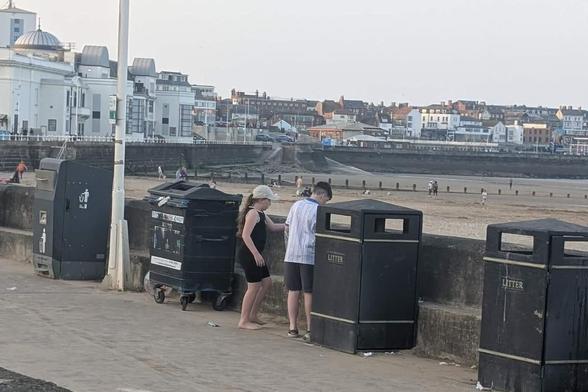
“I’m disgusted by the general public”: Father slams public for littering Yorkshire beach as kids step in to help clean

A Yorkshire dad has praised his children for helping to clear Bridlington beach after it was left an “absolute state” on Bank Holiday Monday.

Yorkshire Post

Economic Warning Signs In The Philippines Grow

With weak economic growth and high inflation already happening, the future is looking dark for the economy of the Philippines and there are warning signs growing, according to a news report by Malaya Business Insight.

To put things in perspective, posted below is an excerpt from the Malaya Business Insight report. Some parts in boldface…

The Philippines is not yet in stagflation, economists said, but slowing growth, high inflation, weak public spending, and the Middle East oil shock are pushing parts of the economy closer to danger.

Michael Ricafort, chief economist at Rizal Commercial Banking Corp., said some weaker sectors may already be feeling near-stagflation conditions.

Near stagflation conditions for some vulnerable, already weak industries. But stronger ones are more insulated,” Ricafort said.

His comment followed President Marcos Jr.’s statement that potential stagflation is among the concerns keeping the government “awake at night” as officials try to contain prices of basic goods and keep the economy running.

Jonathan Ravelas, senior adviser at Reyes Tacandong & Co., said the country is still not in stagflation, although the risks are rising.

“There are potential stagflation risks, but we’re not yet there,” Ravelas said at the weekly Pandesal Forum in Quezon City on Wednesday.

He said unemployment remains below its long-term average, while the economy continues to post positive growth despite the slowdown.

“If we talk about the average unemployment rate in the Philippines since the 1960s, it’s 7.5 percent. Right now, our numbers are between 5 percent and 5.3 percent,” Ravelas said.

Inflation, however, remains a major threat. Ravelas said consumer prices could climb to 8 percent to 9 percent toward the end of the year, with households likely to feel the sharpest impact from higher fuel, food, and transport costs.

He said the stagflation concern recalls the oil shocks of the 1970s, when energy disruptions pushed prices sharply higher while economic activity weakened.

Ravelas said the more immediate challenge is reviving spending, particularly government spending, to keep growth from losing further momentum.

He said the economy is still feeling the effects of last year’s flood-control scandal, which disrupted public works and slowed disbursements, while the inflationary impact of the US-Iran conflict has added pressure.

Restraining spending now, he said, would be like “shooting ourselves on our foot” because it would further weaken recovery.

“We need to be able to work on improving consumption,” Ravelas said.

He also said the government must convince the public that it is acting decisively to stabilize prices.

“When it comes to fighting inflation, we need to show our countrymen, from a government perspective, that prices are stable. That would be a good opportunity so that they will believe the government is doing something,” he said.

Ravelas noted the country should also invest in upskilling workers to improve employment prospects.

Given the inflation pressure, he said the Bangko Sentral ng Pilipinas is likely to take a defensive policy stance and raise interest rates by 50 to 75 basis points, although it must balance inflation control with the need to support growth.

A separate report from the De La Salle University Carlos L. Tiu School of Economics said inflation is being driven mainly by fuel, as higher energy costs feed into transport, logistics, and production.

Fuel costs have more than doubled since the war began, pushing inflation sharply higher from May through August 2026. We expect inflation to peak at around 8 percent in August,” economists Jesus Felipe, Mariel Monica Sauler, Gerome Vedeja, political scientist Susan Kurdli, and research assistant Seth Paolo Paden said in the school’s May economic report.

They said the disruption in the Strait of Hormuz has also cut off roughly a third of global fertilizer supply, keeping inflation elevated through the end of 2026.

By early 2027, the report said, energy and fertilizer pressures are expected to ease, with inflation likely to return to the BSP’s 2 percent to 4 percent target band by April 2027 and settle at around 2.8 percent in 2028.

The DLSU economists said the current inflation surge is a supply shock caused by war-related disruptions in global energy and food markets, making interest rate increases an imperfect response.

Higher interest rates will neither bring oil prices down nor reopen the Strait of Hormuz. What they will do is make borrowing more expensive, slow investment, and constrict household spending,” they said.

Let me end this post by asking you readers: What is your reaction to this recent development? Do you think the economy of the Philippines will eventually fall into a state of stagflation this year? How are you dealing with the higher costs of living nowadays?

You may answer in the comments below. If you prefer to answer privately, you may do so by sending me a direct message online.

+++++

Thank you for reading. If you find this article engaging, please click the like button below, share this article to others and also please consider making a donation to support my publishing. If you are looking for a copywriter to create content for your special project or business, check out my services and my portfolio. Feel free to contact me with a private message. Also please feel free to visit my Facebook page Author Carlo Carrasco and follow me on Twitter at @CarloCarrascoPH as well as on Tumblr at https://carlocarrasco.tumblr.com/ and on Instagram athttps://www.instagram.com/authorcarlocarrasco

#ASEAN #Asia #AssociationOfSoutheastAsianNationsASEAN #Bing #BongbongMarcos #business #businessNews #CarloCarrasco #ChatGPT #commerce #economicConfidence #economicDynamism #economicGrowth #economics #economy #EconomyOfThePhilippines #energy #Facebook #food #foreignInvestment #foreignInvestors #geek #Google #GoogleSearch #governance #grossDomesticProductGDP #inflation #Instagram #Investagrams #investment #MalayaBusinessInsight #Marcos #MiddleEast #news #oil #Philippines #PhilippinesBlog #Pinoy #power #PresidentMarcos #publicService #RCBC #RizalCommercialBankingCorpRCBC #RizalCommercialBankingCorporationRCBC #socialMedia #SoutheastAsia #stagflation #stagnation #technology #Twitter #WordPress #WordPressCom

We are charged with building a #GreatSociety.

It is college graduation season in America. There was a time when a president used that moment to inspire graduates commencing their journey, not to treat the room as a mirror.

#HCR writes about one of those moments. 👇

It is a reminder that #politics can be noble. That #PublicService is not self-service.

The distance between those two instincts tells everything we need to know right now and what must be done

#USPol #LBJ

https://open.substack.com/pub/heathercoxrichardson/p/may-22-2026

May 22, 2026

On May 22, 1964, in a graduation speech at the University of Michigan, President Lyndon Johnson put a name to a new vision for the United States.

Letters from an American
LAPD Officer Jordan M. Perez

First Name: Jordan Last Name: Perez Middle Initial: M. Badge Number: 42728 Gender: M Race: Hispanic Employer: Los Angeles Police Department Job Title: Poli...

Cop Blaster: Police Misconduct Reporting & Monitoring

University Economists Say Philippine Economic Growth Could Slow Down To 3.1% This Year

Could the economy of the Philippines be weakening a lot right now? As far as the economists of De La Salle University (DLSU) are concerned, economic growth will be 3.1% this year and they pointed to the effects of the Middle East conflict, rising inflation and other factors, according to a Manila Bulletin news report.

To put things in perspective, posted below is an excerpt from the Manila Bulletin report. Some parts in boldface…

De La Salle University (DLSU) economists slashed their 2026 Philippine gross domestic product (GDP) growth forecast to 3.11 percent from 3.79 percent previously, warning that the economy is facing mounting pressure from the Middle East conflict, elevated inflation, and lingering domestic vulnerabilities.

If realized, the revised forecast would mark the country’s weakest annual economic growth post-pandemic, worse than the 4.4 percent recorded in 2025 in the aftermath of the flood-control corruption scandal and below the government’s downscaled five- to six-percent target.

In their report on the Philippine economy for May 2026, published on Monday, May 18, DLSU economists Jesus Felipe, Mariel Monica Sauler, Gerome Vedeja, and Seth Paolo Paden, together with political science professor Susan Kurdli, said the downgrade reflected “three converging pressures on the economy.

These include the Middle East conflict disrupting oil supply and pushing energy prices higher, the risk of tighter monetary policy should inflation persist, and the emerging pass-through of higher fertilizer costs to food prices.

“The combination of all three explains why the growth outlook has deteriorated more sharply than previously expected,” the report read.

The economists noted that the economy had already slowed sharply to 2.81 percent in the first quarter, which they described as “the last reading to reflect pre-shock normalcy” before the full impact of the Middle East conflict filtered through fuel prices, inflation, and fertilizer supply disruptions.

DLSU expects growth to slow further to 2.8 percent in the second quarter and 2.3 percent in the third quarter before recovering to 4.53 percent in the fourth quarter on the back of government catch-up spending, overseas Filipino workers’ (OFWs) remittances, and an eventual recovery in investments should geopolitical pressures ease.

The report warned that the war had exposed the Philippines’ structural vulnerabilities, particularly its heavy dependence on imported petroleum, fertilizer-sensitive food production, and a fragile investment environment already weighed down by domestic political issues even before the external shock emerged.

Medium-term growth is projected to recover to 3.93 percent in 2027 and 5.71 percent in 2028, driven by easing energy prices, the expected shift toward monetary accommodation, election-related spending, and the ramp-up of the Pax Silica semiconductor industrial hub. Still, both projections remain below the government’s downgraded growth targets.

For 2026, DLSU expects private consumption growth at 4.93 percent, government expenditure at 4.89 percent, exports at 4.51 percent, and imports at 5.62 percent. Gross fixed capital formation, however, is forecast to contract by 1.99 percent, reflecting weak investor confidence, slowing bank lending, and elevated geopolitical risks.

On the supply side, agriculture, forestry, and fishing are projected to grow just 0.2 percent this year, while industry is expected to expand 1.24 percent and services 4.38 percent.

The economists also warned that inflation would remain “elevated through the end of 2026” as higher fuel costs spill over into transport, logistics, and food prices. The report expects inflation to peak at around eight percent by August before easing back within the Bangko Sentral ng Pilipinas’ (BSP) two- to four-percent target band by April 2027.

DLSU also expects the peso to weaken further this year, projecting the currency to hit around ₱63.5 against the United States (US) dollar by August due to rising oil import costs and negative real interest rates before recovering in succeeding years.

The economists argued that peso depreciation may provide limited support to the economy because most Philippine exports and imports are priced in US dollars under the dominant currency pricing system.

“The short-run effect of depreciation tends to be: stronger on import prices; weaker on export volumes; more inflationary; [and] less expansionary for net exports than the textbook case,” the report said.

The report explained that because Philippine exports—particularly electronics and global value chain-related products—contain substantial imported inputs, peso depreciation could raise production costs while delivering only limited gains to export volumes.

Let me end this post by asking you readers: What is your reaction to this recent development? Do you think the economy of the Philippines has no room left to find ways to boost economic growth this year? What do you think the national government should do to stimulate the economy?

You may answer in the comments below. If you prefer to answer privately, you may do so by sending me a direct message online.

+++++

Thank you for reading. If you find this article engaging, please click the like button below, share this article to others and also please consider making a donation to support my publishing. If you are looking for a copywriter to create content for your special project or business, check out my services and my portfolio. Feel free to contact me with a private message. Also please feel free to visit my Facebook page Author Carlo Carrasco and follow me on Twitter at @CarloCarrascoPH as well as on Tumblr at https://carlocarrasco.tumblr.com/ and on Instagram athttps://www.instagram.com/authorcarlocarrasco

#ASEAN #Asia #AssociationOfSoutheastAsianNationsASEAN #Bing #business #businessNews #CarloCarrasco #ChatGPT #commerce #DeLaSalleUniversityDLSU #economicConfidence #economicDynamism #economicGrowth #economics #economy #EconomyOfThePhilippines #energy #Facebook #food #geek #Google #GoogleSearch #governance #grossDomesticProductGDP #inflation #Instagram #Investagrams #ManilaBulletin #MiddleEast #news #oil #Philippines #PhilippinesBlog #Pinoy #publicService #socialMedia #SoutheastAsia #technology #Twitter #WordPress #WordPressCom