Today in Labor History February 23, 1829: The British authorities exposed the Cato Street Conspiracy and arrested all the conspirators. Those involved had planned to murder all the British cabinet ministers and the Prime Minister and overthrow the government. The authorities executed 5 conspirators and exiled 5 others to Australia. No one knows how many people were truly involved in the conspiracy. However, numerous trade unions, Irish Republicans and shoemakers were supposedly ready to support it. They were angry about the Peterloo Massacre and government repression, like the Six Acts that were enacted to suppress any further radical organizing. They were also angry about the ongoing privation caused by the depression. The Peterloo Massacre occurred 10 years prior, when the cavalry massacred at least 19 workers and veterans of the Battle of Waterloo while they were demonstrating for the vote.

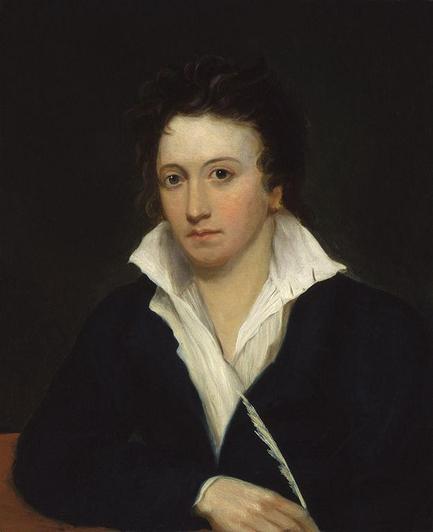
Percy Bysshe Shelley wrote about the massacre in his poem, “The Masque of Anarchy.” The authorities censored it until 1832, ten years after his death. Mike Leigh’s 2018 film Peterloo is an excellent portrayal of the massacre, and the events leading up to it. Many writers have written novels about Peterloo, including the relatively recent “Song of Peterloo,” by Carolyn O’Brien, and “All the People,” Jeff Kaye. However, perhaps the most important is Isabella Banks‘s 1876 novel, “The Manchester Man,” since she was there when it happened and included testimonies from people who were involved.

#workingclass #LaborHistory #CatoStreetConspiracy #peterloo #prison #union #deportation #massacre #novel #poem #poetry #anarchism #books #fiction #poetry #author #writer #shelley @bookstadon

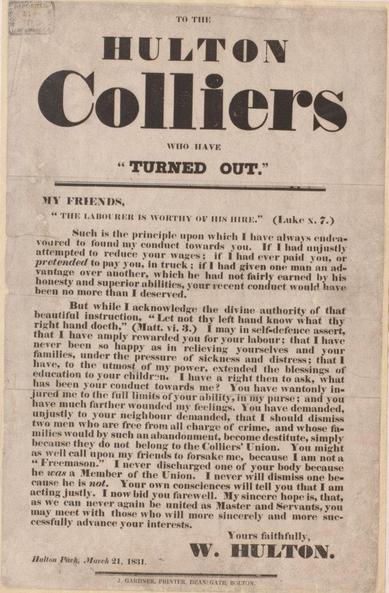
Today in Labor History December 21, 1910: 344 miners died when the Hulton Bank Colliery No. 3 Pit exploded in Westhoughton, England. It was the third worst mining disaster in British history. The original owner of the mine, William Hulton, once served as sheriff. In that role he sentenced 4 people to death, including a 12-yer-old boy, for taking part in a Luddite attack in 1812. His orders also led to the Peterloo Massacre in 1819, in which the cavalry charged a crowd of 60,000 workers and peasants fighting for universal suffrage, killing 18. Many had just returned from Waterloo. Hulton paid the lowest wages of any colliery owner in Lancashire and he violently opposed any attempts to organize. His son and grandson, who later took over control of the colliery, were no better.

For a really good portrayal of the Peterloo events, see Mike’s Leigh’s 2018 film, “Peterloo.” Several recent novels portray Peterloo, including Carolyn O'Brien's “The Song of Peterloo” and Jeff Kaye's “All the People.” Isabella Banks wrote the novel “The Manchester Man” in 1876, based on her own interviews with survivors of the massacre. Additionally, there is a graphic novel in 'verbatim' form, Peterloo: Witnesses to a Massacre, as well as a 2016 Doctor Who audio adventure based on the Peterloo Massacre.

#workingclass #LaborHistory #miners #disaster #Peterloo #massacre #luddite #books #film #novel #fiction #doctorwho #author #writer @bookstadon

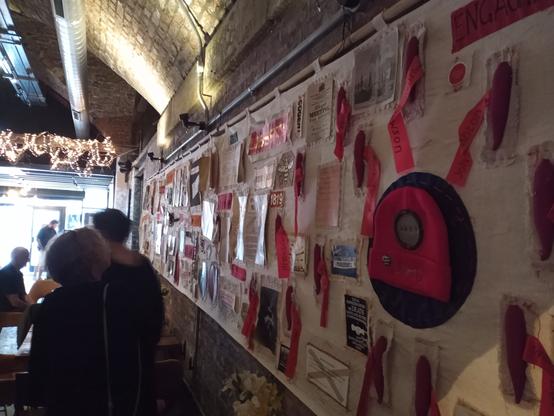
Also very good to see the Peterloo tapestry, created by members of the public in the run-up to the bicentenary in 2019, on display in the bar of 53two!
#Peterloo2025 #Peterloo
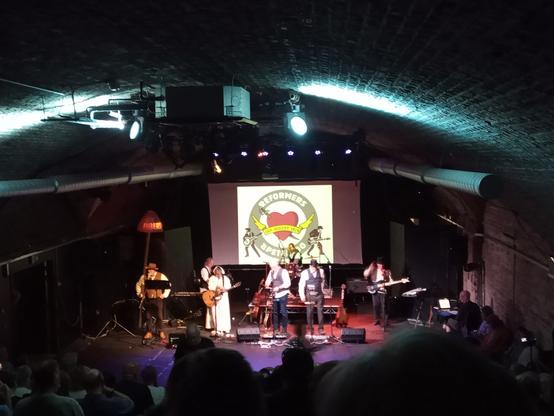
Afterwards at 53two on Watson Street we saw Reformers of Peterloo perform Peterloo in Rock, a musical show about 1819 and the fight for democracy (have we won yet?)
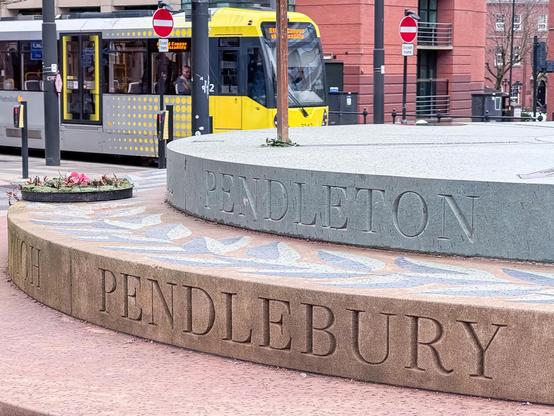
Featuring the art of @PeterlooMemorial's Polyp as ever-shifting backdrop.
One more performance tonight at 8pm!
#Peterloo2025 #Peterloo
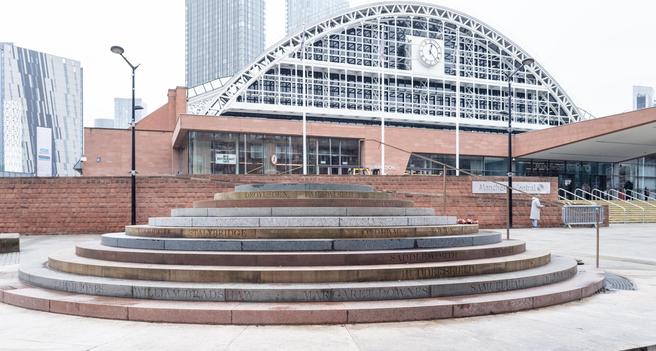
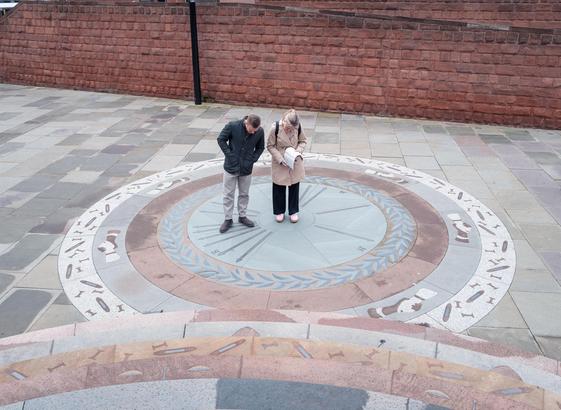
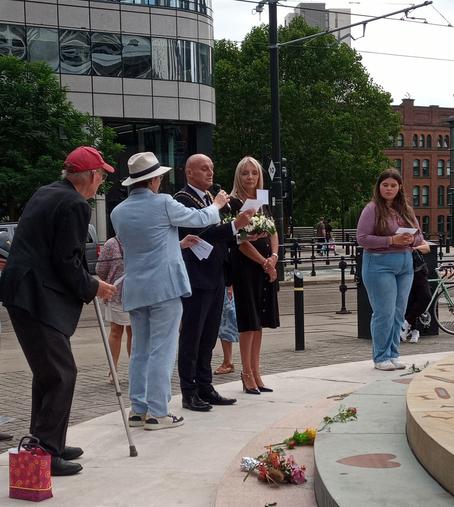
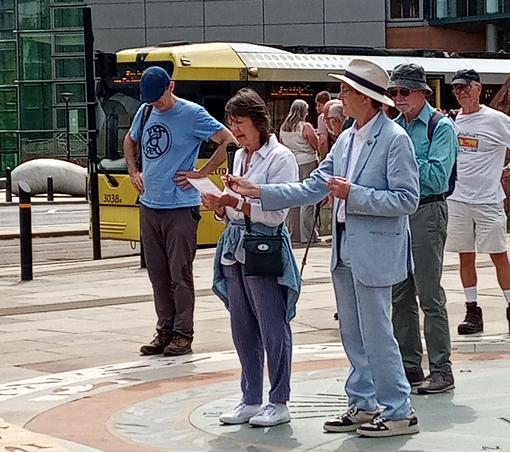
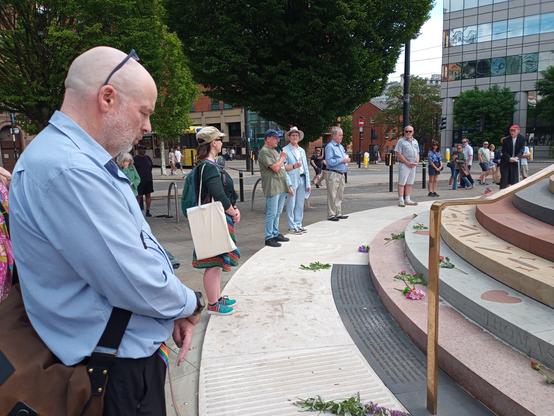
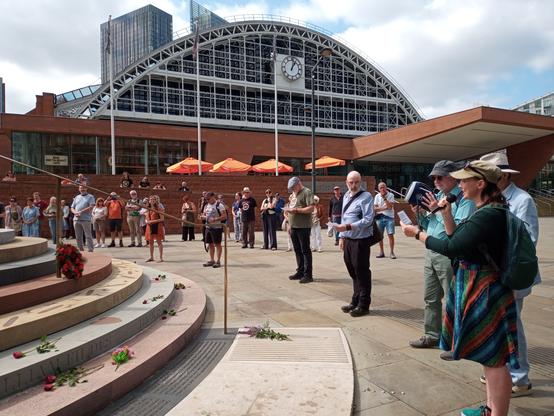
Thanks to all those who joined us at the Peterloo Memorial today to remember those who were killed on St Peter's Field in 1819 during the campaign for democracy.
#Peterloo2025 #Peterloo

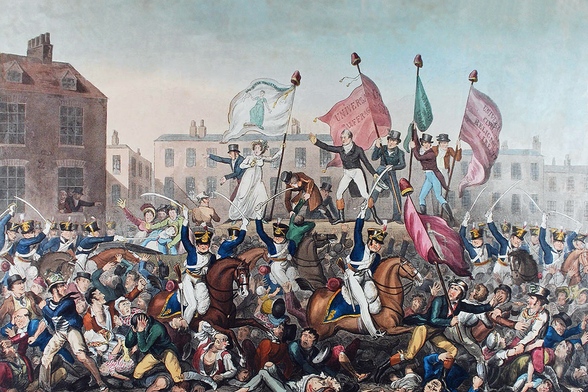
Today in Labor History August 16, 1819: Police attacked unemployed workers demonstrating in St. Peter's Field, Manchester, England. When the cavalry charged, at least 18 people died and over 600 were injured. The event became known as the Peterloo Massacre, named for the Battle of Waterloo, where many of the massacre victims had fought just four years earlier. Following the Napoleonic Wars there was an acute economic slump, terrible unemployment and crop failures, all worsened by the Corn Laws, which kept bread prices high. Only 11% of adult males had the vote. Radical reformers tried to mobilize the masses to force the government to back down. The movement was particularly strong in the north-west, where the Manchester Patriotic Union organized the mass rally for Peter’s Field. As soon as the meeting began, local magistrates tried to arrest working class radical, Henry Hunt, and several others. Hunt inspired the Chartist movement, which came shortly after Peterloo.

John Lees, who later died from wounds he received at the massacre, had been present at the Battle of Waterloo. Before his death, he said that he had never been in such danger as at Peterloo: "At Waterloo there was man to man, but there it was downright murder." In the wake of the massacre, the government passed the Six Acts, to suppress any further attempts at radical reform. The event also led indirectly to the founding of the Manchester Guardian newspaper.

Percy Bysshe Shelley wrote about the massacre in his poem, “The Masque of Anarchy.” The authorities censored it until 1832, ten years after his death. Mike Leigh’s 2018 film Peterloo is an excellent portrayal of the massacre, and the events leading up to it. Many writers have written novels about Peterloo, including the relatively recent “Song of Peterloo,” by Carolyn O'Brien, and “All the People,” Jeff Kaye. However, perhaps the most important is Isabella Banks's 1876 novel, “The Manchester Man,” since she was there when it happened and included testimonies from people who were involved.

#workingclass #LaborHistory #peterloo #waterloo #unemployed #poverty #freespeech #massacre #anarchism #novel #poetry #literature #books #poet #author #writer #fiction @bookstadon

"The Peterloo Massacre took place at St Peter's Field, Manchester, Lancashire, England, on Monday 16 August 1819. Eighteen people died and 400–700 were injured when the cavalry of the Yeomen charged into a crowd of around 60,000 people who had gathered to demand the reform of parliamentary representation..."

#Peterloo #PeterlooMassacre #OTD

https://en.wikipedia.org/wiki/Peterloo_Massacre

Am 16. August 1819 ereignete sich das #Peterloo Massaker gegen friedliche Demokratie-Demonstraten in Manchester. Vor zwei Jahren haben Thomas von @schoenerdenken und ich über den famosen Historien-Film von #MikeLeigh gesprochen.

Soweit ich weiß, findet dieser Film von 2018 bei uns immer noch nicht statt. Keine Synchronisation, keine VOD oder Home-Media-Auswertung. Nix. So sad!

https://schoener-denken.de/blog/peterloo-filmkritik/

Jubiläumsfolge 1200: PETERLOO - Die Verteidigung der Vorherrschaft - feat. Molo -

Wir gehen zwei Jahrhunderte zurück: Grossbritannien 1819. Eine Kundgebung, geplant von der Manchester Patriotic Union Society. 80.000 unbewaffnete Menschen, die gegen die Getreidezölle und für Weiterlesen ...

@workingclasshistory

The Peterloo Massacre took place at St Peter's Field, Manchester, Lancashire, England, on Monday 16 August 1819. Eighteen people died and 400–700 were injured when the cavalry of the Yeomen charged into a crowd of around 60,000 people who had gathered
https://en.wikipedia.org/wiki/Peterloo_Massacre

https://www.peterloomassacre.org/history.html

https://www.nationalarchives.gov.uk/education/resources/protest-democracy-1818-1820/

2018 Film (Mike Leigh) - 200th anniversary
https://en.wikipedia.org/wiki/Peterloo_(film)

#labormovement #manchester #Peterloo #workingclasshistory

Peterloo Massacre - Wikipedia

📣 New Podcast! "16 August 1819: Peterloo massacre" on @Spreaker #history #massacre #peterloo
https://www.spreaker.com/episode/16-august-1819-peterloo-massacre--67211009
16 August 1819: Peterloo massacre

Mini-podcast about an event on this day in working class history. Our work is only possible because of support from you, our listeners on https://patreon.com/w

Spreaker